Drafting for Needs vs. Value: Which MLB Front Offices Mastered the 2026 Draft Board?
The annual MLB Draft is essentially a massive portfolio management exercise disguised as a sporting event. Unlike the NFL or NBA, where first-round draft picks are expected to immediately take the field and rescue a struggling team, baseball drafts are a long-term game of risk mitigation, cash allocation, and mathematical volatility.
If you only draft based on the immediate “needs” of the major league, you’re almost always making a suboptimal choice. The player you pick today might not be playing in a major league stadium in three years. By then, your major league roster needs will have completely changed.
The smartest managers in the sport understand this. They don’t draft based on the current roster; they draft to maximize the net present value of their youth development system.
The 2026 tournament in Philadelphia is a prime example of this tension. We’ve seen some teams panic and draft for safety, while others treat their draft boards like a Wall Street stock market, hunting for major market inefficiencies.
Let’s review the spreadsheet, analyze the swing metrics, and dissect the three management teams that completely dominated this year’s draft—and why my personal model suggests they’ve built the best supply of potential players.
1. The White Sox and Roch Cholowsky: Maximizing the Ceiling
When you hold the number one overall pick, you have a massive philosophical decision to make. You can cut an underslot deal with a slightly lower-tier prospect to save money for later rounds, or you can grab the best player on your board and write a historic check.
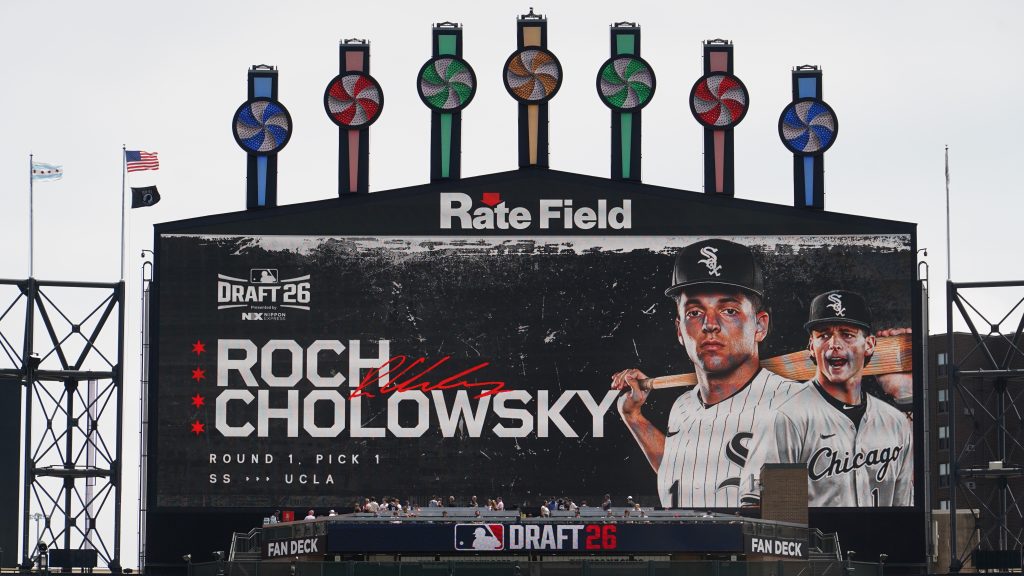
The Chicago White Sox chose the latter. By drafting UCLA shortstop Roch Cholowsky first overall, they landed a player widely considered the most complete college shortstop prospect since Troy Tulowitzki.
The Financial Architecture
- Pick Slot Value: $11,350,600
- Actual Signing Bonus: $10,350,000
- Net Pool Savings: $1,000,600
This is a phenomenal piece of business by the White Sox front office. Not only did they secure the premier defensive shortstop in amateur baseball, but they also convinced him to sign for a cool million dollars under slot. That $10.35 million mark shatters the previous signing bonus record, but it still represents a massive win for Chicago’s overall draft pool flexibility.
The Advanced Metric Profile
Why is the industry so incredibly high on Cholowsky? It starts with his elite balance at the plate. During his junior season at UCLA, Cholowsky anchored the Bruins’ lineup with a monster slash line:
- Batting Average: .320
- On-Base Percentage: .452
- Slugging Percentage: .636
- Home Runs: 21
His swing path is incredibly efficient. He maintains a compact, direct hand path to the ball, which allows him to register a remarkably low in-zone whiff rate. When you couple that hitting profile with a glove that scouts already grade as an easy 60 on the scouting scale, you have a potential franchise cornerstone.
Derrick’s Take: I’ll be honest: I usually hate when bad teams get cute at No. 1 overall. The White Sox desperately need a culture-setter, and Cholowsky is exactly that. Writing a historic eight-figure check to an amateur player is always scary, but they didn’t overthink this.
My favorite part of this pick? Cholowsky’s defense is so advanced that he could probably field at the big-league level right now. If his bat translates even moderately to pro ball, this is a multi-time All-Star who anchors your infield for the next decade. Saving a million bucks on slot while getting the clear-cut best player in the draft is an absolute masterclass.
2. The Atlanta Braves: Masterclass in Portfolio Arbitrage
No front office manages the draft pool system quite like the Atlanta Braves. Under their analytical regime, the Braves treat their draft pool like a diversified mutual fund. They manipulate cash allocation to maximize their overall return across the entire board.
In the first round, the Braves held the 9th overall pick. Instead of spending every penny of their slot value, they selected Virginia outfielder AJ Gracia—a guy ranked slightly lower by some public boards but absolutely adored by internal models.
The Double-Play Strategy
While public metrics had Gracia ranked around No. 19, the Braves trusted their scouts, who had been screaming “this is our guy” for a year. By selecting him at No. 9 and saving slot money, they executed a brilliant portfolio split.
They used those massive savings to double down on elite college talent later in the class, securing two high-ceiling players rather than putting all their eggs in one basket.
The Statistical Profile: AJ Gracia
Gracia is not just a cost-saving chip. He is an absolute run-producing machine. During his standout season at Virginia, he put up video-game numbers:
- Batting Average: .354
- On-Base Percentage: .489
- Slugging Percentage: .632
- Runs Scored: 64
The lefty slugger has consistently performed as a highly patient hitter, producing competitive at-bats with elite plate discipline.
Derrick’s Take: This is why the Braves are always in the postseason. They don’t just draft players; they draft the whole board. Gracia at number nine might have looked like a slight reach to the casual fan who only looks at mock drafts. But look at his swing mechanics. He has an incredibly quiet load and a flat barrel path that absolutely demolishes fastballs.
From my perspective, Gracia has the highest floor of any college outfielder in this class. He doesn’t chase, he doesn’t panic with two strikes, and he hits everywhere he goes. Getting a hitter this polished while saving money to play with later in the draft is the kind of front-office chess that keeps a franchise’s window open forever.
3. The Cincinnati Reds and Justin Lebron: The High-Beta Value Play
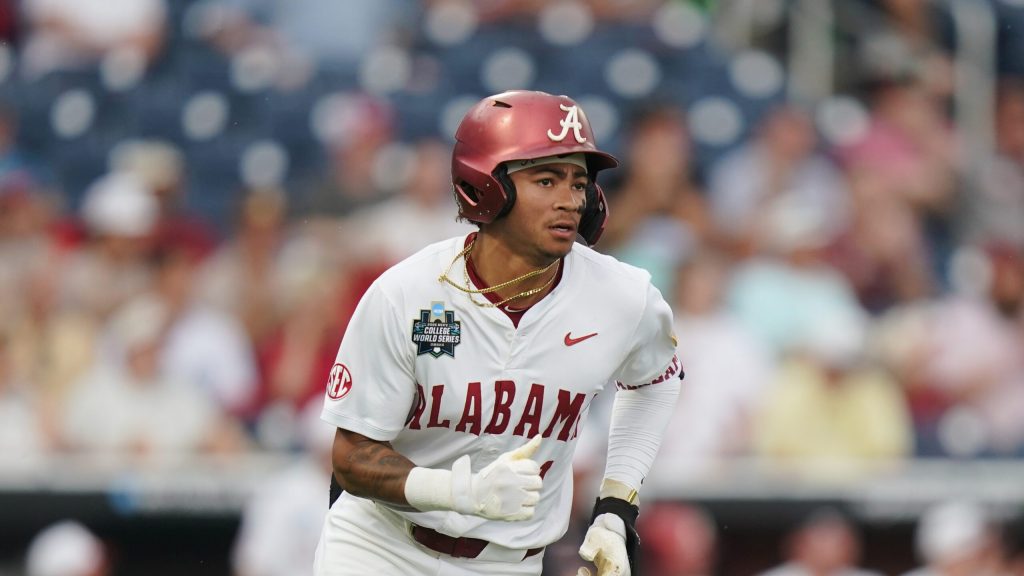
If you want to find the ultimate value play of the 2026 draft, look no further than the Cincinnati Reds at pick 18. They took a massive, high-beta gamble on Alabama shortstop Justin Lebron and I am absolutely obsessed with this pick.
Lebron is an impactful talent who has been the undisputed face of the Crimson Tide program. Over his collegiate career, his physical tools have made him one of the most dynamic athletes in college baseball.
The Analytical Profile
Over his three seasons in Tuscaloosa, Lebron put up some eye-popping career metrics:
- Batting Average: .309
- OPS: .984
- Home Runs: 46
- Stolen Bases: 66-of-68 (An absurd 97% success rate)
In his 2026 junior season alone, Lebron went 42-of-43 in stolen base attempts to lead all SEC players and rank fifth in the entire nation. Even wilder: he was the only player in Division I baseball to produce at least 16 home runs and 42-plus steals this past season.
Justin Lebron’s 2026 Season Splits:
Home Runs: 16
Stolen Bases: 42
Stolen Base %: 97.6% (42-for-43)
SEC Standing: 1st in Stolen Bases
The Analytical Gamble
With that kind of historic power-speed combination, why did Lebron slide to pick 18?
It comes down to swing-and-miss concerns against elite SEC breaking balls and a slight uptick in defensive errors during his final year. Some teams backed off, fearing he was a high-risk asset with a volatile profile. The Reds, however, looked at his raw physical tools and pulled the trigger.
Derrick’s Take: This is a classic “buy-the-dip” investment, and I am absolutely screaming from the rooftops about how much I love it. The Reds got a top-five pure talent at pick 18 because other front offices over-indexed on a few cold stretches in the SEC.
Are there swing-and-miss concerns? Sure. But you are talking about a kid who went 42-of-43 on stolen bases against SEC catchers while hitting 16 bombs. That is an elite power-speed dynamic that you simply cannot teach. In Great American Ball Park, Lebron’s raw pull-side power is going to play beautifully. It’s a high-risk, high-beta gamble, but at pick 18, the expected value of this pick is astronomical.
The Master Class Draft Grades
Let’s summarize how these three front offices operated. The teams that succeeded did not let short-term roster gaps dictate their strategy. They let valuation models guide their board.
- Chicago White Sox (Grade: A): Secured the best player in the draft while saving $1 million on the slot value. They got their future captain.
- Atlanta Braves (Grade: A+): Played the pool system perfectly. Gracia is a high-floor offensive weapon who will move incredibly fast through the minor leagues.
- Cincinnati Reds (Grade: A-): Took the biggest, highest-upside gamble of the first round. If they can refine Lebron’s approach against offspeed stuff, they have a superstar.
Roster building is about finding value where others see risk. The White Sox bought elite stability, the Braves bought tactical value, and the Reds bought pure, unadulterated athletic upside. If you want to see how elite organizations are run, keep your eyes on these three draft classes over the next three seasons.