Refining the Edge: How Hacks Turned Comedy Writing into a Brutal Intergenerational Battleground
There is a pervasive, romantic lie that pop culture loves to tell about creative genius: the myth of the effortless spark. We love movies and shows where a writer sits down at a typewriter, gazes out a rain-slicked window for three seconds, experiences a flash of divine inspiration, and pours out a masterpiece in a single, flawless night.
Hacks takes that romantic myth, throws it on the floor, and stomps on it with a pair of thousand-dollar designer heels. Created by Lucia Aniello, Paul W. Downs, and Jen Statsky, Hacks treats the art of comedy writing not as a mystical gift, but as a grueling, bone-crushing, manual labor trade craft.
It views a good joke the same way an expert carpenter views a hand-carved mahogany table, something that requires hours of measuring, sanding, getting splinters, throwing out bad wood, and starting over until the angles are sharp enough to draw blood.
At the center of this blood sport stand two women at opposite ends of the cultural and generational spectrum: Deborah Vance, played with terrifying, god-like charisma by Jean Smart, and Ava Daniels, played with brilliant, anxious neurosis by Hannah Einbinder.
When the show premiered on HBO Max, it could have easily settled for being a comfortable, odd-couple buddy comedy. We’ve seen the template a thousand times: the bitter, rich old-timer learns to be open-minded from the hip youngster, while the self-righteous youngster learns to respect her elders. Everyone shares a warm hug by the end of the season, and the status quo remains safely preserved. Hacks completely rejects that lazy, neat resolution.
My take on the series is that its genius lies in how relentlessly it weaponizes the intergenerational dual-protagonist setup. It doesn’t treat Deborah and Ava’s relationship as a sweet teacher-student dynamic or a surrogate mother-daughter bond, even when it flirts with those tropes.
It treats them as two deeply flawed, fiercely arrogant gladiators who are locked in a room together because they desperately need each other’s weapons to survive. It is a show about how ego, legacy, and joke structure force two women from vastly different eras to grind against each other until all their soft edges are scraped away, leaving behind only the purest, sharpest comedy imaginable.
Part I: The Collision of Two Dynasties, The Broadcaster and the Tweeter
To understand why the friction between Deborah and Ava generates such incredible narrative spark, you have to break down the distinct cultural worlds they inhabit. Deborah Vance is a legendary titan of Las Vegas comedy. She has done thousands of stand-up shows at the Palmetto casino, sold millions of QVC items, hosted late-night pitch slots, and built a massive, multi-million-dollar empire on the backs of broad, reliable, crowdsourced punchlines.
She represents the old guard of comedy, an era where female comedians had to be twice as tough, ten times as cynical, and willing to endure unspeakable structural misogyny just to earn a seat at the table. Deborah’s comedy is built on bulletproof mechanics, high volume, and total crowd domination. She doesn’t care if a joke expresses her authentic soul; she cares if it hits the back wall of a casino showroom filled with drunk tourists who paid eighty bucks a ticket.
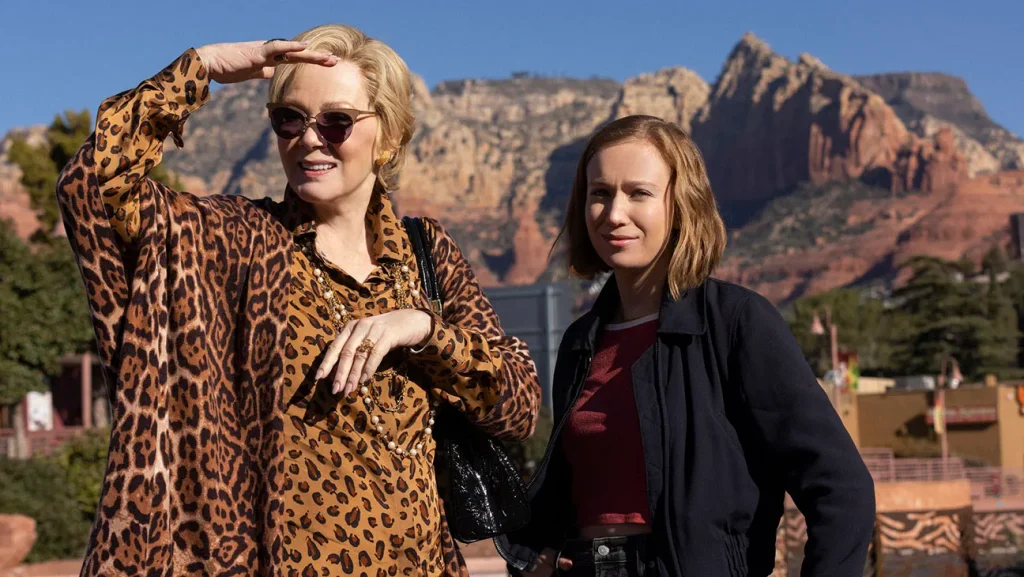
Ava Daniels, on the other hand, is a twenty-something bisexual comedy writer from Los Angeles who got digitally canceled for making a bad joke about a closeted senator on Twitter. Ava represents the hyper-intellectual, self-analytical, intensely sensitive modern comedy scene. Her humor is rooted in personal identity, structural critique, existential anxiety, and subtle meta-irony. Ava cares deeply about moral purity, authentic self-expression, and subverting expectations, but she lacks the basic stamina, crowd-reading skills, and thick skin required to survive a real room full of people who aren’t online.
When Ava’s desperate agent, Jimmy, sends her to Las Vegas to fix Deborah’s aging material, the initial meeting is an absolute masterclass in narrative hostility.
Deborah doesn’t want a youth consultant telling her how to be funny. She views Ava as a lazy, entitled, over-sensitive child who expects a career handed to her without ever paying her dues. Ava views Deborah as an ancient, hacky, sellout dinosaur who trades in lazy, lowest-common-denominator jokes to buy taxidermy dogs and luxury estates.
Look at how Jean Smart and Hannah Einbinder play that first encounter in Deborah’s opulent, cold mansion. Smart plays Deborah like a lioness inspecting a sick gazelle. She sits back, eyes narrowed, picking apart Ava’s posture, her outfit, and her desperate need for approval with surgical precision. Einbinder plays Ava with a perfect mix of millennial defensiveness and sheer panic, puffing up her chest to hide the fact that her career is in absolute ruins.
The turning point of that scene and the engine of the entire series happens when they stop playing polite corporate defense and start hurling genuine, vicious insults at each other. The moment Ava stops trying to be a deferential assistant and snaps back with a brilliantly mean, hyper-specific insult about Deborah’s life, Deborah’s eyes light up.
In that moment, Deborah recognizes something in Ava: a killer instinct. She doesn’t care that Ava was rude; she cares that Ava hit the mark. Comedy instantly transcends personal offense. A good strike is a good strike, regardless of who threw it.
Part II: Why Jokes Are Built, Not Born
One of the most thrilling aspects of Hacks is how deeply it respects the actual mechanics of writing stand-up material. Most shows about artists treat the creative process as an effortless series of successes. A character writes a script in a montage set to pop music, and suddenly they are standing on stage receiving a standing ovation. Hacks shows you the grueling, boring, humiliating eighty-nine steps that happen between writing a pitch on a legal pad and making an audience laugh.
In season one and season two, as Deborah decides to throw out her comfortable, thirty-year-old Vegas act and build a raw, honest, deeply personal hour of comedy, the show turns into an unvarnished manual on joke mechanics.
We watch Deborah and Ava spend days trapped in dirty tour buses, dim hotel rooms, and low-tier comedy clubs across the country, arguing over a single word, a pause, or a setup. Look at the way the show breaks down the difference between a premise and a joke.
Ava will bring in a brilliant, insightful premise about female trauma or generational hypocrisy, but it has no punchline. It’s an essay, not stand-up. Deborah will ruthlessly strip away Ava’s pretentious vocabulary and demand the hard laugh. “Where is the turn?” Deborah screams. “Where is the rhythm? Why should a guy from Ohio care about your internal landscape if you don’t give him a laugh every twelve seconds?”
Conversely, Deborah will pitch a broad, hacky setup that she’s used since 1994. Ava will step in and demand that Deborah dig deeper, forcing her to stop relying on easy self-deprecation or lazy stereotypes, and actually tell the painful truth about her real life—her failed marriage, the arson rumor that defined her career, and the betrayal of her sister.
My take on these writing scenes is that they offer some of the most satisfying creative drama on television because the stakes are purely mechanical.
When Deborah takes the stage at a dirty dive bar or a middle-American comedy club to test out a new bit, we as the audience know every line of that joke because we saw them write it three scenes ago. When the joke bombs, we feel the visceral, stomach-churning humiliation with them. The setup was too long, the rhythm was off, or Deborah lost the crowd’s trust. And when they re-tool the sentence, change the cadence, adjust the delivery, and go back out there to finally land the laugh, the payoff feels like a massive athletic victory.
It frames comedy not as a casual gift of gab, but as an aggressive science of crowd psychology. You are manipulating the air pressure in a room full of strangers using only syntax, timing, and vulnerability.
Part III: Ego, Ownership, and the Toxic Umbrella
The central psychological puzzle of Hacks is trying to define what Deborah and Ava actually are to each other. Is Deborah a mentor? Yes, but she is a mentor who will happily crush Ava under her heel if she feels her own legacy is threatened. Is Deborah a surrogate mother? In some ways, yes. She buys Ava clothes, pays her medical bills, and offers her a front-row seat to wealth and power that Ava could never access on her own. But she also uses that power to keep Ava trapped, dependent, and financially bound to her empire.

Is Ava a protege? Yes, but she is a protege who secretly harbors a massive ego of her own. Ava wants to be seen as an independent creative force, yet she constantly feeds on Deborah’s prestige, protection, and boundless resources. When Ava feels neglected or dismissed by Deborah, her instinct isn’t to walk away gracefully; it is to strike out in petty, self-destructive anger, as she does at the end of season one when she drunkenly leaks damning, toxic personal details about Deborah to a pair of British TV producers.
The dynamic between them is a constant, fascinating tug-of-war between profound creative intimacy and terrifying professional paranoia. This structural push-and-pull is what keeps the show from ever growing stale. Every time you think Deborah and Ava have reached a stable, loving equilibrium, their egos re-assert themselves.
Look at the breathtaking move at the end of season two. After Ava helps Deborah write, produce, and sell her legendary self-funded comedy special—a special that completely revitalizes Deborah’s career and cements her status as a cultural icon—Deborah turns around and fires Ava.
On the surface, it looks like a cold, heartless betrayal. Deborah sits Ava down in a quiet office and cuts her loose, telling her that the lawsuit over Ava’s leaked email is settled and that their working relationship is over. Ava is devastated, begging to stay, believing she is being punished.
But Deborah’s true motivation is far more complex, beautiful, and terrifying. Deborah realizes that as long as Ava remains under her massive, comfortable, wealthy umbrella, Ava will never build her own career. She will spend her entire youth being a highly paid ghostwriter for an established titan, hiding behind Deborah’s fame instead of taking her own creative risks. Deborah fires Ava not out of hatred, but out of a brutal, tough-love recognition that the bird has to be thrown out of the nest if it is ever going to fly.
It is an act of mentorship disguised as an execution. Deborah sacrifices her own comfort to force Ava to go out into the industry and fight for her own name. It demonstrates the profound, tragic irony at the heart of their bond: to truly honor the craft they built together, they have to separate.
Part IV: The Price of the Spotlight
As the series moves into its third season, the stakes evolve from simple survival into the terrifying realm of legacy. Deborah Vance achieves the ultimate dream she was robbed of thirty years earlier: landing the host chair of a major late-night network talk show. She becomes the first woman in decades to hold that culturally dominant position. But with that victory comes the crushing weight of institutional compromise.
The late-night network landscape doesn’t care about Deborah’s artistic soul or Ava’s radical progressive politics. It cares about corporate sponsors, broad demographic appeal, affiliate ratings, and not offending executives. This shift sets up an even deeper philosophical conflict between our two lead characters.
Ava, who returns to work as Deborah’s head writer, believes that they should use this historic platform to push boundaries, feature underrepresented voices, make sharp political critiques, and completely revolutionize the tired late-night format. Ava views the host chair as a tool for cultural progress.
Deborah, having spent fifty years climbing to the top of a mountain that tried to throw her off at every turn, views the host chair as a trophy that must be protected at all costs. She is terrified of losing it again. If that means doing broad, safe, corporate-friendly bits, cutting sharp political jokes, or pleasing suits, Deborah will do it without blinking.
My take on this tension is that it exposes the ultimate tragedy of creative success within a capitalist industry. Ava represents the pure, uncompromising idealism of youth, the belief that getting power allows you to change the system. Deborah represents the pragmatic, battle-scarred reality of survival, the knowledge that the system will destroy you the moment you stop feeding it what it wants.
When Deborah chooses safety over artistic risk, Ava doesn’t just see a creative disagreement; she sees a moral betrayal. She watches the woman she helped rebuild slide back into the safe, hacky habits of her Las Vegas past just to keep a corporate gig.
And what does Ava do when she realizes Deborah is slipping back into old patterns? She uses the exact tools Deborah taught her. In a staggering power play at the end of season three, Ava realizes that gentle persuasion and loyalty will never work on a woman like Deborah Vance. Deborah only respects power, leverage, and cold dominance. So, Ava digs up leverage, corners Deborah in her own office, and forcefully demands the head writer position, threatening to expose a secret that could ruin Deborah’s new network gig if she refuses.
Look at the horror and pride on Jean Smart’s face in that moment. Deborah looks at Ava and realizes that the anxious, soft, over-sensitive girl she hired three years ago is completely gone. In her place stands a ruthless, cold-blooded comedy killer who just backed a legend into a corner and won.
Deborah didn’t just teach Ava how to write jokes; she taught Ava how to be Deborah Vance. Ava sacrificed her own moral purity to conquer her mentor, stepping fully into the brutal, cutthroat world she used to judge from afar.
Part V: The Masterclass of Smart and Einbinder
It is impossible to analyze the success of Hacks without devoting serious focus to the sheer, technical brilliance of Jean Smart and Hannah Einbinder. Jean Smart’s performance as Deborah Vance is one of the crowning achievements of contemporary television acting. Smart possesses an innate, theatrical grandiosity that makes Deborah feel larger than life, yet she never loses the quiet, deeply buried pain of a woman who spent decades completely alone at the top.
Watch the way Smart uses her posture. When Deborah is in public or on stage, her back is straight as a board, her chin is tilted up, and her eyes project absolute, unquestioned authority. But the second she steps into the privacy of her bedroom or her trailer, Smart lets the posture sag just a fraction of an inch.
You see the arthritis in her hands, the physical fatigue in her face, and the immense, exhausting physical effort required to maintain the illusion of timeless perfection. Smart delivers comedic lines with the rhythmic precision of a concert drummer, hitting every hard consonant and riding every pause for maximum emotional damage.
Then look at what Hannah Einbinder accomplishes alongside a living legend. For a young actor in her first major television role, standing toe-to-toe with Jean Smart could have been a career-ending disaster. Einbinder could have easily been eclipsed, reduced to a passive straight-woman reacting to Smart’s theatrical fire.
Instead, Einbinder builds a character so distinct, physical, and neurotically alive that she matches Smart blow for blow. Einbinder uses her body language as a physical counterweight to Smart’s rigid elegance.
Where Deborah is poised and controlled, Ava is slouched, fidgety, and constantly tripping over her own limbs. Einbinder excels at the comedy of internal collapse—the way her voice cracks when she is trying to sound authoritative, the frantic eye movements when she realizes she’s lost an argument, and the subtle, heartbreaking shifts in her facial expressions when Deborah delivers a casual insult that cuts straight to her core.
The magic of Hacks happens in the space between them. Their comedic chemistry is built on impeccably tight rhythm. They listen to each other with hyper-attentive focus, picking up on micro-cues, breathing patterns, and subtle changes in tone. When they are riffing together on a new joke, their dialogue bounces back and forth with the speed and precision of professional table tennis players. They don’t just speak their lines; they react to the immediate, physical reality of the other actor in the room.
It is a rare, lightning-in-a-bottle pairing where two actors elevate each other’s work so completely that it becomes impossible to imagine the show existing without either half of the equation.
The Unforgiving Mirror of Comedy
Hacks stands as a profound, hilarious, and deeply honest exploration of what it costs to dedicate your life to making strangers laugh. It refuses to offer easy comfort or sentimental lies. It acknowledges that the entertainment industry is a brutal, ageist, misogynistic meat grinder that will chew up your youth, spit out your ambition, and replace you the second your ratings dip. It shows that talent alone is never enough, you need relentless discipline, thick skin, a terrifying ego, and an absolute obsession with the craft.
Yet, despite its cynical, battle-tested worldview, Hacks retains a deep, almost romantic affection for the act of creation itself. It believes that when two people sit down in a room, set aside their pride, and suffer through the painful, humiliating process of building a joke from scratch, something transcendent happens.
They forge a bond that goes deeper than friendship, deeper than family, and deeper than romance. They become mirror images of each other—refining each other’s instincts, challenging each other’s blind spots, and forcing each other to be better than they ever could have been alone.
Hacks shows us that mentorship isn’t about passing down a torch in a peaceful, quiet ceremony. It is about hand-to-hand combat in the writing room. It is about sharpening a blade on the nearest stone you can find, even if that stone happens to be another person’s ego. And as Deborah Vance and Ava Daniels continue their messy, beautiful, terrifying war for comedic perfection, we get the absolute privilege of sitting in the front row, holding our breath, and laughing until it hurts.