Where Did All the Chemistry Go? The Lost Art of the Movie Star Spark
There was a time when a summer disaster movie was secretly just an excuse to watch two charismatic movie stars bicker, flirt, and sweat within inches of each other’s faces while dodging flying debris.
When Jan de Bont’s Twister hit theaters in the summer of 1996, the primary draw wasn’t truly the innovative, CGI-boosted tornadoes. The true essence of nature was the dynamic, electric chemistry between Helen Hunt and the late, legendary Bill Paxton.
Jo and Bill, their characters, were former lovers who irritated each other immensely, perpetually raising their voices over loud engines, bickering over divorce documents, and sharing looks that conveyed ten years of unvoiced love, remorse, and intense obsession. You didn’t merely observe them pursue storms; you sat in the theater eagerly hoping they would seize each other by the collar and kiss before an F5 tornado devastated the area.
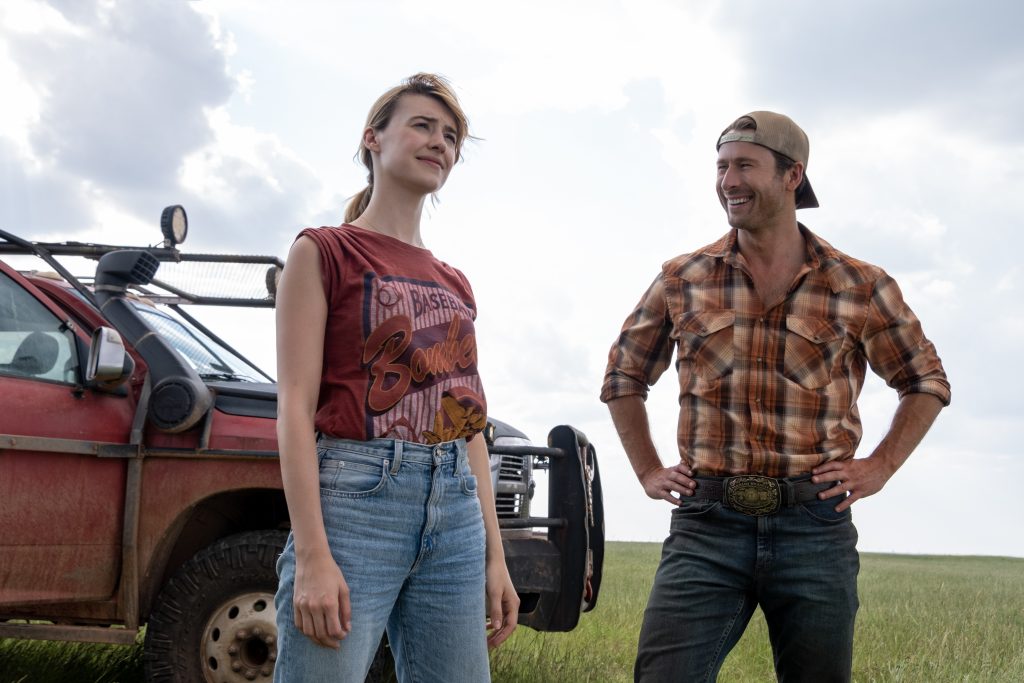
Jump ahead almost three decades to Lee Isaac Chung’s Twisters. On paper, the film has all the elements for a huge success. Glen Powell is an actor seemingly designed in a lab to revive the lost archetype of the appealing 1990s film star, exuding charismatic charm as “tornado wrangler” Tyler Owens. Facing him is Daisy Edgar-Jones portraying Kate Cooper, a gifted and traumatized meteorologist who can genuinely sense the change in the wind.
The movie is an enormous visual spectacle, filled with stunning whirlpools and powerful sound design. However, when the credits finish, a peculiar emptiness settles in your chest. Even after two hours of joking, light-hearted teasing, and treacherous weather, the romantic conclusion seems remarkably sterile. They don’t receive a genuine climax to their romantic storyline; the story opts for a courteous acknowledgment, a few flirtatious exchanges, and a thoroughly sanitized interaction that resembles less an intense chemistry and more two courteous colleagues finishing a successful office assignment.
This is not just a problem isolated to Twisters. It is an epidemic haunting modern American filmmaking. We are living through an era where blockbusters have completely forgotten how to construct genuine actor chemistry.
Where did the spark go? Why do two stunningly attractive people standing in front of a camera feel so utterly devoid of heat? The answer is not that our current generation of actors lacks talent. The fault lies in the modern studio machine itself: a system crippled by over-edited scripts, sterile green-screen environments, and sanitized studio notes that treat natural human messiness as a liability.
Part I: The 1996 Standard of Friction, Sweat, and Unscripted Chaos
To understand what contemporary blockbusters are missing, we have to look closely at why the romantic dynamic in the original 1996 Twister worked so brilliantly. The relationship between Helen Hunt’s Jo and Bill Paxton’s Bill was built on friction.
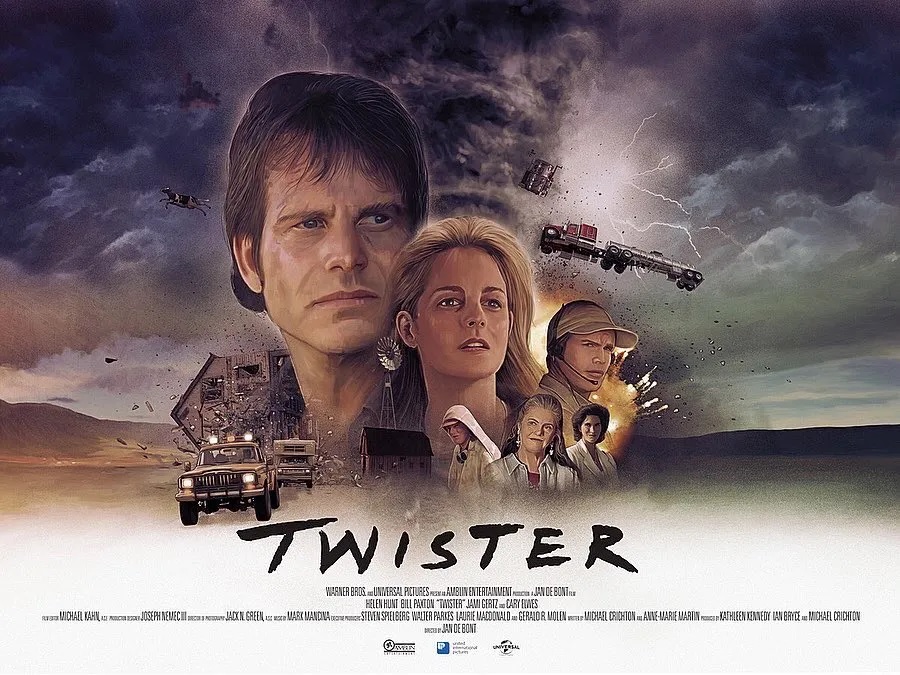
They were not clean, perfectly polished archetypes. They were messy, sunburnt, wind-whipped human beings who hadn’t slept properly in three days. The magic of their interaction lay in their mutual frustration. When Bill shows up with his new fiancée, Melissa (played with incredible comedic tolerance by Jami Gertz), to get Jo to sign divorce papers, the atmosphere is instantly charged.
Observe how Jan de Bont films their scenes collaboratively. The camera intrudes into their personal space. It portrays the chaotic, overlapping conversation as the storm-chasing team shouts over each other at a diner table. It highlights how Paxton’s voice trembles when he becomes passionate about weather patterns, and how Hunt gazes at him with a blend of anger and profound admiration.
The original Twister grasped a key principle of classic Hollywood screenwriting: genuine chemistry necessitates emotional vulnerability. In order for two characters to have chemistry, they need the freedom to irritate one another, err, behave selfishly, and reveal their true vulnerabilities. Jo’s fixation on tornadoes originates from profound childhood sorrow, and Bill is the sole individual who genuinely comprehends her insanity.
Their exchanges are not made up of slick, self-conscious remarks crafted for a promotional edit; they are the messy, raw chatter of two individuals who can’t resist each other even when their safety is at risk.
Importantly, the 1996 movie was filmed primarily on-site along actual dirt roads in Oklahoma. The actors were genuinely positioned in muddy fields, getting assaulted by enormous wind machines, soaked with cold water, and inhaling actual dust. That collective physical discomfort fosters an effortless, genuine bond among performers. When Paxton seizes Hunt’s arm to pull her from a falling barn, that physical response seems rooted in tangible real-world tension.
Part II: The 2024 Sequel and the Glen Powell Paradox
Now, compare that to Twisters. To be perfectly clear: Glen Powell is not the issue in this situation. Powell is indeed shouldering significant emotional burdens to maintain the film’s appeal. He strides into each shot with a natural, timeless film-star stance, displaying a dazzling smile beneath a cowboy hat as he stands in the heavy rain. He has the very same type of theatrical charm that turned actors such as Harrison Ford, Kurt Russell, and Dennis Quaid into household names.
The dynamic falters as the film denies Tyler, played by him, the opportunity to engage with Kate, portrayed by Daisy Edgar-Jones, in a substantial manner.
In the initial scenes of Twisters, Tyler is portrayed as an irritating YouTube star who pursues storms for views and merchandise profit, while Kate is the dedicated, trauma-affected researcher. This scenario is a timeless romantic-comedy configuration: the entertainer opposing the traditionalist. In a film from the 1990s, these two would have engaged in a fierce argument for forty-five minutes, exchanging cutting remarks, sabotaging each other’s approaches, and slowly realizing that their conflicting perspectives complement one another.
Instead, Twisters panics and holds back its strikes almost right away. In just two scenes of encountering Kate, we learn that Tyler is, in fact, an exceptionally intelligent, selfless individual who studies meteorology, contribute his YouTube earnings to storm victims, and holds great admiration for Kate’s brilliance. Any possible ideological conflict is resolved before it has a chance to grow.
Because the script is terrified of making Tyler look genuinely arrogant or unlikable, it robs the characters of any real emotional resistance to overcome. They transition almost instantly from mild awkwardness to mutual respect, eliminating all the tension that makes on-screen romance exciting.
Furthermore, Daisy Edgar-Jones, while a fine dramatic actress in quieter projects, is directed here to play Kate with a perpetual, muted melancholy. She spends vast stretches of the film looking solemn, traumatized, and passive. When placed next to Powell’s blinding, golden-retriever energy, the dynamic does not pop; it simply neutralizes him. It feels less like a fiery romance between equals and more like a charismatic golden retriever trying desperately to cheer up a very tired stranger at a bus stop.
Part III: Death by Green-Screen and Digital Isolation
A more profound, technical explanation exists for why contemporary actors find it challenging to evoke the intensity that flowed so effortlessly for earlier generations: the physical conditions surrounding film production have significantly altered.
In the 1990s, when two actors were inside a truck pursuing a storm, they typically occupied an actual truck chassis attached to a camera rig, jostling on a genuine road, inhaling the same air, responding to authentic sunlight, and connecting through eye contact in real space. Currently, major film production depends significantly on large LED volume screens, blue-screen stages, and digital post-production compositing.
When you remove the tactile essence of a setting, you remove the spontaneity of the performance. Actors are no longer responding to an actual blast of wind toppling a fence or a real raindrop striking their face; they are responding to a tennis ball on a stick held by an assistant director, envisioning what a visual effects artist in New Zealand will create behind them half a year later.
This virtual separation fundamentally influences body language. Observe how performers navigate in contemporary action blockbusters. Their motions are smooth, controlled, and accurate, designed to avoid intersecting with digital background components or interfering with intricate visual effects layers.
Contrast that with the untamed, awkward physical interactions of 1990s films. In the original Twister, characters frequently clutch one another, trip over patio furniture, dodge soaring farm machinery, and squeeze into tight storm cellars where their bodies are unavoidably in close, awkward contact.
In Twisters, even during the height of an F5 tornado tearing through a town, the lighting on the actors remains remarkably clean, their hair stays sculpted with precision products, and their physical interactions feel carefully choreographed to keep everyone centered neatly in the frame. When physical contact is sanitized, chemistry becomes entirely theoretical.
Part IV: The Sanitized Studio Mandate aka.The Fear of Real Intimacy
We also need to address the obvious issue: contemporary Hollywood’s strange and increasing fear of romantic and sexual closeness. In the last ten years, studio blockbusters have experienced a significant trend toward emotional uniformity. To ensure films resonate across all global markets, demographic groups, and sensitive corporate sponsors, studios have carefully removed elements that could be seen as chaotic, controversial, or excessively mature.
This has led to what movie reviewers commonly call the “asexual era” of contemporary blockbusters. Superheroes, storm chasers, space travelers, and undercover operatives can save the world, yet they seldom exhibit unrefined, direct adult longing.
Consider how ridiculous the conclusion of Twisters really is. You possess two exceptionally appealing main characters who have endured several dangerous natural calamities together, exchanged heartfelt confessions in a pickup truck, and ventured directly into the center of a fierce tornado to rescue a community. The film code of the past century requires a cathartic, fervent connection—a moment when all the built-up excitement and unexpressed romantic tension culminates in a cinematic kiss.
In contrast, the movie concludes at an airport terminal with a charming, polished joke about Tyler opting to remain and pursue storms with Kate, concluding with them sprinting toward a truck as the credits begin. After the film was released, reports emerged that Powell and Edgar-Jones had filmed a kiss, but Steven Spielberg (acting as an executive producer) allegedly suggested removing it because he believed it would be more impactful if they didn’t kiss.
I love Steven Spielberg as much as any human being alive, but that note was a catastrophic miscalculation. Cutting that moment did not make the story feel more grounded or mature; it made the film feel oddly prudish, as if the studio was terrified that showing two consenting adults kiss on screen would alienate a segment of the audience.
When studios treat romantic payoff as something to be managed, softened, or removed entirely, they communicate to the audience that the attraction between the characters was never real to begin with. It reduces movie stars to action figures who exist solely to run from digital effects, talk about plot points, and set up potential franchise sequels.
Part V: Why Chemistry Cannot Be Written by Committee
The process of developing screenplays in modern Hollywood has turned into a tiring procedure of committee-driven focus groups. Scripts go through various stages involving studio executives, feedback meetings, rewrite editors, and corporate branding supervisors. Throughout this process, any character deficiency that could render a lead somewhat unappealing, politically contentious, or emotionally complicated is methodically polished away.
The issue lies in the fact that human attraction is essentially based on imperfections. We do not develop feelings for perfect ideals that consistently express the proper, courteous response. We become enamored with people who astonish us, test our beliefs, exasperate us, and bring us joy even when we try not to.
In the 1996 Twister, the character played by Helen Hunt is admittedly a bit unhinged. Her childhood trauma engulfs her to the point where she recklessly jeopardizes her crew, disregards fundamental safety measures, and displays a frightening degree of single-minded fixation. Bill Paxton’s character is struggling to move forward in life, aiming for safety, and wanting to be an ordinary TV weatherman. However, he is pulled back into her sphere because her intense passion resonates with his own suppressed instincts.
Their connection is understandable as they are both flawed in ways that complement each other like pieces of a puzzle. In Twisters, the absence of genuine selfishness, irrationality, or unpleasantness in either character results in a flat dynamic. Kate shares a trauma connection with the weather, while Tyler is an appealing person who enjoys it.
They treat each other well. They enhance one another’s skills. They exchange courteously composed conversations regarding radar technology and Doppler instruments. It is a fully healthy, HR-sanctioned professional association. It is equally very dull to view on a sixty-foot screen.
My verdict: movie star chemistry is not something you can manufacture in a edit bay or fix with visual effects. It requires directors who trust their actors to improvise, screenwriters who write sharp, prickly dialogue with bite, and studios that have the courage to let two people on screen be messy, passionate, and real.
Part VI: Bring Back the Heat
Twisters is certainly not a bad film. As a summer popcorn experience, it offers numerous striking scenes, loud howling winds, and an enjoyable, lively score that creates a delightful two hours at the cinema.
Glen Powell demonstrates once more that he possesses the natural charm needed for a large screen, while Lee Isaac Chung orchestrates the storm scenes with authentic magnitude and energy. However, as a display of the vanished talent of movie star charisma, it symbolizes a troubling indication of a broader cinematic downturn.
We have exchanged genuine actor chemistry for digital refinement. We have substituted the chaotic, erratic friction of two stars clashing in a muddy area with sterile green-screen environments, sanitized interactions, and studio-imposed emotional protection. We have concluded that special effects are the main attraction, overlooking that the most remarkable special effect in film history has consistently been two actors gazing at one another across a bustling room with undeniable, clear longing.
If Hollywood aims to preserve the summer blockbuster for the upcoming generation, it should focus less on enhancing the realism of its digital tornadoes by five percent. It should mute the volume levels, reintroduce genuine actors into actual settings, engage screenwriters skilled in crafting sharp dialogue, and allow its performers to be imperfect, relatable, and passionately drawn to one another once more. Until then, we’ll simply have to keep returning to 1996 to witness what true thunder appears like.