The Chess Master of Amen Corner: Why Tiger Woods’ 2019 Masters Victory Was the Ultimate Mental Masterclass
My viewpoint is that we should dismantle the entire narrative that encompasses the iconic reputation of Tiger Woods. For twenty years, golf media presented a particular myth about Eldrick “Tiger” Woods.
They presented an image of a physical superhero—a strong, athletic marvel who approached the tee box, held a steel driver like a hammer, and smashed golf balls 330 yards down the fairway with such swing speeds that seasoned PGA Tour professionals were left tearing up into their towels. They adored the thunderous, crimson-shirted dominant predator who instilled fear in rivals via sheer physical strength, assertive pin-seeking, and iconic fist pumps that rattled the Georgia pines.
That iteration of Tiger Woods was amazing. However, it is not the rendition that achieved the most significant mental recovery in the annals of human athletics. By Sunday, April 14, 2019, at Augusta National, that athletic marvel was long absent.
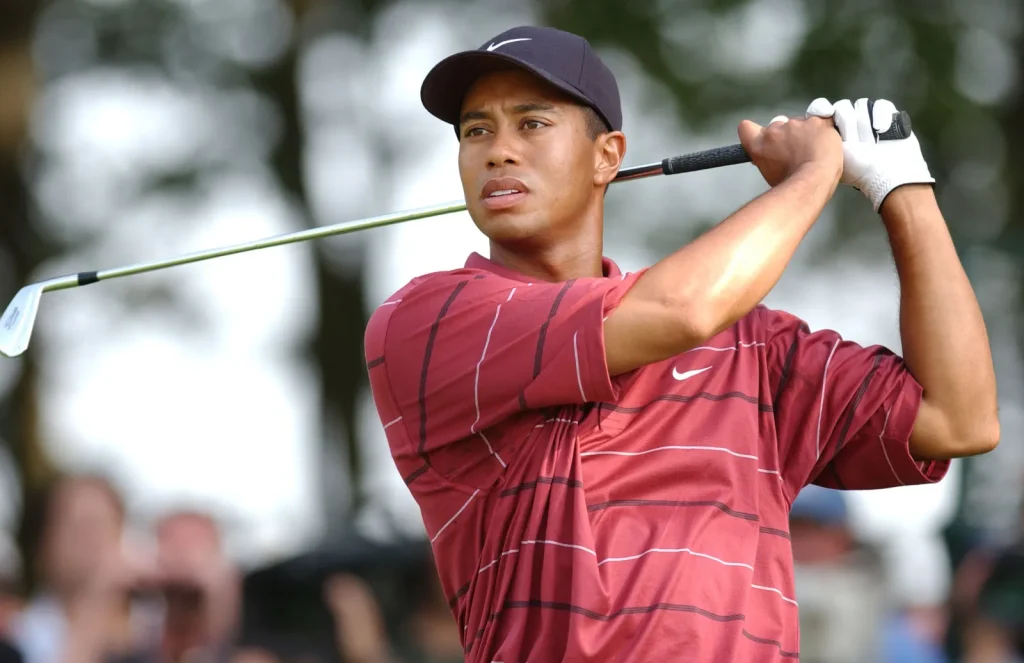
In his stead was a forty-three-year-old man whose physique had been methodically disassembled by four crippling back surgeries, four knee procedures, and an ankle fused together like an ancient plumbing connection. His spine was actually secured with medical-grade titanium screws. He could hardly lean down to place his ball on a tee without grimacing. He found himself amidst a new wave of younger, taller, fully capable hyper-athletes—players such as Brooks Koepka, Dustin Johnson, Rory McIlroy, and Bryson DeChambeau—who effortlessly drove the ball fifty yards beyond him.
However, as the sun went down over Augusta National on that chilly Sunday evening, it was the worn, injured, four-time back surgery survivor who donned a fifth Green Jacket. In what way? He didn’t accomplish it with force. He accomplished it without flashy, highlight-worthy plays.
Tiger Woods won the 2019 Masters because he played pure, ruthless, psychological chess. He treated Augusta National like a giant psychological trap, sat back, and let the younger, longer hitters drown themselves in Rae’s Creek while he systematically dismantled the course with surgical course management and ice-cold emotional control.
Let us pull back the curtain on Tiger’s Sunday scorecard, analyze the brutal psychological wreckage at Amen Corner, and explain why the 2019 Masters is the greatest mental victory ever recorded in professional sports.
The Broken Titan: The 11-Year Nightmare
To appreciate the sheer, unadulterated absurdity of what happened on Sunday at the 2019 Masters, you first have to remember where Tiger Woods was living just two years prior. This wasn’t just a comeback from a bad slump. This was a comeback from the absolute bottom of human existence.
From his 2008 U.S. Open win—where he notably triumphed with a broken leg and a torn ACL—until spring 2019, Tiger faced an 11-year ordeal of physical suffering and public disgrace.
His back was in such bad shape that there were months he couldn’t get out of bed to spend time with his children. He wasn’t able to sit in a chair while having dinner. He was unable to walk to his mailbox. He underwent spinal fusion surgery—a desperate, final medical intervention where surgeons actually fuse two vertebrae to prevent nerves from sending pain signals to the brain.
In 2017, his global ranking had fallen to 1,199th place. Consider that figure for a moment! The best golfer to ever live was placed lower than club professionals, young amateurs, and individuals who competed in little-known regional circuits in Northern Europe. Sports commentators publicly urged him to retire on national television to protect his legacy from further damage. Friends were concerned if he would return to walking normally, much less hit a golf ball at 120 miles per hour.

Upon his return to the PGA Tour in 2018, his physical game had transformed significantly. He no longer possessed the explosive hip rotation that produced his iconic 1997 strength. He couldn’t simply approach a par-5 and power a ball over the trees. He needed to completely transform himself. He needed to substitute physical threats with spatial intelligence, emotional control, and sheer tactical brilliance.
The Sunday Landscape: Surrounded by Lions
When the final round of the 2019 Masters kicked off, the leaderboard looked like a modern PGA Tour horror movie for anyone over forty. Tiger wasn’t leading the tournament. He was trailing Francesco Molinari—the stone-cold, robotic Italian who had spent the previous year playing flawless, error-free golf, including beating Tiger head-to-head to win the 2018 Open Championship at Carnoustie. Molinari hadn’t made a bogey in nearly fifty holes at Augusta! He was playing like a human calculator.
And behind Molinari was a pack of young, hungry apex predators:
- Brooks Koepka: A muscular, stone-faced monster who had won three of the previous seven Major championships through sheer power and intimidation.
- Dustin Johnson: An athletic freak who could carry a driver 320 yards in his sleep without flexing a muscle.
- Tony Finau: A six-foot-four launch-monitor engine who generated effortless clubhead speed.
- Xander Schauffele: A fearless young killer who hunted pins with zero hesitation.
Every single one of those guys could out-drive Tiger Woods on every hole. They had younger backs, faster knees, and pristine spinal discs.
In modern professional golf, when a pack of twenty-something long hitters is chasing a forty-three-year-old with a fused back on Sunday at a Major, the forty-three-year-old is supposed to fold. They are supposed to tire out on the back nine, start mis-hitting their irons as fatigue sets in, and bow out gracefully while the young guns battle for glory.
Tiger Woods knew this. He knew he couldn’t beat them in a long-drive contest. So, he decided to beat them in a game of spatial geometry and mental discipline.
The Master Plan: Dissecting Augusta’s Hidden Architecture
To grasp Tiger’s approach on Sunday, it’s essential to comprehend the layout of Augusta National. Augusta National is more than a golf course; it serves as a mental challenge dressed up as a botanical garden. It showcases pristine fairways, beautiful azaleas, smooth green areas, and concealed inclines that direct balls towards water hazards.
The course designers—Bobby Jones and Alister MacKenzie—created Augusta with intentional psychological pitfalls. On nearly every hole on the back nine, the green superintendents position the flag pins in spots that appear very enticing to a daring golfer. They position the flag three feet from a water hazard or directly behind a steep bunker.
When a youthful, self-assured, assertive golfer is positioned in the fairway holding an 8-iron, their ego urges them to target the flag head-on! They aim to nail the perfect shot, land it two feet from the hole, and listen to the crowd erupt. That’s precisely what Augusta desires you to do.
If you stray from your target by merely three feet—whether your wrist jitters, the wind changes by two miles per hour, or you contact the ball half a groove low on the clubface—the contours surrounding the green will snag your ball and send it straight into Rae’s Creek or a deep, irretrievable bunker.
Tiger Woods understood every inch of Augusta’s landscape more intimately than the individuals who cut the grass. He understood that during the Masters on Sunday, one does not target the pins. You find the thick section of the green, make your two-putt par, and watch the course shatter everyone else’s confidence.
The Turn: The Slow, Methodical Creep
As the younger players aimed for eagles and birdies on each hole of the front nine, Tiger executed a methodical, understated style of golf. He did not shoot at risky pins on Hole 1 or Hole 3. He aimed for safe targets, found fairways, and settled for easy pars. When he erred—such as bogeying the 5th hole—he remained calm. He didn’t attempt to execute a ridiculous, low-chance recovery shot on the following hole to compensate for it.
He just took his medication, adjusted his heart rate, and continued to strike balls into the safe areas of the greens. Molinari was maintaining his lead. He was at 13-under-par, playing composed, consistent golf, maintaining distance from Tiger.
To someone inexperienced lounging on a couch and watching TV, it seemed as though Tiger was being overly passive in his play. Spectators were yelling at their screens, hoping Tiger would grab his driver, take on the course, and unleash the classic intensity of 2000.
However, Tiger wasn’t competing on the front nine. He was pulling the whole field toward the most daunting section of holes in professional sports: Amen Corner. He awaited the wind to dance. He was anticipating the tension to build. He was anticipating human nature to assert itself.
Hole 12: The Slaughter at Golden Bell
If you want to pin-point the exact moment where the 2019 Masters was won, it happened at 2:10 PM on the 12th hole, a 155-yard par-3 known as Golden Bell.
The 12th hole at Augusta is arguably the most renowned, tricky par-3 globally. On paper, it seems straightforward—just a brief iron over a tiny creek (Rae’s Creek) leading to a slim, diagonal green bordered by azaleas and flanked by bunkers. The snare is hidden in the breeze.
Since the 12th hole is situated in a valley of trees at the lowest part of the land, the wind swirling above the pine trees affects the golfers. A gentle breeze caresses your face on the tee box, but twenty feet above Rae’s Creek, the wind could be blowing at fifteen miles per hour in the opposite direction!
On a Sunday in 2019, the pin on Hole 12 was situated in its customary Sunday location: positioned on the far right side of the green, located directly above the front bunker and only a few feet from the water.
Ian Poulter went first in an earlier group and hit his ball into the water. Next appeared the leading trio: Francesco Molinari, Tony Finau, and Tiger Woods. Molinari held the tournament lead at 13-under-par. He was three holes away from securing a firm grip on the Masters.
Molinari approached the tee area holding a 9-iron. The pin rested on the right. His pride, his excitement, and his thirst for competition urged him to play a gentle draw directly at the pin. He swung. The ball soared upwards into the sky. Once it hit its peak, the swirling gust above Rae’s Creek seized the ball, sent it tumbling like an unseen barrier, and plummeted it directly into the water hazard! Two over par.
Next up was Tony Finau—young, long, explosive. Finau stepped up, targeted the right side of the green near the flag, swung, and launched his ball straight into Rae’s Creek! Another double-bogey. In less than three minutes, two of the top players on the leaderboard had just committed competitive suicide in front of millions of viewers.
Now it was Tiger Woods’ turn. Watch the video footage of Tiger standing on the 12th tee box. He didn’t look at the flag. He didn’t even acknowledge that the right side of the green existed! Tiger knew that on Sunday with a swirling wind at Hole 12, hitting the ball anywhere near the right pin is an absolute fool’s errand.
He picked out a small target on the far LEFT side of the green—a spot twenty-five feet away from the flag, sitting over the deepest, safest part of the land mass, far away from Rae’s Creek. He took a smooth, controlled swing, hit a safe, boring, unglamorous shot into the middle of the green, walked over, tapped in for a simple two-putt par, and walked away.
While three of his main competitors were standing in the drop zone weeping over water hazards, Tiger picked up two strokes on the field by simply refusing to take the bait! It was a masterclass in risk management. Tiger didn’t hit a brilliant shot; he simply executed the smartest shot.
Hole 15: The Decisive Shift at Firethorn
After the disaster at Hole 12, the leaderboard was thrown into absolute chaos. Suddenly, four or five guys were tied for the lead at 12-under-par. Brooks Koepka was making a run. Dustin Johnson was stringing together birdies. Xander Schauffele was charging up the leaderboard.
This was the moment where the pressure became suffocating. They arrived at the 15th hole—a 530-yard par-5 called Firethorn. Hole 15 is a classic risk-reward hole. If you hit a great drive, you can go for the green in two shots, but you have to carry a large pond fronting the green.
Francesco Molinari, desperate to regain his lead after his water disaster on 12, hit his drive into the fairway. On his lay-up/approach shot, under immense pressure, Molinari clipped a tree branch, watched his ball splash directly into the water pond in front of the 15th green, and made another double-bogey. His tournament was officially over.
Now look at how Tiger handled Hole 15. Tiger hit a great drive down the right side of the fairway. He was sitting 227 yards away from the pin. Twenty years earlier, a young Tiger Woods would have pulled out a 2-iron, swung out of his shoes, tried to hit a majestic high draw over the water, and stuck it to three feet.
The 2019 version of Tiger Woods looked at the wind, looked at the lie, looked at the pond, and did something far more impressive: he calculated the exact distance to the fat, safe back-left portion of the green, far away from the water hazard.
He hit a smooth 5-iron to the safe middle-left area of the green, setting up a long 30-foot eagle putt. He didn’t make the eagle, but he safely lag-putted down to two feet, tapped in for an easy, stress-free birdie, and stepped onto the 16th tee box with the sole lead of the Masters Tournament.
Hole 16: The Knockout Blow
If Hole 12 was the spot where Tiger allowed his rivals to falter, then Hole 16—a 170-yard par-3 known as Redbud—was where he executed the decisive strike himself. The pin placement on Sunday at 16 is iconic. It rests on the lower-left section of the green.
When a golfer strikes a ball towards the right-center slope of the green, the inherent incline of the grass will catch the ball and gradually guide it down the hill toward the hole, similar to a bowling ball moving down a ramp.
Tiger was on the 16th tee, gripping an 8-iron. He held a lead of one stroke. The audience was pulsating with incredible anxious energy. The whole sports community was anxiously awaiting. Tiger refrained from attempting a heroic shot aimed straight at the hole. He targeted twenty feet to the right of the flag, onto the incline.
He hit the ball with clean, precise contact. The ball gently settled on the top edge, grasped the incline, and commenced its gradual, grand, historic descent down the slope toward the hole. Down, down, down it went, inching nearer and nearer to the cup as forty thousand spectators at Augusta went absolutely wild.
The ball rolled to a halt merely three feet away from the hole. Tiger approached calmly, made the short birdie putt, increased his score to 13-under-par, and widened his lead to two strokes with two holes remaining. It was precise. It was merciless. It was the instant when all the viewers understood that the unthinkable was truly going to occur.
Hole 18: The Walk to Glory
By the time Tiger reached the 18th tee box, he needed only a bogey to win the tournament. Even on the final hole, under the most immense psychological pressure imaginable, Tiger didn’t deviate from his game plan.
He didn’t try to crush a 320-yard drive down the narrow tree-lined chute. He hit a safe 3-wood into the fairway, laid up safely short of the green, chipped onto the putting surface, and left himself two putts from fifteen feet for the victory.
He missed the first putt on purpose to leave a simple, stress-free two-inch tap-in. He tapped the ball in. The red-shirted icon raised both arms into the air, let out a primal, guttural roar that echoed across the Georgia pines, hugged his son Charlie—recreating the iconic 1997 moment with his own late father, Earl Woods—and completed the single greatest comeback in sports history.
By the Numbers: The Analytical Masterclass
When sports statisticians look at Tiger’s Sunday performance at the 2019 Masters, the numbers reveal a style of play that completely contradicts the traditional “Tiger Woods” stereotype. He didn’t dominate the field in driving distance. He wasn’t blowing balls past Brooks Koepka or Dustin Johnson.
He dominated the field in Strokes Gained: Approach and Greens in Regulation (GIR). Tiger hit over 80% of his greens in regulation across the entire tournament!
TIGER’S SUNDAY STATISTICAL PROFILE (AUGUSTA 2019)
Greens in Regulation (GIR): 80.5% (Ranked 1st in the Field)
Proximity to Hole on Safe Zone Targets: Elite Top 3
Double Bogeys / Water Hazards Hit: 0
Mental Errors Under Pressure: ZERO
While his younger, longer opponents were hitting wild drives into the pine straw, taking dangerous lines over water hazards, and making double-bogeys that ruined their scorecards, Tiger was simply hitting green after green after green.
He forced his opponents to play at his pace. He made par look so valuable that when others tried to chase birdies, they overextended themselves and crashed into the hazards. It was a masterclass in statistical risk minimization.
In modern golf, players are obsessed with strokes-gained metrics, launch angles, and ball speed numbers. They treat the sport like a math equation solved through brute physical force. Tiger Woods proved at the 2019 Masters that golf at its highest level is still a game played between the ears. He used his mind as a weapon to defeat a field of superior physical specimens.
Why This Beats Every Other Comeback in History
Sports fans love to argue about the greatest comebacks of all time. They bring up Muhammad Ali defeating George Foreman in the “Rumble in the Jungle.” They mention Michael Jordan coming out of retirement to win three more titles with the Chicago Bulls. They point to Tom Brady leading the New England Patriots back from a 28-3 deficit in Super Bowl LI.
Those comebacks were breathtaking, legendary displays of athletic greatness. But none of those icons had to overcome what Tiger Woods overcame to win the 2019 Masters.
Ali didn’t have his spine fused before fighting Foreman. Jordan didn’t drop to 1,199th in the world before winning his fourth ring. Brady didn’t have four back surgeries and four knee operations before throwing those touchdown passes in the fourth quarter.
Tiger Woods came back from physical ruin, personal scandal, debilitating chronic pain, and an 11-year Major drought. He went from being unable to walk to his mailbox to standing on the 12th tee box at Augusta National and out-thinking the elite golfers on earth.
Derrick’s Hot Take: The 2019 Masters victory wasn’t Tiger’s most dominant performance—that honor belongs to the 2000 U.S. Open at Pebble Beach. But it was unquestionably his greatest artistic masterpiece. In 2000, he destroyed the world with a physical hammer. In 2019, he dismantled the world with a surgical scalpel. He showed us that physical youth and raw power will always bow down to supreme wisdom, emotional discipline, and mental toughness. It is the greatest mental victory in the history of human competition, and we will never see anything like it again.
The Echo in the Pines
When you walk the grounds of Augusta National today, you can still feel the ghost of that Sunday afternoon in 2019. You can stand by the 12th tee box, look across Rae’s Creek toward that narrow green, and remember how four world-class athletes crumbled under the weight of the moment while one man stood firm.
Tiger Woods didn’t just win a fifth Green Jacket on April 14, 2019. He gave the world a timeless lesson in human resilience. He showed us that no matter how broken your body is, no matter how many times life knocks you down, and no matter how many younger, faster, stronger opponents are lined up against you, a master mind will always find a way to conquer the field. Long live the chess master of Amen Corner, and long live the greatest comeback sports has ever seen.