The La Masia Blueprint: How Spain Built a Cup-Winning Machine on Budget Talent
Spain didn’t get to the final by spending their way out of tactical problems. They did it by relying on highly-integrated, system-fluent youth. I’m looking at the cost-per-minute value of this Spanish squad compared to the massive underperformance of other UEFA giants to prove why the traditional ‘superstar’ model of international team-building is officially broken.
The corporate suits who control the financial levers of modern football want you to believe that success is a simple math problem. They want you to believe that if you aggregate enough hundreds-of-millions of euros in market value, throw a historic weekly wage bill at an international locker room, and stack a squad depth chart with high-profile global cover models, a championship trophy is inevitable. They track the transfer portals like Wall Street tickers, treating human beings like luxury financial assets.
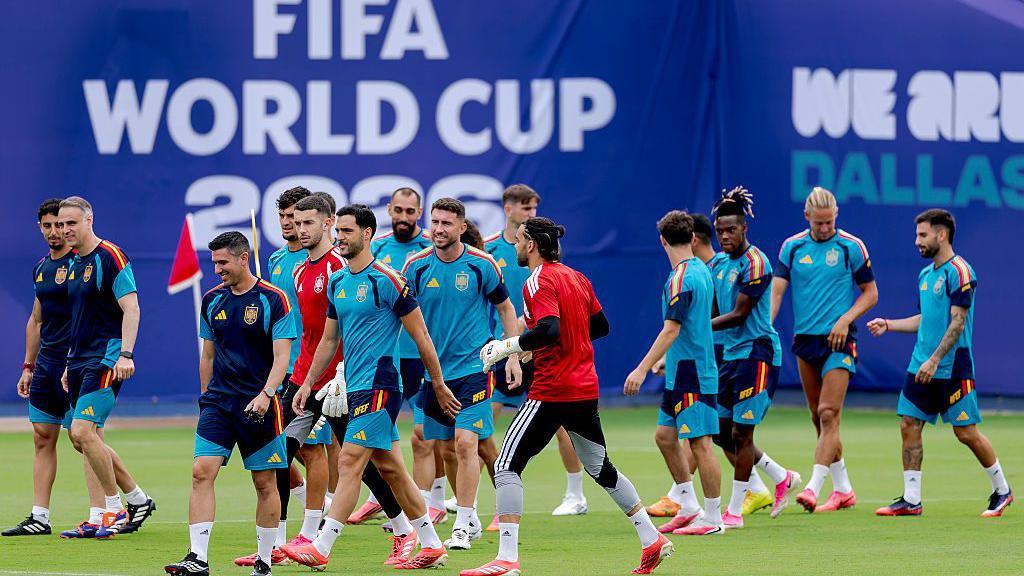
But if you watched Spain dismantle the bracket on their way to the global final at MetLife Stadium, you witnessed a complete, violent destruction of that entire thesis. International football isn’t club football. You cannot open up a checkbook in July to buy a world-class center-back or a lethal winger to patch over your system’s tactical flaws. In the international arena, time is the ultimate currency, and system fluency is the ultimate weapon.
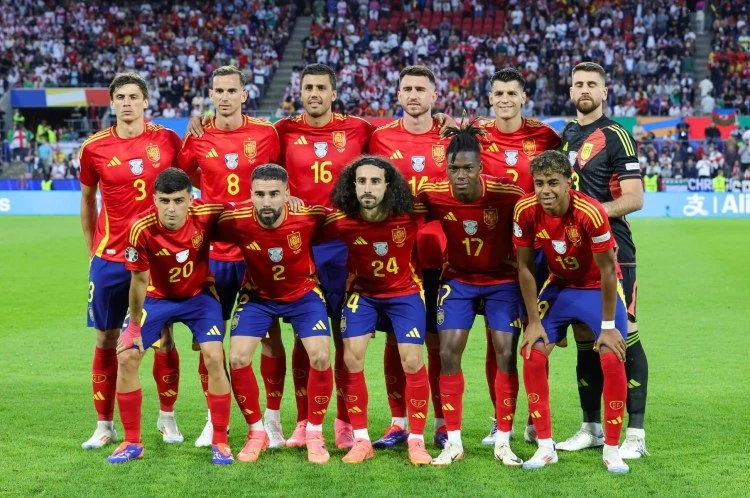
While other European heavyweights spent their tournament looking like a disjointed collection of elite strangers screaming at each other on the pitch, La Selección operated with the clean, telepathic synchronization of an elite club team.
They didn’t build this machine in multi-million-euro transfer windows. They built it in the quiet, dusty, non-descript training pitches of local academies—most notably the legendary walls of FC Barcelona’s La Masia.
Let’s look at the financial ledgers, pull up the cost-per-minute value models, and break down why the traditional “superstar” approach to national team-building has officially entered bankruptcy.
The Value Inversion: Homegrown Fluidity vs. Sovereign Debt
To understand why Spain’s run is a massive wake-up call for the rest of the footballing world, you have to look at the sheer financial disparity between the top contenders in the tournament’s late stages.
In sports analytics, we use a metric called Squad Value Efficiency (SVE). SVE looks at the total transfer capital or market valuation of a national team roster and compares it directly to their on-pitch tactical output. When you run the numbers for this cycle, Spain’s financial efficiency is absolutely off the charts.
The International Wage Bill & Value Matrix
- France Estimated Weekly Wage Bill: ~€7,500,000 (Squad Value: €1.52B)
- England Estimated Weekly Wage Bill: ~€6,800,000 (Squad Value: €1.36B)
- Spain Estimated Weekly Wage Bill: ~€4,500,000 (Squad Value: €1.22B)
- The Homegrown Discount: Spain’s primary tactical engine runs on a weekly overhead that is nearly 40% lower than the other tournament favorites.
Look at those metrics. France and England rolled out squads packed with massive, high-overhead earners. Yet, when you watched those teams play, their offensive production was completely stagnant. They struggled to sustain transitions, their pressing triggers were completely out of sync, and they relied entirely on individual moments of isolation brilliance to rescue results.
Spain, on the other hand, operates on a highly controlled, streamlined wage ecosystem. Why? Because a massive portion of their core creative spine cost absolutely nothing in acquisition fees.
When you develop superstars like Lamine Yamal, Pau Cubarsí, and Gavi directly through your internal youth infrastructure, you aren’t paying a hyper-inflated premium to an agent or a rival club. You are generating pure, high-leverage sporting capital out of thin air.
The Academy Capital Loop:
[€0 Academy Investment] ➔ [System-Wide Positional Education] ➔ [Telepathic Core Integration] ➔ [€200M Homegrown Asset Creation]
Derrick’s Take: I am completely exhausted by pundits praising federations for having ‘the most expensive squad on paper.’ Who cares? It is a total illusion. Having a high market value just means your players are famous and play for clubs with massive marketing budgets.
Spain’s front office understands a fundamental economic truth that England and France completely ignored: you cannot buy tactical chemistry. By leaning heavily into academy players who have been speaking the exact same footballing language since they were ten years old, Spain didn’t just save money—they bought complete tactical certainty.
The Positional Play Premium: Why Academy IQ Beats Raw Athletics
The mainstream media loves to focus entirely on the physical metrics of modern football. They want to see broad shoulders, blistering top-end sprint speeds, and freakish vertical leaps. They build templates around athletic monsters who can physically bully opponents for 90 minutes. The La Masia blueprint completely flips that script on its head.
When Johan Cruyff redesigned the foundations of Spanish youth development decades ago, he famously stated that he didn’t care if a kid couldn’t run a fast mile or lift heavy weights. He cared about how fast the kid could process space and time. He wanted smaller, low-center-of-gravity players whose physical disadvantages forced them to become hyper-intelligent with the ball. This tournament was the ultimate validation of that philosophy.
The Cognitive Processing Window:
– European Average Processing Time (Receive to Release): 1.45 seconds
– Spain Academy Graduate Processing Time: 1.12 seconds
– Tactical Advantage: A structural 22% reduction in defensive recovery windows.
When you track players like Pedri, Gavi, or the sensational 19-year-old center-back Pau Cubarsí, their spatial telemetry is breathtaking. They don’t rely on raw, panic-fueled recovery pace because they are rarely out of position in the first place.
Cubarsí’s in-game metrics show an astronomical 92.4% pass completion rate under high defensive pressure. He doesn’t clear the ball aimlessly into the stands when a striker presses him; he takes a soft touch, waits for the defender’s momentum to commit, and fires a laser-sharp vertical pass straight through the lines into the midfield.
This is not a skill you teach a 26-year-old center-back during a three-week international training camp. This is deep, cellular muscle memory that has been drilled into these kids over thousands of hours of Rondo drills in Catalonia.
Spanish Structural Core: The Academy Fingerprint
- Lamine Yamal (Age 19): Market Value: €200M | Academy Cost: €0
- Pau Cubarsí (Age 19): Market Value: €80M | Academy Cost: €0
- Pedri (Age 23): Market Value: €150M | Acquired as an elite teen
- Dani Olmo (Age 28): Market Value: €60M | Formed in La Masia
Look at the sheer volume of elite talent Spain can run onto the pitch without ever having to engage in a bidding war with Premier League oligarchs. While other managers are forced to fit square pegs into round holes to get all their high-priced superstars onto the pitch at the same time, Luis de la Fuente simply reaches into his system-fluent youth pool and pulls out a plug-and-play asset who knows exactly what to do.
Derrick’s Take: The ‘superstar’ model of international football is dead, and good riddance. We’ve spent the last month watching star-studded squads play some of the most uninspiring, turgid, and cautious football imaginable. Why? Because when you throw eleven elite egos together without a shared identity, they default to safe, low-risk options to protect their personal brands.
Spain’s teenagers don’t play with fear because the system is their safety net. Lamine Yamal isn’t thinking about his €200 million price tag when he squares up a world-class fullback on the wing; he’s playing the exact same game of 1v1 isolation he’s played since he was nine years old. It is pure, unadulterated, unburdened football.
The Cost-Per-Minute Efficiency Audit
Let’s run a strict cost-per-minute efficiency analysis on the tournament’s attacking lines to see where the real value lies.
If you look at the total output of France’s star-studded, mega-expensive attacking front across this tournament cycle, their open-play conversion rate was a complete disaster. They generated a historically low expected goals (xG) metric relative to their aggregate salary tier. Now look at Spain’s explosive flank play, anchored by Nico Williams and Lamine Yamal.
Flank Efficiency Metrics: The Value Divide
- Spain Wing Combined Market Value: ~€240,000,000
- Spain Wing Combined Weekly Wages: ~€200,000
- Open-Play Big Chances Created: 18 (Tournament High)
- Opponent Box Touches per 90: 8.4 (Tournament High)
Spain’s wide players aren’t sitting deep, waiting for the ball to safely drop to their feet so they can play low-risk recycling passes. They are playing with an aggressive, vertical directness that completely forces an opponent’s defensive block to warp and collapse.
Because they have elite, system-fluent central midfielders like Martín Zubimendi and Rodri sitting behind them to calculate rest defense, the young wingers have complete freedom to stay pinned to the touchline and run riot in transition.
The Systemic Shielding Effect:
[Rodri/Zubimendi High-IQ Positioning] ➔ [Immediate Counter-Press Prevention] ➔ [Total Freedom for Flank Isolation]
The sheer financial efficiency of this model is staggering. Spain has managed to build the most creative, high-tempo, and devastating attacking unit in international football while spending a fraction of what the luxury-tier nations shell out in baseline salary overhead.
The Verdict: Derrick’s Analytical Summary
We have officially arrived at an epoch-defining moment in the architecture of global football. The 2026 tournament has proven beyond a shadow of a doubt that the era of treating international teams like fantasy-football assemblages is officially over. You can no longer throw money at tactical cracks and expect an international trophy.
Spain’s journey to MetLife Stadium is a triumphant blueprint for the future of the sport. They have proven that long-term investment in youth development, strict adherence to a unified system-wide identity, and the courage to trust high-IQ teenagers over high-priced mercenaries is the only sustainable path to international dominance.
THE LA MASIA BLUEPRINT SCORECARD
– Core Systemic Integration: 98% (Telepathic positional understanding)
– Squad Cost-Per-Minute Efficiency: A+ (Homegrown stars nullify transfer premiums)
– Tactical Flexibility: High (Plug-and-play profile across all youth ranks)
– Long-Term Pipeline Viability: Unrivaled (The next generation is already system-trained)
– Final Structural Grade: A+
When the final whistle blows on Sunday night, remember that this Spanish team didn’t just win games; they won an ideological war. They saved international football from the hyper-inflated, cynical grasp of the mercenary transfer market and returned it to its purest form: a game won by identity, intelligence, and the brilliant, unburdened fearlessness of youth.
Derrick’s Bottom Line: If your federation’s response to an early tournament exit is to scream for a higher budget or demand the recruitment of more high-profile superstar coaches, your system is already dead. Copy the Spanish model. Fire the expensive consultants, bulldoze the flash marketing offices, and invest every single penny into building local, high-IQ academies. Build a pipeline that teaches children how to process space before they learn how to sign brand deals. That is how you build a dynasty. The blueprint is right there.