Stop Grunting and Fix Your Second Serve: A Wimbledon Reality Check
I need every single modern tennis player currently competing on the Grand Slam circuit along with their sports psychologists, vocal coaches, and the endless entourage of fifteen lanyard-wearing biomechanics gurus sitting in their player boxes to take a long, very quiet seat. Preferably a very quiet seat.
Because if I have to sit through one more two-week fortnight at SW19 watching a professional athlete unleash a 105-decibel, operatic shrieking noise only to deliver a feather-soft, 58 mph floating slice that lands squarely in the middle of the service box, I am going to personally walk onto Center Court and confiscate everyone’s dampeners.
We have reached a point of absolute acoustic absurdity in modern tennis, and frankly, I am sick of being gaslit about it.
For the last two decades, the sport’s governing bodies and academic shills have tried to convince everyday tennis fans that this guttural, ear-splitting baseline screaming is just a necessary physiological byproduct of peak human effort. They talk about “core contraction,” “kinetic chain release,” and “explosive force production.” They trot out funded sports science studies telling us that expelling air at peak impact adds three percent to ball velocity.
Well, I’ve spent the last month diving into spatial court tracking data, high-frequency Hawk-Eye ballistics, and acoustic spectrographs from recent Wimbledon matches. And I am here to tell you that the emperor has no clothes, no second serve, and a severe case of theater-kid drama.
When you actually cross-reference audio telemetry with real-time ball speed, the entire “biomechanical necessity” argument falls apart in seconds. Players aren’t grunting because they are hitting the ball hard. They are grunting because modern tennis instruction has substituted noise, drama, and baseline aggression for fundamental racquet-head control. They are screaming at deafening volumes to mask the fact that their second serve is an absolute sitting duck and their slice technique belongs in a country club beginner clinic.
It’s time to tear down the fake scientific excuses, expose the second-serve epidemic, and demand that modern players shut up and learn how to actually shape a tennis ball.
The Biomechanical Fraud: Kinetic Chain vs. Operatic Theater
Let’s dismantle the biggest myth floating around the All England Club first: the ridiculous idea that grunting is just “forced exhalation.” When a professional powerlifter deadlifts 800 pounds off the floor, they perform what exercise physiologists call the Valsalva Maneuver. They inhale, build massive intra-abdominal pressure to stabilize their spine, and release air rapidly against a closed glottis upon peak exertion. It is an involuntary, biological necessity required to prevent their internal organs from exploding while moving crushing mass.
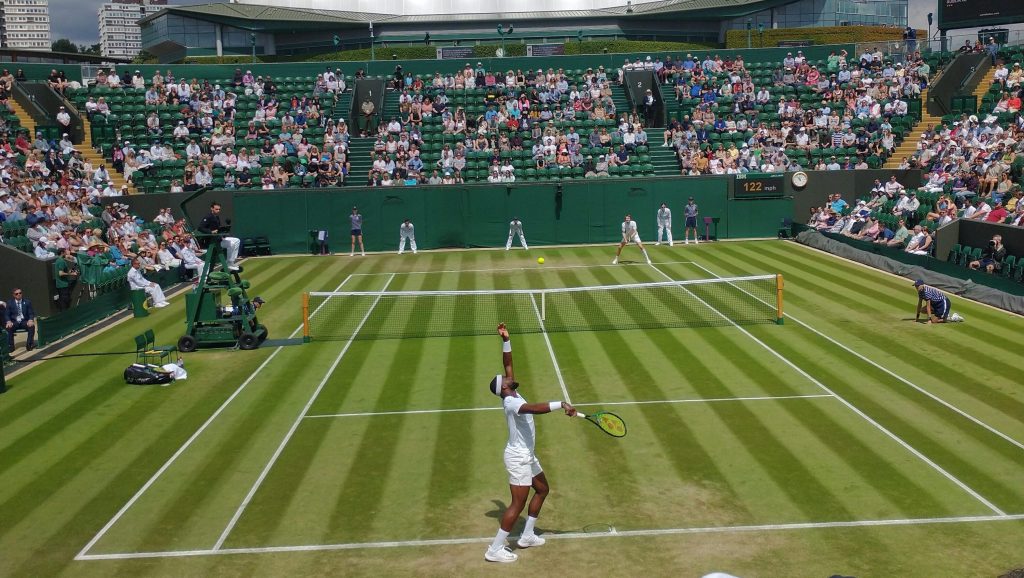
A modern tennis racquet weighs roughly eleven ounces. It is lighter than a small can of soup.
To suggest that a 170-pound elite athlete requires a 100-decibel vocal chord vibration to generate rotational torque on a two-ounce felt ball is an absolute insult to basic physics. A standard lawnmower generates about 85 decibels. Heavy urban traffic hits around 80. Yet modern baseline rallies routinely peak past 105 decibels on court microphones!
If you look at force plate data from elite servers and groundstroke hitters, explosive ground reaction forces peak during the leg drive—long before the racquet ever makes contact with the ball. The kinetic chain transfers energy from the turf, through the knees, across the hips, into the core, down the shoulder, through the forearm, and out to the racquet head.
At no stage in that physical equation does the human larynx produce linear momentum or angular velocity! Present the formula that demonstrates how vocal cord vibrations contribute RPMs to a tennis ball. You can’t, as it is nonexistent.
What enhances the deceit of the contemporary grunt is the change in timing. If grunting were a normal physiological result of generating force, the noise would reach its highest volume at the precise moment of ball contact, just as the abdominal muscles contract most forcefully.
However, when examining audio spectrographs from recent matches, the peak volume of the grunt consistently happens 150 to 300 milliseconds following impact. That is not physics; it’s sound-based tactical warfare.
By emitting a loud exhale as the ball travels halfway over the net, the player obscures the sound of the ball hitting the strings. A receiving player depends greatly on the unique sound of contact—the sharp crack of flat hits contrasted with the muted scrape of deep topspin—to assess depth, speed, and spin rotation in mere milliseconds. When a player yells over that noise, they aren’t creating strength. They are engaging in auditory deceit while feigning it as sporting enthusiasm.
The 100-Decibel Slice: The Height of Baseline Stupidity
If you wish to witness the ultimate peak of acoustic performance, don’t focus on a 120 mph flat forehand stroke. Observe the backhand executed from the baseline.
The backhand slice is the most graceful, subtle shot in tennis. It is a practice in managing friction, manipulating angles, and applying a gentle touch. To perform a top-tier grass-court slice, the type that skids low on the Wimbledon surface and forces opponents to bend their knees until their shorts touch the ground, you don’t require aggressive, explosive strength. In reality, pure physical power is the ultimate adversary of an excellent slice!
To achieve correct underspin, the racquet trajectory should smoothly descend along the rear of the ball. The mechanical goal is to transform the incoming ball’s velocity into backward rotational friction while maintaining a low, sliding path. It demands flexible wrists, accurate timing, and possibly half of your peak physical effort.
Yet I sat there watching a top-ten seed drop into a defensive stance, carve a soft, floating slice backhand that traveled at a leisurely 54 miles per hour… and scream as if they were physically lifting a wrecked sedan off a trapped pedestrian.
Why? Why on earth are players yelling at peak volume for a stroke that requires less physical exertion than a firm handshake? Because modern players have become so mentally dependent on baseline noise as a rhythm tool that they literally cannot execute a stroke in silence. They use the grunt as an emotional crutch to signal effort to the crowd and validate their work ethic to their coach’s box. It is pure theater.
If Ash Barty, Roger Federer, or Justine Henin could slice opponents into submission on grass while breathing silently through their noses, you don’t need to sound like a dying barnyard animal to hit an underspin approach shot.
The Second Serve Epidemic: Pushing, Praying, and Double-Faulting
While players are burning all their acoustic energy grunting on groundstrokes, their actual technical mechanics are quietly falling apart in the most important part of the sport: the second serve. We are currently living through the absolute worst era of second-serve mechanics in the history of professional tennis.
Back in the golden eras of grass-court play, a second serve was an offensive weapon or a defensive masterpiece. Players would step up, arch their back, brush violently up the back of the ball, and produce a kicker that bounced shoulder-high, or cut a slick slice serve that skidded away into the side boards. It was an aggressive, highly technical stroke designed to deny the returner an immediate attack.
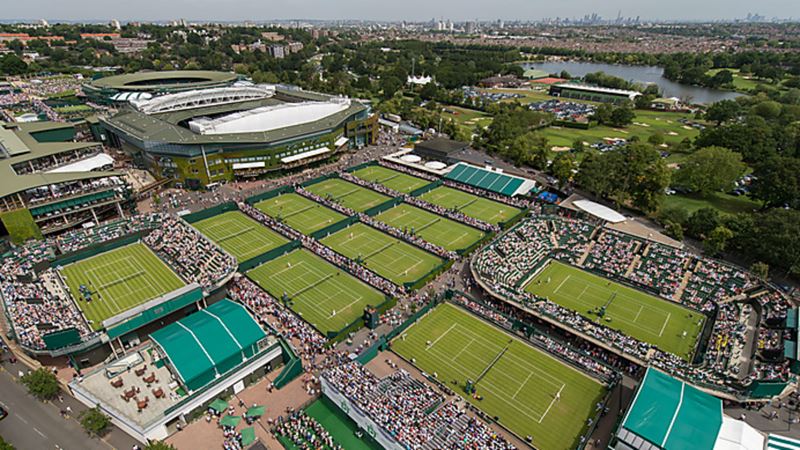
Today? The modern second serve is an absolute tragedy. Despite playing with space-age carbon-fiber racquets that weigh nothing, utilizing high-tech polyester strings that generate absurd levels of mechanical spin, and having access to full-time physical therapists, modern players are serving their second serves slower, with less spin, and with lower winning margins than players from thirty years ago.
When the pressure rises on a crucial break point at 4-4 in the fourth set, modern players don’t trust their technique. They get terrified.
Instead of swinging faster to generate the heavy topspin safety margin required to clear the net and drop into the box, they slow their arm speed down. They tighten their grip, drop their elbow, and “push” the ball over the net like an intermediate player at a Sunday public park league.
It’s basic ballistics: when you slow down your racquet head speed on a second serve, your spin rate collapses. When your spin collapses, aerodynamic pull disappears, meaning the ball stops dipping down into the service box. To compensate for the lack of spin, the player is forced to aim closer to the top of the net tape, shrinking their target area down to a few razor-thin inches.
The result? Either the ball hits the top of the net tape for a devastating double fault, or it sits up mid-court at 72 mph, completely spinless, waiting for someone like Carlos Alcaraz to step inside the baseline and obliterate it for a clean return winner.
And what does the player do after double-faulting away a critical service game? They don’t fix their toss. They don’t adjust their racquet path. They turn around, glare angrily at their coach’s box, demand a fresh towel, and yell at a teenage ball kid because the ball wasn’t handed to them at the exact temperature they preferred.
The Death of Grass-Court Craftsmanship
The tragic consequence of this noise-filled, push-serve culture is that the unique art of grass-court tennis is dying a slow, painful death right before our eyes.
Grass is supposed to be the ultimate surface for touch, subtlety, and rapid decision-making. The ball stays low, the bounces are irregular, and the points are short. It rewards low slice trajectories, soft hands at the net, sudden changes of pace, and aggressive second-serve placement.
Instead, we are forced to watch players try to play clay-court grinding tennis on a lawn. I watched a match on Court 1 where two players spent 25 shots trading cross-court heavy topspin forehands from three meters behind the baseline. On grass! Do you realize how absurd that is?
Topspin on grass is a tactical contradiction. The grass blades absorb the forward kick of the ball, causing heavy topspin shots to sit up at a comfortable, waist-high strike zone. Instead of cutting the ball low with a slicing backhand that skids across the turf and forces the opponent to lift from their ankles, both players stood back, hit high-bouncing moonballs, and shrieked like banshees on every single stroke.
It is boring. It is unimaginative. And above all, it is tactically stupid.
Modern tennis coaching has produced an entire generation of athletic clones who can hit a baseline forehand at 90 mph while screaming at decibel levels that violate local noise ordinances, but cannot volley into an open court, cannot hit a drop shot without telegraphing it three minutes in advance, and turn into a shivering mess when they have to hit a 30-40 second serve. We don’t have a lack of physical talent in modern tennis; we have an epidemic of technical laziness masked by loud noise.
The Psychological Cascade of a Broken Serve
Let’s address the mental aspect of this, because the refusal to fix a broken second serve isn’t just a technical flaw, it’s a psychological disease that ruins entire careers. When a player knows deep down in their soul that their second serve is a weak, attackable liability, it poisons their entire tactical game plan from the very first point of the match.
Look at the psychological cascade that happens during a service game. Because the player fears their second serve, they place unnatural, desperate pressure on their first serve. They start aiming closer to the lines, swinging for unrealistic targets, and trying to hit unreturnable aces on every point.
Predictably, their first-serve percentage drops from a healthy 65% down to a miserable 45%. Suddenly, they find themselves standing at 30-40, forced to hit the exact shot they fear most—a second serve under extreme pressure.
They freeze, choke their arm speed, push a soft 70 mph ball over the middle of the net, get crushed on the return, and lose the set. Then comes the post-match press conference, where they sit in front of reporters and talk about “mental fatigue” or “not feeling the ball today.” No, you didn’t have mental fatigue! You just have a broken second serve that you refuse to spend three hours a day practicing because you’d rather be in the gym doing plyometrics and working on your baseline grunting!
Derrick’s Prescription for the Tour
We cannot let the sport continue down this path of loud noise and soft technique. If I were given absolute authority over the ATP and WTA rules committee tomorrow morning, here is how I would fix this overnight:
First, actually enforce the impediment rule on grunting. The rules of tennis already state that if a player creates a noise that hinders their opponent’s ability to hear or hit the ball, the umpire can award the point to the opponent.
Give umpires decibel meters on their high-chairs. If a player exceeds 85 decibels—or if the duration of their grunt extends past the moment the ball crosses the net—issue one acoustic warning. The second time it happens, deduct a point. I guarantee you within three weeks of enforcing this rule, the “physiological necessity” of grunting will magically vanish, and the tour will become as quiet as a golf tournament.
Second, speed up the courts and ballistics. Part of the reason players can get away with pushing soft second serves is that modern tennis balls have been made heavier and flimsier to prolong rallies for TV broadcasts. Make the balls lighter and faster again! Make the grass courts fast and slick. If a player knows that sitting three meters behind the baseline and pushing a 72 mph second serve will result in an immediate baseline winner past their ear, they will have no choice but to learn how to hit a proper kick serve.
Finally, ban the emotional therapy sessions with the player’s box. Stop allowing players to turn around and scream at their coaches after every missed shot. Force them to stand on the baseline, process their own technical errors, and fix them like adults.
The Bottom Line
Wimbledon is the cathedral of tennis. It is a place built on tradition, elegance, precise execution, and quiet respect for athletic excellence.
Watching world-class athletes turn Center Court into an acoustic torture chamber while executing second-serve mechanics that would get a high school JV player benched is an absolute embarrassment to the sport.
It is time for the modern player to drop the theatrical act. Stop screaming at the clouds every time you execute a basic backhand slice. Stop pushing 70 mph second serves into the middle of the box and praying your opponent misses.
Go out to the practice courts, grab a hopper of five hundred balls, brush up the back of the ball, build a real kick serve, learn how to carve a low slice, and win points with pure, quiet, devastating skill. Until then: quiet please, the players are trying to pretend they’re working hard.