The Sunk Cost of Software: Confessions from My Unfinished Gaming Backlog
I am looking at my Steam library right now, and if I am being completely, brutally honest with you, it looks less like a beloved personal entertainment collection and more like an overgrown digital graveyard.
As per my library statistics, I presently possess four hundred and eighty-seven games. Out of the four hundred and eighty-seven titles, I have finished about two hundred. The remainder? They dwell in a vast, towering, constantly unrealized expanse of unachieved possibilities that I affectionately refer to as “The Mountain.”
There are highly praised masterpieces that run for exactly forty-five minutes in total. There are expansive open-world games where I devoted three hours to the character creator, entered the first town, saved at the inn, and never launched the game again. There are beloved indie games that have received numerous Game of the Year accolades, which I purchased during a summer sale at half price, installed with good intentions, and left on my solid-state drive like a classic novel left unread, gathering dust on a nightstand.
For an extended period, examining that list gave me a strange, ongoing feeling of mild personal guilt. We exist in a gaming culture that views our gaming history as a CV. We flaunt our completion rates as if they were medals, monitor our platinum trophies as if they were military accolades, and regard our backlogs as a towering stack of credit card debt that we must settle before we can indulge in anything fresh.
An unseen, widespread narrative exists within the gaming community suggesting that if a game receives universal acclaim, scores a ninety-four on Metacritic, is deemed a generational milestone by your favorite content creators, or if you’ve invested sixty hard-earned dollars in it, you are obliged to invest your time in it. You are anticipated to remain there, clenching your jaws through gameplay you don’t appreciate, struggling through thirty-hour story lulls, and persuading yourself that if you merely endure until chapter six, the battle mechanics will eventually resonate, and you will begin to have the profound artistic experience that everyone online assured you would happen.
Today, I want to express sincerely that life is incredibly brief, our leisure time is extremely valuable, and our mental capacity is quite delicate to consider our hobby as an additional job.
Today, we are unlocking the vault. I’m sharing my most shocking confessions about gaming drops—the huge, widely adored, highly praised games that I left behind without any sense of regret. We will discuss the harmful mindset of the sunk cost fallacy in gaming, the importance of prioritizing your present emotional state over popular opinion, and how mastering the concept of a clean quit can be the most freeing action for your connection with video games.
Confession #1: Walking Away from the 100-Hour Open-World Masterpiece
Let’s begin with the most significant aspect. The type of decline that prompts individuals to compose furious, lengthy essays in your comments. Several years back, a vast, open-world fantasy game launched to overwhelming, unrestrained global acclaim. The internet was blazing. Every individual on my social media feed was sharing images of expansive, undulating mountains, enigmatic illuminated ruins, and heartbreaking character backstories.
Critics referred to it as an unequivocal success in contemporary game design. As a person who loves rich narratives and immersive environments, I purchased it on release day, downloaded it right away, and cleared my whole weekend itinerary.
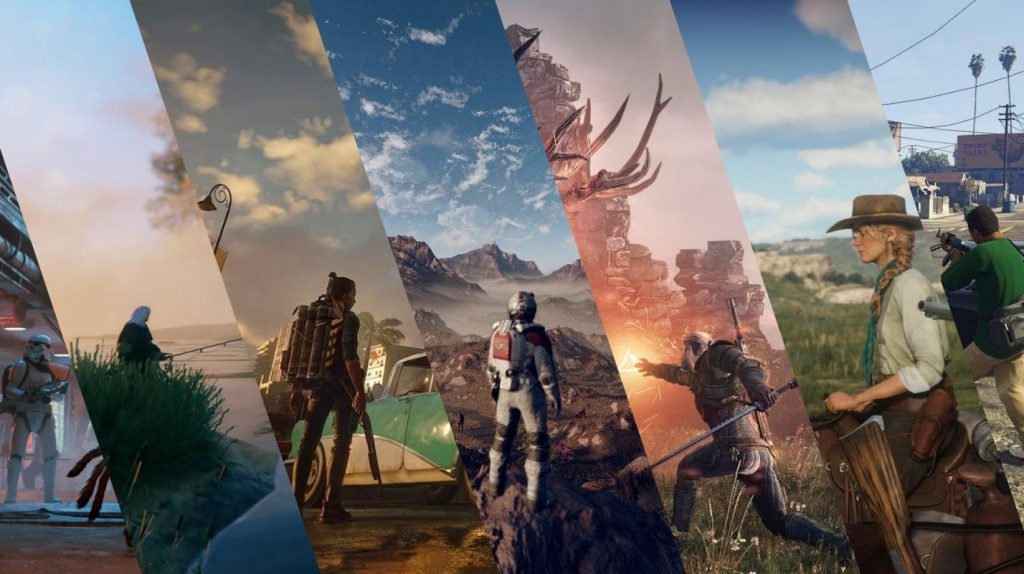
During the initial fifteen hours, I was utterly captivated. The magnitude was overwhelming. I enjoyed wandering through the beginner area, finding secret caves, and uncovering small scenes in nature concealed within the forest. And then, approximately twenty-five hours in, a distinct, recognizable sensation began to seep into the rear of my mind.
I unfolded the primary map, and it resembled a barrier of assignments. Numerous identical tower icons were poised to be ascended in order to dispel the fog of war. My quest log contained forty-seven unfinished side quests, the majority of which required traveling to a remote location on the map to gather three rare herbs or eliminate a group of generic bandits.
Whenever I attempted to pursue the central narrative, I encountered a recommended level obstacle that forced me to spend five hours on optional content just to be able to face the upcoming story boss. Abruptly, the feeling of amazement disappeared, entirely substituted by bureaucratic exhaustion.
I was no longer immersing myself in an enchanting, vibrant fantasy realm; I was organizing an enhanced digital spreadsheet. I was fixated on a map display, evaluating the effectiveness of my quick-travel paths, and acknowledging that my mind was entirely disconnected from the real-time gameplay. I wasn’t engaged in play for curiosity or enjoyment; I was compelled by a strange, mechanical duty to “complete what I began” and witness the credits roll to join the cultural discourse about the game.
On a Tuesday night, after two continuous hours of guiding a virtual horse across an empty landscape to complete a fetch quest, I hit the pause button. I observed my character positioned in the center of a virtual field. I posed a straightforward, bold question to myself: Am I genuinely enjoying myself at this moment, or am I merely finishing tasks to avoid feeling like I’ve squandered my time?
The response was instant, clear, and indisputable. I wasn’t enjoying myself. I felt exhausted. I had endured a long, tiring day at work handling actual logistics, and my mind simply lacked the emotional energy to handle another layer of intricate digital logistics.
I shut the game down. I failed to save. I didn’t abandon my character in a comfortable town. I placed my cursor over the desktop icon, clicked uninstall, and saw forty gigabytes of highly praised software vanish from my hard drive in just five seconds.
The initial reaction from my brain was a sharp spike of panic. What about the main story resolution? What about the epic final boss everyone is talking about? What about the sixty dollars you spent?
But then, about ten minutes later, a completely different sensation washed over me: massive, overwhelming physical relief. The weight of that giant, uncompleted map disappeared from my shoulders. My gaming time was mine again. I opened up a small, low-stakes indie puzzle game that I had been dying to play, sank into my chair, and spent the rest of the night smiling.
Confession #2: The High-Difficulty Challenge Trap
There is a very specific flavor of gaming discourse that loves to equate challenge with inherent quality. We have all encountered it in comment sections, forums, and stream chats—the idea that if a game doesn’t push your mechanical reflexes to their absolute limits, if it doesn’t force you to memorize frame data or die fifty times to a single boss, it somehow lacks artistic substance.
I allowed that mindset to shape my gaming decisions for years. I would purchase challenging roguelikes, demanding soulslike games, or intricate tactical strategy titles, convinced that I only needed to “improve” and master the mechanics.
In a notably challenging month of my life, I chose to take on a highly acclaimed, famously tough isometric action game. The visuals were stunning, the music was excellent, and the storyline was exceptional. In theory, it encompassed all the elements I typically love in a video game.
In practice, it was a formula for total mental fatigue. The game demanded complete, pinpoint mechanical accuracy. Failing to dodge within the two-millisecond window resulted in losing fifty percent of your health bar. Boss encounters were complex, rapid-paced performances where one misstep could reset you to the start of a twenty-minute attempt.
In my early twenties, I may have thought that loop thrilling. I could have relished the thrill of dedicating three hours to conquering a single boss fight, experiencing that intense surge of adrenaline when I barely survived with just a small sliver of health.
However, sitting at my desk after a twelve-hour day of handling real-life stress, my nervous system didn’t perceive that gameplay loop as an exciting challenge. It perceived it as a tangible danger.
Whenever the boss theme music played, my heart would race into a dangerous zone. My shoulders would stiffen until my neck muscles pulsed. My hands would tighten around the controller, and each time the feared “Game Over” screen appeared on my monitor, a surge of real, sour frustration would envelop me.
I endured it for twelve agonizing hours. I studied strategy guides, committed attack sequences to memory, and pushed myself to finish three complete runs. Yet after each victory, I found no joy or feeling of triumph. I simply felt a sense of relief that the punishment had ended for the time being.
One evening, after being defeated by a final-level boss with its health bar nearly at one percent, I sat in the darkness gazing at the death screen. I sensed a tension headache developing behind my eyes.
I considered my week ahead. I considered the actual deadlines, the family responsibilities, the chores, and the emotional effort needed to manage everyday life. I then observed this video game, which I had bought with my own money for relaxation, actually increasing my stress levels.

I removed it that evening. I didn’t stop playing because the game was poor. It was undeniably a work of genius in mechanics, artistry, and sound design. I left because it was detrimental to me during that particular time in my life. Acknowledging that differentiation was a significant milestone in my gaming experience. A game can be a perfect ten in contemporary software design and still be completely unsuitable for your current mindset, and there’s no shame in recognizing that.
The Psychology of Sunk Cost: Why Dropping Games Feels So Hard
Why is it difficult for us to step away from a video game that does not bring us joy? Why do we endure countless hours of monotony or annoyance when we could actually be engaging in something else? It ultimately boils down to a well-known psychological pitfall referred to as the Sunk Cost Fallacy.
The sunk cost fallacy refers to our brain’s illogical inclination to persist in an activity after we have committed time, effort, or money to it, even if the present costs surpass the potential future advantages. In gaming, this trap appears in three different forms:
Initially, there exists the Financial Trap. You invested sixty, seventy, or eighty dollars on a new release. Your mind suggests that not completing the game means you have essentially discarded that money. However, the stark financial reality is this: the funds have already vanished.
As soon as that transaction was completed, those dollars permanently left your bank account. Pushing yourself to spend thirty hours on a game you dislike won’t refund your purchase; it just takes away thirty hours of your valuable time along with the cash you’ve already invested. You are spending money twice on a product that you don’t even enjoy.
Next, we have the Temporal Trap. You have already invested twenty hours into a campaign. Stopping now seems like “squandering” those twenty hours. However, those hours are part of history. They are exhausted. Investing an additional twenty hours to reach the end credits doesn’t make up for the initial twenty hours; it merely increases the total time wasted on boredom.
Thirdly, and possibly the most subtly harmful, exists the Social & Cultural Trap. We exist in a time of intensely interconnected gaming culture. We aim to engage in the conversation, grasp the memes, join community discussions, and experience a sense of belonging in the cultural moment related to a significant release. Leaving a game feels like stepping back from the discussion or acknowledging that you “couldn’t cope” or “didn’t understand” what everyone else appears to be enjoying.
Addressing these pitfalls necessitates a profound change in our perception of the aim of our free time. Video games are neither investments, responsibilities, nor personal development programs. They are engaging media designed to assist you—offering happiness, solace, stimulation, storytelling allure, or emotional relief. Once a game ceases to benefit your well-being and begins to require unpaid effort, the agreement between you and that software is officially null.
The Art of the Clean Quit: How to Curate Your Gaming Life
When you allow yourself to walk away from games without feeling guilty, your whole connection to your pastime changes. You cease perceiving your library as an overwhelming burden of debt and begin to see it as a lively, adaptable buffet where you can sample everything and consume only what truly nourishes you.
Throughout the years, I have created a straightforward yet efficient personal system for determining if a game should remain on my hard drive or be banished to the uninstalled abyss. I refer to it as my Three-Session Audit.
Whenever I start a new game, no matter its price or review ratings, I play it for three separate sessions.
In the First Session, I allowed the game to present itself. I take in the tutorial, appreciate the visual arrangement, and understand the fundamental controls. I don’t evaluate pacing or depth in this case, as numerous amazing games start off with unusual opening hours.
In the Second Session, I seek the main hook. Do I enjoy the fundamental action loop? Do I feel intrigued by the characters or the setting? Do I eagerly anticipate grabbing the controller when I settle at my desk, or am I making excuses to glance at my phone during cutscenes?
In the Third Session, I assess my physical and emotional well-being while playing. If I notice myself repeatedly looking at the clock, experiencing an unsettling anxiety about the duration of the campaign, or coming to the conclusion that I am engaging in the game solely out of routine rather than excitement, I pause immediately.
I don’t leave the game sitting in my “Currently Playing” tab to fester for three months while I pretend I am going to go back to it. I perform the Clean Quit:
Acknowledge what worked: I take a second to appreciate what the developers did well, whether it was a great soundtrack, stunning art direction, or an ambitious world setup.
Accept the mismatch: I explicitly state to myself, “This is a cool piece of art, but its design loop does not match my current life state.”
Uninstall immediately: I clear the game off my hard drive instantly so it stops occupying physical and mental space.
Move on without looking back: I pick up something that actually matches my current mood, whether that is a breezy three-hour narrative title, a comfort game I’ve played ten times before, or a completely different hobby altogether.
Normalizing the “Comfort Replay”
In certain gaming communities, a peculiar and understated elitism exists regarding the notion of replaying games that have already been completed. Individuals behave as if investing fifty hours revisiting Stardew Valley, Skyrim, Animal Crossing, or a beloved cozy indie game for the fifth occasion is a “waste of time” with a substantial backlog of unplayed games awaiting you.
I aim to vigorously break down that concept right here and right now. Playing a cherished, well-known game again isn’t a neglect of your backlog; it is a legitimate, healing method of emotional management. During periods of chaos, unpredictability, and feeling overwhelmed, our minds often lack the mental capability to grasp new mechanics, retain intricate lore systems, or make critical narrative decisions.
Returning to a digital environment where you understand the rules, appreciate the vibe, and trust that everything will end well is akin to putting on a cozy, well-worn pair of sweatpants after a chilly, rainy day. It offers a feeling of security, consistency, and subtle happiness that new games can’t match.
I have dedicated countless hours to replaying games I could likely finish blindfolded, all while my extensive, untouched backlog sits idle. And do you realize what? Each of those hours was experienced in a state of safety, tranquility, and true happiness. That time isn’t wasted—it is precisely the reason for having hobbies to begin with.
Reclaiming Your Gaming Time as an Act of Joy
Ultimately, our video game collections ought to be sources of joy, relaxation, and imaginative inspiration—not digital organizers meant to induce guilt over our leisure hours.
The next time you launch a game and sense that familiar weight of duty pressing in on you, I want you to recall that you have all the control. You are not obligated to give the developers your remaining hours. You are not obligated to share your completion trophy with the gaming community. You are not obligated to justify your previous decisions regarding purchases that no longer align with your preferences.
Allow yourself to exit the app. Allow yourself the freedom to click uninstall. Step away from the games that tire you, welcome the ones that excite you, and regard your gaming moments as the cherished, joyful refuge they were intended to be.
I want to give you the opportunity to share, as I’m sure I’m not the only one with a shocking collection of unfinished masterpieces in their library.
What is the most acclaimed, highly praised, widely cherished game that you decided to leave behind, and when did you specifically realize it wasn’t suited for you? Do you feel guilt about unfinished tasks, or have you already learned the freeing skill of a fresh start? Let’s transform the comment area into a totally secure, non-judgmental space where we honor playing just for enjoyment!