The Software of Self-Care: The Games That Put My Broken Brain Back Together
I am right now on my bedroom floor, encircled by a heap of laundry I’ve neglected for four days, gazing at an empty document because my mind has completely run out of steam. If you’re employed in a creative sector—or frankly, if you simply live as an active member of society in 2026—you understand precisely the kind of mental fatigue I’m referring to.
It isn’t the pure, genuine fatigue you feel after a long day of lifting furniture or completing a marathon. It’s a harmful, noise-laden haze that settles directly behind your eyes. It’s the outcome of dedicating twelve continuous hours to replying to passive-aggressive emails, navigating algorithmic outrage on social media, executing a never-ending series of low-stakes micro-decisions, and attempting to maintain a composed, capable adult image while your internal dashboard displays red warning signals.
When I reach that barrier, the internet often suggests I engage in some offline activity. Go feel the grass, Chloe. Consume a gallon of water. Ignite a thirty-dollar candle that emits the scent of a moist woodland and remain in peaceful meditation until your chakras are in harmony.
Can we be totally truthful for a moment? At times, the material world is precisely where I must break free from. Occasionally, the thought of being alone with my raw, racing thoughts in a quiet, dark space feels more like a personalized form of mental torture than true meditation. I don’t wish to consciously acknowledge my anxiety; I desire to reroute my misfiring neurons into a place that feels secure, organized, and completely free of real-world repercussions.
I engage in playing video games. Do not examine them, do not break down their functionality, and certainly do not debate their efficiency improvements on Twitter. I look to them for the way they change the inner scenery of my thoughts. They serve as my digital permits to take a break, reduce my heart rate, and perform a deep emotional reset. These are the particular places I escape to when my spirit urgently requires a brief retreat.
1. The Mindless Ryhthm of Hardspace: Shipbreaker
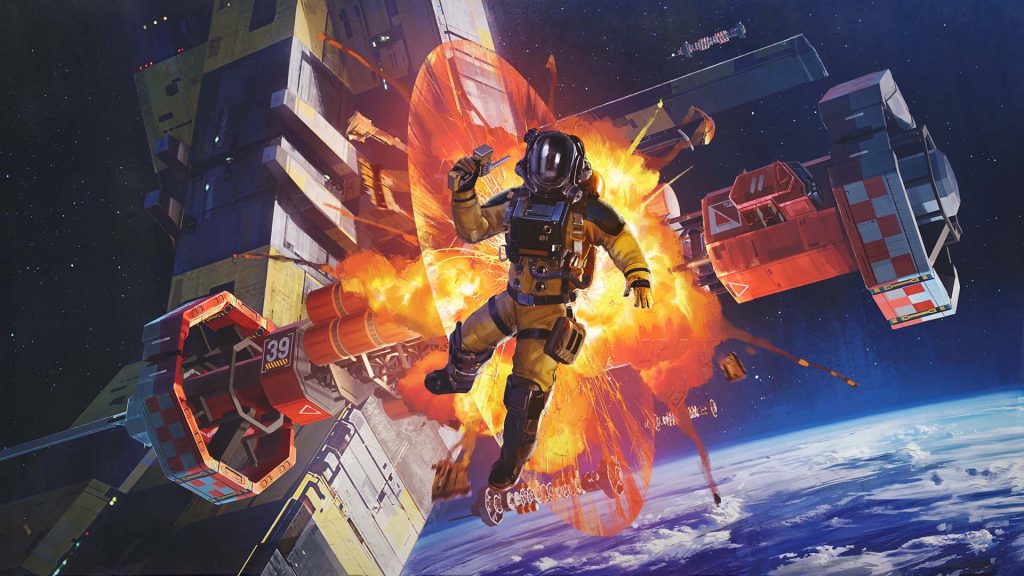
When my life seems utterly chaotic, I don’t crave a grand adventure. I desire a manual labor position in space where the criteria for success are entirely strict. That’s when I launch Hardspace: Shipbreaker.
The concept is that you are a heavily indebted factory worker assigned to recover abandoned spacecraft. You drift in zero gravity wielding a laser cutter, methodically slicing apart massive metal shells, detaching the titanium exteriors from the precious computer cores, and discarding them into the appropriate recycling containers. When you engage in relaxed mode without the oxygen countdown, it shifts from an intense thriller to an exceptionally mesmerizing routine.
During intense creative burnout, my mind resembles a chaotic computer desktop with eighty various tabs open, all simultaneously producing sound. I feel immobilized by the overwhelming number of vague, unstructured issues I need to address in my everyday life. Am I contributing enough? Is my professional path on the right track?
While playing Shipbreaker, I encounter a challenge that is beautifully and precisely defined. Cut this beam. Remove this reactor. Avoid blowing yourself up. The laser cutter produces a deeply satisfying, low-frequency hum that serves as a white noise machine, completely overshadowing the internal dialogue of my anxiety. There is a deep feeling of reassurance in transforming something enormous, shattered, and daunting into neatly categorized, manageable components. It provides me with a sense of control and fulfillment that reality just can’t deliver.
2. Dorfromantik and the Quiet Joy of Growth
At times, stress doesn’t appear as chaotic, frenzied energy; it shows up as a deep, somber sorrow. It’s a particular kind of burnout where you feel entirely detached from your own story, as if you’re merely a passenger observing someone else steer your life. Whenever I end up in that dense, tranquil space, the game I consistently go back to is Dorfromantik.
Dorfromantik is a tranquil strategy and puzzle game where you develop a stunning, continually growing village scenery by adding hexagonal tiles individually. You receive a pile of tiles featuring a combination of forests, rivers, railways, and small groups of houses, and you turn them to connect perfectly.
The game lacks any spoken dialogue, has no ticking clocks, and features no combat. The story is completely visual. You observe a small universe expanding beneath your fingertips, piece by piece. A vast woodland begins merging with a serene meadow; a twisting river flows by a small windmill.
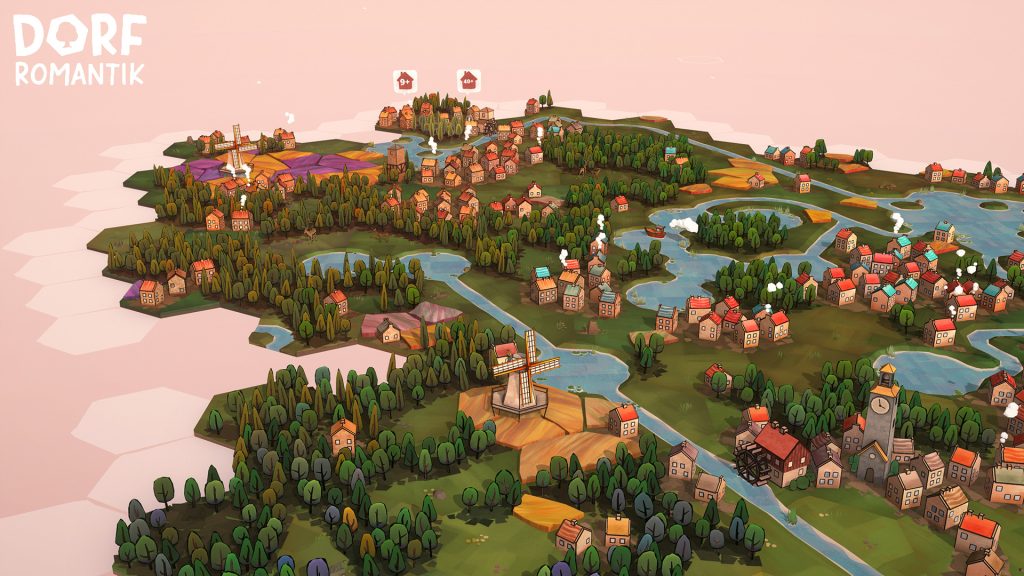
Whenever I engage with Dorfromantik, it seems more like a soothing, accepting activity focused on patience rather than a game. Determining the precise placement of a river tile needs sufficient concentration to calm a busy mind, without requiring any emotional effort from me.
It doesn’t require me to be humorous, intelligent, or efficient. It simply urges me to view the overall situation and proceed slowly, step by step. It softly reminds me that lovely creations take time, and even when you have a piece that appears out of place, you can always find a spot for it if you continue to construct.
3. The Pure Zen of Exo One
We inhabit a society that is completely fixated on optimization, efficiency, and measurements. We count our steps, we analyze our sleep patterns, we measure our social engagements, and we approach our personal interests as if they were side ventures that require expansion and profit.
When I become absorbed in that excessively productive mentality for too many consecutive weeks, my connection with my own creativity becomes highly detrimental. I begin to assess each hour of my day solely through the harsh perspective of productivity, and the pleasure of just being disappears entirely. When I have to get out of that efficiency cycle before I totally collapse, I retreat into Exo One.
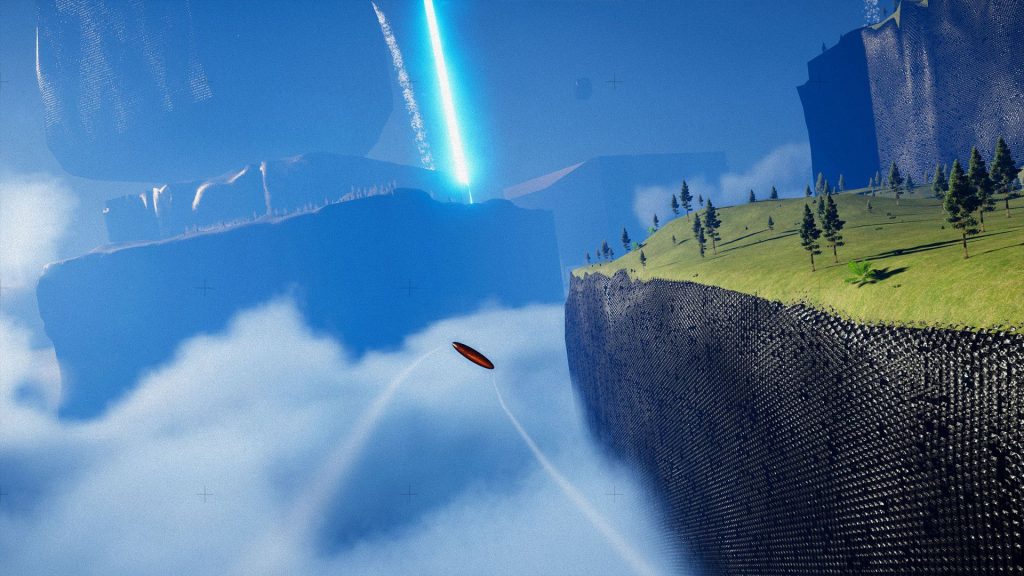
In Exo One, you navigate a peculiar, minimalist alien ship resembling a metallic sphere. The vessel can control gravity and momentum, flattening into a disc to soar through the air of bizarre, empty extraterrestrial worlds, or rolling into a dense sphere to gain incredible speed down the slopes of enormous dunes. There are no foes, no items to gather, and no standard challenges. Your sole objective is to head towards a gigantic blue beam of light visible ahead that carries you to the subsequent planet.
What makes Exo One an incredible emotional reset is its exquisite embrace of the pure feeling of momentum. Descending from the gas giant’s clouds, experiencing the pure weightlessness of your vehicle as a serene, ambient rock melody rises in the background, is the nearest a video game has achieved to replicating the actual sensation of a profound, shared exhale.
Playing this game teaches me how to let go of control. You can’t force the ship to fly; you have to learn how to work with the terrain, riding the slopes and catching the wind at the exact right moment. It gently forces me to remember what it feels like to just ride the wave, rather than constantly fighting against it. It reminds me that sometimes, the best way to get through a heavy situation is to stop pushing so hard, let gravity take over for a second, and trust your own momentum.
4. Embracing the Bleak, Indifferent Stillness of Abzû
Every game I have talked about so far deals with the surface of things, but sometimes, a world with a sky and a horizon can actually feel claustrophobic when your anxiety hits a boiling point. When my sensory overload hits, I want to go to a place where gravity doesn’t exist, where the ambient sound is muffled, and where I can just drift in the dark.
That’s when I dive into the depths of Abzû. Abzû is a stunning underwater exploration game in which you take on the role of a solitary diver navigating expansive, colorful ocean environments. You don’t need to stress over an oxygen meter, you can’t drown, and there are no frightening deep-sea creatures lurking to startle you in the darkness. The game includes a special “meditation mode” that allows you to simply sit on ancient underwater statues and observe the marine creatures interacting.
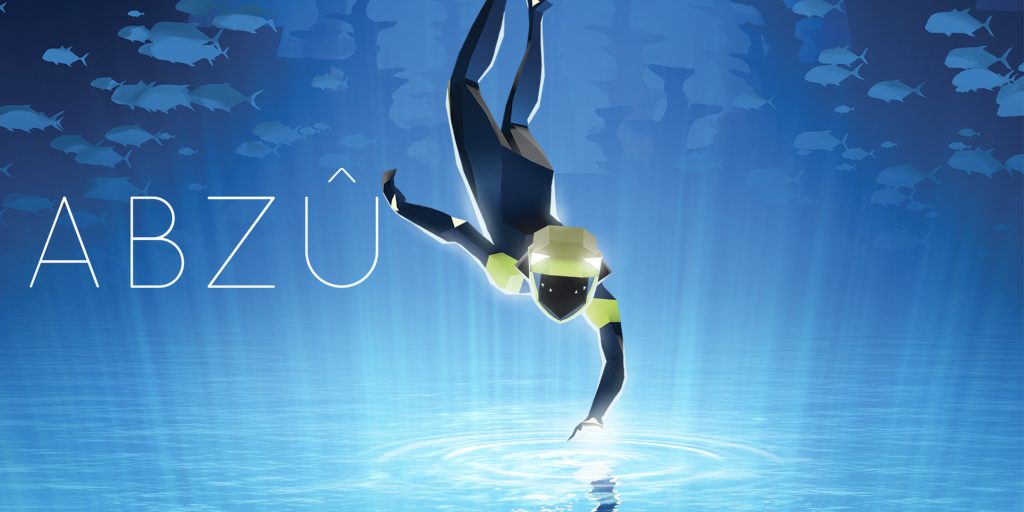
I switch off every light in my current apartment, wear my top noise-canceling headphones, and simply dive into the blue. The sound design is remarkable; the soft, rhythmic murmur of underwater currents completely erases the mundane, tiring clamor of human civilization. Swimming next to a blue whale or navigating through a large school of glimmering fish as Austin Wintory’s orchestral music swells around you is an intensely spiritual experience.
Being underwater provides an astounding clarity. Abzû doesn’t pamper me; it immerses me. It compels me to reduce my pace and synchronize with the fluid, heavy tempo of the sea. It brings to mind that underneath the turbulent, chaotic exterior of our everyday existence, there exists a vast, profound realm of serene, undisturbed tranquility that remains entirely unaffected by the clamor overhead. It serves as a reminder that regardless of how tumultuous life becomes on land, I can always plunge into my inner sanctuary and discover tranquility.
Reclaiming Gaming as an Act of Radical Kindness
We must begin to alter how we discuss our connection with video games. We dedicate considerable time examining them as items—breaking down their corporate pricing structures, debating their visual enhancements, or refining our strategies to pursue arbitrary rankings. However, in doing so, we jeopardize transforming a wonderful, engaging art form into merely another source of real-life pressure, performance stress, and consumer expectation.
Starting a game when you notice your mental health declining isn’t a waste of time. It is an act of extreme self-protection. It’s a recognition of your humanity, that your energy is critically low, and that you must take a break from the real-world simulation for an hour or two to allow your spirit to rejuvenate in a realm where the rules truly make sense.
Regardless of whether you discover tranquility while shaping a spaceship’s cargo area, adjusting tiles on a town map, soaring above an otherworldly alien desert, or floating with a school of fish in the vast ocean, there is truly no incorrect method to utilize a virtual environment for healing.
When the world seems excessively noisy, your phone weighs you down, and your mind signals alarming signs of approaching burnout, allow yourself to take a break. Grab a controller, discover a realm that suits your feelings, and keep in mind that at times, disconnecting is truly the best method to preserve your own well-being.
Which particular digital environments serve as your personal reset mechanism when your mind feels exhausted? Do you enjoy the organized order of a simulator, or do you require a retreat into a remote wilderness for tranquility? Share your thoughts in the comments, and let’s make using play a standard form of self-care.