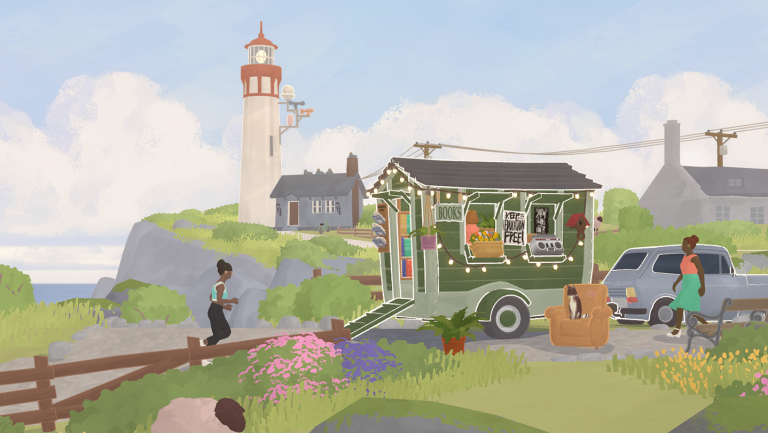
The Life Sim Revolution of Paralives: How Indie Passion Built the Ultimate Dream Home Simulator
For nearly twenty-five years, a single corporate franchise held a ruthless, uncontested monopoly over the entire life-simulation genre. If you wanted to build a digital house, create a virtual family, manage daily needs, decorate cozy bedrooms, and watch digital people live out chaotic lives, you had exactly one option on the market. There was no real alternative, no rival studio keeping the competition sharp, and no independent alternative offering a different vision.
Because of this lack of competition, players watched the genre slowly become weighed down by corporate greed.
What used to feel like a passionate sandbox of endless possibilities gradually transformed into a fragmented ecosystem of endless expansion packs, stuffed behind paywalls, bug-ridden updates, and restrictive mechanics. Simple features like modifying furniture sizes, adjusting roof pitches freely, or customizing clothing patterns—things that should have been standard in modern gaming—were either stripped away or locked behind complex modding workarounds. The community was left yearning for something fresh, something built not by corporate committees aiming for microtransactions, but by passionate creators who genuinely loved the genre.
Enter Alex Massé and his dedicated indie team at Paralives Studio.
When early development clips of Paralives first quietly surfaced on the internet, the life-sim community experienced a collective jolt of pure excitement. We saw a developer clicking on a wall and dragging it freely to any angle imaginable—no rigid grids, no locked boxy rooms. We saw pillows being placed on couches at organic angles, blankets stretched smoothly over bed frames, and Parafolk—the game’s charming, stylized residents—having their height and features customized with effortless precision.
It felt like watching magic happen in real time.
What started as a small, Patreon-funded passion project quickly turned into a gaming phenomenon, capturing the hearts of millions of players worldwide. Paralives isn’t just another indie builder trying to copy the titan of the industry; it is a ground-up revolution. It takes everything we love about life simulators, strips away decades of mechanical clutter, introduces unprecedented creative freedom, and wraps it all in a cozy, warm, hand-drawn art style that feels instantly inviting.
Let’s dive into why Paralives has captured the imagination of builders and storytellers everywhere, how its intuitive construction mechanics rewrite the rules of digital architecture, and why this indie passion project is the dream home simulator we have waited decades to play.
The Art of Building Without Boundaries: Intuitive Construction Mechanics
To truly understand why the gaming community is so hopelessly enamored with Paralives, you have to look at its construction tools.
If you have ever spent hours trying to build your dream home in traditional life sims, you know the exquisite frustration of fighting against the grid. You want to build a cozy, diagonal bay window under a sweeping staircase, but the game snaps the wall into an awkward, blocky box. You want a curved porch that wraps around an oak tree, but the system refuses to cooperate. You end up settling for something far less creative simply because the software’s rigid geometry refused to let your imagination run wild.
Paralives throws the rigid grid into the garbage bin where it belongs, replacing it with an extraordinary set of parametric building tools.
When you draw walls in Paralives, you are operating in a space of pure fluid design. You can pull a wall at a subtle fifteen-degree angle, create flowing, organic curves, adjust wall height down to the exact millimeter, and construct split-level floors without relying on complicated cheat codes or glitchy terrain tricks.
Want a cozy, tiny attic bedroom tucked underneath a sharply sloped roof? Simply drag the roof handles until the rafters fit your vision perfectly. Want a sweeping curved staircase that hugs a stone turret? Click, drag, and set the curve with total confidence.
This architectural freedom transforms building from a tedious exercise in compromise into a deeply satisfying art form.
What makes this system so brilliant is that despite its unbelievable depth, it never feels overwhelming or overly technical. You don’t need a degree in CAD software or architecture to build something stunning. The user interface is clean, modern, and delightfully intuitive. The controls respond instantly to your intent, letting you push, pull, stretch, and shape your house with the fluidity of sculpting clay.
Hyper-Detailed Customization: The Color Wheel and Resizing Revolution
Once you finish framing your house and putting up the walls, the true magic of Paralives begins in the interior design phase.
For years, life-sim players have suffered under the tyranny of preset color palettes. You find a sofa with the exact modern shape you want for your living room, but it only comes in loud orange, neon purple, or a drab beige that completely clashes with your hardwood floors. You end up picking furniture based on matching colors rather than the actual design aesthetic you wanted.
Paralives solves this age-old problem by delivering an integrated, fully functional color wheel and texture customizer across virtually every object in the game.
If you select a wooden dining table, you aren’t stuck choosing between three dark oak swatches. You can pull up the color wheel, adjust the wood grain hue, tweak the saturation, and change the metallic sheen on the table legs. If you want to match a cozy knit throw blanket to the exact shade of teal on your throw pillows, you simply use the color picker to sample the shade directly.
Furthermore, Paralives introduces a feature that decorators have been begging for across decades: proportional object resizing.
In traditional sims, a coffee table is always a coffee table, and a rug is always a fixed size. If a rug is slightly too small for your spacious sectional sofa, your room setup ends up looking awkward and off-balance. In Paralives, you can grab the scaling handles on objects and adjust their dimensions freely:
- Need a massive dining table to fit a sprawling ten-person dinner party? Stretch a six-person table smoothly without distorting its proportions or textures.
- Want a tiny decorative plant to sit neatly on a wall floating shelf? Shrink a floor fern down until it fits the space like a glove.
- Want a grand floor-to-ceiling mirror in the foyer? Scale a wall mirror vertically until it makes a bold, dramatic architectural statement.
This level of granular control extends down to item placement and layering. You can pile books on a nightstand at messy, lived-in angles, drape blankets over the armrest of a chair, cluster framed family photos together on a gallery wall, and stack cushions on a window seat.
It allows you to move away from stiff, sterile, showroom-style houses and build homes that feel genuinely lived-in, warm, and rich with personal human character.
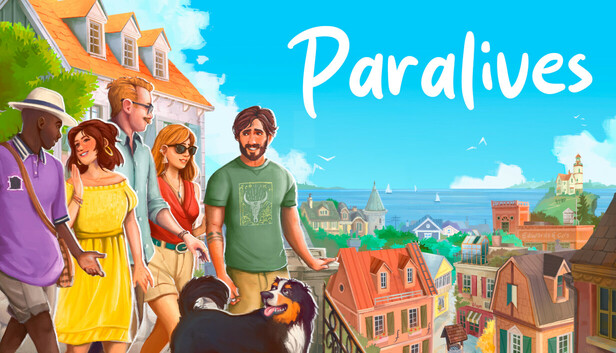
Meeting the Parafolk: Warmth, Identity, and Expressive Life
While the building mechanics alone would be more than enough to justify the hype, Paralives is ultimately a life simulator. A dream home is just an empty wooden box until you fill it with people who love, argue, create memories, and grow together inside its walls.
The characters of Paralives, known affectionately as Parafolk, are designed with a distinct, cozy visual identity that sets them apart from the unsettling “uncanny valley” look of hyper-realistic 3D models.
Rendered in a soft, cel-shaded, hand-painted aesthetic, Parafolk look like characters straight out of an indie animated feature film. Their visual design radiates warmth, charm, and emotional expressiveness.
The character creation suite—known as the Paramaker—gives storytellers a mind-boggling array of customization options:
- Fluid Body Morphology: You don’t just push sliders back and forth between “skinny” and “muscular.” You can grab points directly on a Parafolk’s body to adjust shoulder width, hip shape, waist proportions, posture, and height down to subtle details.
- Complex Hair Customization: You can apply multiple color roots, highlights, and ombre gradients to hair, choosing from a wide array of textures ranging from bone-straight locks to lush afro-textures and intricate braids.
- Layered Outfit Styling: Instead of picking pre-made full-body outfits, you can layer clothing pieces organically. Put a cozy cardigan over a collared shirt, tuck a t-shirt into high-waisted jeans, add boots, choose socks, and recolor every single fabric layer independently.
More importantly, the team at Paralives Studio has placed massive emphasis on social depth and personality mechanics.
Parafolk aren’t just biological drones that wander around fulfilling hunger and bladder bars. They possess complex personality traits, individual preferences, evolving relationship dynamics, and autonomous behaviors that make them feel like real, living individuals.
The interaction system moves away from repetitive, meaningless conversational grinding. When two Parafolk sit down on a couch together over a hot mug of coffee, their body language shifts naturally based on their shared history, current emotional mood, and personal comfort levels. A quiet, introverted Parafolk might lean back, offering shy smiles, while an energetic, outgoing friend gestures wildly with their hands while telling an animated story.
This deep focus on emotional authenticity ensures that living in your dream home feels just as rewarding as designing it.
Built by Passion, Funded by the Community: The Power of Indie Transparency
Beyond the code, the art, and the mechanics, one of the biggest reasons players are fiercely loyal to Paralives comes down to how the game is being developed.
In an industry currently plagued by secretive studio culture, broken day-one launches, unfulfilled promises, and aggressive monetization models, Paralives Studio has operated with absolute transparency and respect for its player base.
The game’s development has been largely funded directly by thousands of fans through Patreon. Because the developers are accountable to the community rather than corporate shareholders demanding quarterly profits, they have the freedom to prioritize quality, polish, and player satisfaction over rushed release dates.
The studio regularly shares detailed devlogs, behind-the-scenes video breakdowns, and open surveys asking the community what features they want to see prioritized.
Furthermore, the developers made a legendary pledge that sent shockwaves through the life-sim community: all major feature updates, content expansions, and seasonal packs will be released for free.
There will be no buying twenty separate twenty-dollar kits just to get basic kitchen cabinets, pet care, or rainy weather. When you purchase Paralives, you own the complete, evolving experience.
This player-first philosophy has built a level of trust and goodwill that corporate studios can only dream of. It reminds us that games are at their absolute best when they are built as true labor of love, crafted by passionate gamers who listen to their community and treat their audience with respect.
The New Golden Age of Life Simulation
We are currently witnessing a historic shift in the gaming landscape. The era of corporate monopolies over the life-simulation genre is officially coming to an end, ushered out by a wave of creative indie innovation.
Paralives represents the absolute peak of this revolution.
It takes the high-concept dream of building a virtual life and strips away every artificial barrier that used to hold players back. It gives architects the tools to draw curved walls and tilt roof angles without restriction. It gives interior designers a color wheel and scaling controls to build spaces that feel real and lived-in. It gives storytellers expressive, warm characters capable of forming deep, meaningful relationships.
Most importantly, Paralives restores that magical sense of wonder, creative freedom, and cozy joy that made us fall in love with life simulators in the first place.
Whether you want to spend three straight days meticulously placing books and potted plants on a handcrafted floating shelf, build an idyllic lakeside cabin tucked away in the woods, or follow generations of a warm, quirky family living out their daily lives, Paralives offers a canvas where your imagination is the only limit.
The future of life simulation is here, it is indie, it is built with pure passion, and it is more beautiful than we ever dared to dream.
Now I’d love to pass the blueprint over to all of you! What is the very first house you plan on building once you get your hands on Paralives? Are you going to recreate your real-life home, build a cozy tiny-house retreat, or construct a sprawling modern architectural mansion? Drop your dream build ideas, character concepts, and thoughts in the comments below!