Gaming with Nostalgia: The Games That Built Me
At this moment, I am on the floor of my bedroom, gazing at the light of my monitor, and I somewhat feel like a time traveler. If you invest ample time in the gaming realm, particularly in 2026, it is remarkably simple to become entirely fixated on what lies ahead.
We continually gaze at the horizon—anticipating the next grand open-world adventure, monitoring engine improvements, discussing AI-based NPC actions, and scrutinizing cinematic trailers. The sector has evolved into a colossal, powerful force of meticulously crafted, high-quality content aimed at capturing our focus and enhancing our engagement statistics.
However, occasionally, the machine malfunctions. Or instead, my mind falls apart. I’ll examine a collection of three hundred innovative contemporary books and experience complete indifference. No excitement, no interest, merely a bizarre, profound void.
When that particular type of digital exhaustion occurs, I catch myself shutting my eyes and paying attention. Not to the elaborate, orchestral rise of a contemporary blockbuster, but to something far more basic: the thin, digital, 8-bit bounce of an artificial bassline. I detect the subtly metallic, dusty warmth of a vintage plastic console heating up. I can vividly recall the feel of a carpet under my knees, the bright glow of a bulky CRT television illuminating a dark living room with a soft blue hue, and the sheer, unquestionable belief that whatever unfolded on that screen was the most crucial thing in existence.
We discuss frequently the reviews, mechanics, and if a game is “objectively” perfect. However, as I grow older, I increasingly understand that the worth of a game isn’t determined by its review rating or its polygon total. Its real worth is assessed by how it aligns with a beautiful, intricate, and well-enjoyed life.
The games that shaped us are not merely programs; they constitute emotional foundations. They serve as the foundational designs for our interactions with the world, our handling of failure, our encounters with wonder, and our ability to view a blank horizon as an adventure rather than merely an empty expanse.
Let’s all take a united step back from the constant clamor of today. I wish to discuss the undeniable powerhouses—the iconic, essential classics—that not only introduced me to this medium but also fundamentally influenced the person I have become.
1. The Kindergarten Architecture of Tetris
Let’s begin at the very very start. Before I grasped the concept of a narrative arc, before I comprehended what a character sprite represented, and before I developed the fine motor skills to navigate a 3D character in a virtual world, there was Tetris. In particular, the version for Game Boy.
I can still shut my eyes and listen to the famous Type A Russian folk tune resonating through those awful, metallic mono speakers. My mother owned a worn, brick-shaped grey handheld that she stored in the glove box of our car for extended road journeys. For a five-year-old, that small screen with its unhealthy greenish-grey backdrop and pixelated liquid crystal display appeared to be an extraterrestrial object.
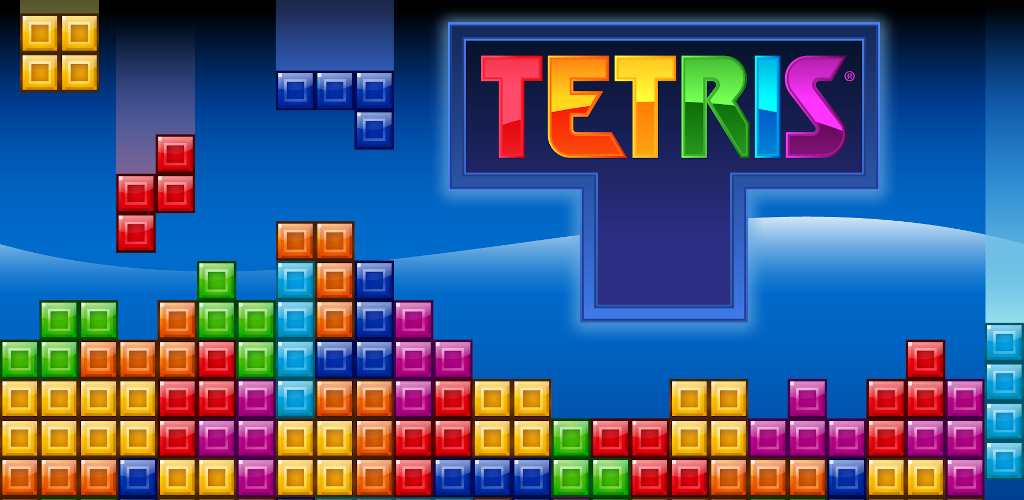
As a child, the whole world seems utterly chaotic. Grown-ups are always instructing you on how to behave, social norms are completely confusing, and your surroundings are designed in a way that makes you feel small and helpless. Yet within that small Game Boy display, Tetris presented a cosmos that was entirely, exquisitely organized.
The shape was straightforward. The fragments dropped with a consistent rhythm. Your main goal was to transform chaos—a disordered, random heap of shapes—into a cohesive, flawless structure. There wasn’t a great evil to overcome, nor a sorrowful history to analyze. It was just the constant, rhythmic process of tidying up an area.
I didn’t understand it then, but Tetris was imparting the basic psychological cycle of resilience. It showed me how to handle a crisis. In Tetris, your errors don’t disappear; they accumulate, forming a rough, daunting barrier that gradually advances toward the upper edge of the screen, constricting your space to maneuver. As the tempo increases, anxiety emerges. Your hands begin to tremble, your choices become hasty, and you start making even poorer placements.
Yet the game also shows that by calming your breath, pausing to inhale, and concentrating solely on the immediate next move instead of fixating on the overwhelming stack of past mistakes, you can gradually whittle down the chaos. You insert a lengthy piece into a space, a line vanishes, the grid falls, and instantly, you find yourself with more breathing space.
I continue to play Tetris even now when my real, adult life feels like it’s stacking up to the top of the display. When the inbox is full, bills are coming due, and creative deadlines are approaching like a tidal wave, I will set my phone aside, start a classic game of Tetris, and stack blocks for twenty minutes. It functions as an actual neurological reset switch. It reminds me that regardless of how chaotic the situation appears, everything can be managed if you address each falling piece individually.
2. The Weight of Momentum in Super Mario Bros. 3
If Tetris showed me how to arrange my thoughts, Super Mario Bros. 3 showed me how to traverse a world. The original Super Mario Bros. launched in 1985 single-handedly rescued the video game industry from a disastrous commercial demise. The historical facts are well-known to us all. However, the game that truly opened up my childhood was its exceptional, theatrical gem of a younger sibling, launched in 1988 (and arriving in the West in 1990).
I recall the specific day my cousin showed up with a copy of Super Mario Bros. 3 at our home. We connected the Nintendo Entertainment System to the basement TV, pressed the heavy grey cartridge firmly into the console slot until it clicked, and switched it on.
The game didn’t merely commence with a title screen. A huge crimson stage curtain was drawn aside, figures dashed across the display like performers adjusting their positions, and outlines projected shadows onto a dramatic setting. It was a show. From the very first frame, it was clear: You are about to leave your mundane, everyday life and step into an extraordinary, enchanting performance.
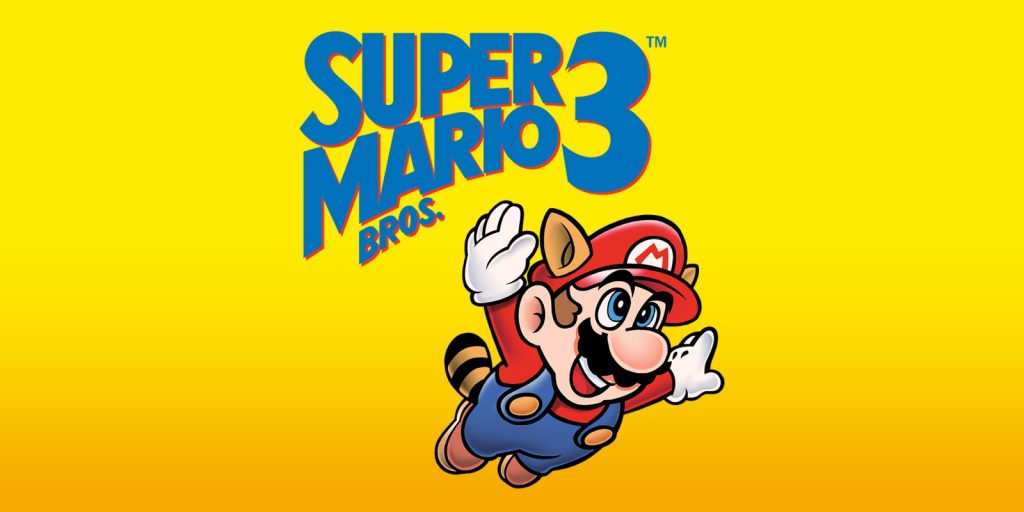
However, what amazed me as a child wasn’t solely the visual display; it was the sensation of having control over Mario. Iconic designer Shigeru Miyamoto grasped a concept that nearly all other developers overlooked during that era: movement ought to be naturally delightful. Mario didn’t merely shift like a stiff, unyielding mass of pixels. He carried weight. He possessed inertia.
By pressing the B-button to run, he didn’t immediately achieve maximum speed; instead, he sped up, his tiny arms flailing until his P-meter was full, allowing him to actually soar with a raccoon tail. When you attempted to halt abruptly, his boots would glide over the grass with a delightful friction noise, drift just beyond your target, and regain his stability.
That weight—that beautiful, dynamic feeling of motion—altered my brain chemistry. It made me understand that games could forge a tangible physical link over the plastic barrier of a controller. I would often lean my whole body to one side on the couch, raising the controller high as if a real shift could aid Mario in jumping over a huge, frightening chasm over a pool of molten lava.
Super Mario Bros. 3 showed me how to find courage when confronting uncertainty. It didn’t grasp your hand. It placed you on a massive overworld map teeming with bizarre, thematic realms—arid deserts under furious suns that actually separated from the sky to pursue you, colossal landscapes where typical Goombas were unexpectedly five times larger than you, and eerie airships gliding through tempestuous skies crowded with whirling cannonballs.
Each individual level provided a small, independent lesson in spatial awareness, timing, and managing risks. It showed me that failure wasn’t a lasting, disgraceful label; it was merely a normal, essential expense of discovery. You forfeit a life, you visualize the trap in your head, you restart the level, and you attempt it again with marginally improved timing. It instilled in me a profound, essential confidence that any challenge, no matter how daunting it appeared at first, could be surmounted if you simply analyzed its pattern and controlled your own pace.
3. The Mythic Submersion of The Legend of Zelda: Ocarina of Time
There is a clean, sharp line in my memory that divides my life into two distinct eras: before I played The Legend of Zelda: Ocarina of Time, and after.
The festive season of 1998 had arrived. The whole gaming industry was undergoing a scary, rugged shift from flat 2D pixel art to the rough, unexplored realm of 3D polygonal visuals. I recall saving my allowance for several months, taking on extra tasks in the neighborhood, and nearly pleading with my parents to assist me in closing the gap for a Nintendo 64 console. As I finally lifted the gold-edged box and placed the weighty plastic cartridge into the device, I was unaware that my connection with storytelling was on the verge of being irrevocably changed.
The game begins not with a dramatic action sequence but with an exceptionally soft, sorrowful piano tune. A young boy rides a horse through a wide, foggy field beneath a faint moon, as the sound of an acoustic pan flute floats nearby. It seemed archaic. It seemed burdened with legendary significance.
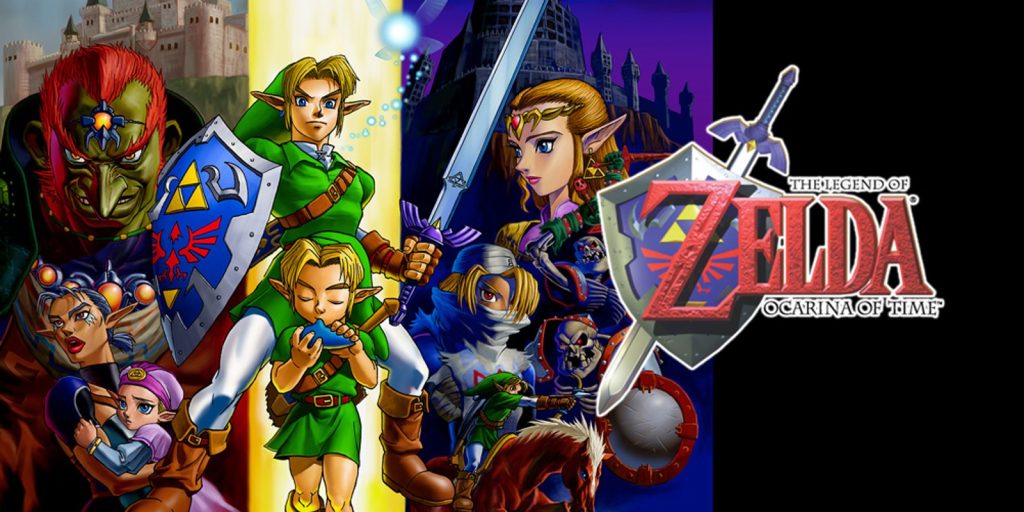
To appreciate the impact Ocarina of Time had on a child’s imagination in 1998, one must grasp the intense shock of emerging from Kokiri Forest into Hyrule Field for the first time.
Until then, video games were straightforward corridors. There were barriers and surfaces that propelled you onward from side to side. As Link entered the vast, emerald-green stretch of Hyrule Field, the barriers faded away entirely. A horizon existed. In the distant view, a massive volcanic mountain loomed with a plume of smoke encircling it, an old stone castle shining under the sun, and an expansive, dark forest gradually disappearing into the fog. And the game didn’t push you along just one route—it hinted: Take a look at that mountain in the distance? It is accessible by walking. You are able to ascend it. It is an actual location.
For an introverted, slightly lonely kid who often felt incredibly alienated by the real world, Hyrule wasn’t a game; it was an actual home. I knew the names of the carpenters in Kakariko Village. I knew the exact timing of the guard rotations in the courtyard. I knew the haunting, lonely melody of the Saria’s Song that played through the misty corridors of the Lost Woods.
Yet the real brilliance of Ocarina of Time—the aspect that elevates it to a classic masterpiece instead of just a nostalgic relic—is its approach to the idea of time. Midway through the game, Link extracts the Master Sword from its pedestal and is placed in a magical stasis for seven years. As you return to Hyrule as an adult, the vibrant, cheerful world of your youth has entirely vanished.
The vibrant market town where you once played with stray dogs is now a quiet, desolate ruin populated by moaning, fearsome undead beings. The pure, enchanting waters of Lake Hylia have evaporated into a dry, desolate pit. The individuals you cared for have been spread apart, shattered, or confined by a dictator’s rule.
This was the initial occasion a video game taught me about loss. It made me aware of the unavoidable, bittersweet sadness of maturity. It made me understand that time flows in a single direction, that circumstances evolve, and that you can never genuinely return to the simple purity of your youth.
However, it also educated me on accountability. Link doesn’t weep over the remnants of his past; he takes up his shield, laces his boots, and embarks on a quest to mend a shattered world, bearing the memories of his youth like a shield of protection. It showed me that adulthood involves being present for others in their darkest moments, bearing your past with dignity, and striving to restore brightness to a world that has lost sight of the sun.
4. The Human Architecture of Final Fantasy VII
If Zelda taught me about the mythic, sweeping scale of adventure, Final Fantasy VII taught me about the messy, complicated interior geography of the human heart.
Launched in 1997 for the original Sony PlayStation, Final Fantasy VII marked a significant cultural turning point. It brought Japanese role-playing games from niche hobbyist circles into the broader global awareness. For a teen in a bedroom lit solely by the neon green light of a plastic save-point crystal, this game was a total revelation.
Until that time, video game narratives were primarily straightforward fairy tales. A giant turtle monster abducts a princess; a brave knight sets out to rescue her. The boundaries between good and evil were entirely distinct, immaculate, and steadfast.
Final Fantasy VII didn’t begin in an enchanted realm. It began in Midgar—a vast, industrial, dystopian city that resembled a frightening mix of Blade Runner and a horrific cyberpunk vision. The planet was filthy, unjust, and completely corrupt. You weren’t portraying a noble paladin in gleaming armor; you were embodying a band of eco-terrorists battling against a ruthless, life-sapping mega-corporation that was literally extracting the planet’s life-force for corporate gain.
The main character, Cloud Strife, was entirely different from any hero I had previously met. He lacked courage, he wasn’t altruistic, and he wasn’t especially nice. He was an aloof, bitter, prideful mercenary who insisted he was indifferent to the world or the lives lost around him—his only concern was receiving payment.
Yet as the story gradually revealed itself over three enormous compact discs, you came to understand that his whole identity was a complete fabrication. He wasn’t an iconic super-soldier; he was a profoundly shattered, traumatized, uncertain child who had constructed a tremendous emotional barrier of feigned courage to shield himself from the overwhelming burden of his own shortcomings and mental disarray.
And then, naturally, there was Aerith. We cannot discuss Final Fantasy VII without mentioning the church in the slums, the yellow flowers emerging through the floorboards, and that one devastating instant in the Forgotten Capital where Nobuo Uematsu’s stunning piano melody fades, overtaken by the shocking, abrupt clash of a silver blade.
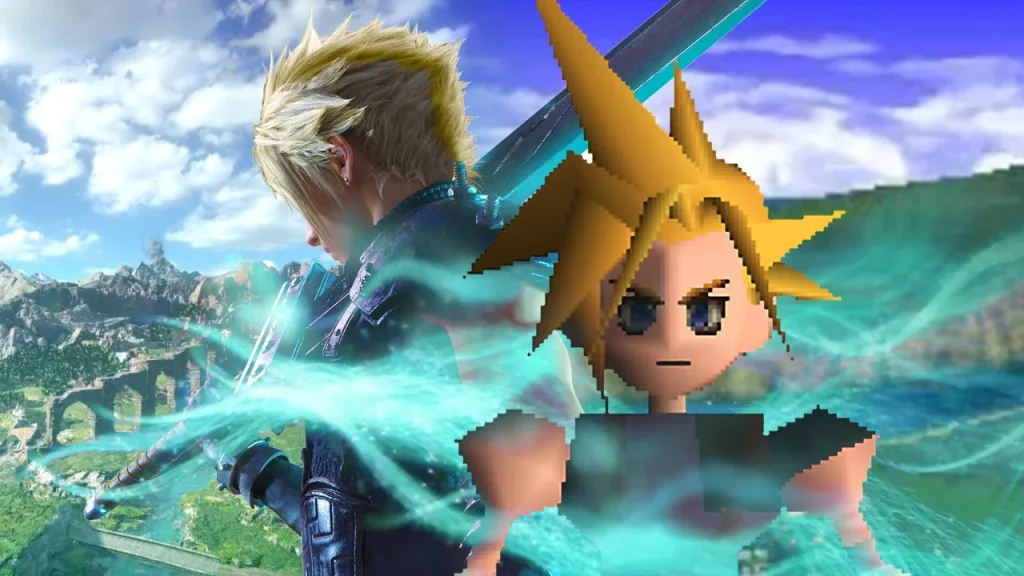
I recall looking at my TV screen while the game controller vibrated in my hands, utterly frozen in shock. It was the first occasion when a digital artwork moved me to tears. It was not a typical, noble cinematic death where a character delivers an elaborate, emotional farewell speech before departing peacefully. It was abrupt, it was unjust, it was utterly heartbreaking, and it created a lasting, empty gap in your current party selection menu for the entire thirty-hour journey.
Final Fantasy VII showed me that video games can address issues such as corporate greed, environmental destruction, loss, mental health, and the quest for true identity. It revealed to me that our wounds, our struggles, and our significant errors do not prevent us from being champions. It showed me that true strength isn’t derived from a large weapon or a heart that is unfeeling; it stems from the daunting, brave act of allowing others to approach you, dropping your defenses, and discovering something valuable to defend even when everything around seems utterly hopeless.
Reclaiming Our History: A Trip Down Memory Lane
We spend so much time evaluating video games as consumer products. We rank them, we score them, we pick apart their engineering flaws, and we drop them into categories to fit a clean, cold algorithmic taxonomy. But when you strip away the packaging, the marketing campaigns, and the performance optimization debates, you are left with something incredibly raw and profoundly human: a shared history.
The games that shaped us aren’t artifacts stored in a case of old technology. They serve as the emotional bases of our existence. They are the particular spaces we secluded ourselves in during our parents’ arguments, the virtual campfires we congregated around with friends who have long faded from our lives, and the quiet guides that showed us how to rise again after a setback and hit the restart button once more.
They showed us how to traverse space, how to handle our worries, how to mourn, and how to discover awe in a two-dimensional realm of shining pixels. They shaped us into the individuals we are now.
At this point, I’d like to pass the microphone to you. Nostalgia isn’t an isolated dwelling; it’s a large, inviting communal campsite where everyone deserves a place by the flames.
Which particular, iconic games have shaped your emotional framework? Was it the chaotic, competitive arcade excitement of Pac-Man or Street Fighter II? Was it the tranquil, farming peace of Harvest Moon, or the harsh, primal survival cycle of the original DOOM? What single video game tune can immediately bring you back to your childhood room with just one note?
Share your memories, your tales, and your personal experiences in the comments area below. Let’s utterly overwhelm the internet with a huge, unapologetic surge of genuine, uplifting communal nostalgia. Share how a game was not only a source of entertainment for you but also guided you through this chaotic, beautiful, intricate existence.