Is Resident Evil: Requiem Actually Worth $70, or Should You Wait for a Steam Sale?
What is up, chat! Hexa here. I am coming to you live from a slightly cramped apartment where the Wi-Fi is blazing fast but the coffee options are tragic.
We need to have a serious financial intervention today. We are well into 2026, and AAA game publishers are still trying to gaslight us into believing that a standard digital game is automatically worth seventy hard-earned dollars. That premium price tag used to be reserved for flawless masterpieces. Instead, it has become a default tax just to participate in launch-week memes and avoid spoilers on TikTok.
The newest monster on the chopping block is Resident Evil Requiem. Capcom dropped this absolute titan on us, and my social feeds have been a total war zone ever since. On one side, you have the graphics purists screaming about dynamic lighting. On the other side, normal human beings are crying over their empty bank accounts.
You already know how I operate. I have zero time for gatekeeping or corporate PR fluff. I do not care about publisher stock prices. If a game is a masterpiece, I will tell you to buy it. If it treats your wallet like a toxic ex, I will drag it through the mud.
I have sunk exactly 45 hours into this game across multiple playthroughs. I have aggressively optimized my PC build paths, achieved max scores in the endgame modes, and tracked every single unhinged community meltdown on Discord.
Is Resident Evil Requiem actually a day-one, full-price banger, or should you stay strong and wait for the inevitable Steam Sale? Grab an energy drink, lock your door, and let’s break this down.
The Dual-Gameplay Split: Grace vs. Leon
Let’s start with the actual gameplay loop. If the core movement feels like sluggish garbage, I do not care how pretty the infected enemies look.
Resident Evil Requiem takes a fascinating structural risk by dividing its campaign between two completely distinct protagonists. Each character drags a wildly different gameplay style to the table.
First up is Grace Ashcroft. She is an FBI intelligence analyst who brings the game back to its old-school survival horror roots. Playing as Grace genuinely feels like a psychological assault on your nervous system. Resources are brutally scarce. You are not swimming in ammo boxes. You are literally counting every single 9mm bullet like a precious family heirloom.
Her sections rely heavily on deep environmental puzzles and an overarching sense of dread. You are constantly managing a tiny inventory space. You have to decide whether to carry an extra green herb or a puzzle emblem you might not need for another hour. It is stressful, it is frustrating, and it is peak classic Resident Evil.
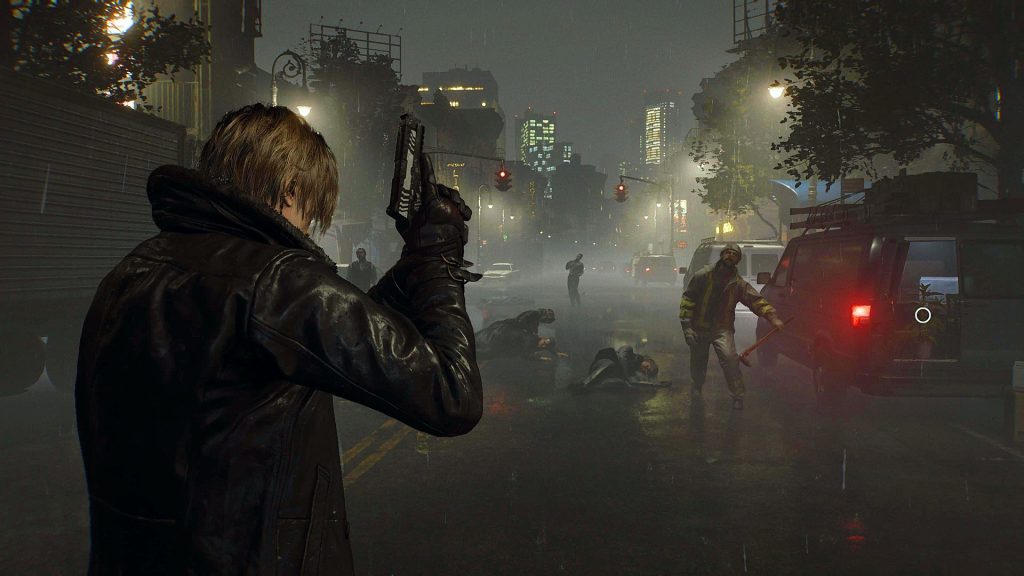
Then the game hits you with Leon S. Kennedy. Suddenly, the vibe mutates into a pulse-pounding action spectacle. This side feels like a direct evolution of the Resident Evil 4 remake. Leon is kitted out, nimble, and ready to throw hands. He has access to heavy weaponry, tactical slides, and a knife parry mechanic that feels incredibly satisfying when you pull it off.
The transition between the two characters is jarring in the best way possible. The director, Koshi Nakanishi, described this dual system as repeatedly jumping into a cold bath right after a hot sauna. He was not lying. Just as your heart rate starts to settle during a slow Grace puzzle section, the game rips the rug out from under you. You are instantly thrown into a sweaty Leon combat gauntlet where you are fighting off hordes in an abandoned facility.
When you are in the zone, the mechanical loop feels like absolute butter. Deflecting a rusty blade with a last-second knife parry delivers a massive hit of raw dopamine. It is crispy, responsive, and beautifully violent.
The Optimization Horror Show on PC
We cannot talk about mechanics without addressing the poorly optimized elephant in the server room. The PC port at launch was a literal crime scene, and anyone telling you otherwise is straight up coping.
While Capcom’s engine has historically been great, Requiem pushes the visual boundary way too hard. It threatens to snap your hardware in half. The level of environmental detail is absurd. Individual raindrops realistically deform when hitting clothing, and the smoke physics are genuinely breathtaking.
But this eye candy comes at a staggering performance cost. If you are running anything lower than an RTX 3070, your graphics card is going to sound like a commercial jet engine attempting a vertical takeoff.
The frame drops in the foggy swamp sections of the map are completely unhinged. We are talking about sudden, violent drops from a smooth 90 FPS down to a stuttering 24 FPS. This happens the exact second the volumetric fog interacts with multiple dynamic lighting sources.
If you want to survive these areas without losing your mind, you have to do some serious setting triage. Do not just rely on the default presets. The built-in benchmark utility is a good starting point, but it does not simulate the absolute chaos of a mid-game mob fight.
If you are rocking an 8GB VRAM card, your first move should be turning Environment Textures down from Extreme to Ultra or High. This single change immediately mitigates the aggressive micro-stuttering that ruins your aiming precision. Also, turn off unlocked framerates. An unstable 90 FPS feels infinitely worse than a perfectly flat, locked 60 FPS when you are trying to line up a critical shot.
Capcom has pushed out a couple of hotfixes since launch, which have stabilized the frame-pacing issues significantly. However, the game still hogs memory like it is a competitive sport. If you are trying to play this on a mid-range rig without turning on aggressive upscaling like DLSS or FSR, prepare for a bad time.
The $70 Breakdown: Content vs. Artificial Padding
Let’s look at the actual volume of content you are buying here. When a game demands $70 upfront for its base edition, it needs to prove it is not just wasting your time with artificial progression gates.
A standard, thorough playthrough of Resident Evil Requiem clocks in at roughly 22 hours. On paper, that is a fantastic length for a survival horror narrative. It is long enough to feel substantial but short enough to prevent the horror mechanics from becoming stale. However, when you start dissecting how those 22 hours are constructed, the corporate padding becomes blindingly obvious.
The initial areas are absolute masterpieces of level design. The abandoned lakeside hotel and the urban quarantine zones are labyrinthine, interconnected spaces. Unlocking a single door shortcuts you back to a safe room you discovered three hours ago. Finding those shortcuts feels earned and incredibly rewarding.

But by the time you hit the mid-game, the pace grinds to a halt. There is a bizarre three-hour segment where you are essentially doing glorified chores across a sprawling industrial facility. You are running around just to find three arbitrary keycards to open a single security door. This adds absolutely nothing to the story, the enemy variety completely stalls out, and it feels like it was entirely engineered to inflate the play time so reviewers would not call the game too short.
Worse still is the creeping corporate greed hiding in the menus. The game features the triumphant return of Mercenaries Mode, which is an absolute masterclass in arcade combat loop design. It is fast, frenetic, and a massive source of replayability. But Capcom decided to include an in-game store where players can buy weapon upgrade tickets with real-world money.
That is just down bad, Capcom. Charging a top-tier premium entry fee for a single-player game and then dangling microtransaction shortcuts in our faces is unacceptable. It does not matter if you can just ignore them.
The mere fact that the progression system was architected with paid shortcuts in mind alters the baseline economy of the game. It makes you constantly second-guess whether a scarcity of upgrade materials is a deliberate design choice meant to foster survival tension, or a deliberate frustration mechanic engineered to make you open your wallet again.
What the Forums Are Screaming About
If you want to understand the true health of a game, you do not look at polished review scores from outlets that received free review copies. You look at the absolute state of the community forums two weeks after launch, once the initial hype has worn off and reality has set in.
The Resident Evil community is currently locked in an ideological civil war, and the arguments are pure internet cinema.
First, you have the lore purists who are losing their collective minds over how the game handles the legacy of Raccoon City. Without dropping massive spoilers, certain late-game environmental reveals have resulted in 40-page manifestos on Reddit accusing the writing team of completely bricking the established canon. People are tracking character timelines with the intensity of a true-crime investigation, and the salt is absolutely delicious to harvest.
Second, PC players are entirely justified in their fury about the inclusion of intrusive anti-tamper DRM software. There is a mounting mountain of benchmark data suggesting that a huge amount of the game’s CPU stuttering and performance hiccups are directly tied to the DRM checking background processes constantly in the middle of intense gameplay.
It is the classic modern gaming tragedy. Paying customers get a worse, stuttering experience, while people who wait for cracked versions down the line will eventually play a cleaner, smoother version of the product. When you pay top dollar, you expect a premium, frictionless experience. You do not expect to feel like an uncompensated QA tester who paid for the privilege of troubleshooting engine stutters on a community forum.
The Economics of the Modern Steam Sale
Let’s talk strategy. If you decide to hold the line, show some financial discipline, and wait out the publishers, what does the trajectory actually look like?
Historically, Capcom games follow a highly predictable depreciation curve on Steam. They are not like certain other publishers whose games stay at full retail price until the heat death of the universe. Capcom wants to maximize initial launch revenue from the hyper-fans, but they are incredibly aggressive when it comes to capturing the mid-tier market during major seasonal sales events.
If history repeats itself with Requiem, we can expect the first minor discount of around 20% off within roughly three months of launch. This is usually timed around a major seasonal Steam sale. By month six, that discount usually deepens to 30% or 35% off. And if you can manage to control your FOMO for a full year, you are almost guaranteed to see a Gold Edition or a massive 50% off drop that bundles the base game with whatever story DLC they release in the meantime.
More importantly, by the time those seasonal sales roll around, you are not just saving money. You are buying a fundamentally superior version of the product. By month three or four, the developers will have rolled out multiple performance patches. The community will have mapped out every single optimal graphical setting configuration. The driver updates from hardware manufacturers will have stabilized the erratic frame rates, and the annoying launch-week bugs will be completely wiped out. Waiting does not mean you are missing out. It means you are an educated consumer who refuses to pay premium prices to act as a beta tester.
The Final Evaluation: Pull the Trigger or Hold the Line?
Resident Evil Requiem is a genuinely fantastic, beautifully atmospheric horror game that is fundamentally suffocated by the predatory pricing structures of the modern triple-A gaming industry. It is absolutely worth your time, but it does not uniquely justify your seventy dollars on day one unless you fit into a very specific niche of ultra-fanatic community participants.
You should drop the cash right now if:
- You have an incredibly high-end PC rig or a next-gen console and want a stunning visual showpiece to justify your expensive hardware investment.
- Your favorite gaming memories involve old-school item management, complex puzzles, and classic, slow-burn survival horror tension.
- You run a content channel, participate heavily in spoiler-heavy community discussions, or value the social experience of playing a massive title alongside the rest of the internet during its launch week.
You should hit that “Add to Wishlist” button if:
- You are currently dealing with a massive backlog of unplayed RPGs, indie hits, and older titles that you bought during previous sales.
- You are highly sensitive to frame drops, micro-stuttering, or visual instability in your action games.
- You fundamentally object to full-priced single-player titles implementing real-world monetization and paid upgrade shortcuts.
Stay strong out there, chat. Don’t let marketing campaigns and cinematic trailers dictate how you spend your cash. Protect your wallet, value your time, and do not let anyone shame you for waiting for a discount. I will catch you guys in the next one. Hexa, out!