Fields of Mistria: How a Retro Pixel-Art Farming Sim Captured Millions of Hearts
Every few years, a game comes along in the life-simulation space that completely recalibrates our expectations of what a cozy farm sim can be. We all remember the seismic shift when Stardew Valley single-handedly revived our collective obsession with rural digital living, building on the cherished foundations laid down decades prior by Harvest Moon and Story of Seasons. But as the genre exploded over the last decade, something curious happened. The market became utterly flooded. We saw dozens upon dozens of indie farming games roll out, many of them copy-pasting the exact same mechanics, rigid daily schedules, and inventory management headaches without bringing any real soul or innovation to the table.
Many of us began to experience a quiet, undeniable case of farming sim fatigue.
We loved the comfort of clearing weeds, planting turnips, befriending local townsfolk, and building up a peaceful homestead from scratch. Yet, so many recent titles felt like they were trapping us in a cycle of repetitive, stressful chores. You spent half your digital day panicking over a strict stamina meter, racing against a harsh internal clock, and micro-managing tiny bag slots, only to discover the townsfolk had three recycled lines of dialogue and all the emotional depth of cardboard cutouts.
Then came NPC Studio’s mesmerizing masterpiece: Fields of Mistria.
From the very second you step foot into the idyllic, pastel-tinted valley of Mistria, you realize this isn’t just another generic farming clone designed to ride on nostalgic coattails. It is a brilliant, breathtaking love letter to late-90s anime aesthetics, classical Game Boy Advance color palettes, and modern quality-of-life game design. It captures every drop of magical nostalgia we felt playing classics like Harvest Moon: Back to Nature or watching Saturday morning episodes of Sailor Moon, while aggressively trimming away the clunky, frustrating friction that used to make retro games so tedious.
Fields of Mistria takes everything we adore about life sims, infuses it with fluid magic systems, deep community storytelling, and unmatched player freedom, and delivers an experience that feels simultaneously classic and refreshingly modern.
Let’s dive into why Fields of Mistria has captured millions of hearts, why its approach to community and romance is revolutionary, and how it proves that nostalgia, when crafted with genuine love and smart design, can create absolute magic.
The 90s Anime Visuals: A Masterclass in Pixel Art Nostalgia
To talk about Fields of Mistria without immediately gushing over its visual direction would be an absolute crime against video game art.
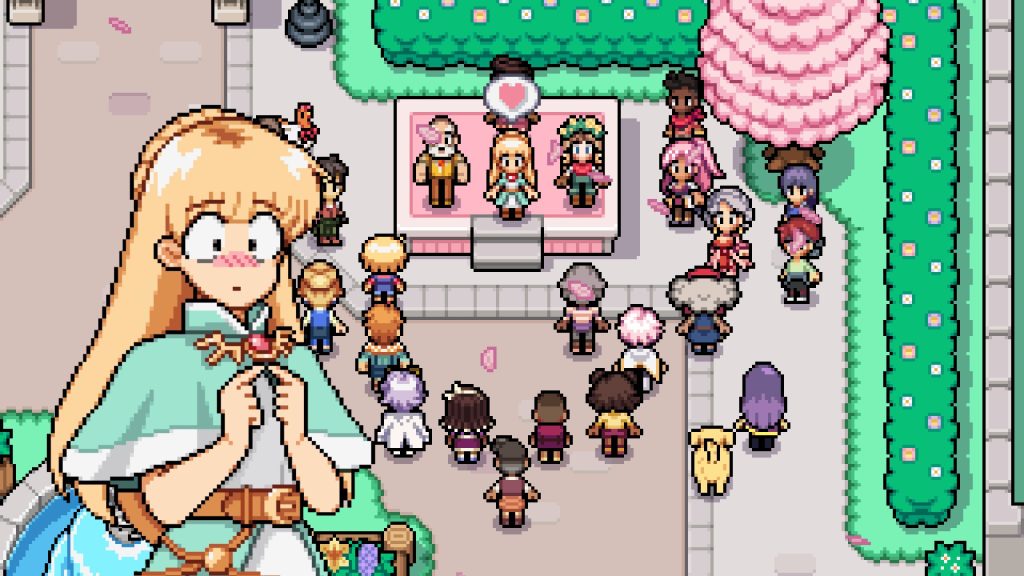
The game leans heavily into a distinct 1990s anime aesthetic that feels pulled directly from a golden age OVA or a classic Super Famicom box art illustration. The character portraits are astonishingly expressive, featuring soft pastel shading, warm big-eyed character designs, dramatic retro hairstyles, and distinct fashion choices that tell you everything you need to know about a character’s personality before they even speak a word.
This visual nostalgia isn’t just a superficial gimmick painted over a bland game; it breathes life into every single pixel of the world.
The overworld environment features lush, vibrant color palettes that change dramatically with each passing season. Spring brings blushing cherry blossom petals floating gently on sparkling turquoise rivers; summer treats you to sun-dappled green canopies and buzzing dragonflies; autumn wraps the valley in golden amber brushstrokes; and winter lays down a soft, silent blanket of pastel-blue snow that makes stepping out of your farmhouse feel like entering a magical storybook world.
What truly sets Fields of Mistria apart from its peers is the sheer fluid beauty of its character animations.
Chickens don’t just bounce up and down on a grid; they peck at bugs, waddle around joyfully, and huddle together when it rains. The townspeople walk with unique postures and animated quirks that make them feel like living, breathing residents rather than static sprites executing pathfinding scripts. When you cast a spell or swing your axe, the visual feedback is snappy, colorful, and intensely satisfying.
It proves that pixel art is not a budget compromise or a shortcut for developers—it is a timeless, highly sophisticated artistic medium capable of evoking deep emotional warmth.
Respecting Player Sanity: Quality-of-Life Done Right
If the stunning retro visuals are what catch your eye, the game’s brilliant quality-of-life design is what convinces you to stay for hundreds of hours.
Anyone who has played classic farming simulators knows the universal pain points: inventory strain, rigid tools, stamina exhaustion by 10:00 AM, and the soul-crushing realization that you accidentally watered the exact same square twice because the grid targeting was clunky. You often spent more time fighting against the game’s UI than actually enjoying your farm.
Fields of Mistria looks at every single annoyance that has plagued the genre for the past thirty years and systematically dismantles them with surgical precision. Consider how the game respects your time and energy:
Fluid Movement and Jumping: You aren’t locked to a stiff cardinal grid. You can walk, run, and—crucially—jump over small fences, ledges, and river streams. Being able to leap across terrain instantly changes how exploration feels, making traversing the map an absolute joy rather than a repetitive pathing exercise.
Instant Tool Swapping and Smart Targeting: You don’t need to manually cycle through ten different inventory slots just to clear a patch of land. The game seamlessly highlights what you are looking at, letting you swing your axe at a stump, hoe a patch of dirt, and water a crop with zero input clunkiness.
Generous Inventory Management: Instead of forcing you to constantly run back and forth to a wooden chest every ten minutes during your first week, Fields of Mistria grants generous bag space right out of the gate and makes upgrading your storage smooth and affordable.
Zero Penalty for Casual Play: The game eliminates the toxic sense of hurry. There are no punishing deadlines that permanently lock you out of storyline progression or missable town events. If you want to spend an entire week doing nothing but custom-decorating your farmhouse or fishing down by the shore, the town of Mistria waits patiently for you without judgment.
By stripping away the artificial stress and mechanical friction, the game allows you to drop into a state of pure, uninterrupted flow. Farming feels therapeutic again. Tending to your crops, feeding your farm animals, and clearing out space for new structures becomes a meditative joy rather than an uphill battle against stamina bars.
Magic-Infused Homesteading: Elevating the Core Loop
While traditional farming games rely purely on real-world agricultural tools, Fields of Mistria elevates the core gameplay loop by weaving a rich, intuitive magic system directly into your daily chores and exploration.
Early in the game, an earthquake unearths ancient ruins near the town, awakening long-dormant elemental magic tied to the land. As you explore the town’s mysterious underground mines and restore the magical altars scattered across the valley, you unlock spells that fundamentally transform how you interact with your farm and the environment.
This isn’t magic that exists solely for combat in a dungeon crawl; it is magic designed to enhance your everyday lifestyle.
You unlock rain spells that can water massive fields of crops in a single instant, saving you precious time on busy harvest mornings. You learn growth-boosting incantations that restore wilted plants, elemental surges that break massive boulders effortlessly, and utility spells that help you harvest rare materials across the wilderness.
This magical integration completely solves the late-game scaling problem that haunts most farming sims.
In older games, as your farm grew larger, your daily chores expanded exponentially until you spent your entire digital morning just keeping your crops alive, leaving zero time to talk to villagers or explore the world. In Fields of Mistria, as your agricultural empire grows, your magical capabilities grow right alongside it. What used to take hours of manual labor in your first season can eventually be accomplished with a well-placed spell, freeing you up to participate in seasonal festivals, decorate the town, or dive deep into the story.
It creates a deeply satisfying sense of power progression. You go from a weary newcomer struggling to clear a small patch of weeds with a rusty tool to a master arcana-farmer who commands the elements to nurture a thriving, magical paradise.
A Town Worth Falling in Love With: Vibrant Community and Fluid Romance
A farming sim can have the most polished mechanics in the world, but if the townspeople feel hollow, the game quickly loses its emotional center. We play life sims because we want to feel like part of a community. We want to care about our neighbors, look forward to town festivals, and build genuine digital relationships.
This is where Fields of Mistria truly demonstrates its narrative genius.
Mistria is populated by an extraordinarily diverse, wonderfully eccentric, and deeply relatable cast of characters. You aren’t just dealing with flat tropes like “the grumpy tsundere” or “the energetic athlete.” Each villager has a distinct personality, a personal backstory, evolving relationships with other villagers, and a daily schedule that changes dynamically based on the weather, season, and story progression.
When you walk into the local tavern on a Friday evening, the townspeople aren’t standing around like static mannequins waiting for you to hand them gifts. They are sitting together in booths, laughing, arguing about local gossip, sharing meals, and holding group conversations that you can naturally step into.
The dialogue writing is exceptionally sharp, warm, and frequently laugh-out-loud funny. Villagers acknowledge your actions in the world, comment on your recent farm expansions, react to the changing seasons, and share their own personal dreams and insecurities.
And then, of course, there is the romance system.
Fields of Mistria offers a wonderfully inclusive, fluid romance framework that lets you court a wide variety of eligible bachelors and bachelorettes regardless of your character’s gender identity.
The romance options are top-tier:
- March: The brooding, perfectionist blacksmith who hides a soft, deeply caring side beneath a prickly exterior.
- Adeline: The hardworking, organized town representative who is desperately trying to rebuild Mistria’s economy while secretly craving a little adventure.
- Eilhart: The eccentric, passionate scholar whose obsessive love for ancient ruins and historical artifacts leads to hilarious and sweet interactions.
- Celine: The gentle, plant-loving florist whose cozy demeanor and love for nature make her an instant fan favorite.
Courting these characters doesn’t feel like a cold transaction where you simply throw hot peppers or diamonds at their faces until a heart meter fills up. Romance unfolds naturally through multi-part heart events, meaningful conversations, shared adventures, and subtle shifts in how they greet you when you pass them on the road. The game builds genuine romantic tension and emotional intimacy, making every milestone in a relationship feel earned and deeply heartwarming.
Rebuilding Together: The Joy of Town Restoration
Another area where Fields of Mistria shines brighter than its predecessors is how it handles town progression and community objectives.
In many classic life sims, upgrading the town can feel like a lonely, one-sided burden. You are expected to single-handedly fund every public project, build every bridge, and fix every broken building while the rest of the villagers sit back and watch you do all the heavy lifting.
In Fields of Mistria, town restoration feels like a true collective effort.
The central narrative hook revolves around rebuilding Mistria after a devastating earthquake ruined its infrastructure and hurt its local economy. As you donate materials, complete community board requests, and sell farm produce to boost the town’s renown rank, you see the physical world dynamically transform around you.
Dilapidated wooden bridges get repaired by local carpenters; closed storefronts reopen with expanded inventory; overgrown public gardens burst into bloom; and new visitors begin moving into town, bringing fresh dialogue, quests, and shop goods with them.
The villagers actively celebrate these achievements alongside you. They throw town festivals to commemorate major repair milestones, thank you personally in the streets, and contribute their own skills to help the community thrive.
This creates a profound sense of shared ownership and pride. You aren’t just decorating a private plot of land tucked away in a corner of the map; you are actively breathing life back into a struggling community, watching it bloom into a prosperous, joyful haven through your hard work and collaboration.
The Ultimate Remedy for Modern Gaming Burnout
In an era dominated by battle passes, aggressive microtransactions, hyper-competitive multiplayer modes, and overwhelming open-world checklists, Fields of Mistria arrives like a cool, refreshing rainstorm on a parched summer afternoon.
It reminds us of why we fell in love with cozy gaming in the first place.
It offers a space where you can slow down, breathe deeply, and immerse yourself in a world that genuinely cares about your comfort and happiness. It respects your intelligence as a player, honors the rich history of the life-simulation genre, and raises the bar for what indie developers can achieve when passion, strong artistic vision, and smart design come together.
Fields of Mistria isn’t just nostalgia done right—it is a triumphant evolution of the cozy farming simulator. It is a world you can slip into after a long, exhausting day in the real world, knowing that warm friends, magical crops, and a peaceful homestead are waiting for you around every corner.
Whether you are a seasoned farming veteran who has put thousands of hours into Stardew Valley and Harvest Moon, or a complete newcomer looking for a sweet, cozy escape, Fields of Mistria is an absolute masterpiece that deserves a permanent spot in your gaming library.
Now I’d love to hand the watering can over to all of you! Have you started your journey in Fields of Mistria yet? Who did you choose as your town bestie or romance partner, and what magical spell has completely changed how you manage your farm? Drop your favorite farm layouts, cozy village moments, and character rankings in the comments below!