Ferrari Strategy Engine: A Magic 8-Ball and a Dream
Retrieve the telemetry data from sector two, turn seven, during any rain-impacted Formula 1 Grand Prix. Avoid examining the throttle trace or the steering angle initially. Examine the timestamp for radio communications located at the bottom left of the telemetry screen.
At 14:22:04, the front tire loses traction on a section of standing water. The driver catches a slide at 182 miles per hour as the steering wheel jerks forty degrees to the left. The engine’s revs increase, the rear differential fights to direct torque, and the driver pushes the radio button while skillfully maneuvering a multimillion-dollar carbon-fiber projectile away from a concrete wall.
“It’s raining heavily in sector two. The rear is completely gone. Do we box for inters? Question.”
What comes next is not a sequence of fast algorithmic simulations performed by a hundred-million-dollar supercomputer in Maranello. What comes next is forty-five seconds of silence, marked by the soft sound of paper shuffling, a deep breath, and the legendary, disheartening reply that has shaped contemporary motorsport history: “We are checking.”
Forty-five seconds in Formula 1 feels like forever. At high speeds, forty-five seconds is approximately 2.2 miles of pavement. During the time the pit wall checks their mysterious gadget on the console, the car has gone past the pit entry lane, finished another entire lap on slick tires in heavy rain, spun off into the runoff, dropped three track positions, and completely ruined its tire temperature.
Welcome to the inner workings of the Scuderia Ferrari Strategy Engine, a complex decision-making framework powered entirely by atmospheric hope, institutional paralysis, and a plastic Magic 8-Ball that usually lands on “Reply hazy, try again.”
The 45-Second Void: Telemetry Meets Decision Paralysis
When examining contemporary Formula 1 telemetry, you are observing unfiltered, raw reality. Telemetry has no regard for heritage. It shows no concern for the Prancing Horse emblem, the crimson color, or the historic heritage of Enzo Ferrari. It assesses delta times, tire wear curves, surface temperature variations, and track position differences in milliseconds.
Each team on the grid has nearly identical tools for processing real-time data. Thousands of simulations are executed every second throughout the duration of a race. Forecasting software analyzes weather radar, assesses safety vehicle probabilities, identifies undercut threat periods, and determines graining rates. When Red Bull or McLaren monitor their screens, the software generates a probability matrix: Pitting on lap 22 results in a 78% chance of maintaining track position, while remaining out presents a 12% risk of encountering dirty air. The pit wall monitors the data, the race engineer communicates with the driver in clear, straightforward sentences, and the car reaches the pit lane before the driver completes the inquiry.
The strategy team at Ferrari appears to function on a distinctly different level of reality. Their software doesn’t produce a decision; it generates a debate committee session.
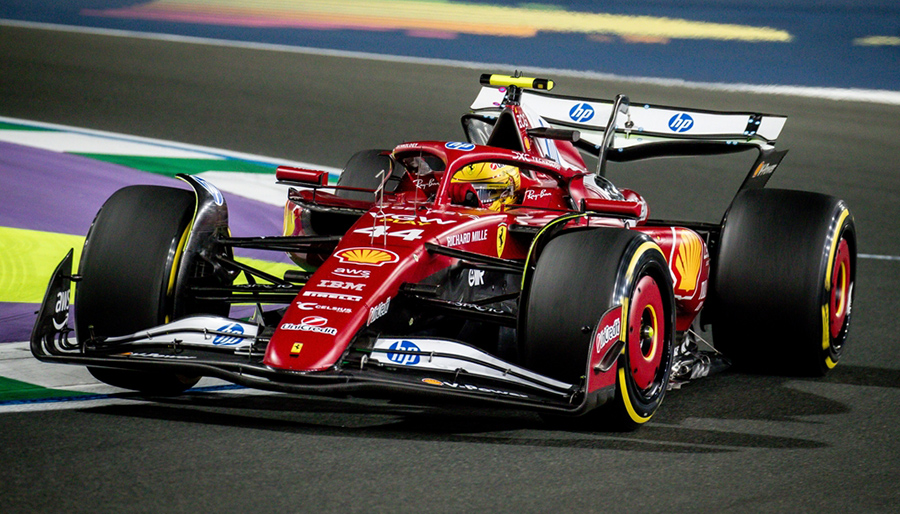
Examine the telemetry from a transition race from wet to dry. By observing the driver’s throttle trace, you can pinpoint the exact moment when decision paralysis grips the pit wall. When a driver has faith in their strategy team, their throttle control is steady and assured, even on old tires. They are aware assistance is on the way. They understand that the entry line to the pit lane is their lifeline.
When Charles Leclerc or Lewis Hamilton pilots a Ferrari amid a strategy crisis, the telemetry resembles a heart rate monitor during a panic episode. Minor adjustments to the accelerator. Soft presses on the brake pedal to sense for traction. Uncertainty at the peak as they are unsure whether to remain out for three additional laps or pit in five seconds.
The divide between data collection and data implementation at Maranello is a vast chasm. The information is right there on their high-definition screens. The weather radar displays a dense blue area over turn five. The driver is shouting over the radio that the tires are ruined. However, the strategy room examines the telemetry, observes the sky, glances at the screen, and concludes that the optimal approach is to inquire about the driver’s thoughts while he is preoccupied managing a high-speed spin.
Plan A Through Plan Z: The Illusion of Preparation
To cover up the fact that decisions are being made on the fly, Ferrari has developed a linguistic cloak: the famous Alphabet of Plans. Listen to any team radio broadcast on a Sunday afternoon, and you will hear race engineers cycling through letters like a bingo caller at a senior center.
“Okay, Charles, we are considering Plan C. But if we lose position to Norris, we will switch to Plan E. Thoughts?”
To the casual observer who lacks experience, this appears remarkably complex. It creates the appearance of an expert-level session on contingency planning. This suggests that deep inside the Ferrari motorhome, a group of experts has outlined every possible cosmic variation of the race, systematically categorizing them from Plan A through Plan Z.
In truth, possessing twenty-six ready-made plans is the most evident indicator that you have no plans at all. When a team clearly comprehends its pace and tire degradation, it follows a main strategy with one or two adaptable branching alternatives. You possess a designated pit window. You possess a strategy for an early Safety Car, and you have a strategy for a late virtual Safety Car. That’s all there is.
Introducing Plan F, Plan H, and Plan P on lap fourteen shows a lack of strategic flexibility; it resembles panic-shopping at a grocery store without a shopping list.
The core issue in Ferrari’s multi-plan approach is that it puts the strategic load on the individual with the least information: the driver. The driver in the cockpit senses the grip level beneath his right foot, but he cannot see where the gap in traffic is three miles ahead. He is unaware if an opponent in the midfield recently achieved a purple sector on hard tires. He lacks thirty radar monitors displaying the movement of rain cells throughout the valley.
When the pit wall asks a driver, “Do you think Plan D is better than Plan B?” while he is pulling four Gs through a chicane, they are abdicating their primary responsibility. They are taking the luxury of their air-conditioned control room, complete with live telemetry feeds and historical sector comparisons, and tossing it out the window. They are asking a person whose heart rate is 170 beats per minute to double as a chief strategist.
Praying for Safety Cars and Miracles
If you analyze the grand prix victories and podium finishes Ferrari has pulled off during strategic chaotic periods, a clear pattern emerges. Their most effective “race strategy” is not an aggressive undercut, a clever overcut, or a masterclass in tire management. It is pure, unfiltered chaos that happens to accidentally line up with their hesitation.
The Ferrari strategy handbook is based on three fundamental principles. The initial principle is the Graced Safety Car. Staying out on worn tires for four extra laps compared to all other teams due to uncertainty about which compound to use can sometimes lead to good fortune. A midfield vehicle will crash into the wall in sector three, yellow flags will be displayed, the pit lane speed limit will allow for a free pit stop, and Ferrari will seem like total masterminds.
They were not exceptionally talented. They were just standing in the rain with a bucket open, and by chance, God dropped a fish into it.
The second principle is Driver Heroics. When the strategy team places a driver in dense traffic on the incorrect tire compound, the sole factor maintaining the car’s points is the raw, unfiltered skill of the person driving. The driver must out-brake three cars heading into turn one, deplete their battery power in two laps, and wear out their tires just to regain the position that the pit wall handed away for free during the pit stop.
The third principle is the Hail Mary Weather Bet. In uncertain situations, bet on severe weather. If it’s lightly raining, equip full wet tires and hope for a storm. In case of heavy rain, remain on slicks and hope that the sun unexpectedly shines through the clouds in ten seconds. When these bets don’t succeed—which happens nine times out of ten—the team attributes it to “unforeseeable racing circumstances.” When they triumph, it is celebrated as iconic Italian fervor triumphing over detached engineering reasoning.
The Pit Lane Chaos: Mechanics, Wheel Guns, and Missing Tires
Strategy involves not only deciding when to halt but also carrying out the actual physical process of stopping. Even if the strategists somehow succeed in pulling off a brilliant move, the operational machinery below them often finds a way to inject slapstick humor into a high-stakes setting.
Think about the traditional late-call situation. A strategist worries at the final moment because a competing team flinched first. The order is shouted into the radio: “BOX NOW, BOX NOW!”
The driver enters the pit lane, locking his front tires as he reaches the pit limiter line. In the garage, utter chaos ensues. Mechanics are racing over tire piles, collecting heating blankets, and dashing toward the box.
We have witnessed Ferrari pit stops where the vehicle halts completely in the pit box, and only three crew members are present holding tires. The fourth tire remains in the garage’s back, snugly covered by its thermal blanket, as the left-rear tire technician desperately looks on the floor for a lost wheel nut.
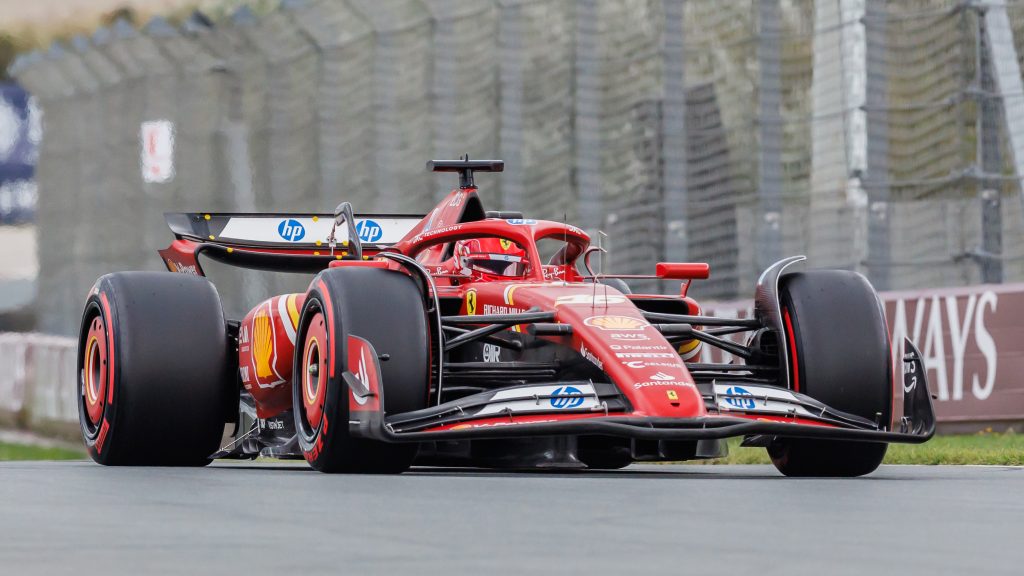
A torturous 12.7 seconds pass on the live broadcast timer. Twelve point seven seconds. In today’s Formula 1, a pit stop lasting 3.5 seconds is regarded as excruciatingly slow. A pit stop under two seconds is the benchmark established by Red Bull. A 12.7-second pause allows the television director to switch to three separate reaction shots of unhappy fans in the stands, replay the mistake in slow motion, and capture the team principal covering his face with his hands before the car even departs the pit.
And it deteriorates further. When operational chaos reaches its peak, basic physical principles become dangerous. Equipment is abandoned in the transit lane. Releases are indicated before the crew is away, leading to frightening near misses where cars fall into the path of approaching opponents or into their own team members.
When a driver exits the pit lane after a failed stop, anxiously inquiring over the radio if the wing adjustment was completed, and the engineer calmly responds that they “couldn’t manage” to turn the screw due to the chaotic tire change, it becomes clear that you’re no longer witnessing a top-tier sports machine. You are observing a live show that is completely unscripted.
The Psychical Cost to the Driver
Driving an F1 car at the limit requires complete mental immersion. A driver needs to be in a flow state, processing track conditions, brake markers, apex speeds, and engine modes entirely on instinct.
When you drive for Ferrari, fifty percent of your cognitive bandwidth is occupied by playing real-time risk manager against your own pit wall.
Listen to the radio tone of drivers who move to Ferrari versus drivers who leave it. When drivers first join Scuderia Ferrari, they are radiant with optimism. They speak in bright, enthusiastic tones. They trust the instructions coming through their earpieces. They execute the requested lap times, pit when told, and express unwavering faith in the team’s overarching vision.
Fast-forward two seasons. The tone changes completely. The voice on the radio becomes weary, skeptical, and sharp. Every strategic instruction from the engineer is met with an immediate counter-question.
“Are you sure about these tires?” “Who else is on this compound?” “If we pit now, where do we come out? Give me the exact gap.”
The driver can no longer afford to simply drive. He has to audit the pit wall’s homework while pulling five Gs through high-speed sweeps. He has to double-check their calculations, question their weather radar interpretations, and occasionally flat-out refuse to obey orders because he knows that following the team’s instruction will drop him directly into a thick wall of mid-pack traffic.
This creates a vicious cycle. The pit wall senses that the driver lacks confidence in their calls, so they become even more hesitant to make firm decisions. They start hedging, offering options instead of mandates, and asking for consensus. The driver, sensing the pit wall’s hesitation, becomes more stressed and vocal on the radio. The resulting feedback loop produces the exact chaos we see unfold on track weekend after weekend.
The Culture of Fear vs. The Culture of Execution
To understand why this happens repeatedly, year after year, across different team principals, different race engineers, and different driver lineups, you have to look beyond the pit wall hardware. You have to look at institutional culture.
In teams like Red Bull or Mercedes, the organizational culture is built around aggressive execution and psychological safety regarding mistakes. If a strategist calls for an undercut and it fails because the opponent managed an unexpected out-lap, the decision is analyzed, adjusted, and forgotten. The strategist is not drawn and quartered in the media. They are encouraged to take calculated risks because high-stakes racing demands boldness.
Ferrari operates under the intense, suffocating microscope of an entire nation. Every strategy mistake is not just an operational error; it is a national crisis analyzed on the front pages of Italian newspapers on Monday morning. This environment creates a culture dominated by fear of failure rather than a desire to win.
When a decision carries catastrophic career risk, human beings naturally lean toward inaction or consensus-seeking. Making a bold, aggressive call on wet tires that turns out to be wrong makes you the individual responsible for the disaster. Hesitating, waiting for someone else to pit first, or asking the driver to make the call distributes the blame. If the strategy fails, the team can say, “The driver preferred Plan C over Plan B based on his feeling of track conditions.”
This defensive decision-making framework is lethal in a sport where victory is measured in thousandths of a second.
While Ferrari strategists are carefully constructing a paper trail of consensus to protect themselves from Monday morning headlines, rival strategists are firing off split-second commands based on raw mathematical probability. One team plays not to lose; the other team plays to win.
What True Telemetry Tells Us About the Future
For Scuderia Ferrari to escape this cycle, the change must occur outside the aerodynamic wind tunnel or the engine dyno space. The automobile is often a remarkable feat of engineering. The chassis is quick, the engine generates remarkable horsepower, and the drivers consistently rank among the top talents in the world.
The issue does not lie with the horsepower. The car’s telemetry speed is not the limiting factor. The limiting factor is the processing rate of the human system located on the pit wall.
Unless Ferrari eliminates bureaucratic restrictions, dismantles the lengthy alphabet of failure, and grants its race engineers the authority to make prompt, data-informed choices without fearing public backlash, the narrative will stay the same.
Until that time, we will keep watching every race weekend. We will observe two exceptional, well-compensated drivers push a splendid red racing car to its limits at 180 miles per hour. We will observe the clouds forming above the track, notice the initial raindrops striking the visor, and anticipate the radio button illuminating.
And somewhere on the pit wall, someone will pick up a plastic Magic 8-Ball, give it a firm shake, look down at the little floating die, and slowly press the push-to-talk button: “We are checking.”