Disney Built a Cozy Game Around Early Access Monetization And It Worked
Disney has devoted almost a century to refining a distinctive kind of magic. The aroma of freshly made waffle cones drifts along Main Street, U.S.A. at eight in the morning. It is the rise of an orchestral string ensemble just as Cinderella’s outfit changes from tattered cloth into a sparkling silver dress.
It’s that intense, emotional sensation in your throat when you watch Mickey Mouse greet you during a nighttime parade. Disney offers more than just media or theme park passes; they provide a sense of emotional security. They promote the reassuring idea that despite how tumultuous, bleak, or tiring life becomes, there exists an enchanting realm where positivity prevails, no one matures too soon, and enchantment exists.
When Gameloft and Disney revealed Disney Dreamlight Valley in 2022, countless cozy gaming enthusiasts—including myself—believed we were about to receive the perfect digital refuge.
Picture this: a life-simulation game where you create a personalized homestead with Wall-E, prepare ratatouille with Remy, relax at the beach with Moana, and gradually clear a storybook valley of dark night thorns. It felt like the perfect combination of Animal Crossing: New Horizons and Stardew Valley, enveloped in a cozy, Pixar-style embrace.
The truth of Disney Dreamlight Valley is much more strategic. Beneath that vivid layer of paint exists one of the most intense, intricate monetization systems ever embedded in a snug game.
Disney and Gameloft didn’t just build a cozy life sim; they built a digital storefront powered by childhood nostalgia, masked it under the guise of an “Early Access Founder’s Pack,” and executed a textbook bait-and-switch that normalized free-to-play mobile casino tactics in a full-priced console title. And the most terrifying part? It worked flawlessly.
The Early Access Trojan Horse: Pay Now, We’ll Go Free-to-Play Later
To understand how Gameloft managed to pull this off without sparking an immediate, pitchfork-waving gaming revolution, you have to look at the original pitch for Disney Dreamlight Valley. When the game launched in Early Access in September 2022, Gameloft made a very specific promise to the gaming community:
You are buying a Founder’s Pack to play the game early and help test development. Once Early Access concludes, Disney Dreamlight Valley will transition into a completely free-to-play title for everyone. This was the core narrative that smoothed over every early concern.
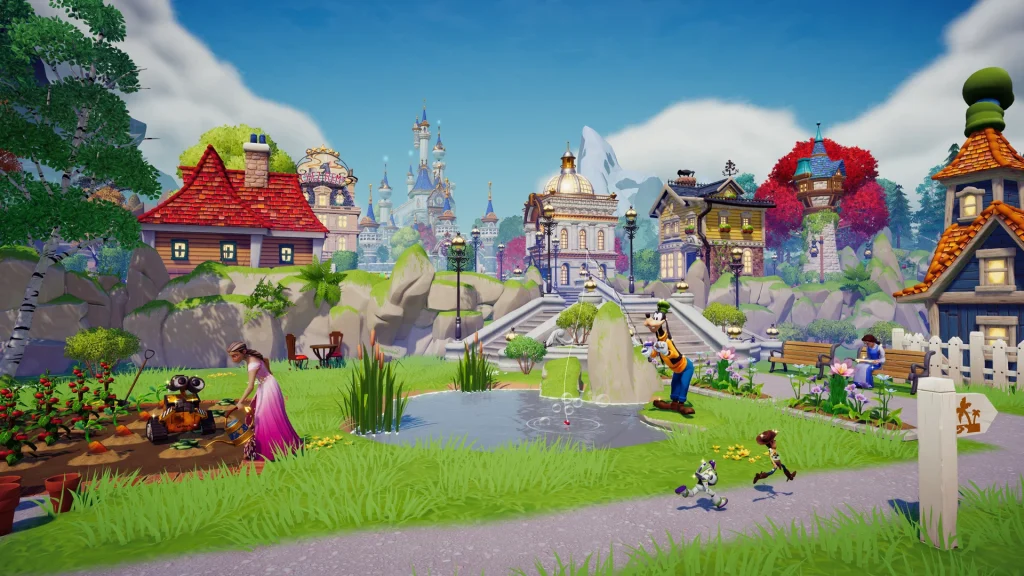
When players opened the game on day one and saw battle passes (called “Star Paths”) and premium currency (“Moonstones”), everyone shrugged it off. The community reasoned that it made sense to have mobile-style battle passes because it was going to be a free-to-play game in the future, so they would need a way to make money when the base game became free.
So, players willingly shelled out anywhere from thirty dollars for a basic Founder’s Pack to over seventy dollars for Ultimate Editions. We paid full price for an unfinished, bug-ridden beta under the explicit agreement that our upfront cash was an early-adopter pass for an eventual free-to-play live-service ecosystem.
For over a year, players bought Founder’s Packs, tested bugs, provided feedback, and engaged with microtransactions under this mental framework.
Then came late 2023. As the game approached its official full release version, Gameloft quietly dropped a massive bombshell announcement: They were canceling the free-to-play transition entirely.
Chloe’s Hot Take: Gameloft used Early Access as an ethics shield. They collected millions of dollars in box-price sales from early adopters under the promise of a future free-to-play model, built an in-game premium cash shop using that money, and then kept the box price anyway. It is the most profitable bait-and-switch in cozy gaming history.
Instead of going free-to-play as promised, Disney Dreamlight Valley officially launched as a mandatory forty-dollar base game. Think about the sheer audacity of this move for a second. Gameloft took a game that was explicitly designed, paced, and architected from the ground up to be a free-to-play title and slapped a permanent price tag on the front door while keeping every single mobile microtransaction mechanic inside intact.
They didn’t rebalance the economy to feel like a traditional box-price console game. They didn’t remove the cash shop. They simply realized that players were already so emotionally hooked on the Disney magic that they could charge a premium entry fee and keep the mobile cash register ringing at the same time.
Moonstones, Bundles, and the Anatomy of the Disney Cash Trap
Once you step past the entry fee, Disney Dreamlight Valley wastes no time reminding you that your wallet is part of the core gameplay loop. Let’s break down the sheer number of competing monetization layers crammed into this cozy valley:
Moonstones: The Obfuscated Premium Currency
Like every mobile game designed to detach your brain from real-world financial value, Dreamlight Valley uses an intermediate premium currency called Moonstones. You don’t buy a cute house skin for twelve dollars; you buy it for several thousand Moonstones.
By selling Moonstones in uneven, non-equivalent real-money bundles, Gameloft forces you into constant mathematical gymnastics.
If a premium item costs a specific amount of Moonstones that sits just above a standard bundle size, you can’t just buy the exact amount you need. You have to buy a larger bundle or combine two smaller ones, leaving you with leftover Moonstones that sit in your account like a psychological itch, begging you to top up again for the next rotation.
The Rotating Premium Shop and FOMO
Every single week, the game’s Premium Shop refreshes its inventory with exclusive furniture sets, character skins, player outfits, and house skins.
These aren’t just minor recolors. We are talking about iconic, high-demand items like the Haunted Mansion house skin, Prince Eric’s ship, or Stitch’s holiday outfit.
The shop operates on a strict weekly timer. If you don’t spend your Moonstones right now, that featured item disappears into the void for months. The game intentionally weaponizes your affection for classic Disney parks and films to create an artificial sense of urgency.
The Cozy Microtransaction Paradox: Nostalgia for Childhood Classics + Limited-Time Rotating Shop + Premium Currency = Financial Exploitation
Star Paths: The Double-Dipping Battle Pass
Every major content update arrives alongside a “Star Path”—the game’s version of a Battle Pass. To unlock the best rewards in a Star Path, you have to spend Moonstones to unlock the Premium track. Then, you are given a long list of tedious grind tasks like catching dozens of fish, talking to specific characters three days in a row, or mining rare gems.
If you don’t have time to complete these daily chores before the event timer runs out, Gameloft generously lets you spend more Moonstones to buy progress tokens and skip the grind you already paid to unlock.
Dream Bundles: Paywalled Story Content
As if a box price, premium shop, and battle pass weren’t enough, Gameloft took monetization one step further by introducing Dream Bundles. The most notorious example was the Dapper WALL-E Dream Bundle. For a heavy stack of Moonstones—roughly fifteen dollars in real-world currency—you unlocked a fancy suit outfit for WALL-E and a small series of exclusive story quests.
Let that sink in. In a full-priced game where the entire core selling point is befriending Disney characters and doing quests with them, Gameloft sliced off character questlines and locked them behind a paywall. It wasn’t a sprawling expansion pack. It was a single character outfit paired with a few fetch quests that belonged in the base game.
Weaponizing Nostalgia: Why Disney Gets Away With It
If an independent indie studio released a forty-dollar cozy farming game with a rotating premium shop, paid battle passes, microtransaction quest packs, and paid expansion DLC, the cozy gaming community would destroy them on Steam reviews within forty-eight hours.
So why did Disney Dreamlight Valley get a free pass from so many players? The answer lies in the unmatched, industrial-grade power of Disney Nostalgia.
Disney spent your entire childhood building an unbreakable emotional bond with you. They were there when you were six years old watching The Lion King on VHS in your living room. They were there when you cried during Up or fell in love with Tangled.
When you play Dreamlight Valley, you aren’t evaluating a video game’s economic balance like a cold, rational consumer. You are reacting with the warm, vulnerable part of your brain that loves Wall-E and wants to give him a hug.
Gameloft understands this emotional dynamic with surgical precision. They know that when a player sees a tiny, pixelated Wall-E looking sad because he doesn’t have his dapper suit, that player isn’t thinking about ethical game design standards.
They are thinking about how cute Wall-E looks in his little hat and how much they need to buy that for him. It is emotional hostage-taking wrapped in pastel colors. By placing beloved childhood characters inside a free-to-play monetization framework, Gameloft transformed our fondest childhood memories into behavioral leverage points to push microtransactions.
The Death of Wholesome Cozy Gaming
What makes the commercial success of Disney Dreamlight Valley so depressing isn’t just that Gameloft got away with it—it’s what this success signals to the broader video game industry.
For years, the cozy gaming genre was an anti-corporate sanctuary. Games like Stardew Valley, A Short Hike, Spiritfarer, and Slime Rancher proved that video games could be wildly profitable simply by being soulful, generous, and deeply respectful of the player’s time and money. Eric Barone spent nearly a decade giving Stardew Valley massive, game-changing content updates completely for free because he cared about his community.
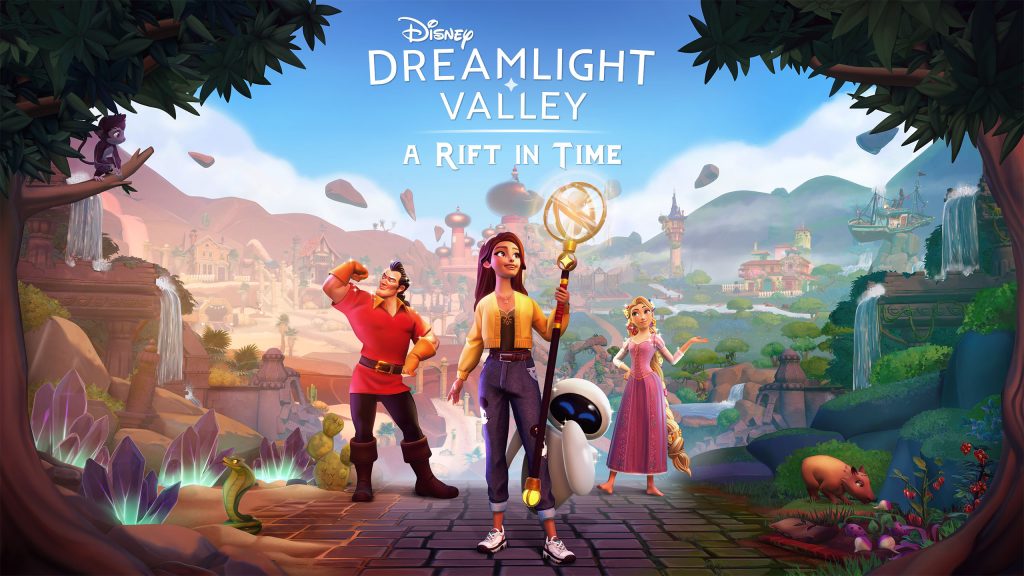
Disney Dreamlight Valley represents the complete commercialization and corruption of that cozy ethos.
Chloe’s Hot Take: Disney Dreamlight Valley is a harbinger of dark times for cozy games. It proved to corporate executives that cozy gamers aren’t looking for peaceful sanctuaries from real-world stress—they are a lucrative, untapped demographic waiting to be monetized with mobile battle passes and rotating cosmetic shops.
When corporate publishers look at Dreamlight Valley, they don’t see a cautionary tale of player backlash. They see a goldmine. They see that you can charge players a box price, sell them seasonal Battle Passes, charge them for quest packs, release paid expansion passes like A Rift in Time or The Storybook Vale, keep a weekly rotating cosmetic shop active, and still have a devoted fan base defending your choices on social media.
The game normalized dark patterns in cozy spaces:
Daily reset anxiety forces players to log in every day to check Scrooge McDuck’s store inventory for randomized furniture spawns.
Time-gated progression makes players wait real-world hours or days for crops to grow or quest locations to unlock, creating friction that tempts players to check back constantly.
Social showcase pressure arrives via “Snapshots” voting contests where players construct elaborate, high-value scenes using store-bought premium items to compete for free Moonstone rewards, turning decoration into a community popularity contest.
What was supposed to be a relaxing getaway from real-world adult responsibilities became another digital job with weekly deadlines, daily chores, and an aggressive pressure to spend money.
How to Enjoy the Valley Without Giving In
Look, I am not going to pretend that Disney Dreamlight Valley is a terrible game from top to bottom. The core art direction is stunning, the voice acting is charming, decorating your valley can be genuinely cathartic, and walking around a Disney park-themed island at sunset while the music plays is legitimately magical.
If you already own the game—or if you’re thinking about picking it up—you can still enjoy the valley without falling into Gameloft’s corporate money pit. Here are my personal, unbreakable rules for surviving the valley with your wallet intact:
First, adopt a hard zero-spend policy for Moonstones. Never, under any circumstances, buy Moonstone packs with real-world money. Treat the Moonstones you earn through base game quests, chest discoveries, and weekly DreamSnaps challenges as your absolute total budget. If you don’t have enough free Moonstones for a Haunted Mansion skin, let it go. It will come back around eventually.
Second, ignore the Star Path timer. The moment you start feeling stressed about completing dozens of Star Path duties before an arbitrary countdown timer hits zero, stop playing for the day. Remind yourself that a virtual Mickey sweater is not worth turning your relaxing evening into a frantic fishing grind.
Third, treat the game like an offline single-player title. Ignore the social media flex culture. Don’t look at subreddits where players spend massive amounts of money to build multi-story Disney park replicas. Decorate your valley for yourself at your own pace using the items Scrooge sells for in-game gold coins, not real money.
The Final Verdict: Disney Dreamlight Valley is a brilliantly designed, wildly fun life-sim held hostage by a predatory mobile monetization strategy. It is proof that even the most wholesome magic in the world can be repackaged as a digital cash register if you put a pretty enough bow on it.
At the end of the day, Disney Dreamlight Valley achieved exactly what its corporate overlords wanted: it proved that cozy gaming is no longer safe from the worst excesses of modern gaming monetization.
Disney didn’t build a magical sanctuary for you to escape to after a long day at work. They built a pristine, Pixar-styled shopping mall—and charged you forty dollars just to step through the front doors.
Now, I want to hear your confessions from the Valley! Did you buy a Founder’s Pack thinking the game was actually going to go free-to-play? Have you ever caved and bought Moonstones just to get a cute outfit for Wall-E or Stitch? Or did you drop the game the second Gameloft announced they were keeping the box price alongside the microtransactions?
Sound off in the comments below with your thoughts, hot takes, and Moonstone horror stories—and let’s talk about where cozy gaming goes from here!