Controlled Chaos: Why Slay the Spire 2 is the Ultimate Therapy for an Overthinking Brain
If you are an chronic overthinker, modern adult life feels like playing a video game where someone threw out the rulebook, turned off the UI, and left you to manage a dozen hidden timers that all go off at random intervals.
You sit down at your desk at night, and your brain immediately starts running background processes. Did I send that email with the right tone? What if my rent goes up next year? Am I eating enough fiber? Why did that person look at me weirdly in the grocery store aisle three days ago? Real life is a messy, chaotic storm of ambiguous feedback, unfair variables, and decisions where you often don’t know if you made the right choice until three months—or three years—down the road.
When your nervous system is spinning out of control from the sheer, unquantifiable weight of reality, popping into a high-octane multiplayer game like Call of Duty or Valorant isn’t going to help. It just dumps adrenaline onto an already flickering fire. Cozy farming sims like Stardew Valley are lovely, but sometimes they give your overactive brain too much idle time, leaving the door wide open for intrusive thoughts to sneak back in while you water virtual cranberries.
Enter Slay the Spire 2.
Mega Crit’s legendary deck-building sequel isn’t just an addictive roguelike. For those of us whose minds run on a constant loop of hypothetical disaster scenarios, it is a near-religious mental reset. It is a sandbox of pure, neat, quantifiable logic where the rules are absolute, the math is transparent, and every single disaster that happens to you is entirely, indisputably your own fault—and instantly fixable on the very next floor.
The Illusion of Chaos vs. The Beauty of Intention
At first glance, a roguelike deck-builder sounds like an odd prescription for anxiety. You draw a random hand of cards every turn, face off against terrifying alien horrors, and pray that the random number generator doesn’t drop you into an unwinnable fight on Act Two.
In reality, Slay the Spire 2 treats your brain with a level of respect and clarity that the real world completely fails to deliver. The core magic of the system lies in a single UI choice that Mega Crit perfected in the original game: Enemy Intents.
In almost every other strategy game, the enemy hides their intentions behind a fog of war. You have to guess what they are planning, prepare for worst-case scenarios, and constantly react to sudden, unpleasant surprises. In the Spire, the monster floating across from you explicitly tells you what it is going to do before you spend a single point of energy. You see a tiny sword icon with the number eighteen above a Cultist’s head. You know, with absolute mathematical certainty, that if you do not generate eighteen points of Block before clicking “End Turn,” you are taking physical damage.

Chloe’s Hot Take: Real life is terrifying because nobody walks around with an Intent Icon over their head. In the Spire, nobody lies to you. The monster tells you it’s going to hit you for twenty damage, gives you three energy, hands you five cards, and says, “What’s the play, doc?” That level of honesty is pure bliss for an anxious mind.
This small design choice completely transforms the psychological relationship between the player and the game. You are no longer managing panic; you are solving a self-contained logic puzzle. The game strips away the ambiguous horror of the unknown and replaces it with a clean, contained set of variables.
Your brain stops floating in a sea of “what ifs” and locks into a laser-focused state of hyper-local problem-solving. You aren’t worrying about the boss fight at the end of the Act; you are figuring out how to play three Strikes and a Defend to survive the next six seconds.
Micro-Decisions as a Cognitive Filter
Anxiety is essentially a failure of cognitive filtering. It happens when your brain loses the ability to distinguish between a minor inconvenience and a threat to your existence, treating a late bill payment with the same fight-or-flight intensity as a predator jumping out of the bushes.
Slay the Spire 2 works like a heavy-duty air filter for that mental noise. It forces your brain through a relentless series of bite-sized, highly impactful micro-decisions that demand just enough of your working memory to kick out intrusive thoughts, without exhausting you.
Think about the sheer volume of choices crammed into a single ten-minute stretch of gameplay:
Do you take a path through an Elite combat to grab a powerful Relic, or do you play it safe through a Rest Site because your health is hovering at thirty percent? Do you add a heavy damage card like Carnage to your deck now to solve your immediate need for Act One frontload burst, even though it will clog up your deck’s scaling loop in Act Three? Do you spend your gold on a potion, remove a basic Defend, or hold out for a shop in the next zone?
In real life, making dozens of choices a day causes decision fatigue because the consequences are murky and the feedback loops are delayed.
In the Spire, the feedback loop is immediate and crisp. You pick a card, you test it in the very next combat, and you see the exact value it provides. If adding that extra attack card clogged your draw pool and caused you to draw zero block cards against a big hit, you immediately understand the causal chain. You learn, you adapt, and you adjust your strategy on the next turn.
This immediate feedback loop acts like a cognitive reset button. It replaces the overwhelming paralysis of real-world choice with a structured, satisfying sense of agency. You are making hundreds of meaningful decisions, but because they exist inside a clean rulebook, your brain registers the activity as empowering rather than exhausting.
Radical Accountability: Why Losing Feels Good
There is a dark, funny paradox at the heart of Slay the Spire 2: you are going to lose. A lot. You will die to basic hallway fights, you will miscalculate poison stacks, and you will get squashed by Act Bosses right when you thought your deck was unstoppable. Yet, dying in the Spire almost never triggers real anger or hopeless frustration.
In modern life, when things go wrong, it often feels deeply unfair. You get passed over for a promotion because of office politics; your car breaks down because of a hidden mechanical flaw you couldn’t have predicted; a sudden policy change ruins your weekend plans. We carry immense anxiety because so much of our failure is caused by external forces completely outside our control.
In Slay the Spire 2, external excuses don’t exist. RNG (random number generation) exists, sure. You will draw bad hands. You will get offered card rewards that don’t fit your archetype. But every veteran player knows that the seeds are almost always winnable if you make the correct choices. When you die on Floor 34, it is rarely because the game cheated you. It is because back on Floor 12, you got greedy, skipped a block card, and took an unnecessary Elite fight when your health was too low.
Chloe’s Hot Take: The best feeling in gaming is realizing a loss was 100% your own fault. It sounds counterintuitive, but if a failure is my fault, it means I have the power to fix it. If I lost because the game was unfair, I’m helpless. If I lost because I played like an idiot, I can just play smarter on the next run.
That radical accountability is oddly comforting. It restores your belief in cause and effect. In a world where hard work doesn’t always guarantee a clean outcome, the Spire promises that better decisions will yield better results. When your run ends in a pile of ash, there is no lingering existential dread—just an immediate, burning desire to hit “New Run,” pick a fresh character, and apply what you just learned.
The New Roster: Expanding the Brain Spa
What makes Slay the Spire 2 even more effective as a mental palate cleanser than its iconic predecessor is the sheer depth of its expanded mechanics and character design.
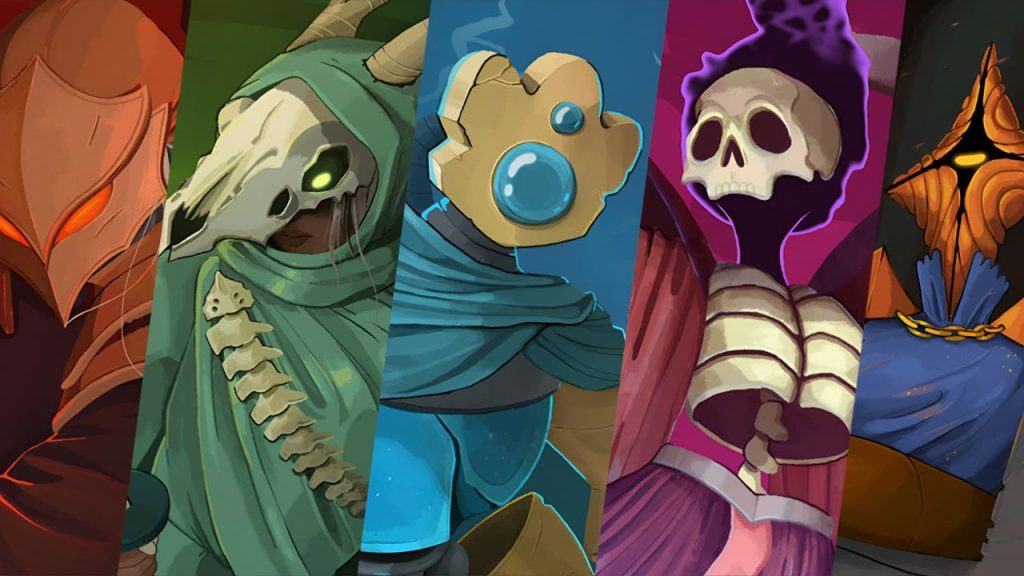
The introduction of new classes, like the Necrobinder, along with revamped card pools for legacy favorites like the Ironclad and Silent, adds entirely new dimensions of tactical math to crunch. Managing the Necrobinder’s soul-resource economy while balancing health costs feels like conducting a tiny, high-stakes orchestra in your head.
Furthermore, the addition of branching path choices, shifting map events, and new relic interactions means your brain can never rely on pure muscle memory. You can’t just autopilot the same “strength build” or “poison deck” every time. The game forces you to remain fully present, adapting to the unique draft history of your current run.
Being forced to stay fully present in the current moment is, coincidentally, the exact definition of mindfulness.
Meditation apps tell you to focus on your breath to clear your head, but for an overactive brain, staring at the back of your eyelids for twenty minutes often just gives your thoughts more room to bounce around. Slay the Spire 2 achieves the exact same therapeutic goal through active engagement. It kidnaps your attention, straps it to a spreadsheet of cool card combos and relic synergies, and doesn’t let go until your mental noise has completely cleared out.
The Perfect Digital Antidote
We don’t play games like Slay the Spire 2 just to escape reality. We play them to remind ourselves what it feels like to have total agency over a system.
When you spend an hour navigating the Spire, weighing probabilities, making calculated sacrifices, and finally landing the killing blow on an Act Three boss with a perfectly executed thirty-damage card loop, you aren’t just winning a video game. You are proving to your nervous system that you can sit with chaos, break it down into manageable pieces, and solve it step by step.
The real world will still be there when you close the game. Your emails will still be waiting, life will still be unpredictable, and the future will still be uncertain.
But for a little while, as you sit in the quiet glow of your monitor, watching your hand draw five fresh cards from a deck you built with your own hands, everything makes sense. The math adds up, the intent is clear, and the next choice is entirely yours to make.
Now I want to hear from my fellow Spire climbers! What is your go-to “brain reset” deck archetype when you’ve had a stressful week? Are you a die-hard Ironclad strength stacker, or do you find peace in the intricate card-draw engine of the Silent? Drop your favorite card combos, hot takes, and spire strategies in the comments below!