Five-Day Tea Breaks: The Majestic Absurdity of Test Cricket
Here’s my perspective: we exist in a society that has utterly yielded to the deity of instant dopamine. Everything in today’s sports environment is designed for immediate satisfaction. We need highlight clips of fifteen seconds, reaction videos lasting six seconds, shot clocks of twenty seconds, and three-minute sudden-death overtime intervals.
We applaud sports that eliminate every tiny second of inactivity so our highly stimulated minds never have to face a moment of silent contemplation. When an event extends beyond three hours, contemporary television executives begin to panic in their conference rooms, urging league commissioners to implement stop-clocks, pitch timers, and reduced quarters to prevent viewers from switching away.
And then, quietly seated in a stadium bathed in sunlight in Melbourne, London, or Mumbai, there exists Test cricket. Test cricket observes our hyper-efficient, fast-paced contemporary society, chuckles softly, prepares a new cup of Earl Grey, and remarks: Hold my cucumber sandwich.
Consider the sheer structural madness of this sport for a moment. We are discussing a sports event featuring twenty-two elite, high-earning athletes who enter a field donned in immaculate, coordinated white uniforms. They perform in intense, ninety-five-degree temperatures for six hours each day. They perform this activity for five consecutive days. They dedicate a total of thirty hours breaking down their muscles, running as much as twelve miles daily, and facing ninety-mile-per-hour leather missiles aimed directly at their ribs.
Following thirty complete hours of intense physical battle, mental strife, and severe dehydration, there is a strong possibility that the game concludes in a perfect, even tie. Not a sudden-death tiebreaker with high drama. Not a penalty contest. Simply a handshake, a courteous nod, and an absolute tie.
If you described that idea to an alien newly arrived on Earth, they might think it was a complex type of mental torment created by a long-gone society. If you described it to a typical fan of American sports, they would be utterly confounded.
However, I must inform you that Test cricket—with its five-day battles, its afternoon cucumber sandwiches, and its intensely suspenseful draws—is not merely a ridiculous remnant of the Victorian age. It is covertly the ultimate psychological, physical, and tactical achievement in the annals of human sports.
The Civilized War: 90 MPH Leather Bombs and Earl Grey Tea
To fully grasp why Test cricket is so wonderfully chaotic, you must first recognize its strange, opposing dual nature. It is a sport founded on a base of harsh, primal physical aggression cloaked in the superficial decorum of a nineteenth-century garden gathering.
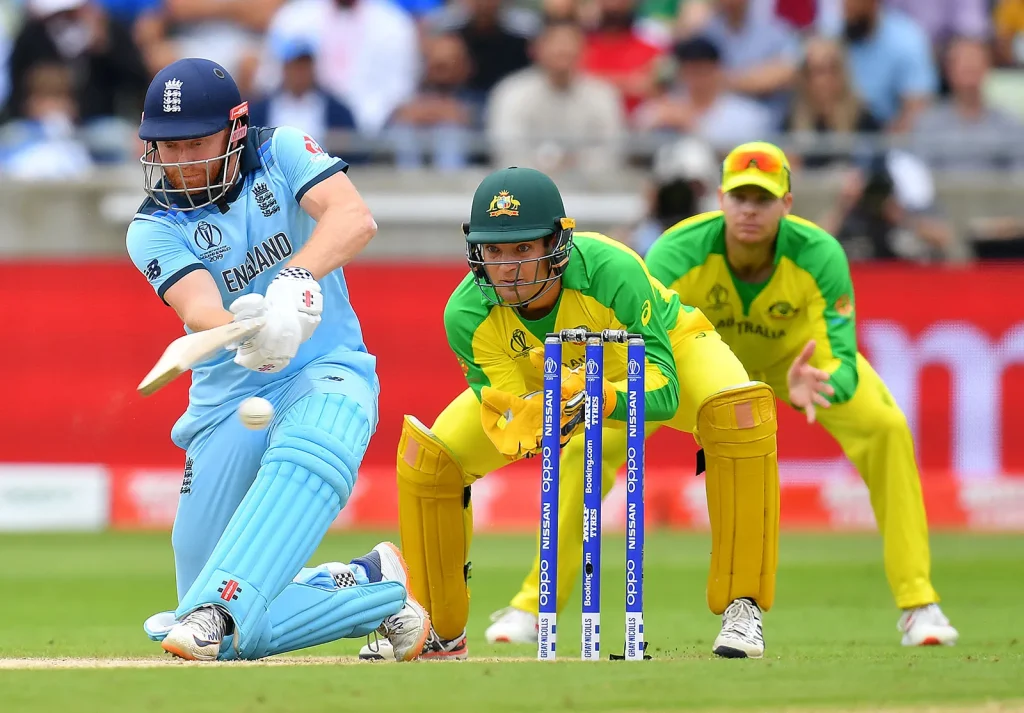
On one side, there exists pure, unfiltered athletic danger. A fast bowler in Test cricket is essentially a genetic anomaly. They get a thirty-yard head start, dash towards a line at full speed, push forcefully into the ground, fix their front knee, and throw a solid, stitched piece of red leather weighing five and a half ounces straight at a person positioned twenty-two yards away.
When a fast bowler releases the ball at ninety-five miles per hour, it strikes the hard-packed ground, skids, and leaps straight toward the batter’s chin, ribs, or toes. There is no protective gear like what you observe in the NFL. Batters don lightweight foam padding, a plastic helmet, and a hope. If a hitter misreads the bounce by a quarter inch, that red ball could shatter their jaw, snap their fingers, or crush their ribs. It is a fierce, fast-paced struggle for survival where fear remains a persistent, oppressive presence.
Now, turn to the opposite side of the coin. At precisely 3:40 PM each afternoon, amid this intense physical combat, an entirely ridiculous event occurs. The two on-field umpires glance at their pocket watches, halt the play, take off the small wooden bails from the stumps, and announce “Tea.”
The performance halts entirely. The quick bowler who was moments ago attempting to crush a batter’s head halts his run. The player who was just dodging for his life brings his bat down. Both squads leave the field side by side, enter their designated locker rooms, and take a required twenty-minute Tea Break.
They not only consume performance-electrolyte drinks from bright plastic containers. They settle in for a genuine, classic high tea. They enjoy cucumber sandwiches made with fresh-cut cucumbers, scones spread with butter and clotted cream, sponge cakes, and drink Earl Grey tea from fine porcelain cups.
Twenty minutes later, they clean the cream from their fingers, reattach their helmets, step back into the sunlight, and continue throwing solid leather balls at each other’s heads at ninety miles per hour.
In what other aspects of human culture can this be found? Can you picture Patrick Mahomes getting tackled in the third quarter of the Super Bowl, while the officials stop the game so both the Chiefs and the 49ers can relax on folding chairs at midfield and enjoy tea sandwiches for twenty minutes? Can you picture LeBron James stopping the NBA Finals in the fourth quarter to enjoy warm chamomile tea with the rival bench?
It is complete, majestic absurdity. It is a sport that refuses to abandon its polite, civilized rituals no matter how intense, dangerous, or modern the physical battle becomes.
The 5-Day Pitch: A Living, Breathing Organism
In nearly every other sport played globally, the surface where the game occurs is a fixed, unchanging factor. A basketball court constructed from polished maple wood on Monday evening will function precisely the same way on Friday evening. A Wimbledon tennis court may shed some grass, yet it stays essentially level. A synthetic grass football field is engineered to provide steady traction from the first quarter through the fourth.
Test cricket completely denies this consistency. In Test cricket, the ground—particularly the twenty-two-yard stretch of dirt in the center referred to as the pitch—acts as a dynamic, evolving, deteriorating character that wholly changes throughout the five-day duration.
At the start of a Test match on Day 1, the surface is new. It often exhibits a delicate green luster of grass. It retains moisture from the early morning dew. The soil below is tough, compressed, and firm. During the initial two days, the pitch performs wonderfully for batsmen. The ball rebounds straight and high from the solid ground. It exits the bat smoothly, enabling hitters to execute beautiful cover drives and pull shots.
By Day 3, the sun has been scorching that patch of earth beneath a magnifying lens of ninety-degree temperatures for twelve continuous hours. The humidity dissipates entirely. The grass wilts. The exterior starts to dry, expand, and fissure.
By Day 5, that same field has transformed into a post-apocalyptic battlefield. Numerous heavy footprints created by 200-pound fast bowlers driving their spikes into the earth have transformed the space around the batter into deep, dusty pits. Extensive, spiderweb-like fissures appear in the middle of the field, occasionally broad enough to fit a coin into.
Now, suddenly, the game is completely unhinged. When a spin bowler pitches the ball into one of those Day 5 cracks, the ball doesn’t bounce straight. It might hit a crack and sharp-turn ninety degrees to the left, taking off like a cobra striking at the batter’s throat. Or it might hit the edge of a crater, keep completely low, and skid across the ground at ankle height.
A batter who scored a breathtaking, elegant 150 runs on Day 1 looks like a clumsy amateur on Day 5, flailing at balls that behave like erratic, physics-defying bouncy balls.
This surface evolution creates a profound tactical chess game. A team that wins the toss on Day 1 has to look at the sky, look at the grass, and project forward five days.
Do you want to bat first while the pitch is smooth, even if your tired bowlers have to bowl on the crumbling Day 5 minefield later? Or do you risk batting last when the pitch is spitting dust into your face? You are playing against the slow, inevitable physical decay of the Earth itself.
The War of Attrition: 15 Mini-Battles in One Game
To grasp how a team actually wins a Test match across five days, you have to understand how the time is structured. A single day of Test cricket is divided into three distinct two-hour sessions:
The Morning Session runs from 11:00 AM to 1:00 PM, followed by a 40-minute Lunch Break.
The Afternoon Session runs from 1:40 PM to 3:40 PM, followed by the legendary 20-minute Tea Break.
The Evening Session runs from 4:00 PM to 6:00 PM, concluding the day’s play.
Multiply three sessions a day by five days, and a single Test match is made up of fifteen individual two-hour mini-battles.
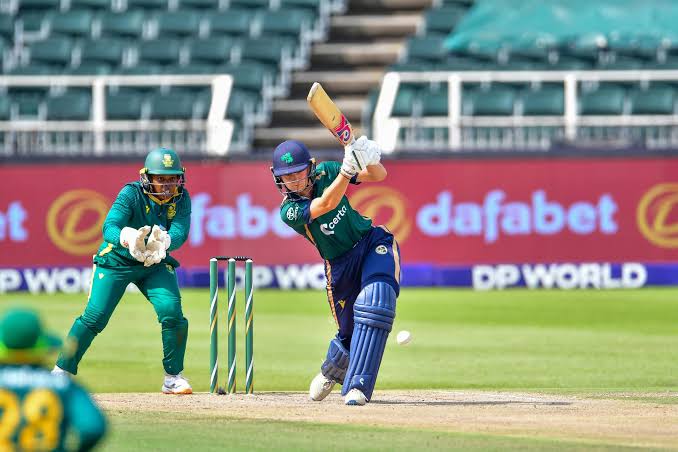
This arrangement generates a storytelling cadence that no other sport can match. In a 90-minute soccer game or a 48-minute basketball match, momentum changes rapidly, yet it is limited by brief durations. In Test cricket, momentum resembles a sluggish, massive freight train that requires hours to shift its course.
A team can be entirely devastated in the Morning Session on Day 2. They might lose three essential batters without scoring, plunging their supporters into a whirlwind of disappointment. However, since the game lasts for five days, they don’t lose immediately. They need to collect themselves around their lunch plates, head back out for the Afternoon Session, and dedicate the next two hours to a steady, deliberate recovery.
It’s possible to excel in twelve of the fifteen sessions in a Test match and still lose the game entirely due to a disastrous ninety-minute collapse on the afternoon of Day 4.
The mental endurance needed to sustain complete concentration throughout fifteen distinct sessions is astonishing. A batter positioned at the crease is not concentrating solely on one play. They may remain out there in the scorching sun for seven continuous hours, confronting 350 separate deliveries.
Each of those 350 deliveries demands the utmost physical focus. For half a second, the batter needs to analyze the bowler’s wrist angle, follow the ball’s seam in the air, assess the bounce from the ground, determine whether to leave, block, or hit, and perform an exact physical action.
If their concentration slips for a single microsecond on delivery number 349, if their foot steps an inch too far to the left, or their elbow drops by a fraction of a degree, the ball catches the edge of the bat, shoots to the wicketkeeper, and seven hours of flawless work vanishes in a split second. There are no second chances. There are no timeouts. You are simply out, walking all the way back to the pavilion while your teammates stare at you in silence.
The Art of the “Draw”: Why a Tie Isn’t a Failure
Now we arrive at the single concept that breaks the minds of non-cricket fans more than anything else: the Draw. In the modern Western sports landscape, we have been conditioned to view draws or ties as an absolute abomination. We hate ties so much that sports leagues have invented increasingly chaotic gimmicks to eliminate them.
The NFL implemented sudden-death overtime regulations. Major League Baseball implemented a designated runner on second base during extra innings. Soccer employs penalty shootouts solely to ensure a clear winner. We require both a champion and a defeated. We seek a definitive narrative conclusion.
Test cricket completely dismisses that concept. In Test cricket, a Draw is not a dull, unsatisfying escape. A Day 5 Draw frequently stands as a thrilling, breathtaking testament to athletic endurance that competes with any triumph in sports history.
The way a Test match draw functions mathematically is as follows: for a team to win a Test match, the bowling side MUST get all twenty batsmen of the rival team out during their two innings before the time expires at the conclusion of Day 5.
If the bowling team accumulates 500 runs, while the batting team only totals 200 runs, but the batting team successfully maintains their last two batsmen at the crease when the clock hits 6:00 PM on Day 5, the match ends in a Draw. The fact that one team scored 300 additional runs is irrelevant! If you do not manage to take all twenty wickets before time expires, you lose.
This establishes one of the most exciting, high-pressure situations in all of sports: The Day 5 Blockathon. Envision this situation: It’s 3:00 PM on the fifth and last day of an intense Test match. The home side requires only two additional wickets to achieve a stunning win. The visiting team is hundreds of runs behind and has no possibility of winning the game.
In any other sport, the game would be over. It would be blow-out garbage time. In Test cricket, the game suddenly transforms into a desperate, claustrophobic siege. The away team’s last two remaining batters give up entirely on trying to score runs.
They stop swinging. They stop attacking. Their entire world narrows down to one singular, desperate goal: survival. They are going to stand in front of those wooden stumps for the next three hours and physically block every single ball that comes near them until the sun goes down.
The captain of the bowling team surrounds the batter with eight fielders standing just feet away. They are hovering like vultures, crouching in a tight circle around the bat, breath so close the batter can smell what they had for tea. The bowler charges in, slamming the ball into the Day 5 dust. The ball turns wildly, spits off the cracks, and bites toward the batter’s ribs.
The batter absorbs the impact on their pads, their chest, their fingers, and their bat. They block. Dot ball. They do it again. Dot ball. They do it for fifty consecutive overs. Three straight hours of pure, agonizing defense. The crowd is screaming on every single ball. The fielding team is appealing frantically to the umpire on every thud of the pad. The tension in the stadium is so thick you could slice it with a knife.
If those two batters manage to hold out until 6:00 PM, if they survive the final delivery of the fifth day with nine wickets down, they celebrate like they just won the World Cup! They have successfully fought off an entire nation’s bowling attack for five days and snatched a draw from the jaws of defeat.
It is an epic, cinematic defensive stand. It is the sporting equivalent of holding a castle wall against a massive sieging army until the relief troops arrive at dusk.
Why We Must Preserve the Absurdity
We live in an era where sports are being ruthlessly streamlined, sanitized, and sped up to fit into the algorithmic feeds of our smartphones. Everything is being compressed into bite-sized, high-octane content designed to hold our fracturing attention spans for three seconds at a time. Test cricket stands as a glorious, defiant middle finger to that entire philosophy.
It is a sport that demands patience. It requires you to sit back, let the game wash over you, and appreciate the slow-burning narrative arcs that take days to unfold. It teaches you that a contest doesn’t need to be fast to be thrilling. It proves that thirty hours of tension, shifting weather, pitch decay, and mental exhaustion can create a deeper, richer emotional experience than any fast-paced, twenty-minute spectacle ever could.
Test cricket is absurd. It is ridiculous that world-class athletes stop for tea while fighting for their lives in ninety-degree heat. It is absurd that a game can go on for five full days and end without a winner.
Derrick’s Hot Take: The absurdity of Test cricket is precisely what makes it legendary. In a modern sports landscape that feels increasingly fake, over-commercialized, and hyper-optimized for short attention spans, Test cricket remains the ultimate raw, unfiltered test of human character. It is an unhurried, beautiful, five-day existential drama disguised as a game, and it is unquestionably the purest, most romantic sport on the face of the Earth. Long live the five-day marathon, long live the crumbling Day 5 minefields, and long live the mid-afternoon cucumber sandwich.