The 90-Degree Wet Bulb Trap: How Miami’s July Humidity Will Suffocate England’s Pressing System
Playing high-tempo, high-pressing football in Miami’s July heat and humidity is a physical impossibility. I’ve pulled the environmental data and matched it against England’s average ‘passes allowed per defensive action’ (PPDA). If they attempt their usual aggressive high-block, they are going to physically redline by the 60th minute. Let’s look at the climate-forced tactical shifts both managers must make.
Every single summer tournament, we go through the exact same exhausting tactical ritual. European pundits sit in air-conditioned television studios in London, Paris, or Berlin, looking at magnets on a tactical whiteboard. They talk endlessly about setting high pressing triggers, squeezing the central pitch envelope, and forcing turnovers in the opposition’s defensive third through sheer, unyielding athletic intensity.
It sounds brilliant when you are scribbling notes during a winter match in Yorkshire or a cool, crisp autumn evening in Munich. But when you transport those exact same high-block tactical diagrams into the oppressive, airless furnace of South Florida in mid-July, those clean arrows on the whiteboard don’t just break down—they run directly into an immovable brick wall of basic human physiology.
If Thomas Tuchel’s England steps onto the grass at Hard Rock Stadium in Miami Gardens attempting to run their standard European high-intensity press, they aren’t just taking a calculated tactical gamble; they are walking directly into an environmental death trap. Let’s pull back the curtain on thermal stress telemetry, break down the physics of the Wet Bulb Globe Temperature (WBGT), and run a hard audit on why South Florida’s summer weather will destroy traditional Gegenpressing.
The Thermal Wall: Understanding the Physics of the Wet Bulb Trap
To understand why traditional high-pressing football fails in Miami, you have to stop looking at standard dry-bulb thermometer readings. When a weather app tells you it is 91 degrees Fahrenheit in Miami Gardens at 5:00 PM in July, your brain might think that while it is hot, these are multi-million-dollar professional athletes who train in state-of-the-art facilities and can surely handle ninety degrees for an hour and a half.
That thinking is a complete, catastrophic delusion. What actually dictates human physical limits isn’t dry heat; it’s the Wet Bulb Globe Temperature.
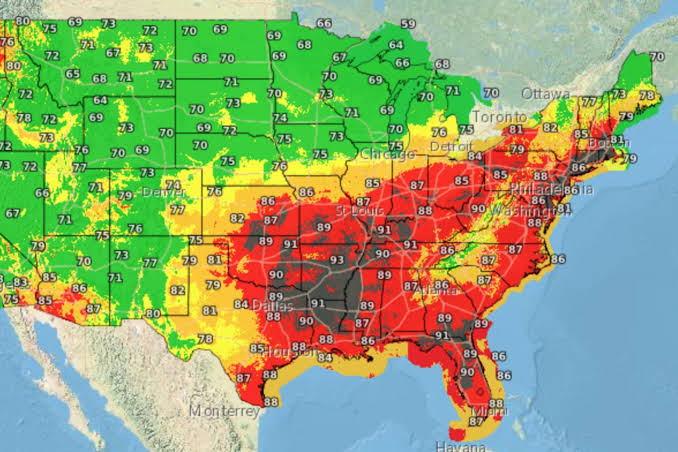
The Wet Bulb measurement takes into account air temperature, wind velocity, direct solar radiation, and most importantly, relative humidity. It measures the absolute lowest temperature that can be reached by evaporative cooling of a water-wetted surface.
In a normal human body under heavy physical exertion, sweating is our primary defense mechanism against fatal internal overheating. When sweat evaporates from your skin into the surrounding atmosphere, it pulls thermal energy away from your core, keeping your internal body temperature regulated near a safe baseline.
When relative humidity inside a stadium pushes past eighty percent at ninety degrees ambient heat, the air around the player is already so thoroughly saturated with water vapor that sweat literally cannot evaporate. Your internal cooling system completely fails. The human engine keeps firing at 180 beats per minute, pouring immense heat into the bloodstream, but the radiator is entirely blocked.
When an athlete’s core body temperature pierces the 102-degree mark under these moisture-saturated conditions, the central nervous system steps in to save the organism from heatstroke. It drastically cuts down neuromuscular firing rates. Your brain literally turns down the physical throttle. Explosive sprints become deliberate trots, recovery runs become slow jogs, and high-intensity press triggers simply collapse into passive standing.
Derrick’s Take: I am so tired of sports media treating weather like a minor inconvenience, as if players just need to drink more electrolyte water at the cooling break. You cannot drink your way out of a physical law. When the relative humidity reaches 85% in South Florida, your sweat is just expensive water rolling down your chest doing absolutely nothing to cool you down. Asking players to sprint 11 kilometers in those conditions while maintaining an aggressive defensive press isn’t building mental toughness—it’s asking a Ford Mustang to race around a track with cardboard wrapped around the radiator.
The Pressing Audit: PPDA vs. The Miami Microclimate
Let’s directly compare this thermal reality with England’s tactical identity under Thomas Tuchel. In contemporary tactical metrics, the benchmark for assessing pressing intensity is Passes Per Defensive Action (PPDA). This metric evaluates the count of passes an opponent can complete in their own defensive two-thirds of the field before the defending team engages in a tackle, interception, or pressure event. A smaller number signifies a hyper-aggressive, incessant high press, whereas a larger number denotes a passive, cautious low block.
In optimal European weather like a brisk sixty-degree night at Wembley or Signal Iduna Park, England functions with an intense PPDA rate near eight to nine. When England concedes possession in the attacking third, Jude Bellingham, Bukayo Saka, and Declan Rice perform swift, high-energy recovery sprints. They shut down passing lanes in a second and a half, compelling the opposing goalkeeper or center-backs to make rushed, low-efficiency long passes.
In a typical European climate, an athlete can perform numerous high-intensity sprints each game since their body recuperates during short pauses in action as heat naturally dissipates. In Miami’s July weather, the recovery period between intense sprints significantly increases.
If England attempts to maintain their usual aggressive, low-PPDA press in Miami Gardens, their midfield engine room will exhaust its glycogen energy reserves and hit thermal overload before the hour mark. When a pressing team redlines in heat, they don’t fail gradually; they fail catastrophically. The gaps between the forward line and the defensive line widen from a tight twenty-five yards into a gaping forty-five-yard canyon. The opposition’s ball-playing midfielders suddenly find endless time and space to turn, look up, and carve open a stranded back four.
Derrick’s Take: The math doesn’t lie, and neither does human biochemistry. If Tuchel trots out a lineup instructed to chase down opposition center-backs in the 15th minute in Miami, he is burning his team’s fuel tank for a short-term reward.
You might get a couple of early high-turnover chances, sure. But by minute 60, Declan Rice and Kobbie Mainoo are going to be standing on the pitch with lead weights tied to their boots. An elite opponent will sit back, let you burn yourself out in the midday sun, and then completely carve you up like a holiday roast once your legs give out.
The Hard Rock Microclimate: The Canopy Shadow Fallacy
A frequent misconception exists among casual fans about the architectural design of Hard Rock Stadium. Stephen Ross invested more than half a billion dollars to build a huge, open-air shade canopy over the seating area at Hard Rock Stadium, which received widespread acclaim as an engineering wonder. It shields ninety percent of the audience in the bleachers from the intense, blazing South Florida sun.
People think that since the stadium features a canopy, the field itself is a cool, shaded retreat. It is completely contrary.
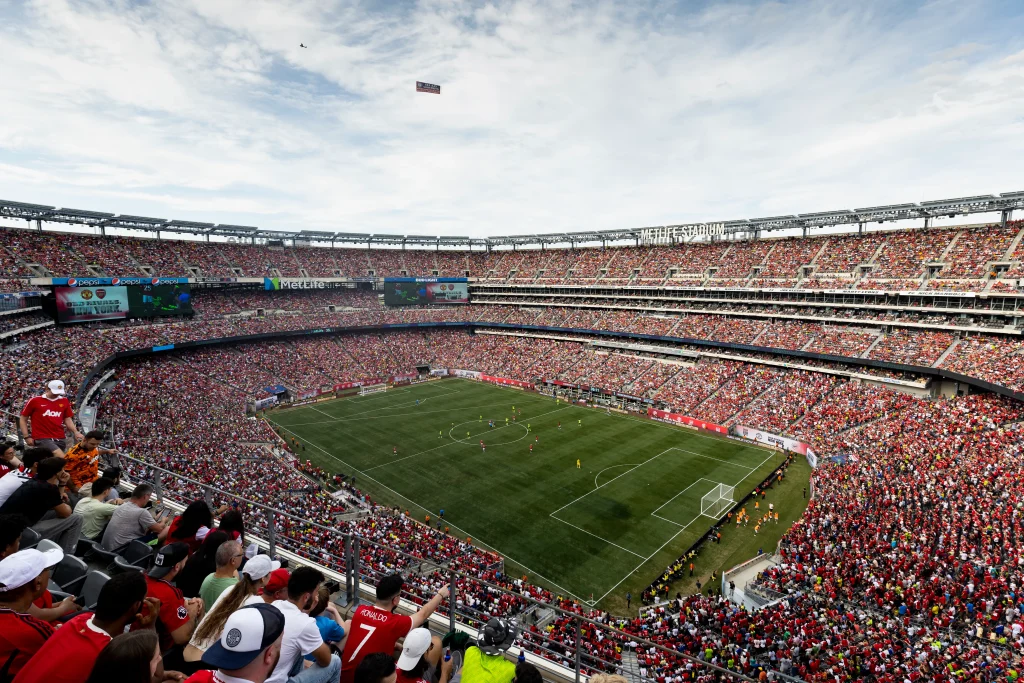
The canopy was intended to shield spectators from rain and direct sunlight, yet its large rectangular form functions as a substantial barrier for heat and moisture. It blocks the dominant coastal winds blowing from the Atlantic Ocean. At field level—encircled by 65,000 shouting spectators, towering concrete barriers, and dense grass—air movement approaches zero.
As the spectators in the upper bowl relax under the canopy roof and savor a refreshing breeze, the twenty-two athletes on the field are essentially racing inside a vast, moist greenhouse. The glowing heat reflecting from the natural grass raises the temperature at ground level much more than the officially recorded figures from the airport weather station.
Derrick’s Take: Everyone looks at photos of Hard Rock Stadium and thinks it’s shaded so it won’t be that bad. Give me a break. I’ve stood on that pitch level in July. It isn’t a breezy shaded park; it’s a sauna with a roof opening. The canopy traps the humidity right above the grass. There is zero air circulation down there. You are breathing in heavy, hot air that feels like wet velvet. Expecting European-trained athletes to execute complex high-speed pressing patterns inside that dome without suffocating is complete tactical fantasy.
The Tactical Blueprint: The Climate-Forced Pivot
So, what is the alternative? How does a world-class manager navigate the 90-degree wet bulb trap without completely abandoning their team’s competitive edge?
The answer lies in tactical economy. The managers who succeed in South Florida won’t be the ones with the most aggressive pressing schemes; they will be the ones who manage their team’s thermal output with surgical precision.
Tuchel must completely scrap the idea of continuous high-pressing. England cannot afford to press the opposition’s goalkeeper or center-backs unless a clear, catastrophic mistake occurs. Instead, England must retreat into a disciplined, compact mid-block or low-mid hybrid structure.
By dropping the defensive engagement line back twenty yards, England forces the opposition to carry the ball forward into congested space. This drastically reduces the distance England’s midfielders have to sprint. Instead of covering sixty yards of open pitch on a recovery run, they only cover fifteen to twenty yards within a tight, structured envelope.
Furthermore, in high-temperature environments, possession is not just an offensive tactic; it is a physical recovery strategy. When you hold the ball, you force the opposition to run, shift their lateral defensive blocks, and expend precious cooling reserves. England must move away from fast, vertical directness and embrace long, methodical, rhythmic ball possession.
Passing the ball sideways between their center-backs and goalkeeper for forty-five seconds might draw boos from casual fans in the stands, but it is physically essential. It allows England’s central midfielders to drop their heart rates back into a manageable zone without giving up control of the match.
Finally, under modern five-substitute rules, bench management becomes the ultimate tactical weapon. In normal weather, managers wait until the 70th or 75th minute to make tactical substitutions. In the Miami Heat Trap, waiting that long is coaching malpractice. By refreshing the entire wide and central midfield engine room early in the second half, a manager can inject fresh legs into the squad right when the opponent’s core body temperature is crossing into the danger zone.
Derrick’s Take: If Thomas Tuchel tries to prove how brave and modern his tactics are by forcing England into an aggressive high-press in Miami, he should be fired on the tarmac before the plane even leaves Florida.
International tournament football isn’t about ideological purity; it’s about survival. The smart play is to lock down a compact, suffocating mid-block, pass the ball slowly to keep your heart rate down, let the opponent burn themselves out in the heat, and then bring fresh, fast substitutes off the bench at the 60-minute mark to tear them to shreds.
Derrick’s Final Verdict: The Environmental Audit
The information is truthful. The principles of human thermal regulation cannot be altered, negotiated, or surpassed by sheer determination. When the referee signals in Miami, the main rival on the field won’t solely be the eleven athletes in the rival colors. It will also be the heavy, humid air within Hard Rock Stadium.
If England adjusts, adopts a conservative, slow-paced mid-block, and utilizes possession to conserve energy, their top-tier technical skills will see them through. Should they become overconfident, disregard the weather data, and attempt to execute high-tempo Gegenpressing during a South Florida summer, they will find themselves as yet another warning story lost in the Miami humidity.
Derrick’s Bottom Line: Respect the climate, drop the block, slow the game down, and save your sprints for when they actually count. In the 90-degree wet bulb trap, the team that tries to run the fastest is always the first one to fall.