Why “Perfect” CGI Killed the Raw Danger of Mad Max
There is a precise moment in 2015’s Mad Max: Fury Road that lives permanently in my head. It is not a major plot point, nor is it a dramatic monolog. It occurs during the middle of the desert chase, when a pole-cat War Boy swings eighty feet in the air across a moving convoy, his body swaying against the real Namibian horizon while the sheer momentum of a multi-ton monster truck rattles the camera rig.
You can see the dust clogging the lenses. You can see the slight, terrifying wobble in his footing. You can physically feel the hot desert wind ripping through the frame. Your brain, firing millions of evolutionary threat-assessment neurons, registers something simple and undeniable: a real human being risked his life to capture this frame.
That instinctual, profound feeling of tangible danger is the core belief of the Mad Max series. Since George Miller destroyed his own used cars on Australian backroads in 1979 with a limited budget, this story has become cinema’s pinnacle of practical stunt performance. It was the opposite of clean Hollywood studio productions.
This is exactly why watching the prequel for 2024, Furiosa: A Mad Max Saga, felt like a deeply emotional and surreal experience. I want to be completely open from the very beginning. Furiosa isn’t a sluggish movie. George Miller continues to be an exceptional creator of visual mythology, while Anya Taylor-Joy infuses a powerful, quiet intensity into the main warrior that captivates throughout her time on screen. The story spans a vast timeline, covering years of sorrow, retribution, and strategic politics throughout the Wasteland.
Throughout its lengthy duration, I consistently felt removed from the experience by an overpowering sense of digital fluidity. The wasteland ceased to seem like a scorching, sun-soaked stretch of genuine stone and searing diesel; it appeared like a flawlessly crafted, highly polished video game cutscene. The actual grime, the frightening heaviness of collapsing metal, and the true risk of death had been substituted with countless flawless, immaculate visual effects sequences.
In refining the digital canvas, Furiosa unintentionally eliminated the wild, unpredictable peril that initially made George Miller’s world iconic.
Part I: Why Fury Road Felt So Terrifyingly Real
To grasp what happened with Furiosa, we need to first break down the revisionist narrative around Fury Road. Film enthusiasts frequently idealize the 2015 classic as a movie filmed entirely without digital effects, suggesting that George Miller merely drove fifty modified cars into the desert, pressed record, and wished for no casualties.
That is clearly a falsehood. Fury Road featured more than two thousand visual effects sequences. The famous blue-and-orange color scheme underwent significant alterations during post-production, safety harnesses were removed digitally, background skies were replaced, and entire sandstorms were created within rendering farms.
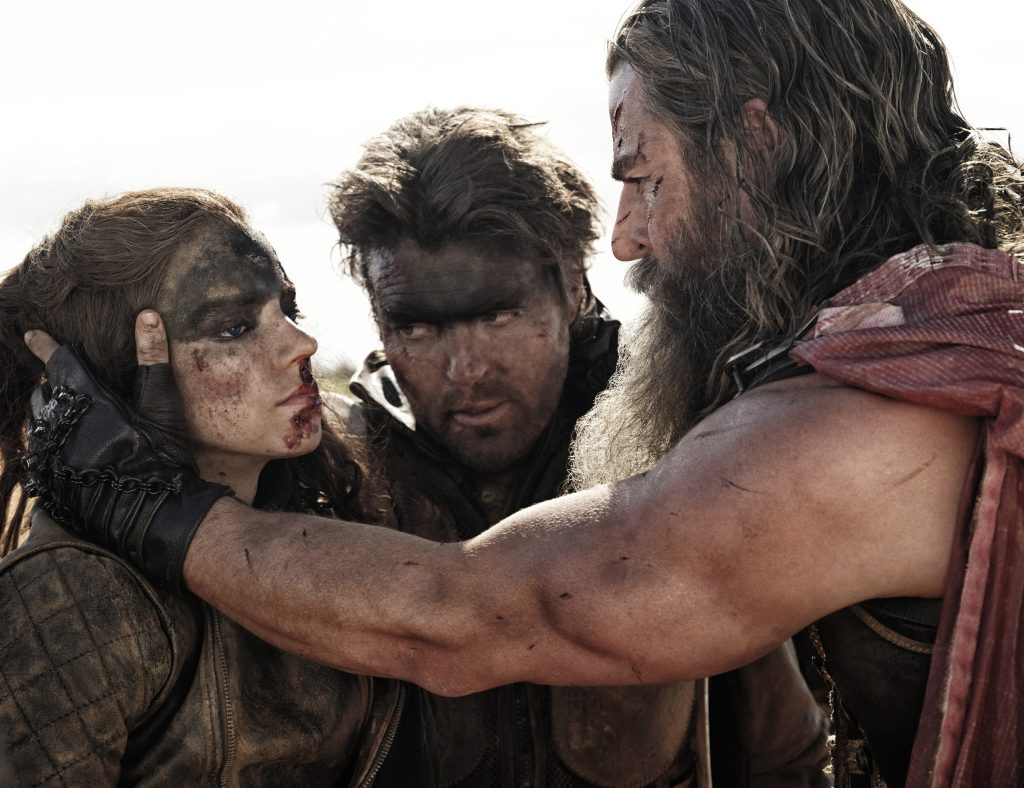
The reason Fury Road stands as a benchmark for action films is that George Miller employed digital techniques as an unseen brush over a backdrop of complete physical reality. The fundamental baseline of each individual shot was authentic. The War Rig was a real, operational 18-wheeler that was driven at fast speeds over Namibian salt flats. The stunt artists were genuine acrobats suspended from authentic metal poles attached to moving frames. The vehicles that overturned, collided, and detonated were authentic metal machines collapsing under genuine kinetic forces.
My Take: CGI works best as a frame, never as the painting. When you use digital tools to erase a safety wire attached to a stunt driver jumping off a real moving truck, the shot feels miraculous. When you use digital tools to render the truck, the driver, the jump, and the dirt simultaneously, the shot loses its soul.
In Fury Road, the camera was constrained by the laws of physics. It wobbled because it was mounted to a chase vehicle bouncing over real terrain. It suffered from lens flare because it was pointed at the real sun. The dust on screen was real particulate matter getting stuck in the grease on the actors’ faces. That physical friction creates a psychological baseline for the viewer. You know, without having to analyze it intellectually, that the danger on screen is grounded in physical truth.
Part II: The Digital Polish of Furiosa
As you move from Fury Road to Furiosa, the visual language changes immediately. Rather than transporting a large cast and crew to isolated desert sites for extended periods of frustrating, sun-baked practical shooting, a considerable amount of Furiosa was shot within controlled studio environments utilizing bluescreens, greenscreens, LED volume stages, and extensively altered digital compositing.
The effect of this change is perceived right away in the illumination and depth of focus. In Furiosa, the sun appears to radiate with an eerie, artistic flawlessness. The horizon lines appear oddly smooth, and the space between the foreground figures and the background landscape often feels entirely detached, resembling a hyper-stylized comic book scene made real.
Reflect on the grand, pivotal action scene of the film: the fifteen-minute attack on the Octoboss and his paragliding marauders while the War Rig moves across the vast desert. In theory, it is an exceptional example of dynamic choreography. Bombs are being dropped from paragliders above, motorbikes are circling like wolves below, and young Furiosa is hiding under the truck chassis while defending against attackers with improvised weapons.
Even though the idea is impressive, the execution continually reminds the audience of its own artificial nature. As a paraglider descends, the illumination on the actor’s face contrasts sharply with the intense, direct brightness of the exposed sky. As a motorcycle flips and crashes at seventy miles per hour, it glides through the air with a haunting, weightless grace that reveals its digital roots.
Instead of holding your breath because a human stunt performer is performing an impossible feat, you relax into your theater seat because your brain recognizes that you are watching a complex computer algorithm calculate collision dynamics. The scene is technically “perfect,” but it is emotionally sterile.
Part III: Why Your Brain Knows When a Stunt Is Fake
Why are human beings so incredibly good at spotting computer-generated imagery, even when it is executed by world-class visual effects houses? The answer lies in the subtle laws of Newtonian physics that our eyes process every single day.
When a genuine three-ton car collides with a sand dune at high velocity, numerous chaotic and unpredictable events occur immediately. The shock absorbers compress with great force, transmitting vibrations throughout the frame. Countless individual grains of sand burst outward in unpredictable, non-linear paths. The metal bends and rips inconsistently due to flaws in the steel’s structure. The tires slip, causing a rough, slight jolt as they slide over the dirt.
A computer simulation, regardless of how advanced its fluid dynamics or particle engines are, fundamentally functions based on code created by human programmers. It computes probability distributions and force vectors. Consequently, when a CG vehicle flips in a contemporary film, it typically exhibits a smooth, flowing motion that seems just a bit overly fluid, a touch too uniform, and a fraction too weightless.
This occurrence is frequently called the Uncanny Valley of physics. We often discuss the Uncanny Valley concerning human faces—such as in digital de-aging or CGI actors. However, there exists a similarly damaging Uncanny Valley of movement and mass.
In Furiosa, this problem affects nearly all significant vehicle scenes. When characters leap between moving vehicles, their bodies suspend in the air for a brief moment longer than usual. When blood splatters or oil leaks, it disperses on the screen with a neat, digital uniformity that misses the chaotic, sticky uncertainty of real liquids. When blasts occur, the flames surge in flawless, symmetrical columns that strikingly resemble the identical pre-rendered fire assets utilized in numerous other contemporary blockbusters.
When there is no physical weight on screen, there is no physical consequence. And when there is no physical consequence, the life-or-death stakes of the Wasteland evaporate.
Part IV: The Legend of Dementus and the Loss of Tactile Violence
The dependence on digital backgrounds and flawless compositing affects not only the vehicle action but also subtly diminishes the performances and character designs. Consider Chris Hemsworth’s depiction of the sinister warlord Dementus.
Hemsworth is delivering an incredible, unpredictable performance. He portrays Dementus as a dramatic, tragicomical ruler donned in a billowing white cape that gradually collects red dust as his psyche declines. He drives a chariot drawn by three thundering motorcycles—an image so magnificently ridiculous that it could only come from the imagination of George Miller.
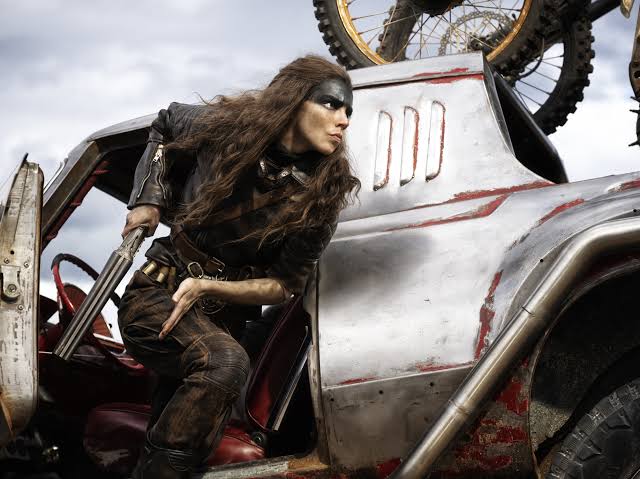
However, observe how Dementus interacts with his surroundings in contrast to Immortan Joe or the People Eater in Fury Road.
In Fury Road, Immortan Joe appeared as a deteriorating bio-hazard nightmare because Hugh Keays-Byrne was physically donning a substantial, yellowing plastic breathing mask that clouded with genuine moisture in the African heat. His skin, covered in pustules, was layered with genuine chalky powder that settled into his creases as he perspired. You could nearly sense the gangrene, rust, and old gasoline emanating from his body.
In Furiosa, even with the prosthetic noses, artificial teeth, and intricate costumes, the characters often appear as though a luxury Hollywood wardrobe team had outfitted them just forty-five minutes before the director yelled action. Their garments are worn, but they exhibit that polished, airbrushed appearance that shouts “costume shop aging.” The grime on their faces resembles meticulously applied makeup instead of the dirt that gathers after weeks of resting on engine blocks in a barren desert.
When Dementus stands atop his observation vehicle to give a speech to his biker horde, the crowd surrounding him often feels like a digital copy-paste job. Instead of a terrifying, chaotic sea of thousands of unique, filthy, desperate weirdos packed together in a real quarry, you see digital doubles waving their arms in rhythmic synchronization in the background.
This lack of tactile grime robs the story of its emotional terror. The Wasteland is supposed to be a place of unimaginable cruelty, scarcity, and physical decay. When the world looks clean, painterly, and digitally controlled, the violence stops feeling dangerous and begins feeling like a stylized comic book ballet.
Part V: Is George Miller to Blame, or Is This the Inevitable Fate of Modern Cinema?
It is easy to point fingers at studio executives or blame visual effects artists for this shift, but the truth is far more complex and depressing.
George Miller is in his upper seventies. The making of Mad Max: Fury Road was an iconic, exhausting ordeal that almost ruined the actors and team. They endured more than eight months in the Namibian desert navigating logistical issues, chilly nights, sweltering days, malfunctioning gear, studio closures, and ongoing safety risks. It was truly a miracle that no one lost their life while filming that movie.
Anticipating a director in his late seventies to replicate that same physical strain for Furiosa was merely impractical. Managed studio spaces, LED backdrops, and extensive CGI utilization are not merely artistic decisions; they are essential for logistics, budgeting, and safety in contemporary large-scale filmmaking.
Additionally, Miller has consistently been an auteur intrigued by technological progress. He was among the first innovators of digital filmmaking methods with Babe and Happy Feet. He sees computer-generated imagery not as a low-quality alternative; instead, he perceives it as an endless digital canvas that frees his creativity from the rigid limits of real-world physics.
In Furiosa, Miller aimed to narrate a tale that extends over fifteen years, encompasses vast stretches of land, includes grand military assaults on Gastown and the Bullet Farm, and highlights incredible action sequences that would be nearly impossible to film safely in reality. CGI allowed him to envision grander ideas, construct bigger sets, and design more intricate action scenes without jeopardizing the safety of stunt actors.
The Tragedy: The very technology that liberated George Miller’s imagination is the exact technology that diminished his world’s impact. By removing the real-world constraints that forced him to innovate with steel, grease, and practical stunts, the film lost the very friction that gave his vision its iconic, legendary edge.
This is the great paradox of modern blockbuster filmmaking. As tools become more powerful and visual effects become capable of rendering literally anything the human mind can conceive, the stakes of what we see on screen decrease. When anything is possible, nothing feels impressive.
Part VI: Bring Back the Bruises and the Real Sand
Furiosa: A Mad Max Saga is certainly not a terrible movie. Indeed, when set against the vast ocean of interchangeable, mass-produced superhero films that fill contemporary cinemas, it stands out as a creation of unique, intense creative perspective. Anya Taylor-Joy is exceptional, Tom Burke imparts a composed, romantic grace to Praetorian Jack, and the film’s narrative ambition is more impressive than nearly everything else released lately.
Had Furiosa been launched as an independent post-apocalyptic fantasy film entirely unrelated to the Mad Max series, we would probably be lauding its imaginative world-building and dynamic visual appeal. Yet, it resides in the lengthy, daunting shadow of Fury Road—a movie that demonstrated to the globe that actual physical peril, genuine stunt performance, and authentic desert dust produce a level of cinematic enchantment that no computer program can hope to imitate.
By opting for flawless digital regulation instead of raw, erratic real-world disorder, Furiosa exchanged the essence of the Wasteland for the ease of the studio set. It provided us with a refined, stunning, intricately detailed display, yet it overlooked the essential reality that originally made George Miller’s universe iconic: in the Wasteland, if you can’t sense the warmth of the flames and the aroma of the burning diesel, you are merely observing a light exhibition.
Hollywood needs to understand that perfection is tiresome. Return the bruises to us. Return the damaged steel to us. Return to us the genuine sand.