How Spider-Man: Brand New Day Strips Away the Stark Tech to Save Peter Parker’s Soul
At a point in the peak of the contemporary Marvel Cinematic Universe, I looked at Spider-Man and understood that I was no longer viewing a street-level hero. I was viewing Iron Man Junior.
Don’t misunderstand me. Tom Holland’s portrayal throughout his initial trilogy was captivating, energetic, and rich with emotion. Yet amidst the nanotech armor that seamlessly formed around his jaw, the orbital drone attacks managed by a stylish pair of shades, the billionaire guidance from Tony Stark, and the spontaneous journeys through the cosmic and multiversal abyss, the fundamental essence of Peter Parker became obscured in the technology. He possessed a lethal mode incorporated into his spandex.
He had a smart assistant providing strategic guidance in his ear during gym class in high school. If his suit was ruined, he didn’t remain on his bed with a needle and thread and a sore thumb; he boarded a multi-million-dollar Stark jet and allowed a 3D printer to craft a completely new high-tech suit from liquid metal while enjoying Led Zeppelin.
It was entertaining, extravagant, and an unmistakable display, yet it removed the unique emotional core that established Spider-Man as the best comic book character ever: the relentless, oppressive struggle of being impoverished, isolated, and tethered.
When Marvel Studios revealed Spider-Man: Brand New Day, the shared concern from the fan community was evident. Soft reboots in large cinematic franchises are famously challenging to handle. They frequently appear as urgent business adjustments, disregarding years of character growth solely to market a new series of action figures or to reestablish a convoluted timeline.
My perspective on Spider-Man: Brand New Day is that it signifies the most essential, bold, and narratively crucial shift in contemporary superhero films. Utilizing the tragic blank-slate conclusion of No Way Out—where the whole world forgets Peter Parker’s identity—while brutally removing every billionaire’s safety net, every advanced gadget, and every Avengers-level contingency strategy, the filmmakers did more than simply reboot the character.
They preserved his storytelling essence. Spider-Man: Brand New Day compels Peter Parker to return to the tough, stunning, unromantic truth of traditional street-level heroism, demonstrating that Spider-Man is at his most heroic when he lacks funds, has no AI assistance, and can only escape by climbing directly up a grimy brick structure in Queens.
Part I: How Modern Blockbusters Lost the Working-Class Hero
To truly understand why Brand New Day seems like a refreshing gust of crisp New York air, you need to examine the narrative snare the MCU created for Peter Parker during the last ten years. The original brilliance of Stan Lee and Steve Ditko’s creation stemmed from a groundbreaking idea: a superhero whose life was continuously complicated by possessing superpowers. Superman possesses a Fortress of Solitude. Bruce Wayne possesses limitless wealth and a batcave. Tony Stark owns a house located on a cliff.
Peter Parker lived in a small, chilly bedroom in a humble Queens home with a kind, elderly aunt who struggled to pay the rent. When Peter battled the Vulture or the Lizard in the classic comics, he wasn’t solely concerned about getting smashed through a wall; he was anxious about missing his job at the Daily Bugle, flunking his chemistry exam, or damaging his only winter jacket.
His bravery was characterized by sacrifices. Each hour he dedicated to swinging through Manhattan to thwart a bank robbery was an hour he missed out on earning a salary or nurturing a personal connection. The MCU, in its haste to incorporate Spider-Man into the wider Avengers universe, gradually diminished those compromises.
By tethering Peter’s origin directly to Tony Stark’s fortune and tech empire, the stakes shifted from personal survival to corporate inheritance. Peter was no longer a working-class kid trying to keep his head above water; he was the chosen heir to a military-industrial weapons empire. When he ran into a problem, he had access to a billionaire’s satellite defense system. When he needed a new suit, he was given nanotech armor capable of surviving a fight with Thanos on an alien planet.

While that framing made sense within the massive, world-ending scale of Infinity War and Endgame, it fundamentally damaged the grounded mechanics of a Spider-Man story.
When a hero has infinite technical resources, a fight with a local criminal stops being a desperate struggle for survival and turns into an exercise in software management. The physical reality of the character disappears into a cloud of CGI suit-swaps and laser blasts. You lose the tactile grit of a teenager stitching up his own bleeding ribs in a cramped bathroom while trying not to wake up his aunt in the next room.
Brand New Day recognizes that high-tech convenience is the absolute enemy of Spider-Man’s emotional stakes. The film doesn’t just reduce his tech; it utterly demolishes it.
Part II: The Narrative Masterstroke of Total Anonymity
The introductory segment of Spider-Man: Brand New Day is a brilliant display of subtle, sorrowful world-building. Peter Parker is all by himself. The Doctor Strange spell at the conclusion of the last chapter not only wiped away the public’s awareness of Peter being Spider-Man; it also eliminated Peter Parker from existence in the perception of the state and his loved ones.
He lacks a social security record, a high school transcript, a bank account, friends, and family. Ned is unfamiliar with him. MJ gazes past him with the courteous, detached look of an unfamiliar person in a café.
In less capable hands, a film could have used its initial forty-five minutes desperately trying to find a means to reverse that enchantment, whether through a magical object, a scientific glitch, or a brief Avengers appearance to restore order. Brand New Day chooses the daring, brilliant approach of allowing Peter to experience that solitude.
Peter resides in a small, gloomy, walk-up flat in Manhattan. The radiator bangs and shakes throughout the night. The corners of the wallpaper are lifting. The plastic bucket catches the leak from the kitchen sink. He pays his rent with wrinkled bills earned from delivering pizzas and doing low-wage side jobs. His suit isn’t an extraordinary creation of Stark nanotechnology; it’s a handcrafted cloth suit made from inexpensive lycra, stitching, and goggle lenses purchased at a nearby hardware shop.
My take on this visual and environmental shift is that it immediately restores the physical weight of the character. When Peter pulls on that hand-sewn suit, you feel every stitch. When he swings through the city, there is no HUD overlay showing him wind speeds, building angles, or optimal landing trajectories. There is no snarky AI voice offering tactical advice. There is only a tired, brilliant, broke twenty-year-old kid relying entirely on his own reflexes, his own intellect, and his own raw instinct.
Without Tony Stark’s tech acting as a buffer between Peter and the pavement, every punch hurts more. Every fall carries consequence. When Peter’s suit gets torn in a street fight, it stays torn for the rest of the movie. He has to spend his Sunday evening sitting on his worn-out mattress with a needle and thread, manually repairing his mask while his hands tremble from exhaustion.
That simplicity restores the heroism to its purest form. He isn’t fighting because he was given a high-tech mission by an international intelligence agency; he is fighting because he lives in this neighborhood, sees people suffering, and feels a deep, agonizing moral responsibility to help, even when the city offers him nothing in return.
Part III: The Pressure Cooker of Local Stakes and Why Street-Level Villains Matter
A significant weakness of contemporary superhero films is the fixation on world-ending, apocalyptic scenarios. Each film seems driven to evoke the annihilation of the Earth, the breakdown of the galaxy, or the vanishing of the whole multiverse.
When the stakes are eternally boundless, they ironically lose all significance. Our minds struggle to handle the emotional impact of a massive blue beam shooting into the sky to obliterate the planet for the fifteenth occasion. Spider-Man: Brand New Day dramatically reduces the scale of conflict, resulting in the emotional stakes feeling exponentially greater.
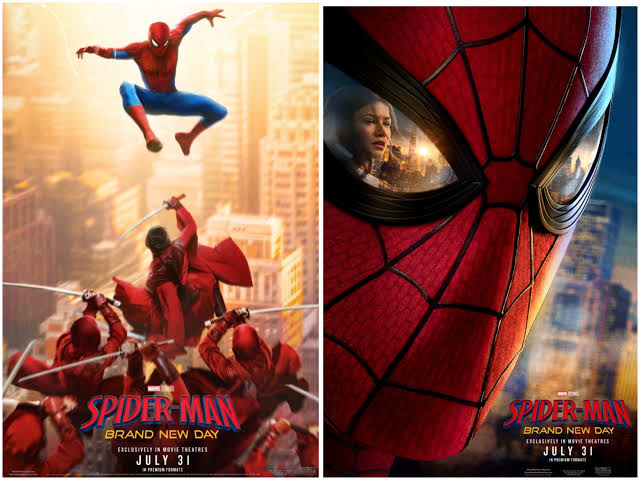
The danger in Brand New Day is not a violet extraterrestrial gathering enchanted gems or a multiverse conqueror attempting to alter existence. The danger is local, structural, and unsettlingly human. It occurs in unclean backstreets, wharves, social hubs, and apartment complexes. The antagonists are not demigods; they are gang leaders, corrupt government officials, and desperate street enforcers exploiting a city grappling with economic decline.
By anchoring the conflict in community interests, the film allows Spider-Man to embrace his authentic purpose: a protector of the neighborhood. Notice how the film constructs a simple action sequence.
In an Avengers film, Spider-Man battling a surge of CGI extraterrestrial outriders creates a dazzling display of motion and visual effects. In Brand New Day, Spider-Man thwarting a robbery at a midnight bodega in Harlem holds far greater emotional weight.
Peter is acquainted with the bodega owner. He knows the daughter of the guy is attending college. He understands that if this shop is damaged, the insurance will not pay for it, and a family-run business that has been a part of the community for thirty years will close down. Unexpectedly, Spider-Man isn’t merely focused on defeating the villains; he is diligently ensuring that a display case remains intact, that a wayward bullet avoids striking a refrigerator, and that the owner stays unharmed.
The struggle transforms into a dance of urgency, concern, and spatial consciousness. My perspective on this structural change is that it underscores the essential distinction between a soldier and a local hero. A warrior overcomes the foe regardless of the sacrifices. A community guardian defends the delicate environment of a locality.
When Peter confronts a foe lurking in the depths of New York’s criminal realm, he can’t request an airstrike. He cannot soar off in an advanced aircraft. He must outwit his adversary by utilizing fundamental physics, makeshift chemistry derived from common cleaning supplies, and his own strong determination.
It turns the narrative back into an intellectual puzzle. We get to see Peter Parker the genius scientist shine through, not because he is using a billion-dollar laboratory, but because he is mixing chemicals in a glass jar in his kitchen to create a web-fluid formula that can dissolve a villain’s body armor.
Part IV: The Isolation of the Secret Identity
The removal of high-tech safety nets and the erasure of his social network re-establishes the core tragic engine of the Spider-Man mythos: the absolute agony of the secret identity.
In the previous MCU trilogy, the secret identity was effectively abandoned very early on. Aunt May knew he was Spider-Man. Ned knew. MJ knew. Happy Hogan knew. The Avengers knew. Peter had a massive, supportive team of people around him who were constantly validating his choices, patching his wounds, and helping him manage his dual life.
While that was a fresh, fun take for a high school-era trilogy, it stripped away the profound psychological isolation that makes the character so compelling. Brand New Day places Peter back in total, suffocating secrecy.
When Peter gets injured in a night fight, he can’t go to a high-tech hospital or call a friend to pick him up. He staggers back to his freezing apartment alone, bleeds on his own floor, and stitches his own wounds. When he sees MJ at the donut shop where she works, he has to swallow his immense love for her, keep his mouth shut, and pretend he is just a regular customer buying a black coffee.
He chooses to stay a stranger to her because he knows that being close to Spider-Man means putting her in grave danger. That is real, heart-wrenching sacrifice. It isn’t a grand, dramatic movie sacrifice where a hero dies in a blaze of glory surrounded by inspiring music; it is the quiet, daily, unthanked sacrifice of choosing to be miserable so that the people you love can be safe and happy.
Look at the quiet brilliance of Tom Holland’s performance in these scenes. Without the safety net of high-tech suits or a team of supportive friends, Holland plays Peter with a grounded, mature weary grace. You see the physical toll of his double life in the dark circles under his eyes, the slight limp in his walk, and the way he hesitates before pulling his mask down over his face.
He isn’t a wide-eyed kid looking up to mentors anymore. He is a young man carrying the weight of an entire city on his shoulders, knowing that no one will ever clap for Peter Parker, no one will ever print his name in the headline as a hero, and no one will be waiting for him at home when the mask comes off.
Part V: The Economy of the Web-Shooter
It sounds like a minor, nerdy detail, but the mechanical nature of Spider-Man’s equipment is deeply tied to the emotional credibility of his stories. When Peter has infinite nanotech webbing generated automatically by an Iron Man suit, the webs lose all narrative value. They become an endless, boring resource that can solve any problem with zero stakes. He can shoot web-nets, web-tasers, web-parachutes, and web-bombs without ever worrying about running out.
Brand New Day brings back the economy of the web-shooter. Peter has to manufacture his own web-fluid by buying chemical canisters with his own meager wages. Every drop of web-fluid costs money he doesn’t have. Every time he fires a web line to swing across town, he is spending resources that could have gone toward his grocery bill or his monthly rent.
This financial constraint introduces a brilliant layer of tension to the action mechanics. During a fight sequence, Peter has to actively count his shots. He can’t just wildly spray webbing across a room. He has to be precise, creative, and frugal. If he runs out of web-fluid mid-air during a chase scene across the Manhattan skyline, he doesn’t have an automated parachute mode to save him. He falls. He has to catch a fire escape with his bare hands, tearing his fingers and bruising his ribs in the process.
This tactile, physical reality changes how we as viewers experience the action. We aren’t watching a video game where a digital avatar flies through a digital city with unlimited energy bars. We are watching a fragile human body pushing itself to its absolute limits against gravity, concrete, and steel.
My take on this stylistic choice is that it forces the filmmakers to rely on physical stunt work, practical spatial geography, and inventive action choreography rather than relying on endless visual effects polish. The swings feel heavier. The impacts feel harder. The speed feels dangerous. When Peter slams into the side of a brick wall because he miscalculated a swing on a windy night, you wince, because the movie has established that he is a real person made of flesh, blood, and bone, not an armored drone wrapped in gold-titanium alloy.
Part VI: The New Standard for Superhero Cinema
The achievement of Spider-Man: Brand New Day provides an essential, pressing lesson for the future of the superhero genre, which has been struggling with its own inflated, multiversal overindulgence for years. In recent years, blockbuster comic book films have functioned under the mistaken belief that larger is consistently superior. Larger budgets, larger ensembles, larger guest appearances, larger multiverse stakes, and larger visual effects blasts.
The outcome of that escalation has led to widespread audience exhaustion. When all is cosmic, nothing seems personal. When each character is either a deity or a billionaire wielding magic and cutting-edge technology, human fragility entirely disappears.
Brand New Day demonstrates that the genuine way forward for the genre lies not in expansion, but in concentration. It shows that you can take one of the most renowned, profitable intellectual properties globally, remove ninety percent of the blockbuster distractions, put him in a grimy room with one lightbulb and a faulty sewing machine, and create a narrative that resonates with ten times the emotional impact of a CGI space battle.
Eliminating Tony Stark’s technology from the film didn’t undermine Spider-Man; it enhanced him. It reminded us that what makes Peter Parker unique was never the suit, the AI, the nanotechnology, or the Avengers membership. What distinguishes Peter Parker is the child within the costume.
It is his stubborn refusal to give up when his body is broken. It is his willingness to take the subway home with a bleeding shoulder because he didn’t have enough money for a taxi after saving a stranger’s life. It is his quiet, unwavering belief that having the power to help people means you have an inescapable moral obligation to do so, no matter how much it costs you personally.
A Triumphant Return to What Matters
Spider-Man: Brand New Day is a triumphant, deeply emotional, and structurally brilliant reset for the character. It honors the history of what came before while having the courage to strip away the gilded, billionaire crutches that were holding the character back from achieving true narrative greatness. It re-establishes Peter Parker as the undisputed king of working-class street-level heroism, grounding his struggles in the relatable, painful, and beautiful realities of everyday life.
When Peter swings off into the snowy New York night in the film’s final frame—dressed in his simple, hand-sewn cloth suit, with no AI in his ear, no money in his pocket, and no one waiting for him at home—he feels more majestic, more tragic, and more inspiring than he ever did flying through the sky in a gold-plated Iron Spider suit.
He is no longer an apprentice to titans. He is no longer an heir to a corporate legacy. He is just Peter Parker. He is your friendly neighborhood Spider-Man. And it is absolute bliss to finally have him back home where he belongs.