Beyond the Bouquet: Why I Befriend Pelican Town’s Quietest Souls When Life Gets Heavy
There is a distinct type of loneliness that isn’t derived from being alone in a physical sense. It’s the subtle, enduring tiredness that takes hold after an extended week of constant connectivity. You’ve dedicated days to replying to emails, browsing through countless social media updates, managing rapid group conversations, and attempting to stay afloat amidst the chaos of a world that expects you to continually create, excel, and showcase your very best self.
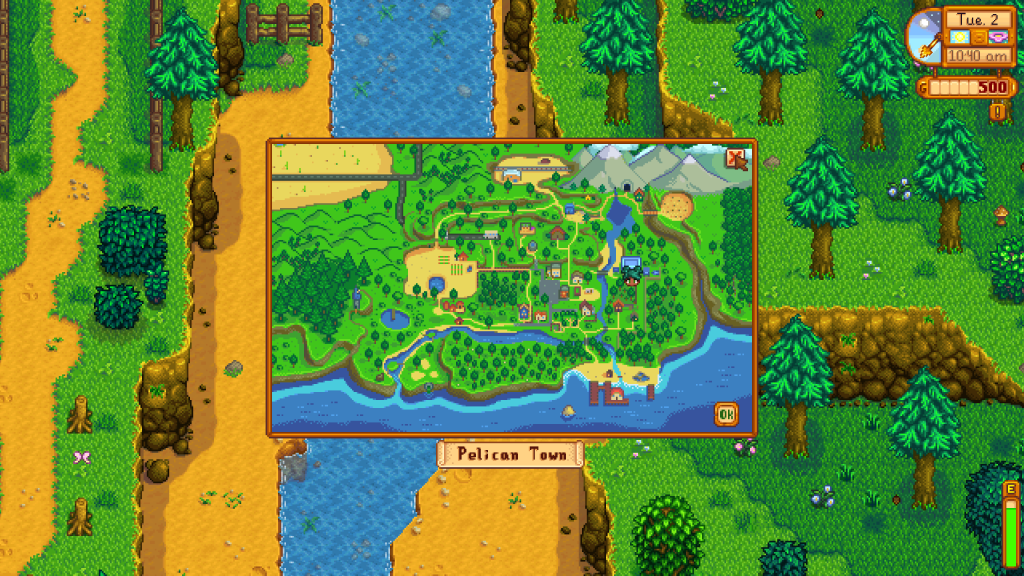
Your mind is racing, your energy is totally exhausted, and yet, ironically, you feel utterly detached from those nearby. Whenever that sensation begins to well up in my chest, I avoid going into the city, and I refrain from entering a high-stakes multiplayer game. I start up Stardew Valley.
If you observe how the majority of individuals play ConcernedApe’s warm masterpiece nowadays, you might assume it’s a cutthroat business simulator. The web is packed with min-maxing strategies illustrating how to maximize your ancient fruit wine production by Year 2, how to rush the Community Center before winter arrives, or how to quickly romance and marry Sebastian, Abigail, or Leah by constantly gifting them their favorite high-value items.
There’s nothing objectionable about playing like that if you enjoy mechanical efficiency—I’ve definitely experienced my fair share of hyper-optimized farming setups! Yet, when I engage in play as my spirit feels weary and isolated, I toss all those efficiency spreadsheets right out the window.
I don’t purchase a floral arrangement. I take my time to complete the Mine levels. I load my inventory with wild blackberries, daffodils, and freshly baked bread, and then I seek out the individuals in Pelican Town who reside on the outskirts. Those who quietly gather by the river, tend to the community flower beds, or sit solitary by a campfire in the mountains. I go looking for Linus, Evelyn, George, and Krobus.
The Gentle Dignity of Linus: A Masterclass in Unconditional Warmth
The first individual I turn to when I feel lonely is Linus. If you’ve experienced Stardew Valley, you’re aware of how the town first reacts to him. He resides in a tiny yellow tent pitched on the mountainside above Robin’s woodworking shop. He searches for his meals, cleans himself in the river, and digs through garbage bins for leftover food. The villagers frequently regard him with skepticism, distrust, or slight unease, presuming he poses a danger merely because he opts to reside beyond the confines of traditional society.
Every time you encounter Linus, his words shatter my heart without fail. He gazes at you with wary, protective eyes and states, “A newcomer? Hi there. Don’t worry about me. “I merely reside out here by myself.” He believes you will throw stones at his tent or ask him to go away since that’s what he has learned to anticipate from others.
Yet, as you begin to traverse that mountain trail each morning—not to seek a mission or exchange goods, but merely to offer him a wild horseradish or a blueberry—his whole existence becomes gentler.
Linus isn’t concerned with the net value of your farm. He doesn’t mind if you’re dressed in simple beginner attire or carrying a Galaxy Sword. He doesn’t require your help to repair his home or “rescue” him from his way of living. Indeed, one of the most impactful cutscenes in the whole game takes place when Robin proposes to assist in constructing a real house for him, and Linus graciously but resolutely refuses. He enjoys his existence in the woods. He enjoys the sound of the breeze rustling the leaves, the scent of the alpine air, and his strong bond with nature.
All Linus longs for is to be acknowledged and valued as a person. Upon reaching the highest hearts with Linus, he won’t offer you a romantic declaration or a gleaming prize. He offers you something far more valuable: total, unconditional trust. He instructs you on how to create Wild Bait. He asks you to join him by his campfire and enjoy a cozy meal together. He smiles and says you’re a good friend to him, mentioning that he feels secure in your presence.
When I feel isolated, offering a basic foraged item to Linus reinforces an essential truth that our contemporary society often overlooks: kindness doesn’t need a purpose. To love people, you don’t have to change them, nor do you need to win someone’s affection with lavish, costly actions. At times, the most restorative gift you can give someone else—or accept for yourself—is the calm recognition that they have a place, just as they are.
Granny Evelyn & George: The Quiet Magic of Domestic Warmth
Following my trip to the mountain, my next destination on a solitary afternoon is invariably the quaint house with a blue roof in the heart of town where Evelyn and George reside. As half the player community focuses on identifying which young bachelor or bachelorette features the most intense romantic moments, I am utterly enchanted by the understated, homely elegance of Granny Evelyn.
Evelyn is the town’s kind guardian. She’s the senior woman who nurtures the community garden boxes close to the square each morning, ensuring the town stays vibrant and lively. Upon entering her kitchen, the atmosphere immediately feels cozier. The fireplace is constantly ablaze, George, her husband, sits in his wheelchair watching television, and Evelyn typically stands by the stove with a gentle smile in anticipation of your arrival.
When you give Evelyn a new Tulip or a Diamond, her eyes shine with genuine, motherly delight. She refers to you as “my dear,” inquires about your well-being on the farm, and urges you to wear warm clothing when winter arrives.
After reaching several heart levels, she mails you a letter. Included with that letter is a plate of warm, fresh cookies, accompanied by a recipe for you to make them on your own.
It appears to be a small, insignificant gameplay occurrence on the surface. It’s merely an item within the game that gives back a small portion of health and energy. Yet when it comes to emotional narratives, that letter feels to me like a comforting embrace. It conveys the authentic sentiment of actual grandmothers—the sort of affection that manifests not in grand statements, but in homemade meals, hand-knitted garments, and inquiries about whether you’ve had your meals today.
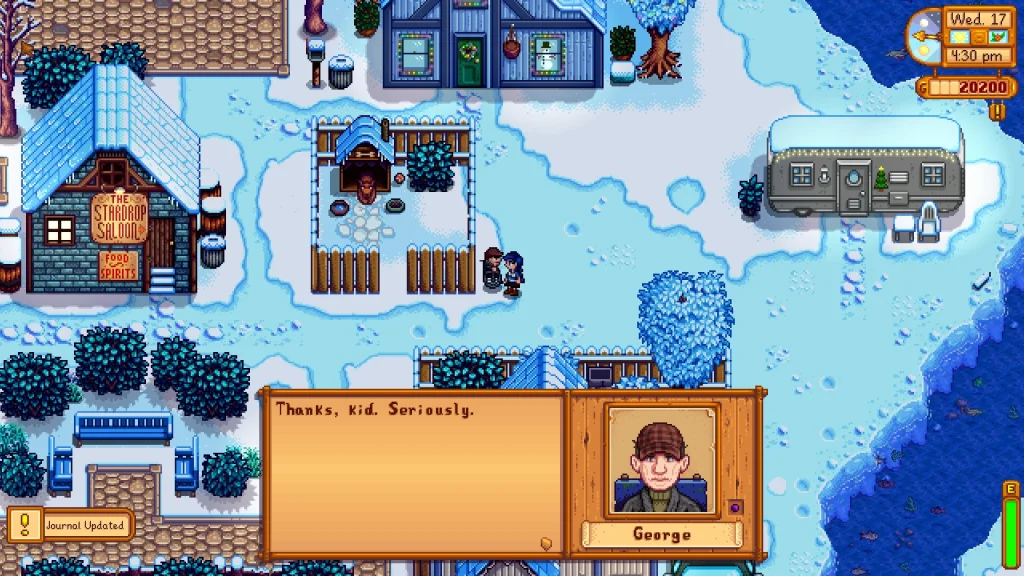
Even her spouse, George, provides one of the most fulfilling friendship journeys in gaming. Initially, George is famously irritable. He yells at you to move aside, grumbles about his painful knees, and maintains a strong defensive stance. However, if you continue—if you keep leaving Leeks on his counter week after week without anticipating an immediate change in his mood—his facade gradually dissolves.
Ultimately, George reveals details about his history, his disability, and the challenges he faced in adjusting to his new circumstances. He ceases frowning as you enter the front door and begins to express that you mean a lot to him, like family.
Forming friendships with Evelyn and George isn’t for acquiring a strong advantage or accessing a pivotal location. It involves acquiring the patience needed to care for others despite their irritability and feeling the warmth of a home where you are consistently embraced with kindness.
The Art of the Low-Stakes Gift: Why Virtual Kindness Touches Us
Have you ever wondered why handing a pixelated NPC can make a real person sitting in a dark room feel less alone? It sounds almost silly when you break it down logically. The characters in Stardew Valley are state machines running on pre-written code loops and fixed dialogue trees. They don’t have real feelings, they don’t know who we are, and they will repeat the same seasonal lines year after year. However, the feelings they trigger in us are entirely genuine.
From a psychological perspective, games such as Stardew Valley succeed by providing an environment where social interactions are free from real-world anxieties, performance expectations, and the fear of being rejected. In our everyday lives, contacting someone—particularly when we are experiencing vulnerability or solitude—can seem daunting. We fear expressing the wrong thoughts, being a nuisance, or facing rejection of our emotional openness.
Stardew Valley reduces those risks to nothing, while preserving the essential emotional dynamics of human relationships:
Attentiveness: To provide an excellent present in Pelican Town, you need to be observant. You should observe that Willy enjoys Sea Cucumbers, that Penny dedicates her afternoons to reading beneath the oak tree, or that Linus values a fresh Coconut from the desert. Recognizing another person’s likes is the fundamental basis of genuine intimacy in real life.

Consistency: Friends in the valley are not forged overnight. They are formed through slight, frequent exchanges over a period. Traversing the town two times a week to greet others establishes a routine of care that reflects how profound, enduring real-life friendships are created.
Reciprocity Without Exchange: The most effective NPC interactions don’t resemble transactions; they embody a sense of shared concern. You give Evelyn a flower, and three days later she sends you cookies as she was remembering you. That basic cycle fulfills our inherent human desire for mutual affection.
When we participate in these low-pressure virtual care activities, our brains ignore that the recipient consists of pixels. The neurochemistry of empathy, kindness, and social bonds activates regardless. We sense a bit more lightness, a bit more warmth, and a bit stronger connection to the environment around us.
Moving Beyond the Efficiency Trap: Celebrating the Soul of Pelican Town
Our society fixates on assessing worth based on output. We monitor our daily steps, refine our morning habits, measure our career advancement metrics, and aim to extract every bit of efficiency from our twenty-four hours.
It’s remarkably simple for that harmful productivity mentality to seep into our comfortable gaming environments. We transform our tranquil farms into manufacturing plants. We regard the villagers as vending machines, into which we put gifts and from which we retrieve heart points. We hurry through chats, overlook dialogue options, and approach community festivals as tasks to complete so we can return to collecting gold.
However, when you take your time, when you allow yourself to play ineffectively, clumsily, and softly, Stardew Valley transforms into a completely different experience.
It transitions from a farming game to a narrative about a shattered, isolated individual who abandoned a soul-draining corporate cubicle at Joja Corporation in search of solace in a quaint seaside town. And that recovery doesn’t stem from possessing five million gold coins or a stable filled with golden hens. It arises from understanding how to be part of a community.
It arises from being next to Willy on the dock as he quietly fishes. It originates from assisting Gus in maintaining warmth in the saloon on a rainy Friday night. It originates from delivering a Wild Horseradish to Krobus in the dark sewer, ensuring he feels remembered by the world above.
The next time you boot up Stardew Valley or any cozy life sim, I challenge you to try something different. Leave your crops unharvested for a day. Ignore the Mine quests. Put down the romantic chase for a moment. Pick a few wild flowers from the forest floor, walk up into the mountains, and go sit by the campfire with Linus.
Listen to the ambient sound of the wind in the trees, watch the embers float up into the night sky, and let yourself remember that the most valuable things in life can never be optimized, measured, or bought. They are found in the quiet, everyday moments of simple human kindness—both inside the screen, and long after you turn the game off.
Now, I want to hear from you! Who is the one Stardew Valley character that you always find yourself visiting, no matter how many times you restart your farm? Are you a dedicated Linus defender, a die-hard Evelyn cookie enthusiast, or someone who loves hanging out in the sewers with Krobus?
Tell me about your favorite quiet NPC memories and non-romantic friendships in the comments below! And if you have a friend who could use a little extra warmth today, maybe send them a quick message just to let them know you’re thinking of them.