The Architecture of Atmosphere: How I Built My Cozy Gaming Sanctuary
I am now seated at my desk, gazing at my keyboard, and the sole illumination in my whole apartment is a gentle, buttery, amber hue that envelops my wood-patterned desk mat. Beyond my window, the rain falls—one of those persistent, heavy gray showers that entirely eliminates any remaining duties to participate as a responsible member of society. My phone lies screen down, hidden under a random notebook, utterly quiet.
If you had entered my room three years ago, you would have observed a drastically altered environment. At that time, my gaming desk resembled a futuristic triage facility. I had three uncoordinated screens emitting harsh, relentless blue light straight into my eyes. My computer tower resembled a vibrant neon disco ball with forceful fans oscillating in a relentless spectrum of colors. My mechanical keyboard pounded with a harsh, fierce plastic clack reminiscent of a hail storm battering a metal roof, while my desk resembled a cemetery of cold, partially consumed energy drink cans.
I believed that was how a “gamer setup” should appear. I believed that to engage in gaming seriously—be it as a hobbyist or content creator—you needed toimmerse yourself in an atmosphere that echoed performance, speed, and intense noise.
Can we be fully truthful for just a moment? That setting didn’t bring me joy. It was subtly driving me crazy. After a three-hour gaming session, I would feel more energized, more anxious, and more physically drained than when I started. The mix of intensely stimulating gameplay on the screen and a frigid, chaotic, blinding setting off-screen was overwhelming my nervous system.
A significant episode of creative exhaustion made me recognize that I had totally misaligned my connection with my physical environment. Video games serve as a remarkable means of escape, emotional rejuvenation, and storytelling solace. However, if the actual space you occupy resembles a chaotic, stressful workspace or a hyperactive arcade, the enchantment of the virtual realm vanishes entirely before it can even enter your mind.
Therefore, I dismantled everything. I dedicated months to thoroughly examining each item on my desk, every light in my room, and all the routines related to my playtime. I ceased regarding my gaming setup as a factory environment and began considering it a place for well-being. I redirected my attention from frames-per-second measurements to the design of ambiance.
Establishing a “welcoming environment” isn’t just about purchasing pricey, stylish room decorations you came across in a popular social media trend. It’s about creating a purposeful sensory system that safeguards your mental capacity, reduces your underlying anxiety, and turns your physical surroundings into a haven where your mind can finally relax and unwind fully. These are the particular design tiers, physical tactile selections, and actual lifestyle combinations that created my ideal personal reset station.
1. The Light Strategy: Banishing the Overhead Glare
Let’s establish the absolute golden rule of atmospheric design right out of the gate: the big overhead light is the enemy of inner peace. There is nothing that destroys a cozy mood faster than a harsh, cold fluorescent bulb casting jagged shadows from the ceiling, making your room feel like a clinical dentist’s waiting room or a corporate cubicle.
When I designed my cozy setup, my primary goal was the complete eradication of direct, exposed light sources. Your eyes should never look directly at a naked bulb. Instead, the goal is diffused, indirect, layered illumination.
The key element of my lighting setup is a stylish monitor light bar resting on top of my display. It projects an exact, angled shaft of light directly onto my desk mat without reflecting any glare onto the monitor screen. It lights up my physical workspace flawlessly, enabling me to view a notebook or a mug without reflecting light into my eyes.
Behind the monitor, there’s an uncomplicated, budget-friendly desk lamp equipped with a smart LED bulb that is consistently set to a warm, deep amber light. This color temperature closely resembles the light spectrum of a flickering candle or a fading campfire.
From a biological perspective, this warm spectrum informs your brain that the sun has set, leading your nervous system to instinctively lower its defenses and secrete cortisol. By casting this amber glow onto the empty wall behind my screen, I establish a gentle visual barrier that entirely removes the eye fatigue caused by looking at a bright display in a dark environment.
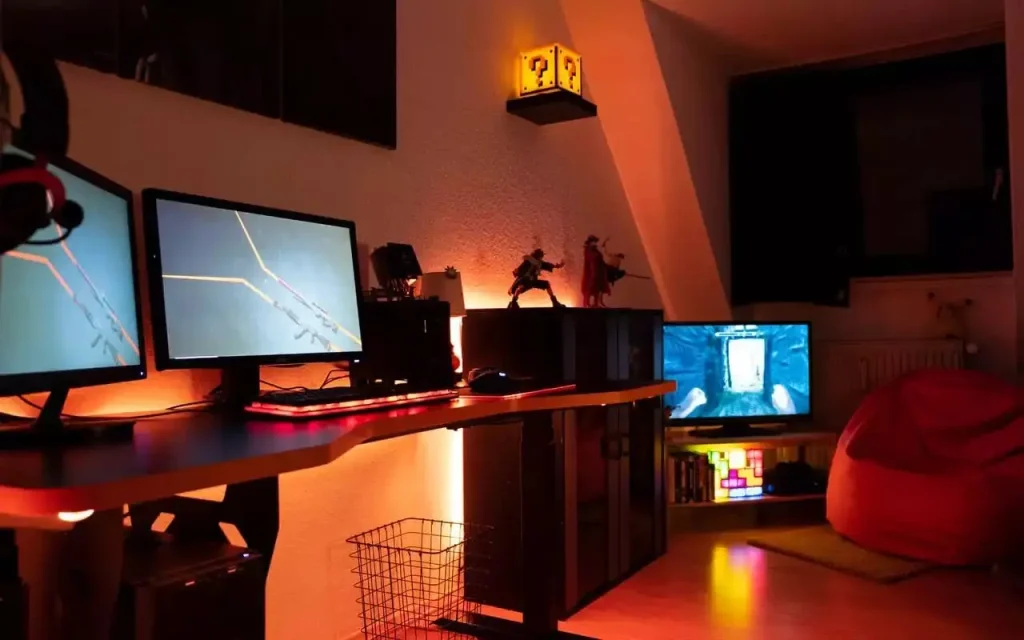
Ultimately, I employ low-profile, concealed LED strips placed behind the back edge of my wooden desk and alongside the baseboards on the floor. These do not transition through intense neon purples or blinking blues; instead, they are fixed on a soft, steady warm white.
It cleans the floor and the walls with a gentle light that offers just enough visibility to prevent me from stumbling over a misplaced slipper, while maintaining a serene and elegantly shadowed upper portion of the room. When the room achieves this balance, the physical edges of my walls appear to blur, and the area transforms from an average bedroom into a snug, safe haven.
2. The Acoustic Sanctuary: Tuning the Keyboard Feel and Sound
If you are a PC gamer or someone who writes for a living, your keyboard is your primary physical bridge into the digital landscape. You touch it thousands of times a day. Yet, most people treat their keyboard like a cold, unyielding plastic utility block.
For a long time, the mechanical keyboard community was an intimidating and highly technical subculture involving soldering tools, custom firmware updates, and intricate manual alterations. Yet as we progress into 2026, the whole environment has entirely transformed. Producers have ultimately understood that typing ease involves more than just functionality or switch responsiveness—it is an auditory and tactile craft.
While creating my comfortable workspace, I noticed that the sharp, metallic noise of an inexpensive keyboard was continually delivering tiny amounts of auditory tension straight into my ears. I desired a keyboard that emulated the sound of rain on big leaves or the deep, pleasing, resonant thump of an old typewriter. Within the community, we refer to this as the pursuit of the ideal “thock.”
I opted for a robust, durable 75% layout custom aluminum keyboard featuring a dual-gasket mounting design. Rather than the internal circuit board being screwed directly into hard plastic, a gasket mount encases the edges in soft foam strips. When you press a key, the board subtly bends under your fingers, cushioning the impact and removing the rigid, jarring feeling that leads to finger fatigue during extended use.
For the switches, I opted for pre-lubed, short-pole tactile variants instead of the noisy, clicky kinds. The factory lubrication entirely reduces the plastic-on-plastic sliding friction, making every keystroke a smooth, buttery experience. The acoustic profile is richer, more subdued, and profoundly calming. Writing an essay or exploring an indie game no longer feels like data entry; it resembles a soothing, rhythmic percussion loop. It transforms a simple interface task into a pure sensory pleasure that I anticipate daily.
3. The Ritual of Pairing: Teas, Tastes, and Digital Moods
We frequently consider gaming setups solely in regards to technology—displays, mice, sound interfaces, and wires. However, a genuinely cozy environment should stimulate every human sense, incorporating both taste and smell. A crucial aspect of my personal self-care practice is the intentional ritual of matching certain loose-leaf teas with the precise emotional frequency of the game I am engaged in.
Entering a comfortable game shouldn’t occur absentmindedly while browsing social media on your device. It ought to be a gradual, intentional event. Spending five minutes to warm water, observe tea leaves unfurl in a glass infuser, and choose a particular mug creates a deliberate psychological boundary. It informs your brain that the effective workday has officially concluded and that we are now transitioning into a period of relaxation.
When I engage in a calm, tile-laying strategy game such as Dorfromantik or a serene farming simulator like Stardew Valley, I seek an experience that feels completely grounded in nature. I prepare a pot of Hojicha, a type of Japanese green tea that is roasted using charcoal rather than being steamed. The roasting method removes the sharp, grassy bitterness typical of green tea and substitutes it with a rich, soothing scent of toasted nuts and wood smoke. Sipping that warm, nutty beverage while observing a small digital forest assemble on my screen establishes a wonderful balance between my taste and my sight.
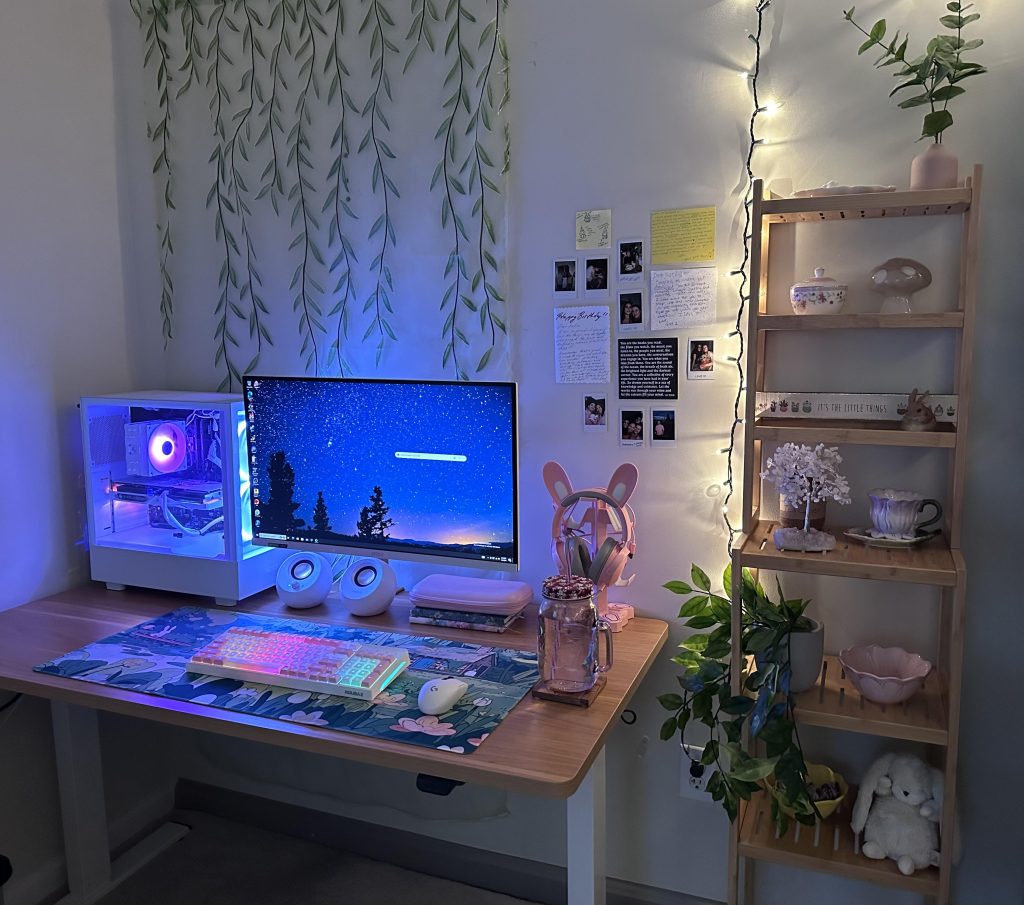
Conversely, when I dive into the vast, silent, underwater depths of a game like Abzû, I reach for a blend of pure peppermint and Egyptian chamomile. There is no caffeine allowed in this zone.
The natural menthol in the peppermint has this crisp, cooling property that clears your respiratory system and mimics the sensation of breathing crisp, fresh air, while the chamomile acts as a mild, natural sedative for your nervous system. As the ambient, muffled sounds of the deep blue sea fill my headphones, the herbal steam rising from my glass mug creates a complete, multi-sensory bubble of absolute tranquility.
And on the nights when I want to drift out into the stars with something like Exo One or Outer Wilds, I go for a smoked Lapsang Souchong. It’s a dark tea dried over pinewood fires, giving it this incredibly distinct, campfire aroma. Drinking that out of a vintage, delicate porcelain mug while gliding over desolate alien sand dunes makes the profound isolation of space feel less lonely and more like an expansive, beautiful mystery.
Reclaiming Your Space as an Act of Self-Kindness
It’s remarkably simple to get caught in the consumer mindset that a “gaming setup” is a fixed display meant to be photographed, edited, and shared online for attention. We come across these extremely stylized, minimalist, and impeccably clean desks on social media and believe that without that exact three-thousand-dollar bespoke wooden desktop or those particular designer items, our space lacks legitimacy.
However, that viewpoint entirely overlooks the real essence of a comfortable haven. Your arrangement shouldn’t be designed to impress an outside camera; it should be created to nurture your internal wellbeing.
A comfortable arrangement serves as a dynamic emotional support system. It is an environment that recognizes your human weaknesses. It understands that you feel overwhelmed by bright lights following a lengthy day of screen usage. It understands that sharp, jarring clicking noises can increase your underlying anxiety. It acknowledges that a hot beverage cradled in both hands can serve as a concrete source of solace when your mind is racing.
By intentionally arranging your lighting, adjusting your keyboard sounds, and ensuring your basic physical comforts, you engage in a profound act of self-preservation. You are creating a concrete stronghold that declares the chaotic clamor, the ceaseless performance standards, and the hyper-tuned responsibilities of the external world cannot enter this space.
The next time you find yourself at your computer with that overwhelming, dull haze of burnout clouding your mind, resist the urge to click aimlessly through your library. Observe your surrounding physical space. Switch off the glaring overhead light. Activate a small lamp adjusted to a soft, warm amber glow. Take a moment, brew some tea, hear the soft, muted sound of your keys, and allow yourself the chance to disconnect from the hectic reality for a little while. You are not squandering time; you are merely providing your spirit a secure, peaceful space to reconstruct itself.
At this moment, I’d love to hear your thoughts, as each person’s interpretation of comfort is wonderfully distinct. How do you arrange the physical environment around you when you require a significant emotional reboot?
Do you require complete, quiet darkness with just one desk lamp, or do you have a particular candle aroma or drink routine that signals the start of your relaxation period? Share your thoughts in the comments below, and let’s discuss ways to make our gaming spaces feel more like home.