The Lazy Game Remake Era: Why We Need to Stop Buying Games We Played 10 Years Ago
Let’s be honest with ourselves for a single, terrifying second. Last week, I was scrolling through the digital storefront on my console, looking for something that felt fresh, bold, or slightly unpredictable. Instead, what did I find plastered across the primary featured banner?
It was a glossy, rebranded, “thoroughly upgraded” version of a game I invested sixty hours in when I was residing in a totally different place, in a relationship with a different partner, and stressing over entirely different life issues. It was a game from under ten years ago. It was a game I can vividly recall because its visuals remain timeless, its design feels contemporary, and its original code operates seamlessly on the hardware sitting directly beneath my television at this moment.
We have officially stepped into the twilight realm of interactive entertainment. We are in the Lazy Remake Era, a cultural impasse where the video game industry reflects on its remarkable, innovative past and concludes that the most secure, lucrative option is simply to replicate its own recent work. The most frustrating aspect of this whole situation is that we are allowing them to escape accountability. In reality, we are enthusiastically financing it.
I am weary of acting like we should applaud like trained seals every single time a major publisher reveals a complete remake or a definitive remaster of a game released in the mid-2010s. It does not constitute an effort to preserve history. It is not a heartfelt endeavor aimed at saving neglected art from outdated, obsolete equipment.
It serves as a corporate safety net, a sluggish cash extraction, and a systemic drain on the whole ecosystem, depriving funding from unconventional, experimental, independent intellectual properties. If we continue to spend our money on this relentless wave of manufactured nostalgia, we will find ourselves in 2030 recognizing that no one in the AAA industry has created a truly new, original game in a whole ten years.
The Myth of the Unplayable Masterpiece
The main rationale that publishers employ to market these recycled products is consistently cloaked in the pseudo-artistic terminology of necessity. They inform us that the initial vision of the game was significantly constrained by the technology available at that time. They showcase development leads to discuss how they can finally bring their initial designs to life.
They use phrases such as improved graphical quality, unlocked frame rates, redesigned asset workflows, and ambient occlusion to suggest that the game you cherished in 2014 or 2015 is now an outdated, decaying artifact fit for a museum. They aim to convince you that if you’re not using the version with real-time subsurface scattering on the main character’s earlobes, your experience is somehow diminished and outdated.
Yet, let’s explore the actual history of generational progress to grasp how ridiculous this claim has become. As the sector transitioned from the late nineties to the late 2000s, refreshing a game was entirely sensible. Transferring a game from the original PlayStation era to the PlayStation 3 or Xbox 360 involved a major, innovative transformation.
You transitioned from sharp, low-polygon shapes and simple, pixelated 2D sprites to fully developed, physics-based 3D environments. Playing the original editions involved dealing with static camera perspectives, clumsy tank controls, and design layouts that presented a real challenge for contemporary gamers. In such cases, a remake served as a cultural interpreter, transforming an outdated, structurally challenging work of art and rephrasing it in contemporary language for a new generation to grasp its excellence.
Contrast that past breakthrough with what we are facing currently. When a publisher chooses to remaster a game from the PlayStation 4 period, what do they truly alter? They are increasing the resolution from 1080p to true 4K, refining some rough edges on far-off shadows, incorporating support for ultra-wide displays, and reducing loading times by several seconds due to contemporary solid-state drives.

The fundamental game stays completely unchanged. The character animations remain the same, the level designs are unchanged, the AI behaviors are identical, and the voice acting is taken from the exact same sound files. Titles such as the recently remastered Horizon Zero Dawn and the revamped Until Dawn included sophisticated motion-capture performances, cinematic three-point lighting setups, contemporary third-person camera controls, and production quality that matched significant Hollywood blockbusters at their initial release.
The initial versions continue to appear remarkably crisp, clear, and stunning on contemporary displays. When viewing the comparison videos next to each other, you aren’t witnessing a groundbreaking advancement into a new realm of creativity; instead, you see a game that shifted from beautiful to a bit more polished, yet now demands one hundred thirty gigabytes of storage.
By accepting the corporate story that a decade-old game is somehow unplayable or obsolete, we are devaluing the significant artistic accomplishments of the original development teams. We are regarding video games in the same way as smartphones or graphics cards, operating on the consumer belief that if a newer version is available, the previous one is inherently worthless. It is an extremely harmful approach to engage with an art form, and this attitude is completely distinct to the video game community.
Cinephiles don’t expect a film from 2015 to be entirely remade using contemporary digital cameras simply because advances in sensor technology have occurred. Music enthusiasts don’t request an album from ten years ago to be re-recorded entirely simply because new mixing technology is accessible. We recognize that the limitations of time are essential to the art. However, in gaming, we have been taught to think that if a texture isn’t completely photorealistic, the experience is somehow flawed.
Nostalgia as a Subprime Corporate Strategy
This unending stream of remakes isn’t occurring because the world’s game creators have abruptly exhausted their creativity. The field is filled with exceptional writers, innovative world creators, and technical masterminds eager to craft unseen realms and mechanics we’ve yet to imagine. The issue is wholly situated in today’s corporate boardroom, where heightened risk aversion has become a refined organizational practice.
Creating a contemporary, high-budget AAA video game has turned into a daunting, multi-million-dollar financial risk. Development budgets frequently exceed two hundred million dollars, marketing efforts are equally expensive, and development cycles now span five to seven years.
If a publisher invests $250 million in entirely new intellectual property, creates a brand-new universe from nothing, instructs players on an entirely foreign set of mechanics, and the game does not attract an audience, the whole company may disappear in an instant. Studios close down, vast numbers of skilled individuals become unemployed, and executives face tough questioning from angry shareholders.
Confronted with that daunting truth, a cautious executive will invariably opt for the route of minimal effort. They open their spreadsheets, examine their historical data, and discover a secure, well-known game that sold ten million copies ten years ago. They understand that with a remake, the most challenging and costly aspects of game development are already entirely completed.
The script has been composed and recorded. The level design has been tested and balanced already. The characters are well-known figures with dedicated followers. Primarily, the marketing hook is embedded deeply in our shared childhood experiences.
It is an extremely secure, reliable, and skeptical financial cycle. Publishers need not concern themselves with whether the audience will relate to the narrative or find the characters engaging, as the audience affirmed those creative decisions a decade ago. They don’t need to invest millions in presenting a new universe to the audience; they merely need to activate your brain’s nostalgia centers with a familiar musical hint or a recognizable outline in a teaser.
When we reward this behavior by dropping seventy dollars on a game we already own, a game that is often sitting right there in our digital libraries fully playable via backward compatibility, we are sending a very clear, very dangerous message to the people who hold the purse strings.
We are telling them that we do not want them to take risks. We are telling them that we don’t want them to fund weird ideas, try to surprise us, or push the boundaries of what interactive entertainment can be. We are explicitly telling them that we are completely satisfied paying premium prices to buy our own memories back from them, over and over again, as long as they make the textures look a little bit sharper.
Starving the Outliers and Paralyzing Talent
Every dollar that a leading publisher allocates to putting together a large group of animators, programmers, and technical artists to update, enhance, and re-release an old game is a dollar that is clearly not invested in discovering the next innovative creative talent. This is a game where the total gains and losses balance out. Elite development talent is a limited resource, and when an entire studio spends three years adjusting the asset pipelines of a game from 2015, that studio is essentially stalled in time.
Reflect on the titles that dramatically transformed the cultural scene of our pastime in the past two decades. Consider titles that revolutionized gaming and created completely new methods of play. None of those games were guaranteed successes at the outset. They were unusual, extremely innovative, and significantly perilous ventures that consistently had to struggle against corporate doubt just to secure a small portion of funding.
Had the industry been as fixated on mirroring its recent past back then as it is today, numerous historical turning points would have been stifled at the outset. A risk-averse executive would have reviewed those proposals, disagreed, and instructed the team to focus on remastering a proven success from the last generation instead.
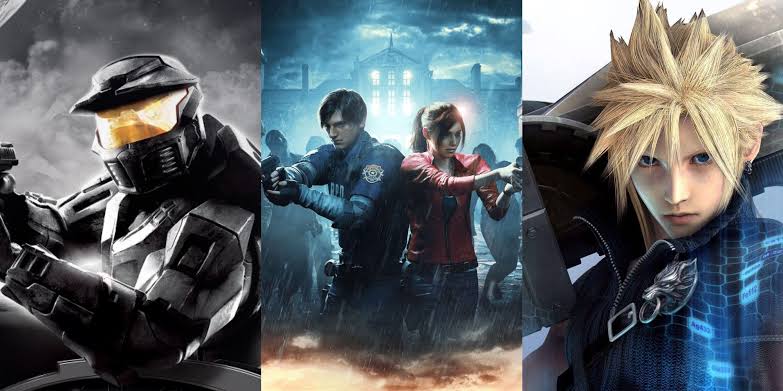
When large studios occupy their top creative talent with these perpetual updates and remasters, they are stifling their most precious resources. Rather than pushing a talented gameplay designer to develop a completely new combat system or an original traversal mechanic, the studio is requesting that they dedicate months to tweaking the frame data and hitboxes of a system they initially created as junior staff. It is imaginative standstill posing as technological advancement. It transforms creative artists into factory workers whose sole task is to shine outdated chrome.
In the meantime, the independent development community must shoulder the entire significant weight of innovation with extremely limited financial resources. Every year, we witness remarkable, lightning-in-a-bottle successes emerging from the indie sector, but consider what those exceptionally innovative teams could achieve if they had just a portion of the enormous AAA funds that are presently wasted on enhancing how water flows around a character’s footwear in a game we’ve already completed twice. We are continuously jeopardizing our cultural future simply to maintain a corporate recycling facility operating at peak performance.
Breaking the Loop of Consumer Complacency
Addressing this systemic creative crisis doesn’t necessitate a complex structural change in the games industry, nor does it call for a substantial shift in economic policy. It demands that we, as participants and buyers, utilize a fundamental level of critical thinking and self-discipline.
We need to refrain from purchasing the identical games repeatedly. We need to condition ourselves to resist that sudden, impulsive rush of dopamine that strikes when a publisher releases a cinematic trailer featuring a character we adored in our youth appearing somewhat more lifelike than they did on our earlier consoles.
The next time you feel lured by an eye-catching remake or an upgraded remaster announcement for a game you clearly recall playing on an older system, consider going through a few straightforward mental checks before grabbing your credit card.
Initially, verify if the original edition of the game is completely functional on your existing hardware via native backward compatibility. If it is, compel yourself to download it, start it up, and play it for merely fifteen minutes. What you will find, almost every time, is that your brain is an extraordinarily strong visual processor.
In just minutes of diving in, your brain quickly fills any small visual voids, and you discover that the game continues to play, sound, and feel truly amazing. The supposed necessity for an expensive visual redesign disappears entirely as soon as you grasp the controller and interact with the design.
Next, pose a truly honest psychological inquiry: Are you purchasing this game because you sincerely desire a fresh, challenging interactive experience, or are you acquiring it because you long for the particular time in your life when that game was initially released? A video game, regardless of how many rays it calculates or how many frames per second it renders, cannot function as a time machine.
Purchasing a seventy-dollar remaster won’t restore the carefree atmosphere of your former college apartment, it won’t revive the friendships that have gradually faded over the past ten years, and it won’t alleviate the heavy burden of your adult duties. It is merely a software application, and relying on it to pursue an elusive sense of comfort leads to creative and financial letdowns.
Ultimately, consider that seventy-dollar cost and understand what that amount could signify if invested in the true future of the medium. Rather than giving that hefty amount to a multi-billion-dollar publisher for their cautious approach, you could allocate that same budget to buy three or four entirely original, highly experimental games from indie developers.
You might invest that cash in a strange narrative game featuring an art style unlike anything you’ve encountered, a challenging roguelike with a gameplay mechanic you don’t completely grasp, or a distinctive puzzle game developed by a small three-member team overseas. By redirecting your funds from the corporate recycling cycle and channeling them directly into the grassroots engine of innovation, you are directly contributing to the preservation of gaming as an artistic medium.
If we don’t begin changing our spending habits and expect more from big publishers immediately, the outlook for the end of this decade will be quite disheartening. We won’t receive the daring, genre-defining, unpredictable masterpieces that outline the limits of a new era in design.
We will continuously see repetitive, iterative cycles of the same limited selection of familiar brands. In 2030, we will likely find ourselves on our couches, gazing at a shop filled with games we enjoyed two decades earlier, questioning when the industry lost its creativity. Let’s place our past where it should be, securely on our shelves and vividly in our recollections, and begin seeking a future that’s truly worth pursuing.
For an incredibly sharp look at how this cycle of endless remakes impacts the underlying economics of game studios and alters developer career paths, check out this deep dive exploring the realities of The Modern Remake Problem. This video provides brilliant context on why major publishers have become so terrified of original ideas and how it changes the games we get to see.