The Spielberg Template: How Every Modern Director is Still Trying to Recreate 1982
Examine nearly any significant release from this year, and you’ll see the presence of Steven Spielberg. The expansive tracking shots, the innocent wonder, the fractured families—we remain ensnared in the film language created over four decades ago. Let’s analyze why Hollywood continues to be completely afraid of moving beyond the Spielberg template.
Part I: The Year That Locked the Cages
I would like to take you to a particular moment in my life that entirely transformed my perspective on contemporary film. A couple of months back, I chose to have a weekend marathon of the top-grossing movies of this box office year. I remained in the shadows, observing a multi-hundred-million-dollar sci-fi blockbuster, succeeded by an indie favorite that captured the festival scene, concluded by a popular family adventure movie.
As the credits began to roll on the third film, an unusual, overwhelming feeling of déjà vu enveloped me. I got up, approached my bookshelf, took down a history of American film, and checked the box office statistics for one key year: 1982.
During the summer of 1982, Steven Spielberg premiered E.T. the Extra-Terrestrial. During that same summer, he created and successfully co-directed Poltergeist.
While I was in my living room observing the present scene, a chilling realization struck me: Hollywood has never truly moved on from 1982. We haven’t evolved; we merely acquired quicker computers to produce the identical images.
Every prominent blockbuster director active today—from J.J. Abrams and Denis Villeneuve to the Duffer Brothers and Barry Jenkins—continues to utilize a cinematic framework developed by a 35-year-old Steven Spielberg in a heated editing room more than forty years ago.
I refer to this as The Spielberg Template, and I think it is the most influential, unseen force affecting contemporary commercial filmmaking. It serves as the perfect security blanket for both studio executives and directors. However, it has turned into a lovely, velvet-furnished artistic enclosure. We find ourselves ensnared in a cycle of nostalgia, completely afraid to create a new visual language since the old one remains remarkably effective.
Part II: The Three Pillars of the Playbook
To understand how deep this infection goes, I want to dissect the three structural pillars that Spielberg perfected in the early ’80s—pillars that modern directors copy with the religious devotion of monks replicating ancient scripture.
The Architecture of the Template
| The Spielberg Pillar | The Original 1982 Manifestation | The Modern Imitation |
| The “Spielberg Face” | Elliot staring out the window at the glowing shed in E.T. | Timothée Chalamet or Zendaya staring blankly at a massive spaceship |
| The Suburban Monomyth | The cookie-cutter tract housing of Poltergeist and E.T. | The ubiquitous, stylized retro-suburbia of Stranger Things or It |
| The Absent Father Subtext | Mary struggling as a single mother in the wake of a messy divorce | Nearly every single protagonist in modern Disney, Marvel, or indie film |
1. The Economy of Awe (The Spielberg Face)
I am utterly exhausted by the modern abuse of the slow push-in shot. You know exactly the one I mean. Something incredible, terrifying, or miraculous is happening just off-camera. Instead of showing us the object of wonder right away, the camera rests on a medium close-up of an actor’s face. The camera slowly tracks forward, the actor’s eyes widen, their mouth parts slightly, and a soft, golden light reflects in their pupils.
Film critic Matt Patches famously cataloged this as the “Spielberg Face,” and in 1982, it was a revelation. When Spielberg used it, it wasn’t just a cool camera movement; it was a narrative device designed to violently pull the audience into a state of childlike vulnerability.
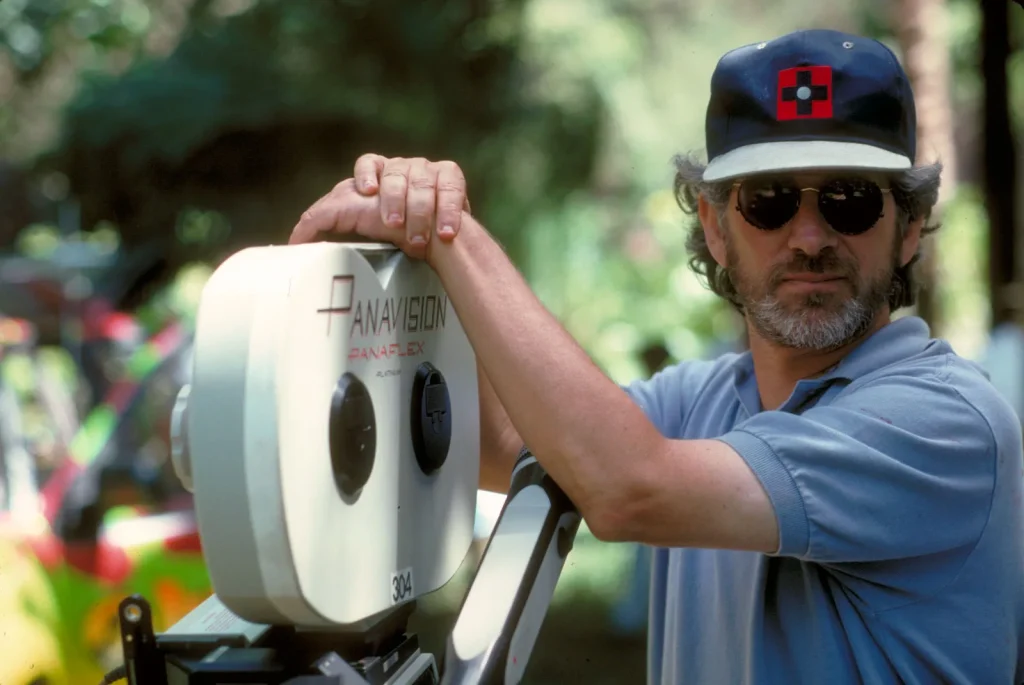
Today? It is a cheap shortcut. I see it in almost every single trailers. Directors use it as an emotional cheat code. They can’t figure out how to write a scene that genuinely evokes wonder, so they force the actor to look very hard at a green-screen tennis ball while the camera glides toward them on a dolly track, hoping the audience will mistake the camera’s movement for actual emotional depth.
Modern Creative Lazy Shortcut:
[VFX Green Screen] + [Slow Camera Dolly Push-in] + [Actor Mouth Slightly Open] = “Earned Awe” (Narrative Lie)
2. The Suburban Monomyth
Prior to Spielberg, science fiction and horror resided in obscurity—in eerie castles, German expressionist urban settings, or the cold, metallic hallways of spacecraft. In 1982, Spielberg’s real brilliance was merging the extraordinary with the everyday reality of post-war American consumer culture.
Observe Poltergeist and E.T. They take place in the same environment: California housing developments, meticulously designed neighborhoods where every home appears the same, sidewalks scattered with Big Wheels, and kitchens stocked with name-brand cereal boxes and Coors beer cans.
It’s infuriating that contemporary films fail to imagine an extraordinary occurrence taking place elsewhere. When Hollywood seeks to anchor a supernatural tale today, they don’t consider the realities of contemporary life in 2026. They don’t consider urban apartments undergoing gentrification, countryside mobile home parks, or extremely dense skyscrapers.
No, they create a pristine, idealized replica of an ’80s neighborhood. They provide the children with vintage bicycles, dress them in denim jackets, and set them in homes featuring wood-paneled walls. It is a mimicry of a mimicry, a feigned recollection of a childhood that many contemporary viewers never truly experienced.
3. The Broken Home as Plot Engine
If you want to get a script greenlit by a major studio today, your protagonist almost legally must have profound, unresolved parental trauma. I challenge you to name a single major genre film from the last five years where the main character doesn’t have a missing dad, a dead mother, or an estranged relationship with a parental figure.
Where did this start? It started with Spielberg processing his own parents’ real-life divorce on the screen in 1982.
In E.T., the alien isn’t just an extraterrestrial biological entity; he is a literal surrogate father and protector for Elliot, a boy struggling to make sense of a home where the father has run off to Mexico with a new girlfriend. In Poltergeist, the horror enters the house precisely through the fractures in the nuclear family structure.
Spielberg turned personal psychological therapy into global commercial entertainment. But what was deeply personal and raw for him has been transformed by modern Hollywood into a cynical, assembly-line narrative trope. Now, characters don’t have personalities; they just have “daddy issues” that function as a substitute for real character development.
Part III: The Visual Mechanics of the Copycats
It’s not only the themes that are repetitive; the actual techniques of filming and editing movies are also caught in a cycle. I wish to discuss the visual mechanics of how contemporary directors strive to capture that elusive ’82 energy and why it frequently devolves into empty pastiche.
Think about J.J. Abrams. I regard Abrams as the ultimate high priest of the Spielbergian worship. When he created Super 8, it wasn’t a homage; it was a filmic communion. He reproduced the anamorphic lens flares, the distinct blue-hued night illumination, and the wide-angle shots that Janusz Kamiński and Allen Daviau developed with Steven.
However, Abrams overlooked the fundamental truth that I think establishes Spielberg as a genuine master: The camera’s movement must consistently respect the layout of the environment.
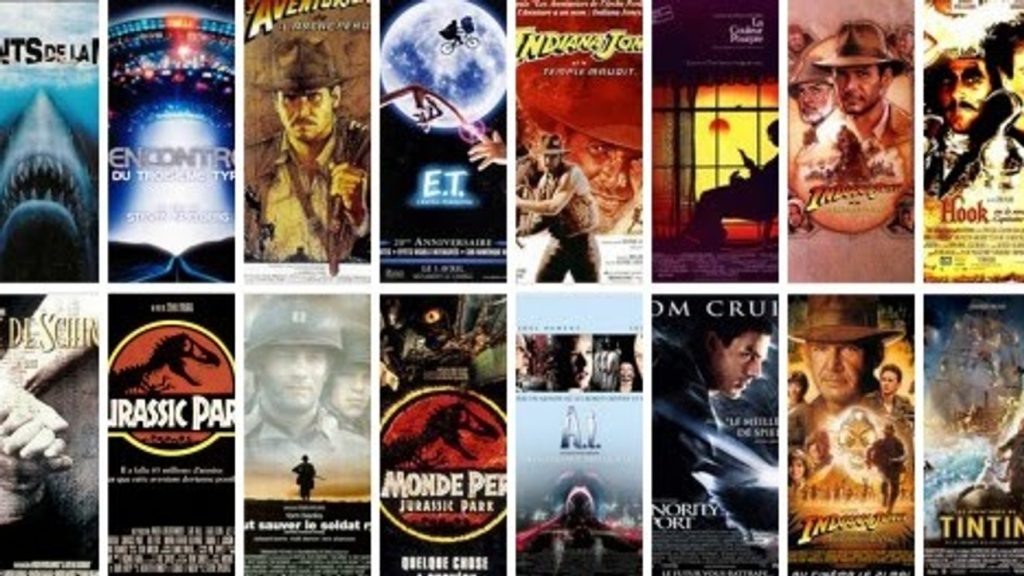
When Spielberg performs an extended, intricate tracking shot through a suburban kitchen—such as the breakfast sequence in E.T.—he’s not merely displaying his skills. He is creating the tangible experience of a cluttered, disorderly, chaotic home. He places the camera at a child’s eye level, gazing up at the adults, instantly immersing us in Elliot’s viewpoint.
Contemporary filmmakers replicate the method yet entirely miss the reason. They provide us with expansive, continuous drone footage and dynamic steadicam movements through digital realms that seem utterly weightless. They shift the camera since they believe a dynamic camera signifies an exhilarating film, entirely overlooking that Spielberg’s camera was consistently rooted in the human eye and human feelings.
Part IV: The Industrial Co-Dependency
Why is Hollywood so utterly terrified of breaking this template? To answer that, we have to look at the financial realities of modern studio survival.
The film industry is currently operating in an environment of unprecedented economic risk. When a studio spends $200 million on a production and another $100 million on global marketing, they cannot afford a single creative misstep. They need an insurance policy. And the ultimate narrative insurance policy is the Spielberg Template.
“The reason we keep returning to the cinematic structures of the early 1980s is because it represents the last era where monocultural awe was universal. It is a proven emotional framework that bypasses intellectual critique.”
— From a candid conversation with an anonymous studio head
The Spielberg Template is uniquely effective because it operates on a pre-intellectual level. It targets our deep, biological desire for safety, home, and familial reconciliation. By wrapping a modern film in the visual and thematic language of 1982, studios can make a completely new, unproven story feel instantly familiar and safe to a global audience.
It is a form of emotional manipulation that I find both deeply impressive and incredibly depressing. We are being fed creative baby food—smooth, easily digestible, and perfectly formulated to ensure we never have to chew on anything genuinely challenging or structurally new.
Part V: The Path Beyond the Playbook
I want to be entirely transparent: I do not dislike Steven Spielberg. I believe he is among the most outstanding visual artists to have ever handled a camera. What he accomplished in 1982 was nothing less than extraordinary. My frustration is not aimed at the master; it is aimed at the years of indifferent apprentices who have transformed his individual creative achievements into a strict commercial formula.
To keep cinema a dynamic, vibrant art form for the remainder of this century, we must be prepared to exorcise the spirit of 1982. We need to stop expecting contemporary filmmakers to provide that “classic Spielberg feeling” and begin asking them to evoke emotions we can’t even name yet.
A new visual language is required that represents the complex, digital, and fragmented nature of contemporary life. We require films that boldly address fractured families without quickly attempting to resolve them through a miraculous extraterrestrial solution. We require cameras that maneuver in patterns that mirror our contemporary, hyper-stimulated minds instead of the smooth, reassuring dolly tracks of earlier times.
It’s time to abandon the security of the suburban cul-de-sac. It’s time to switch off the golden backlights, stow the vintage bicycles, and venture into a cinematic scenery unburdened by the childhood recollections of a filmmaker who ruled the world forty-four years ago. The template has fulfilled its purpose. It’s the moment to create something fresh.