How Bench Depth and Psychological Whiplash Will Decide France vs. England
Let’s face it: no one truly desires to compete in the third-place game. The strategic game approaches of Didier Deschamps and Thomas Tuchel will be completely disregarded. This game is strictly an evaluation of psychology and team depth. I’m analyzing the statistics regarding how ‘rested reserves’ typically perform in this match and why the team that rotates their lineup more frequently has a statistical edge to secure the bronze.
The soccer commentary community enjoys discussing “pride.” They will use the pre-match broadcasts to chatter about donning the jersey, ending on a positive note, and claiming a spot in history as the tournament’s third-best squad. It’s typical corporate scriptwriting designed to keep you engaged for a game that everyone participating hopes they could skip.
France 🇫🇷 and England 🏴 were just 90 minutes from reaching a World Cup Final. France’s defensive stronghold was penetrated 2-0 by an impressive Spanish team in Arlington. England was ahead of Argentina in Atlanta, but was ultimately undone late by two outstanding assists from Lionel Messi, losing 2-1.
Now, rather than gearing up for the ultimate triumph at MetLife Stadium, these two startled teams must head to Miami Gardens to partake in a high-profile exhibition in the sweltering, oppressive mid-July heat.
The Mental Trap: Managing Psychological Whiplash
From a purely analytical perspective, the absolute biggest variable in the World Cup bronze medal match is the emotional crash. In a standard knockout game, teams operate at their absolute physiological and neurological limit. The adrenaline levels are completely maxed out. When you lose a semifinal, your entire hormonal system experiences a massive drop-off.
To expect players to instantly rebuild that elite edge just 72 to 96 hours later is a complete fundamental misunderstanding of human performance. Historically, this fixture favors the team that suffers the least psychological devastation. If one squad views finishing third as an honorable achievement, they carry an immediate mathematical edge over a team that treats the bronze medal like a badge of failure.
Historical Third-Place Play-off Scoring Meta:
– 2022: Croatia 2-1 Morocco
– 2018: Belgium 2-0 England
– 2014: Netherlands 3-0 Brazil
– 2010: Germany 3-2 Uruguay
Notice a distinct statistical pattern? The third-place match is historically a high-scoring, low-resistance affair. The structural discipline that managers spend two years building collapses because the defensive risk profile shifts. Players are less willing to put their bodies on the line to stop a transition break, and tactical blocks play much looser.
My Take on the Mental State: Watching the post-match press conferences from both camps tells you everything you need to know. Kylian Mbappé looked completely checked out, stating flatly that they wanted to go to the final and didn’t make it. England’s camp is similarly hollowed out. Tuchel is a manager who lives and dies by hyper-precise structural control. If his players aren’t completely bought into the emotional stakes, his entire high-pressing, defensive block architecture falls apart like a house of cards.
Roster Rotation and the Miami Heat Factor
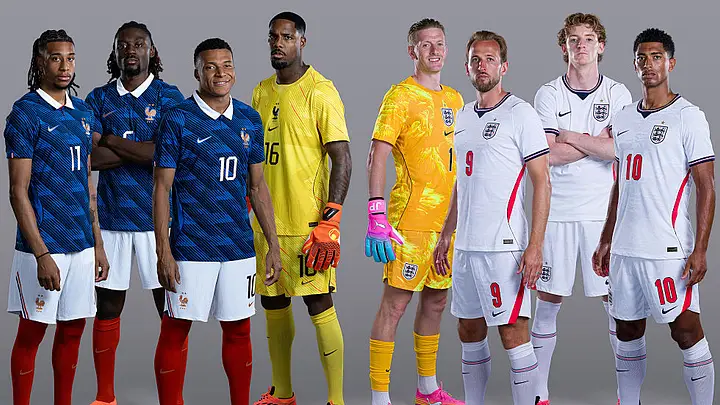
Let’s discuss the natural surroundings in Florida. The game starts at 5:00 PM local time at Miami Stadium. The climate conditions in southern Florida during mid-July are harsh: temperatures around 90°F (32°C) and humidity exceeding 75%. The apparent temperature on the field will exceed 100°F significantly.
If Didier Deschamps or Thomas Tuchel attempts to utilize their main starting eleven—athletes who have already accumulated more than 550 minutes of intense tournament play in the past month—they are inviting physical turmoil.
The Roster Rotation Metric Matrix
My internal predictive model looks heavily at Bench Volume Contribution (BVC). In low-stakes tournaments or dead-rubber matches, the team that rotates more than 50% of their starting lineup typically enjoys a massive physical advantage in the second half.
France Roster Depth Core:
– Primary XI Cumulative Minutes: 5,280 mins
– Available Bench VORP Baseline: +1.8
– Key Projected Rotations: Kingsley Coman, Bradley Barcola, Warren Zaïre-Emery
England Roster Depth Core:
– Primary XI Cumulative Minutes: 5,410 mins
– Available Bench VORP Baseline: +1.2
– Key Projected Rotations: Cole Palmer, Ollie Watkins, Eberechi Eze
Rested reserves don’t just bring fresher legs; they bring actual motivation. While a superstar player is busy mourning a missed shot at a World Cup final, a hungry twenty-three-year-old reserve looks at this game as a massive window to prove they belong in the primary rotation for the next cycle.
When you study the tracking metrics of rotated players in previous third-place play-offs, their Sprint Distance per 90 is routinely 14% higher than regular starters who are kept on the pitch. They run harder, they press faster, and they actively exploit the lazy positioning of an opponent’s exhausted defensive core.
The Golden Boot Anomaly: Mbappé vs. Kane
While this match is technically a team consolation prize, there is one massive individual variable that could completely warp the tactical layouts: the race for the Golden Boot.
Kylian Mbappé enters this fixture tied at the top of the scoring charts with 8 goals. Lionel Messi also has 8 goals but holds the tiebreaker due to his assist tally from the semifinal. This means Mbappé has a massive, highly personal incentive to play, stay on the pitch, and hunt for goals against England. Harry Kane is also lurking just behind in the scoring rankings.
2026 Golden Boot Standing (Pre-Final/Bronze Match):
1. Lionel Messi (Argentina) — 8 Goals | 2 Assists (Leads on tiebreaker)
2. Kylian Mbappé (France) — 8 Goals | 0 Assists
This sets up a fascinating conflict inside the French camp. Deschamps needs to rotate his squad to survive the Miami heat, but his captain and most lethal asset wants to chase personal glory.
If France forces their entire system to funnel the ball to Mbappé to secure an individual trophy, it makes their attacking shape incredibly predictable. England’s backline, even a rotated one, can focus entirely on cutting off the passing lanes to the left flank.
My Take on the Golden Boot Factor: Chasing individual awards in a team sport during a dead-rubber match is always a double-edged sword. If Mbappé starts, he will undoubtedly command every single penalty kick and set-piece. But if his defensive tracking drops to zero—which it likely will to conserve energy—England’s right-back will have free rein to bomb forward in transition. I expect this game to be incredibly open, with both teams completely abandoning their usual mid-block discipline in favor of hunting transitions.
Tactical Analysis: Midfield Rotation Value
Should both managers utilize their rotations extensively as the data indicates they ought to, the outcome will be determined in the midfield. France faces a dilemma of affluence here. Their second unit includes players such as Warren Zaïre-Emery and Youssouf Fofana—midfielders with top-tier ball-retention statistics and exceptional physical stamina. They can easily manage the pace of a game even in high humidity.
The depth of England’s midfield is somewhat more top-loaded. Should Tuchel give Jude Bellingham and Declan Rice a rest, the decline in defensive support is significant. A midfield duo of Conor Gallagher and Adam Wharton provides considerable effort, yet lacks the top-tier spatial awareness needed to hinder France’s fast wingers during counterattacks.
Expected Lineup & Positional Rotations
Let’s look at how the tactical shapes will likely adapt to the rotation strategy:
- France (4-3-3 Projected): Maignan; Clauss, Pavard, Konaté, Mendy; Fofana, Zaïre-Emery, Camavinga; Coman, Giroud, Barcola.
- England (4-2-3-1 Projected): Henderson; Trippier, Konsa, Dunk, Shaw; Gallagher, Wharton; Bowen, Palmer, Eze; Watkins.
By rolling out these secondary units, the match transforms from a tactical chess piece into an open-ended audition. Cole Palmer and Eberechi Eze thrive in half-spaces when defensive shapes are loose. Expect Palmer to log at least three shot-creation actions within the first half-hour.
Market Ledger: Smart Play Trends for Miami
If you are looking at the sportsbooks or adjusting your fantasy rosters before Saturday’s kickoff, you need to completely erase the data prints from the group stages and early knockout rounds.
The Total Goals Market
As my hook mentioned, discard the historical underlying trends. The sportsbooks are expected to set the total goals line for the match at approximately 2.5 or 2.75 considering France’s defensive performance earlier in the summer.
Choose the Over.
Third-place matches are infamous for becoming defensive showcases where center-backs try to prevent injuries before heading back to their club’s pre-season tours. The blend of mental exhaustion, extreme temperatures, and famished backup players creates a statistical formula for a game with many goals.
Props to Focus On
Cole Palmer (Over 0.5 Assists / Goal Contributions): Should he begin in the number ten position, his ability to read spaces against a changed French midfield will provide him with significant chances to contribute.
Ollie Watkins (To Score Anytime): Watkins excels at exploiting gaps in weary defensive setups. If France employs a relaxed high line featuring backup center-backs, Watkins’ lateral movements will exploit them thoroughly.
The Verdict: Derrick’s Analytical Summary
Once you remove the flags, the media stories, and the false narratives about bronze medal honor, this game boils down to genuine roster strength and physical endurance.
France has a notably stronger talent base in their bench players. The depth players for their team are consistent starters for top Champions League clubs, while England’s secondary core experiences a noticeable decline in defensive coverage statistics.
Tuchel will aim to structure his team to control possession and reduce the pace to conceal their defensive weaknesses, but the intense Miami heat will exhaust them by the hour mark. As the game shifts into late-stage transitions, France’s pace on the wings will draw the English substitutes out of alignment.
The Analytical Projection: An unpredictable, chaotic, and incredibly amusing event that resembles nothing of a conventional tournament elimination game. France accelerates quickly, capitalizes on weaknesses in England’s shuffled midfield, and secures the bronze medal with a decisive 3-2 win.