“Generative Realities” vs. Human Soul: Why I Care More About a Tiny Indie Script Than an Infinite AI World
If I have to read one more tech-bro press release about a “fully dynamic, infinite AI-generated sandbox with limitless possibilities,” I am going to throw my custom-built PC directly out of a third-story window.
Seriously, when did we let the venture capitalists convince us that “infinite” equals “good”?
Lately, the gaming industry has been screaming itself hoarse over automated environment scaling and generative AI NPCs. Every major studio seems to be in a frantic arms race to build games where you can talk into your headset and have an AI-driven digital shopkeeper dynamically ask you how your real-world Tuesday is going. They brag about procedural generation algorithms that can spit out ten thousand unique planets at the press of a button.
But I’ll let you in on a little secret: I’ve played those games. And they feel like walking through a beautifully painted, completely empty shopping mall.
The Rise of “Gameslop” and the Metricization of Play
There is a highly specific, uncanny-valley exhaustion that comes from playing a game built by an algorithm. In the player communities on Reddit, Steam, and Discord, we’ve started calling it “gameslop.” It is the digital equivalent of those endless, scrollable feeds of AI-generated images of “cozy log cabins” that all have a weirdly oily texture and an extra window where a chimney should be. It looks like art, but it lacks the friction of human decision-making.
In the pursuit of infinite retention and slashed development costs, major gaming executives are trying to turn a highly collaborative, expressive art form into a pipeline of pure, automated efficiency. They look at over forty-five thousand developers laid off between 2022 and 2025 alone and they see an opportunity to replace expensive, unionizing human creatives with servers that don’t need healthcare or sleep.
But players are smarter than the executives give them credit for. The market data is already starting to show a massive, beautiful backlash. By the time we entered 2026, the Steam platform was flooded with thousands of games disclosing the use of generative AI. And you know what? Players are rejecting them. On average, games that disclose generative AI use receive significantly lower user review scores and see refund rates that are double or triple the industry average.

A recent Quantic Foundry survey showed that nearly two-thirds of gamers hold a deeply negative attitude toward generative AI in their games. Among the Gen Z audience that tech companies assumed would sleepwalk into a fully virtual, AI-driven existence, the skepticism is a staggering ninety-seven percent.
Why? Because players can feel the difference between a world that was crafted and a world that was merely poured out of a bucket. When you wander through a procedurally generated forest, you quickly realize that the trees are placed there by a noise generator, not a designer trying to guide your eyes toward a hidden secret.
When you read a text box generated by an LLM, you can feel the flat, polite, corporate-safe mediocrity of a machine that has been trained on a dataset of things other people wrote. It is an imitation of life, a copy of a copy, stripped of all the weird, jagged, beautiful edges that make human expression so vital.
The “Can” Button versus the “Should” Button
One of the most brilliant developers in the industry, Xalavier Nelson Jr., once wrote a line that has permanently burned itself into my brain:
“Generative AI is a ‘can’ button, not a ‘should’ button, and every game you have loved is built off of ‘shoulds.'”
This is the absolute crux of the argument. Game design, and really, all art, is not defined by what you are capable of putting into the world. It is defined by what you choose to exclude. It is an exercise in restraint, boundaries, and deliberate friction.
When a human team builds a game, they are constantly making agonizing choices about what not to do. They decide that you cannot enter a specific building because they want to focus all their narrative energy on the drama happening in the alleyway behind it.
They decide that a certain character will only say five words to you, because those five words carry the crushing weight of a lifetime of unspoken regret. They design a narrow, linear hallway because they want to control the lighting, the music, and the exact camera angle to make you feel a sudden, suffocating wave of dread as you turn the corner.
Generative AI is the enemy of restraint. It is a technology built to generate everything, everywhere, all at once. It turns every door into an entrance to a randomly generated room, which sounds amazing until you realize that none of those rooms have anything meaningful inside them. It allows an NPC to talk to you forever, which sounds like the ultimate roleplay dream until you realize that because their dialogue is being calculated on the fly, they have no real arc, no destiny, and no secrets that the writer hid for you to find.
When you remove the constraints of the human hand, you remove the intentionality. And when you remove the intentionality, you remove the art. The game ceases to be a conversation between a creator and a player; instead, it becomes a mirror reflecting your own inputs back at you in an endless, meaningless feedback loop.
The Backlash is coming from Inside the House
It’s not just the players who are pushing back; the people who actually build these games are deeply terrified and angry. If you walked the halls of the Game Developers Conference in San Francisco, you would have felt a massive, palpable shift in energy.
A few years ago, the GDC panels were dominated by eager executives showing off early, clunky demos of AI-powered NPCs running on cloud networks. They promised a future where we wouldn’t need writers to draft fifty variations of a guard saying “Intruder spotted!” But by 2026, the skepticism has surged. Over fifty-two percent of surveyed developers now openly state that generative AI is actively bad for the industry, a number that has skyrocketed from previous years.
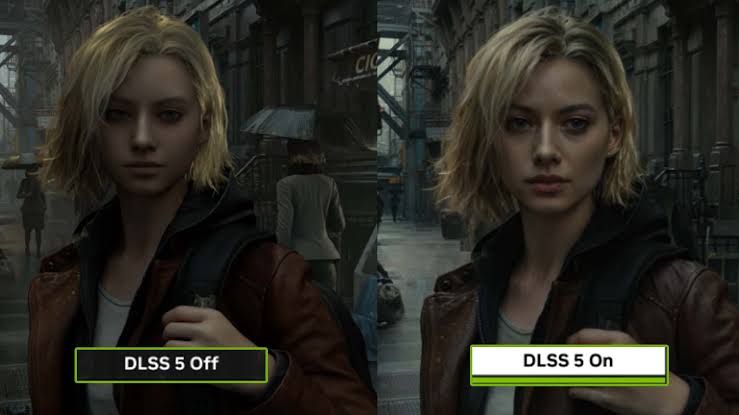
The legendary RPG writer David Gaider, one of the brilliant minds behind Dragon Age, didn’t mince words when he called generative AI a “plague” that is simply “not ready for prime time.” He pointed out a glaring, systemic issue that tech executives conveniently ignore: how are we supposed to train the next generation of creative talent if we automate all the entry-level tasks? If a machine is writing the generic merchant dialogue and the basic background lore, how does a junior writer ever get their foot in the door to eventually write the next masterpiece?
We saw a hilarious, telling moment of panic recently with Larian Studios, the creators of Baldur’s Gate 3. Late last year, their founder Swen Vincke made a brief, passing mention of using AI during the early ideation stages of their next project. The player community reacted with such swift, absolute fury that the studio had to rush out a public clarification, proudly declaring that they employ seventy-two full-time, human artists—including twenty-three concept artists—and were actively recruiting more.
Even Larian, one of the most beloved, untouchable studios in the world, had to bend the knee to the absolute boundary their players had drawn: do not feed us automated content. We are paying you for human imagination, and we expect you to deliver it.
The Ecological and Human Cost of the “Infinite”
There is another side to this tech-bro push for infinite virtual realities that makes my blood boil, and it’s the sheer, physical cost of it all.
We are taught to think of AI as this clean, weightless cloud technology that exists in some ethereal digital dimension. But the reality is that generative AI is an ecological disaster. The massive physical server stacks required to run real-time, LLM-driven NPCs are incredibly energy-intensive. They guzzle millions of gallons of water just to keep their processing units cool, and their electricity draw is putting immense, terrifying pressure on local power grids and communities.
Think about the sheer, grotesque irony of that. We are burning real-world fossil fuels, draining real-world water tables, and heating up our very real planet, all so that a player can have a slightly more dynamic, totally artificial conversation with a digital elf about their day. It is a spectacular waste of resources in service of a feature that nobody actually asked for.
And for what? To solve a problem that didn’t exist. Nobody was playing The Witcher 3 or The Last of Us and thinking, “This is great, but I really wish this deeply emotional, beautifully acted scene was replaced by a randomized conversation that I had to type out myself.”
The industry is trying to solve a creative challenge with a brute-force technological hammer, and the physical world is paying the price for their hubris.
Why the Bedroom Script Wins Every Single Time
If you want to understand why I still have hope for this medium, you have to look away from the multi-billion-dollar publishers and look at the quiet, revolutionary spaces of the indie scene.
A few months ago, I played a tiny, three-hour narrative game developed by a solo creator. It had simple, low-fidelity pixel art. There were no voice actors, no ray-traced shadows, and certainly no real-time AI algorithms. The entire game took place in a single house, and the gameplay consisted almost entirely of clicking on old household objects and reading short, quiet memories associated with them.
At one point, the main character finds an old, cracked coffee mug in the back of a cupboard. A simple text box pops up on the screen, describing how her mother used to hold that mug with both hands on cold winter mornings, her knuckles red from the cold, and how she would always leave a tiny splash of milk at the bottom because she was always too busy rushing to get her kids ready for school to finish her own drink.
It was such a simple, quiet, specific observation. It wasn’t trying to be “epic.” It wasn’t trying to offer me “limitless choices.” But as I sat at my desk, looking at those few lines of text, a lump formed in my throat, and I felt this sudden, overwhelming rush of love and grief for my own mother. That is the magic. That is the human soul of game design.
A machine can analyze a million tragic screenplays and write a grammatically perfect scene about a dying parent. It can use predictive text to structure a technically sad dialogue tree. But a machine has never felt the quiet, cold ache of a winter morning. It has never looked at its mother’s tired hands. It has never felt the terrifying, beautiful vulnerability of putting its deepest personal regrets onto a blank screen, hoping that some stranger on the internet might read them and feel a little less lonely.
Art is an act of translation. It is the process of taking a deeply human experience and translating it into a medium so that another human can receive it. When you remove the human from the beginning of that chain, the translation fails. There is no sender on the other side of the screen. There is only a mirror, reflecting your own loneliness back at you.
The Finite Beauty of Human Art
I don’t want an infinite world. I don’t want to live in a game that never ends, populated by digital ghosts who have endless, hollow things to say.
I want to play games that have an end. I want to play games that are flawed, quirky, and undeniably human. I want to play games where I can feel the literal sweat, tears, and late-night anxieties of the developers who poured their lives into the code.
I want to support the artists who are fighting to keep their jobs in a climate that is actively trying to replace them with statistical models. I want to celebrate the solo creators, the tiny teams of three working out of a garage, and the studios that proudly declare their commitment to the human hand.
The next time a major publisher tries to sell you on a game with a “million unique AI encounters” or a “fully automated, procedurally scaled universe,” I want you to remember that your time on this earth is finite. Your attention is a precious, limited resource. Don’t waste it on the automated, soulless “gameslop” designed by a corporate committee to keep you trapped in an endless retention loop.
Go find a game with a script that was hand-written by a real person who had something they desperately needed to tell you. Go play something that was built with intent. Because when the screen finally goes black and the credits roll, you won’t remember the infinite space. You will remember the human soul that met you there.
Am I screaming into the void here, or are you also feeling completely checked out from the whole “generative AI” hype cycle? What is a tiny, hand-crafted game that recently made you feel something real? Let me know in the comments below!