Has the Live-Action Trend Hit Its Expiration Date? Marc’s Take on Moana’s $95M Debut
Hey guys, Marc here. Pull up a chair, grab a cold drink, and let’s have a real, unfiltered chat about what just went down at the box office this past weekend.
If you had told me five years ago that a live-action Moana movie, starring Dwayne “The Rock” Johnson back in his most charismatic role, featuring some of the most beloved Disney songs of the 21st century, and backed by a staggering $250 million production budget, would struggle to clear $45 million on its opening weekend, I would have laughed you right out of my comment section. I would’ve told you that the Disney live-action money printer was simply too powerful to fail.
But here we are in July 2026, and the box office receipts have served up a massive, ice-cold glass of reality. Disney’s live-action Moana didn’t just fail to make a big splash; it practically crashed headfirst into the reef. Pulling in a highly underperforming $43 million domestically and a $95 million global debut, this film has Hollywood executives sweating through their suits.
Now, let me be fair for a second. If this were a mid-budget, original horror film or a quirky indie comedy, a $95 million global opening weekend would have the studio heads popping champagne and planning sequels. But we are talking about a $250 million Disney mega-tentpole.
When you factor in the marketing budget, which easily pushed another $100 million to $150 million, this movie needs to make at least $600 million globally just to break even. Right now? That looks like an incredibly steep, almost impossible hill to climb.
The bulletproof formula that propelled The Lion King (2019) to a historic $191 million opening weekend is officially broken. We are witnessing the definitive popped bubble of the live-action remake era.
So, what happened? Why did the ocean refuse to cooperate this time? Let’s dive deep into the numbers, the “too soon” problem, and why audiences are finally demanding that Disney sail beyond the safe reef of nostalgia.
The Cold, Hard Math: How the Titans Have Fallen
Let’s start with the data. As a self-proclaimed box office nerd, I live for the numbers, and the comparison charts for this movie are absolutely brutal.
For nearly a decade, translating beloved animated classics into CGI-heavy live-action blockbusters was the safest bet in the entire entertainment industry. It was a license to print money. But look at how the mighty have fallen when we line up Moana against the peak performers of this sub-genre:
| Movie | Release Year | Domestic Opening Weekend | Global Box Office Total |
| The Lion King | 2019 | $191.7 Million | $1.66 Billion |
| Beauty and the Beast | 2017 | $174.7 Million | $1.26 Billion |
| Aladdin | 2019 | $91.5 Million | $1.05 Billion |
| The Little Mermaid | 2023 | $95.5 Million | $569.6 Million |
| Moana (Live-Action) | 2026 | $43.0 Million | $95.0 Million (Debut) |
Sources: Rentrak / Studio Estimates
Yikes. Seeing those numbers laid out like that is wild. Moana didn’t just fall short of The Lion King or Beauty and the Beast; it opened basically neck-and-neck with last year’s incredibly troubled Snow White remake ($42.2 million).
But here is the thing: Snow White was a disaster of a production. It suffered years of delays, massive reshoots, and a relentless wave of online controversy and culture-war backlash that poisoned the well before a single trailer even dropped.
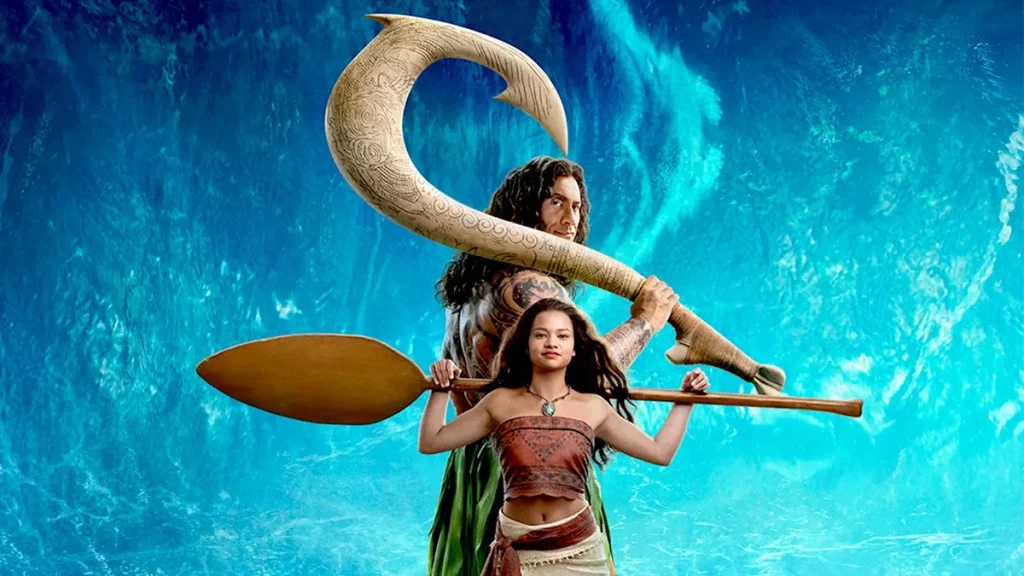
Moana, on the other hand, had virtually none of that. It had Dwayne Johnson relentlessly hyping it up on his massive social media platforms. It featured Catherine Lagaʻaia, a wonderfully talented newcomer who was warmly received by fans when she was cast. The trailers looked fine, the music is still widely beloved, and the summer theatrical market of 2026 has actually been pretty healthy.
The issue isn’t the marketing, the cast, or the release date. The issue is the fundamental concept. We have reached a critical tipping point where “remake fatigue” is no longer just a theory movie critics talk about, it is an active box office reality.
The 10-Year Mirror: The “Too Soon” Problem
If you ask me to point to the single biggest reason why Moana stalled, I don’t even have to hesitate: the 10-year gap. The original, animated Moana was released in theaters in November 2016. We are currently sitting in July 2026. That is a mere ten years.
When Disney remade Cinderella (2015), Beauty and the Beast (2017), or The Lion King (2019), they were tapping into a deep, multi-generational well of nostalgia. The adults buying those tickets had watched the original hand-drawn classics on VHS during the 1950s or 1990s.
They were parents now, eager to share a modernized, “real” version of their childhood memories with their own kids. There was a genuine sense of curiosity: How will they make the CGI beasts look? How will they render the African savannah in photo-realistic detail? But with Moana, that curiosity loop is completely dead.
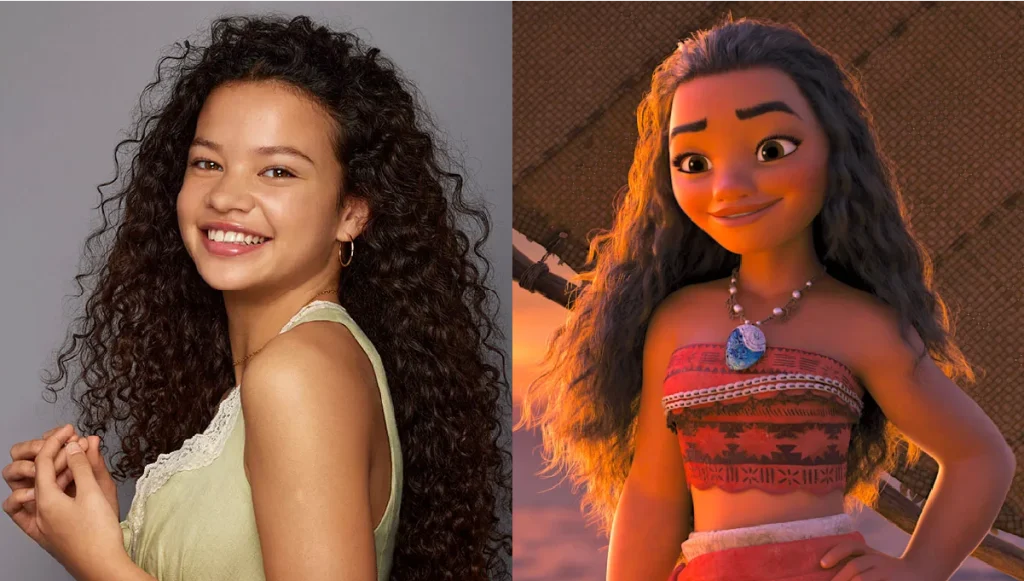
The original 2016 film is already a masterpiece of modern, state-of-the-art 3D CGI animation. The water simulation in that movie is still jaw-droppingly gorgeous. The character models are expressive, bright, and clean. There is absolutely no technical “leap” to be made by translating those digital assets into a “live-action” format.
When you watch the live-action Moana, you aren’t seeing a beloved childhood memory re-imagined. You are seeing a movie you probably streamed on Disney+ last Tuesday recreated with real actors standing in front of massive blue screens. It feels less like an artistic reinterpretation and more like a cynical, redundant exercise in brand management. It’s like buying a brand new copy of a book you already own, except this copy has slightly worse formatting and costs twice as much.
The Battle of the Moanas: A Masterclass in Corporate Self-Sabotage
As if the ten-year gap wasn’t enough of a hurdle, Disney committed the ultimate sin of theatrical scheduling: they actively forced this new film to compete with its own animated sibling.
Just 19 months ago, in November 2024, Disney released Moana 2 in theaters. It was a massive, record-breaking juggernaut, scoring an unbelievable $225 million Thanksgiving opening weekend and sailing effortlessly past the $1 billion mark globally.
Think about the sheer cognitive overload this creates for a family. You took your kids to see the big, shiny, animated Moana 2 in theaters in late 2024. They loved it. They bought the toys, they sang the songs, and they’ve been watching both animated films on a constant loop on Disney+ ever since.
Then, in July 2026, Disney asks you to drop $80 on tickets, popcorn, and drinks to take them back to a theater to watch… the exact same plot as the first movie, but with real people?
Naturally, parents looked at their budgets, looked at their kids, and said, “Yeah, we’ll just wait for this to hit streaming.”
By keeping the animated franchise actively alive with highly successful sequels, Disney accidentally highlighted the complete irrelevance of their own live-action remake. They built a massive, high-speed, beautiful highway to Motunui, and then wondered why no one wanted to pay a toll to take the slow, bumpy scenic route.
The Creative Hollow: When Math Replaces Magic
Now, let’s talk about the movie itself. I always try to go into these films with an open mind. I wanted to love it. But the reviews for Moana have been dismal, currently sitting at a rotten 34% on Rotten Tomatoes.
And while the audience score is higher (sitting at 90% from fans who just love the music and characters), that disconnect tells us everything. Audiences love the concept of Moana, but the film itself is creative vaporware.

Let me make one thing clear: Catherine Lagaʻaia is wonderful as Moana. She brings a sweet, energetic, and culturally authentic presence to the screen, and she has a massive career ahead of her. Dwayne Johnson is, well, Dwayne Johnson—he can do the Maui charm in his sleep.
The issue is the direction under Thomas Kail. The film is a sterile, shot-for-shot photocopy.
Marc’s Hot Take: Animation is a medium of infinite expression. It allows characters to squash, stretch, and emote in ways that defy physics. When Maui transforms into a giant hawk in the animated film, it’s a seamless, breathtaking piece of visual magic. In the live-action version? It looks like a high-end visual effects asset rendering in real-time. The magic has been completely replaced by math.
The living ocean, which was a vibrant character with a distinct, playful personality in the 2016 film, is reduced to a series of impressive but ultimately flat, realistic water simulations. When the ocean interacts with Moana in live-action, it doesn’t feel like a magical spirit; it looks like a tech demo showcasing water physics. By stripping away the stylized, colorful canvas of animation, you strip away the soul of the story.
The Summer 2026 War: The Battle for the Family Wallet
While “remake fatigue” is a great artistic explanation, we also have to talk about the brutal reality of the theatrical marketplace.
In July 2026, families are being incredibly selective about where they spend their hard-earned money. Ticket prices are high, popcorn is practically a luxury item, and the PG-rated market is currently a bloodbath of heavy hitters.
Moana didn’t launch in a quiet window. It sailed directly into a perfect storm of powerhouse animated sequels:
- Toy Story 5 (Disney/Pixar): Still holding incredibly strong in its fourth weekend, pulling in $18.5 million and marching toward a monstrous $879+ million global total.
- Minions & Monsters (Universal/Illumination): Kept a firm grip on the family market with $20.5 million in its second weekend.
As box office analysts have pointed out, there is simply a ceiling on how much PG-rated content the market can support at once. Families had to make a choice. If you’re a parent with fifty bucks to spend on a movie night, are you going to take your kids to see the highly anticipated, incredibly fun new adventures of Woody and Buzz in Toy Story 5? Or are you going to take them to a live-action remake of a movie they already watch three times a week on Disney+?
It’s not rocket science. The competition offered something new; Disney offered homework.
How Disney Can Save the Voyaging Spirit
So, where do we go from here? Is this the absolute end of the live-action trend? The “easy money” era is dead, and honestly, we should all be celebrating that. The days of simply slapping a live-action coat of paint on a classic title and watching a billion dollars roll in are over. Audiences have developed a highly sensitive radar for corporate laziness. They are actively rejecting the cynical, shot-for-shot photocopies.
But this doesn’t mean Disney will stop making these films. What it means is that the strategy has to pivot.
The Reimagining Model vs. The Copy-Paste Model
If Disney wants to save this pipeline, they have to abandon the photo-real photocopy model and return to actual reinterpretation.
Think about the live-action remakes that have actually worked well artistically:
- Pete’s Dragon (2016): Director David Lowery took a relatively obscure, clunky 1977 musical and turned it into a quiet, melancholic, and deeply moving indie-style fable about grief and friendship. It didn’t make a billion dollars, but it remains a critical high-water mark because it had a reason to exist.
- Cruella (2021): Craig Gillespie abandoned the plot of 101 Dalmatians entirely, opting instead for a stylish, punk-rock 1970s fashion-heist movie. It was bold, it was weird, and it felt like a real movie, not a corporate mandate.
When a remake has a distinct directorial voice, a willingness to change the plot, and a genuine reason to exist in a physical, live-action medium, we are still willing to show up. But when you try to remake a modern, flawless animated film like Moana just to keep the IP wheels spinning, you end up with a historic disappointment.
The Ultimate Lesson of Motunui
There is a beautiful, poetic irony to the live-action Moana struggling at the box office. In the original film, Moana’s entire journey is about looking beyond the reef. She has to escape the safe but stagnant confines of her island and voyage into the unknown to find new horizons. She discovers that her people stopped being voyagers because they became afraid of the dark, choosing the security of the shore over the excitement of exploration.
For the past decade, Disney has acted exactly like the fearful villagers of Motunui. Terrified of the unpredictable waters of original storytelling, they stayed safely behind the reef of their existing IP, churning out remake after remake, sequel after sequel.
The soft debut of Moana is a clear, unmistakable message from us, the audience: It’s time to start voyaging again. We don’t want to keep circling the same island. We want to see what lies beyond the horizon.
What do you guys think? Did you buy a ticket for this, or did you sit this one out? Let me know in the comments below!
If you want to judge the visual style and the shift from animation to realism for yourself, you can check out the Official Live-Action Moana Trailer to see how they handled translating Maui and the ocean to the real world.