Why Every RPG Developer Should Be Terrified of Larian Studios
There was a moment shortly before Baldur’s Gate 3 launched when the collective temperature of the AAA gaming industry suddenly spiked. It wasn’t because of a market crash, a massive labor strike, or a hardware supply shortage. It was because a group of prominent game developers took to social media to urge players—and I am paraphrasing here, but only slightly—not to expect this level of quality from anyone else.
They called Larian Studios’ upcoming behemoth an “anomaly”. They pointed out that Larian had unique advantages: a massive, specialized team, proprietary engine technology refined over a decade, a insanely successful Early Access period, and the cultural tailwind of the Dungeons & Dragons license. They pleaded with the gaming public not to treat Baldur’s Gate 3 as a new baseline for the RPG genre, warning that trying to replicate its scope could literally collapse other studios.
I watched this public relations panic unfold with absolute fascination. Because when corporate suit-and-tie developers start preemptively telling their audience, “Please don’t hold our future sixty-dollar products to the standard of this other sixty-dollar product,” you know something fundamental in the matrix has broken.
Larian Studios didn’t just release a good video game when Baldur’s Gate 3 debuted. They detonated a high-yield nuclear warhead right in the middle of the modern AAA publishing model.
They exposed the corporate excuse engine for what it truly is: a lazy, focus-tested, microtransaction-ridden facade designed to extract maximum profit for minimum effort. And if I were a C-suite executive at BioWare, Bethesda, Ubisoft, or EA, I would be lying awake at night in a cold sweat.
The Death of the “Live-Service” Delusion
For the better part of a decade, traditional publishers have been trying to convince us that traditional, self-contained, single-player RPGs are a dying relic of the past. We were told that gamers don’t want a hundred-hour story you buy once and own forever. We were told that “modern audiences” demand battle passes, seasonal roadmaps, cosmetic microtransactions, daily login incentives, and always-online live-service infrastructure.
We watched venerable RPG powerhouses strip down their storytelling mechanics to make room for four-player co-op looter-shooter mechanics, paid skins, and battle passes. Then Baldur’s Gate 3 walked into the room, casually dropped a massive, pristine, one-hundred-plus-hour single-player RPG onto the table, and made over a billion dollars without a single microtransaction.
No paid character outfits. No XP boosters sold in a digital cash shop. No day-one DLC slicing off the best companions. No battle pass forcing you to play every Tuesday to unlock a fancy sword. No forced internet connection to save your game. You paid for the game, and you got… the entire game.
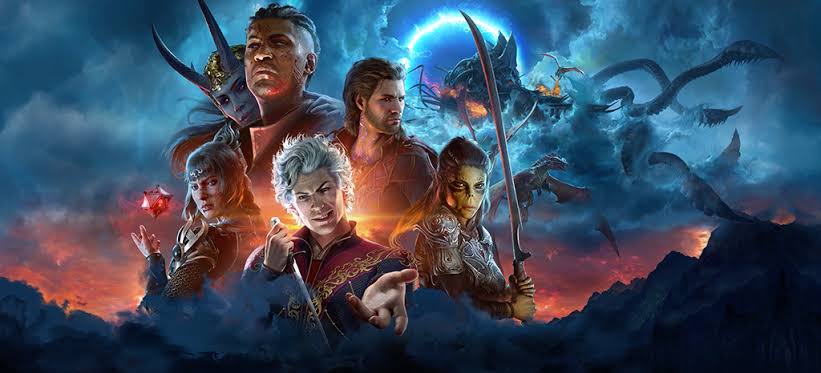
Chloe’s Hot Take: The success of Baldur’s Gate 3 proved that the live-service trend was never about what players actually wanted. It was about what corporate shareholders wanted to force down our throats. Larian showed that when you treat players like respected human beings instead of walking wallets, they will reward you with unprecedented loyalty and endless word-of-mouth sales.
The sheer humiliation this inflicted on corporate gaming cannot be overstated. For years, executives hid behind the lie that modern AAA budgets are too high to survive on box sales alone. They claimed microtransactions were a “financial necessity” to support ongoing development.
Larian Studios—a studio that expanded to hundreds of developers across multiple global offices—proved that if your game is actually phenomenal, you don’t need to nickel-and-dime your players to turn a historic profit. You just need to make something people genuinely care about.
The Myth of “Illusion of Choice” Is Broken Forever
Before Baldur’s Gate 3, major RPG developers had successfully trained us to accept mediocre, illusionary choice mechanics. We all know the formula. You are playing a massive open-world RPG, and you come across a crucial narrative decision. You are presented with three dialogue options:
Option A: The Good Guy response.
Option B: The Snarky Guy response.
Option C: The Evil Guy response.
You choose Option C, expecting a dark, divergent path. Instead, the NPC says one angry line of dialogue, nudges you back onto the exact same linear quest track, and the story proceeds as if nothing happened. We were told by industry veterans that true narrative branching was “too expensive,” “too complex,” and “a waste of development resources because most players only play the game once.” Baldur’s Gate 3 took that lazy design philosophy and smashed it into dust.
The Choice Reactivity Matrix:
Complex Narrative Scripting + Uncompromised Player Agency = True RPG Freedom
In Baldur’s Gate 3, if you choose to eliminate a key quest-giver within the first ten minutes, the game won’t penalize you with an immortal NPC label or a “Mission Failed” notification. The game rolls its eyes, assesses the unpredictable outcomes, modifies the story mechanism, and continues progressing.
Choosing to ally with the goblins and eliminate a tranquil grove doesn’t result in a standard bad ending; instead, it unlocks completely distinct companions, narratives, and camp interactions that players on the “good path” will miss in that gameplay.
The depth of choice reactivity in Larian’s masterpiece is so profound and incredibly intricate that it spoiled other RPGs for me. I started another expensive RPG soon after completing my second playthrough of Baldur’s Gate 3, and within two hours, I sensed that I was trapped in a digital bind.
Larian demonstrated that genuine choice isn’t merely offering players an alternative color laser at the conclusion of a lengthy campaign; it involves honoring the player’s autonomy throughout every moment of the experience.
Swen Vincke and the Power of Unfiltered Creative Leadership
Why was Larian able to pull this off while studios with three times their budget consistently ship half-baked, soul-crushing disappointments? It comes down to leadership, structure, and the complete absence of corporate suit interference.
Larian Studios is headed by Swen Vincke, a man who literally wears full suit of armor to gaming awards shows and game reveals. But more importantly, Larian is a privately owned company. They do not have a board of directors demanding quarterly earnings growth at the expense of product quality. They do not have public shareholders who have never played a video game in their lives demanding that AI tools or live-service monetization be shoehorned into the code.
Swen Vincke and his team are RPG nerds making games for RPG nerds.
[Traditional AAA Studio Structure]
Shareholders -> Board of Directors -> Focus Group Data -> Marketing Division -> Sanitized Game
[Larian Studios Structure]
Passionate Game Developers -> Direct Player Feedback -> Uncompromised Creative Vision
When you look at modern AAA development, games are no longer built on creative passion; they are built on risk assessment, metric analysis, and focus group data.
Executives look at telemetry data and say, “Well, data shows that sixty percent of players skip dialogue, so let’s trim the dialogue system down to a simple wheel.” Or, “Data shows that battle passes increase daily retention, so force every design lead to implement a seasonal progression track.”
Larian completely rejected this corporate focus-group disease. They spent three years in open Early Access, listening directly to player feedback, refining mechanics, fixing bugs, and building trust. They trusted that if they built something deep, complex, and uncompromisingly passionate, the audience would follow. And the audience didn’t just follow; they turned the game into a global cultural phenomenon.
The “Anomaly” Excuse Is a Admission of Corporate Failure
Let’s circle back to that infamous developer debate surrounding Baldur’s Gate 3 raising the bar. When AAA developers claim that Baldur’s Gate 3 is an “anomaly” that shouldn’t set a new standard, they are partially correct in terms of mechanics. No one expects every indie studio or mid-tier developer to create a game with 170 hours of cinematic dialogue and thousands of ending variations. That would be ridiculous.
But when gamers talk about Baldur’s Gate 3 setting a new standard, we aren’t talking about raw asset scale. We are talking about respect, integrity, and polish.
Chloe’s Hot Take: Calling Baldur’s Gate 3 an “anomaly” is a cop-out. It’s an admission that major AAA publishers have the money, talent, and resources to make masterpiece-quality games, but choose instead to burn those resources on marketing campaigns, bloated middle management, and aggressive monetization schemes.
The reason traditional RPG studios are terrified of Larian is because Baldur’s Gate 3 stripped away all their excuses. For years, publishers told us:
- “Turn-based combat is dead in modern AAA games.” (BG3 proved it can sell millions).
- “Complex CRPG systems are too niche for mainstream gamers.” (BG3 broke Steam concurrent player records).
- “Games have to ship broken because modern game dev is too hard.” (BG3 shipped with staggering polish in its core acts after rigorous early testing).
- “We need microtransactions to support post-launch updates.” (Larian released massive free patches, cinematic epilogues, and mod tools without charging a dime).
Every single corporate narrative used to justify buggy launches, gutted content, and aggressive monetization was exposed as a lie.
Where Does the RPG Genre Go From Here?
We are currently standing at a historic fork in the road for the RPG genre. On one side, you have the traditional AAA establishment: massive publishers churning out sterile, risk-averse, focus-tested titles that treat players as monetization metrics to be optimized. They will continue trying to convince us that battle passes belong in fantasy worlds and that true choice is “too difficult” to engineer.
On the other side, you have the new benchmark set by Larian Studios. A benchmark defined by artistic courage, deep systemic freedom, uncompromised passion, and a profound respect for the intelligence of the player.
Gamers have tasted what is possible when a studio prioritizes greatness over short-term quarterly profit. We have seen what happens when developers are allowed to make the game they actually want to play, rather than the product a spreadsheet told them to build.
You cannot un-ring this bell. Every time a major studio announces a new hundred-dollar RPG moving forward, the gaming community is going to look at it through the lens of Baldur’s Gate 3. We are going to ask: Does this game respect my time? Does it respect my money? Does it give me real freedom, or is it just another digital storefront wrapped in a fantasy skin?
If corporate RPG developers are terrified of Larian Studios, they should be. Because the curtain has been pulled back, the excuses are gone, and gamers are never going back to accepting crumbs.
Now, I want to hear your thoughts! Did Baldur’s Gate 3 ruin other RPGs for you, or do you think the industry’s reaction was blown out of proportion? Which studio do you think feels the most pressure from Larian’s success? Drop your hot takes, favorite BG3 choices, and industry rants in the comments below!