How Furiosa: A Mad Max Saga Transformed Desert Violence into a Mythic Cinematic Opera
There is a moment early in George Miller’s Furiosa: A Mad Max Saga that captures the entire thesis of his unique cinematic madness.
A young girl, snatched from a hidden oasis of green and abundance, hangs suspended from a rusted vehicle speeding across an endless ocean of orange sand. The sun is a blinding hammer, the roar of modified V8 engines vibrates through the earth like an apocalyptic choir, and around her, men painted in white chalk throw themselves off moving war rigs with absolute, fanatic joy. It isn’t just an action scene; it is a ritual. It is a terrifying, breathtaking display of physical theater where death is always a half-inch away and human lives are traded for gallons of gasoline and drops of water.
When Mad Max: Fury Road exploded into theaters back in 2015, it felt like a miracle—a two-hour, relentless, real-time chase movie that functioned like a perfectly executed heavy-metal symphony. It set an almost impossible standard for action cinema. Most filmmakers who tried to follow up a lightning-in-a-bottle masterpiece like Fury Road would have simply tried to make the exact same movie again: faster, louder, and more relentless.
George Miller did something far more ambitious, far more challenging, and ultimately, far more rewarding.
Instead of giving us another two-hour sprint, Miller expanded his scope into an epic, multi-year odyssey. He took the dusty, chrome-drenched world of the Wasteland and used it to construct a grand, tragic, visual opera about childhood loss, surviving trauma, and the hollow, consuming nature of vengeance.
My take on Furiosa: A Mad Max Saga is that it stands as a towering, singular masterpiece of modern action cinema—a film that proves George Miller is not just an action director, but one of the last true visual poets working in studio filmmaking.
By weaponizing kinetic camera movement, astonishing physical stuntwork, massive environmental scale, and an episodic, chapter-based narrative structure, Furiosa elevates blockbuster violence into mythic art. It transforms what could have been a standard revenge story into a crushing, tragic examination of how a human soul survives inside a world that has completely lost its mind.
Part I: The Rhythm of the Frame—Kinetic Camera Work and Visual Operatics
To understand why George Miller’s action sequences feel fundamentally different from almost every other blockbuster in Hollywood, you have to look at his unique visual rhythm.
In modern studio filmmaking, action is often shot with chaotic, shaky handheld cameras and chopped together with lightning-fast, disorienting edits. It is a technique designed to hide bad stunt choreography, mask cheap visual effects, and simulate a chaotic energy that the director couldn’t capture on set. The result is usually an unreadable blur where you can’t tell who is punching whom, where the characters are in physical space, or what the emotional stakes of the fight actually are.
George Miller approaches action with the absolute precision of a classical ballet choreographer or a symphony conductor.
In Furiosa, the camera is constantly moving, but it is never chaotic. Miller and his cinematographer, Simon Duggan, utilize what Miller calls “cross-hair editing”—a technique where the primary focus of action in every single shot is aligned directly in the center of the screen.
Whether a war rig is flipping upside down, a bike charger is leaping over a vehicle, or a spear is piercing a driver’s chest, your eye never has to search the frame to find the focal point. The cuts can happen fast, but your brain processes the spatial geography instantly.
Look at how the camera glides across the screen during the film’s set-pieces.
The camera isn’t just watching the action; it dances with it. It swoops down from a bird’s-eye view of the desert, dives beneath the spinning wheels of a heavy war machine, swoops up beside a stunt performer hanging off a kite, and pulls into a tight, intense close-up of Anya Taylor-Joy’s eyes—all in what feels like one continuous, fluid, athletic motion.
My take on this visual philosophy is that it turns cinema back into a purely silent-era medium.
Miller has famously said that he wants to make movies that can be understood in Japan without subtitles. In Furiosa, dialogue is sparse because it isn’t needed. The story is told through physical movement, spatial geometry, camera speed, and visual iconography. The camera moves with an operatic cadence—building tempo during an ambush, holding a prolonged pause of tension before an explosion, and swelling into grand visual crescendos as machinery and metal collapse across the sand. It is visual music in its purest form.
Part II: The Reality of Metal and Bone—Physical Stuntwork as Cinematic Ritual
We live in an era where audiences have become numb to digital action. We have seen digital cities crumble, digital superheroes fall from space, and digital armies collide without feeling a single spike of adrenaline. When everything is created inside a computer renderer, nothing carries physical weight. Your brain registers the lack of gravity, the fake lighting, and the absence of real danger, and it emotionally disengages.
Furiosa refuses to let the audience disengage because it grounds its world in the visceral, terrifying reality of physical stuntwork.
When you see a stunt performer leap from a motorcycle onto a speeding war rig at eighty miles an hour in Furiosa, your brain recognizes that a real human being performed a dangerous physical act in a real desert.
Look at the film’s undisputed centerpiece sequence: the fifteen-minute ambush on the Stowaway War Rig by Dementus’s gang, utilizing gliders, parasails, and mortar-launching motorbikes.
The sequence took seventy-eight days to shoot, requiring over two hundred stunt performers every day. It is an absolute masterclass in physical execution.
You see parasailers dropping from the sky onto the roof of a moving vehicle, using grappling hooks to rip away metal armor plates while fuel lines burst and flame-throwers ignite. You watch stuntmen dragged through real dirt, swinging from crane arms, and executing complex physical combat on top of engines that are actually roaring down a desert track.
Even when visual effects are used to enhance the background or seamlessly blend shots together, the physical core of the action—the metal, the vehicles, the dust, the fire, and the human bodies—is overwhelmingly real.
My take on this dedication to practical stuntwork is that it restores a sense of genuine wonder and terror to blockbuster cinema.
It transforms the action from mere entertainment into a sacred cinematic ritual. When a stunt looks dangerous on screen, it gives the story an edge of existential stakes. You aren’t watching invincible digital avatars exchange weightless blows; you are watching fragile creatures of flesh and bone trying to survive inside a terrifying world of crushing steel and fire. Every punch hurts, every fall carries consequences, and every near-miss makes you hold your breath.
Part III: The Canvas of Desolation—Environmental Scale as a Character
The Wasteland in the Mad Max universe is not just a backdrop; it is a living, breathing, hostile deity that demands human sacrifice.
In Furiosa, George Miller expands the geography of this apocalyptic world beyond the endless roads of Fury Road. We are introduced to the triangular geopolitical power dynamic of the Wasteland: the Citadel, with its towering green crops and fresh water controlled by Immortan Joe; Gastown, a filthy, black-smoke industrial hellscape that refines oil; and the Bullet Farm, a jagged, dark stone quarry dedicated to the mass production of ammunition.
The environmental scale of these locations is captured with breathtaking, epic grandiosity.
Miller uses wide-angle landscape shots that reduce massive armies of bikers and war vehicles to tiny, insignificant specks of dust crawling across a vast, indifferent earth. The desert is painted in extreme, hyper-saturated colors: deep cobalt blue skies, blinding white salt flats, oily black smoke, and an ocean of fiery, orange sand that stretches out beyond the horizon.
Look at how the film frames the physical distance between these strongholds.
The travel sequences don’t feel like quick narrative transitions; they feel like treacherous medieval pilgrimages across a sea of death. A journey from the Citadel to Gastown is an ordeal fraught with ambushes, dust storms, mechanical failures, and starvation.
My take on this environmental framing is that it visually reinforces the tragic themes of the story.
The Wasteland is an ecology of absolute scarcity. Because there is no water, no food, and no hope, humanity has regressed into a feral, primitive state where life is cheap and cruelty is the default survival strategy. The crushing scale of the desert reminds us that no matter how powerful warlords like Immortan Joe or Dementus claim to be, they are just tiny, pathetic parasites fighting over scraps in a dead world that will eventually swallow them all.
The environment acts as a constant, looming reminder of what was lost. Every frame of barren sand silently echoes the memory of the “Green Place of Many Mothers”—the lost paradise that Furiosa is desperately trying to return to throughout her entire life.
Part IV: The Structure of an Epic—Episodic Pacing and the Legend of a Hero
One of the most surprising and effective narrative choices Miller made in Furiosa was abandoning the real-time, continuous clock of Fury Road in favor of an episodic, chapter-based narrative structure.
The film is explicitly broken into five distinct chapters, spanning over fifteen years of Furiosa’s life: from her childhood kidnapping as a young girl (played with astonishing grit by Alyla Browne) to her survival inside Dementus’s nomadic horde, her disguised upbringing inside the Citadel as a silent mechanic, and finally her ascendance as an adult Imperator (played with fierce, magnetic intensity by Anya Taylor-Joy).
This chapter-based structure transforms the movie from a simple chase narrative into a classic, mythic odyssey.
It feels like reading an ancient, worn tapestry or listening to an oral legend passed down around a campfire in a world where books no longer exist. The film takes its time, allowing us to watch Furiosa observe, learn, adapt, and endure.
Look at how the film handles her transition from a silent child hiding in the shadows to a hardened warrior.
We see her study the mechanics of engines, learn how to build weapons from scrap metal, memorize the trade routes of the desert, and master the art of remaining completely invisible to the predatory men around her. She doesn’t become a bad-ass action hero overnight through a quick montage; her competence is earned through fifteen years of silent, agonizing patience and brutal survival.
My take on this episodic pacing is that it gives the film a profound sense of historical weight.
We witness the slow, tragic evolution of a society falling deeper into madness. We see how warlords rise and fall, how trade alliances are forged and broken over oil and bullets, and how a young girl’s trauma hardens into an armor of absolute resolve. By taking us through the long years of her captivity and quiet rebellion, Miller ensures that when Furiosa finally cuts her hair, attaches her mechanical arm, and steps into the war rig for her final vengeance, the moment carries a staggering, multi-year emotional payoff.
Part V: The Tragedy of Vengeance—Anya Taylor-Joy and Chris Hemsworth’s Dark Mirror
At the emotional core of Furiosa lies a dark, philosophical inquiry into the nature of revenge.
Modern Hollywood revenge movies usually sell a simple, satisfying fantasy: a villain does something terrible to the hero, the hero hunts the villain down, kills them in a cool fight, and walks away into the sunset feeling victorious and healed.
Furiosa utterly dismantles that simplistic Hollywood revenge fantasy.
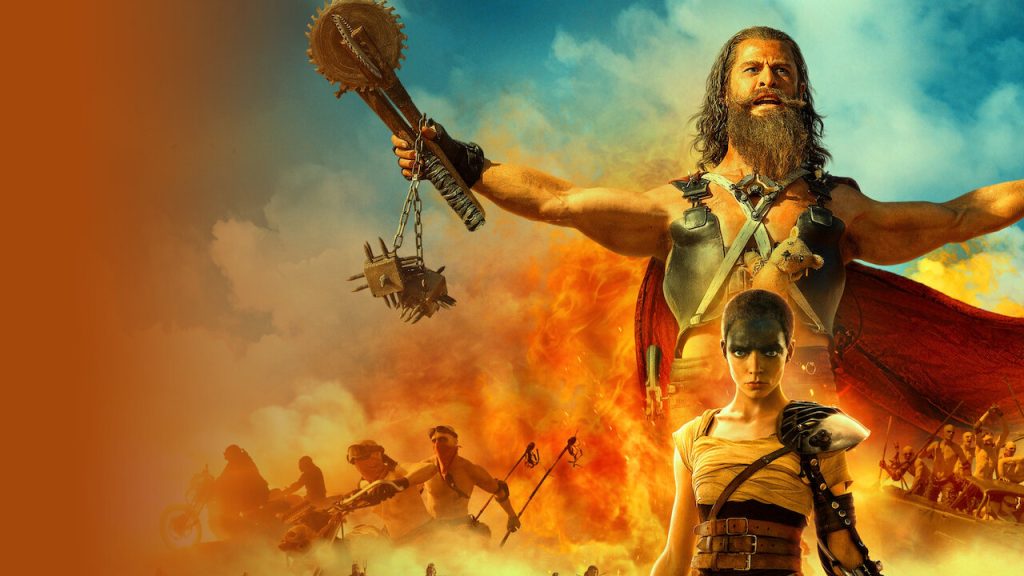
The relationship between Anya Taylor-Joy’s Furiosa and Chris Hemsworth’s Dementus is a brilliant, dark mirror study in shared trauma and tragic obsession.
Chris Hemsworth gives the performance of his career as Dementus—a red-caped, chariot-riding wasteland warlord who is equal parts theatrical buffoon, psychotic tyrant, and deeply broken victim. Dementus isn’t a cold, calculating mastermind; he is a pathetic, manic, grief-stricken man who lost his own family during the fall of the world and chose to fill that unhealable void with infinite noise, chaos, violence, and conquest. He travels with a teddy bear strapped to his chest—a childish, tragic relic of the life he lost.
Furiosa, meanwhile, is driven by the singular, burning promise she made to her dying mother: to find her way back home to the Green Place, and to exact retribution on the man who stole her childhood.
Look at how their final confrontation is staged.
There is no grand, triumphant duel with soaring music. The confrontation between Furiosa and Dementus in the desert is quiet, uncomfortable, and intensely psychological.
Dementus mocks her desire for revenge, explicitly warning her about the trap she is stepping into. He tells her the bitter truth of their world: that killing him won’t bring her mother back, won’t restore her severed arm, won’t turn the desert green, and won’t fix the hole in her soul. He points out that revenge is a ghost chase—an addiction that leaves you just as cold, empty, and broken as the person who harmed you.
My take on this thematic climax is that it elevates Furiosa into genuine cinematic literature.
The film refuses to give the audience a cheap, easy emotional hit. When Furiosa finally exacts her punishment on Dementus, it is presented not as a moment of glorious justice, but as a somber, mythic, and deeply uncomfortable act of transformation.
She doesn’t find peace through violence. Peace only comes later, when she turns her focus away from destruction and toward salvation—using her power to help others escape the Citadel, setting the stage directly for the events of Fury Road.
Part VI: The Mythic Legacy—Why Furiosa Is a Landmark for Action Cinema
In a cinematic landscape increasingly dominated by risk-averse corporate franchises, recycled intellectual property, and sterile digital visual effects, Furiosa: A Mad Max Saga stands as a heroic, defiant monument to uncompromised artistic vision.
It is a film made by an eighty-year-old master director who still approaches cinema with the wild, radical, inventive energy of a young film student discovering the power of the camera for the very first time.
George Miller proved that you can take a blockbuster sequel—a format usually reserved for quick cash grabs—and turn it into a deeply felt, visually astonishing piece of pure myth-making.
He didn’t just give us more of what we saw in Fury Road. He expanded the artistic vocabulary of his universe, offering a story that is grander in scope, deeper in its characterization, and more tragic in its thematic weight, while maintaining an absolute mastery of physical action choreography that leaves every other modern director scrambling to catch up.
It is a movie that demands to be experienced on the biggest screen possible, with the sound rattling your ribcage, so you can feel the true, glorious, terrifying power of visual storytelling operating at its absolute peak.
The Verdict: A Masterpiece Written in Fire and Sand
Furiosa: A Mad Max Saga is a towering triumph of modern cinema—an operatic, kinetic, and deeply tragic masterpiece of action storytelling.
Through its flawless cross-hair editing, mind-boggling practical stuntwork, staggering environmental scale, and profound narrative structure, it transforms a desolate desert chase into a timeless myth about survival, loss, and the heavy cost of vengeance. It leaves you breathless, awestruck, and visually intoxicated.
When the final chapter closes and the film seamlessly bridges the gap into the opening frames of Fury Road, you realize you have witnessed something truly extraordinary. You haven’t just watched an action movie; you have lived through a grand visual odyssey painted in blood, rust, and chrome.
George Miller didn’t just conquer the Wasteland once again—he proved that as long as there are artists willing to pour their heart, soul, and physical lives into the craft of visual cinema, the silver screen will continue to be a place of pure, unadulterated magic.