How Good Pizza, Great Pizza Engineered the Perfect Mechanical Simulation of Neurotic Customer Service
In the gaming industry, the culinary management subgenre has historically relied on a very specific, adrenaline-fueled flavor of panic. Titles like Overcooked or Cook, Serve, Delicious! treat the kitchen as an aggressive battlefield of pure manual dexterity. The stress in those games is mechanical and frantic: your fingers fly across a controller to memorize button combos, manage burning stovetops, and dodge literal environmental hazards, all while trying to satisfy a faceless, assembly-line queue of anonymous consumers. It is a simulation of physical chaos.
But TapBlaze’s massive, enduringly popular hit, Good Pizza, Great Pizza, approaches the culinary nightmare from an entirely different, brilliantly psychological angle. It looks past the surface-level panic of burning food to focus on the true, universal source of retail horror: the psychological instability of the hungry customer.
Wrapped in a warm, charming, hand-drawn art style and a relaxing lo-fi soundtrack, Good Pizza, Great Pizza hides an incredibly sharp, deeply funny simulation of frontline food service. By forcing players to decipher increasingly abstract, cryptic, and borderline chaotic linguistic riddles disguised as pizza orders under a ticking patience meter, the game moves past traditional cooking mechanics.
It becomes a fascinating study in real-world retail empathy and linguistic deduction, proving that top-tier casual game design doesn’t need a ticking clock or exploding stoves to create intense tension—it just needs the unpredictable friction of human communication.
The Linguistic Meatgrinder: Pizza as a Cryptic Riddle
The core structural brilliance of Good Pizza, Great Pizza lies in how it completely redefines the concept of an “order.” In any other restaurant sim, a customer walks up to the counter and states exactly what they want: “One pepperoni pizza, please.” The task is a straightforward test of inventory assembly.
In Good Pizza, Great Pizza, the local townspeople speak in a baffling dialect of culinary poetry, passive-aggressive riddles, and vague emotional vibes. They do not order food; they present existential challenges.
A customer will walk up to your counter, stare blankly into your soul, and utter a sentence like: “I’m a literalist. I want a pizza where every ingredient starts with the letter P.” Suddenly, your brain is forced out of automatic muscle memory and into an active, high-stakes game of semantic deduction. You have to frantically scan your ingredients, filtering out cheese and sauce to realize they want Pepperoni, Pineapple, Peppers, and Pork.
Even more chaotic are the poetic orders. A customer asking for a “desert sunrise” means you need to paint half the pizza with red sauce and cheese, and the other half with yellow corn or chicken. When someone walks in and demands to “smell the ocean,” you have to translate their atmospheric mood into a literal combination of anchovies and onions.
By introducing this dense layer of communication friction, TapBlaze perfectly captures the exact, soul-crushing reality of real-world service labor: the exhausting cognitive load of having to act as an uncertified psychic interpreter for a stranger who doesn’t know how to articulate their own desires.
The “What?” Button and the Social Tax of Clarification
To manage this linguistic chaos, the game provides a single, beautifully designed safety valve: the “What?” button. If a customer delivers a completely unintelligible paragraph of text, you can click this button to force them to clarify their order.
On paper, this sounds like a simple accessibility feature. In practice, TapBlaze has weaponized it into a brilliant psychological trade-off that perfectly mirrors the intense social anxiety of real-world customer service.
Every time you press the “What?” button, the customer’s internal patience meter instantly takes a significant, permanent hit. Their cheerful expression twists into a mask of pure, condescending annoyance, and they deliver a patronizing, over-simplified explanation like: “I just wanted cheese and pepperoni. It’s not that hard.” This mechanical penalty triggers a highly authentic, stress-inducing risk-reward calculation in the player’s head.
Do you swallow your pride, press the button, and accept a massive drop in their happiness meter (which directly lowers the financial tip you receive at the end) just to ensure you get the recipe right? Or do you gamble your hard-earned ingredients, guess what a “basil-infused nightmare” means, and risk a catastrophic zero-dollar payout if your intuition fails?
It is a masterful simulation of the subtle, emotional policing that defines retail work, where asking a customer to repeat themselves feels like a high-risk gamble against their temper.
The Aggressive Micro-Geography of the Cutting Station
Once you finally decipher what the customer wants, the game transitions to the preparation table, where the focus shifts from linguistic deduction to the strict, uncompromising mathematics of spatial geometry. Good Pizza, Great Pizza demands an almost neurotic level of structural precision that transforms food preparation into a high-stakes art form.
The game engine tracks the exact pixel coordinates of every single ingredient you drop onto the dough. If an order calls for a classic pepperoni pizza, you cannot simply toss a handful of meat onto the cheese and call it a day. The community standard—and the internal scoring system—demands a perfect, symmetrical matrix: exactly eighteen slices of pepperoni, aligned in concentric circles of twelve on the outside and six on the inside.
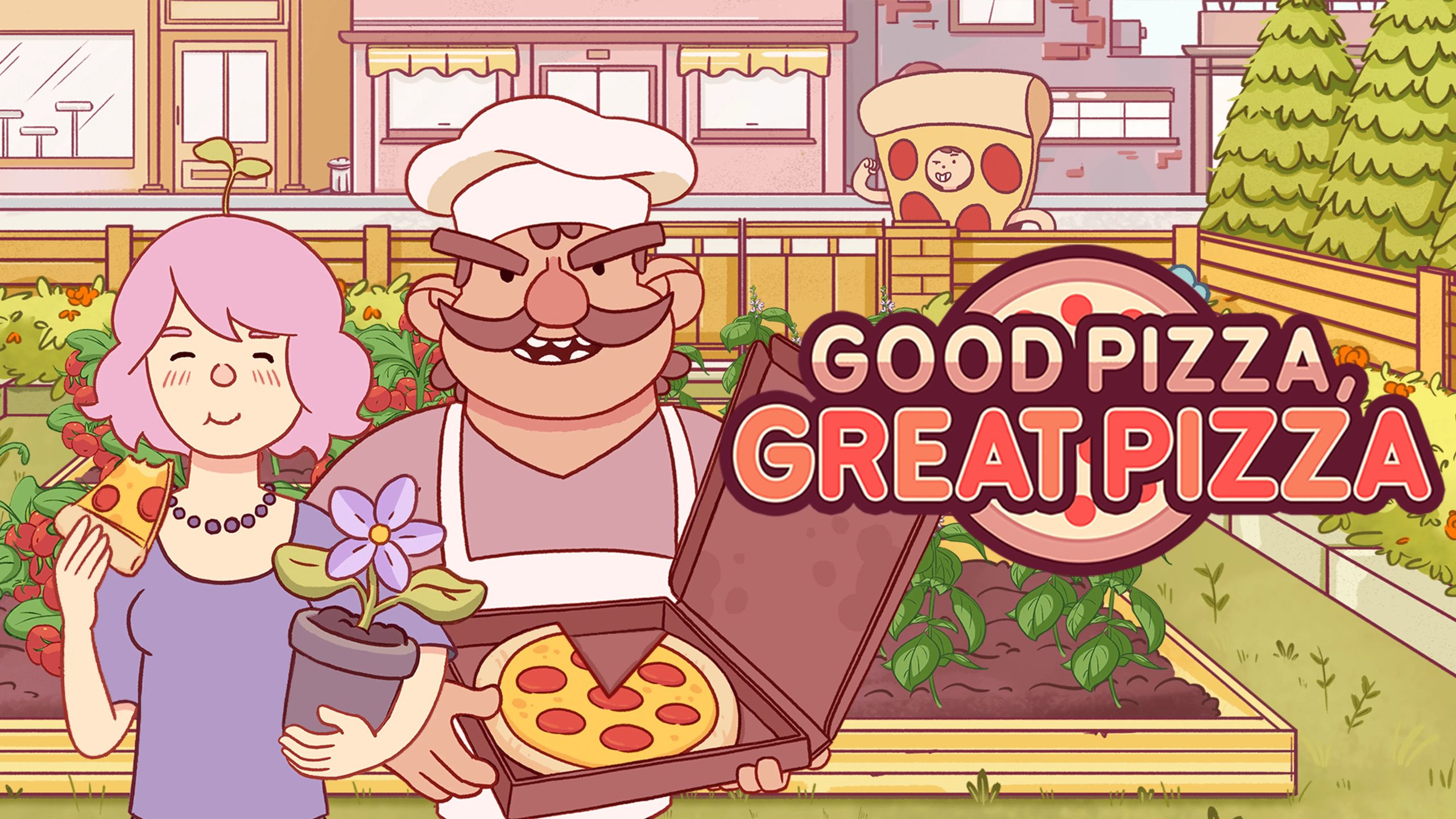
If your placement is sloppy, if a single slice of pineapple overlaps onto a side that was supposed to be strictly half-mushroom, or if your cutter slices a pizza into uneven, asymmetrical triangles, the customer will call you out at the window. They will look at a minor, microscopic asymmetry and dock your pay, complaining that their food looks like a mess.
This extreme, mechanical nitpicking perfectly captures the hyper-specific, unreasonable standards of the modern consumer. It turns the simple act of placing virtual toppings into a meditative, high-concentration exercise in spatial discipline, making the player feel the exact combination of pride and profound irritation that comes with hand-crafting a product for an incredibly ungrateful audience.
The Infinite Variety of the Human Condition
What elevates Good Pizza, Great Pizza from a simple, repetitive casual title into a genuine narrative masterpiece is its sprawling, deeply empathetic world-building. The game’s progression is built entirely around an endless, rotating theater of recurring local characters, each bringing their own distinct subplots, financial struggles, and psychological quirks directly to your shop counter.
You aren’t just serving random NPCs; you are actively engaging with a living neighborhood ecosystem. You encounter the hyper-competitive rival pizzeria owner across the street, Bric Spahn, who routinely drops by just to insult your decor and test your resolve.
You interact with an expanding roster of sweet, broke children who only have two dollars to their name and ask if you can make them a plain piece of flatbread, forcing you to make a real-time choice between maximizing your profit margins or performing a brief act of quiet, unprofitable community kindness.
There are even late-game homeless characters who ask for free food, whose narratives eventually evolve, rewarding your structural charity by returning weeks later as successful entrepreneurs who invest massive influxes of capital back into your kitchen upgrades.
By giving its eccentric, demanding customer base actual humanity, history, and narrative progression, the game transcends its own retail cynicism. It proves that while customer service is an undeniably exhausting, often hilarious gauntlet of linguistic friction and human eccentricity, the messy, unpredictable connections we make across the counter are exactly what give our communities their soul.
The Masterclass of Casual Friction
Ultimately, the enduring critical triumph of Good Pizza, Great Pizza lies in its deep, fundamental understanding of human nature. It is a game that recognizes that true engagement doesn’t require high-definition graphics, complex combat systems, or high-octane pacing. It simply requires a deep, authentic appreciation for the beautiful, frustrating, and incredibly funny complexities of human communication.
TapBlaze didn’t just code a hit cooking simulator; they engineered a flawless psychological portrait of the service industry. They built a world where a simple request for dinner can turn into an ancient riddle, where a pizza cutter can become an instrument of geometric perfection, and where a single “What?” button can carry the emotional weight of a workplace crisis.
It stands as a towering masterclass in casual game design, reminding the entire industry that sometimes, the most addictive, deeply satisfying, and genuinely fun experiences don’t come from escaping reality—they come from laughing directly at the chaotic, unhinged friction of everyday life.