Christopher Nolan’s The Odyssey: Why “Unfilmable” Literature is the Ultimate Cure for Superhero Fatigue
Nolan’s The Odyssey is a line in the sand. While other studios are drowning in self-referential multiverse sludge, Nolan went back to the cradle of Western storytelling. He is proving that audiences don’t want endless sequels.
They want scale, myth, and a director who treats the cinema screen like an ancient amphitheater. Let’s look at why ancient epic poetry is secretly the most radical thing happening in modern filmmaking.
Part I: The Exhaustion of the Digital Theme Park
I have hit a wall with modern blockbusters, and I know I am not alone. For the past decade, going to the theater has started to feel less like an artistic experience and more like an obligation to keep up with corporate synergy. We have been trapped in a exhausting cycle of cinematic universes, post-credit teases, and multi-studio handshakes where the ultimate goal is to set up a spin-off series for a streaming service.
When everything is a multiverse, nothing matters. If a character dies, who cares? There is a variant of them three timelines over. If the stakes involve the literal collapse of existence, it feels remarkably small because it is drawn on a digital canvas by overworked visual effects artists under the direction of a studio committee.
I call this the Multiverse Sludge Era. It is an aesthetic wasteland born from a profound lack of creative courage, where studios spent hundreds of millions of dollars trying to reverse-engineer what algorithm-driven demographics want to see.
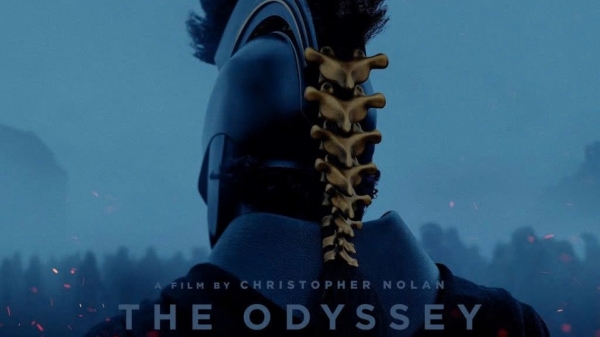
And then, Christopher Nolan dropped a $250 million, 173-minute epic adaptation of Homer’s The Odyssey right into the middle of the summer box office. I am not exaggerating when I say that The Odyssey feels like a monumental shift in the tectonic plates of Hollywood. It is an open act of defiance against the sterile, green-screen factory system.
Nolan went back to the foundational text of Western literature and treated it with the gravity of a historical event. In doing so, he reminded me and millions of moviegoers worldwide what grand-scale, auteur-driven cinema is supposed to look and feel like.
Part II: The Anatomy of Nolan’s Antiquity
To understand why The Odyssey successfully shatters the modern blockbuster template, we have to examine exactly how Nolan approached a text that Hollywood has long considered essentially “unfilmable” at a modern blockbuster scale. He didn’t sanitize it, and he certainly didn’t make a standard, sword-and-sandal action movie. He bent the medium of cinema to fit the vast, psychological architecture of Homer.
The Reality of the Ancient Landscape
| Aspect | The Marvel/Studio Formula | Christopher Nolan’s The Odyssey |
| Visual Canvas | Permanent green-screen stages, digital sky replacement | Six-country location shoot (Iceland, Sicily, Morocco, Scotland, etc.) |
| Camera Technology | Standard digital cinema cameras optimized for VFX workflows | 100% shot on IMAX 70mm film cameras (A historical first) |
| Narrative Structure | Linear, predictable, heavily formulaic act structures | Deeply non-linear, memory-warped, psychological framework |
| Thematic Focus | Absolute heroism, unblemished moral righteousness | Extreme hubris, profound war guilt, structural trauma |
I find Nolan’s absolute refusal to rely on the digital crutches of modern Hollywood incredibly refreshing. Instead of filming his epic journey against a gray wall in Atlanta, he dragged his production across six countries to capture the jagged volcanic black sands of Iceland, the wind-scoured coastlines of Morocco, and the ancient, sun-baked stone of Sicily.
Because the film is the first feature-length project shot entirely using IMAX 70mm film cameras, the texture of the world is breathtakingly tactile. When Matt Damon’s Odysseus crawls out of the crushing surf onto the shores of Ogygia, you don’t see polished digital pixels. You see the raw, terrifying power of real ocean water hitting actual land.
Nolan treats the natural elements like characters. The sea isn’t a passive backdrop; under Hoyte van Hoytema’s cinematography, it is a vast, terrifyingly unpredictable expanse that feels heavy, wet, and deeply indifferent to human survival.
Part III: The Non-Linearity of Mythic Trauma
Nolan’s wisest choice, which I think utterly confused conventional studio executives during the script phase, was fully embracing the non-linear possibilities of the source material. Homer’s Odyssey commences not at the outset; it begins in the midst, with Odysseus trapped and his family in devastation.
Nolan employs this particular framework to create a psychological mystery box that seems closely connected to his earlier works such as Memento and Oppenheimer.
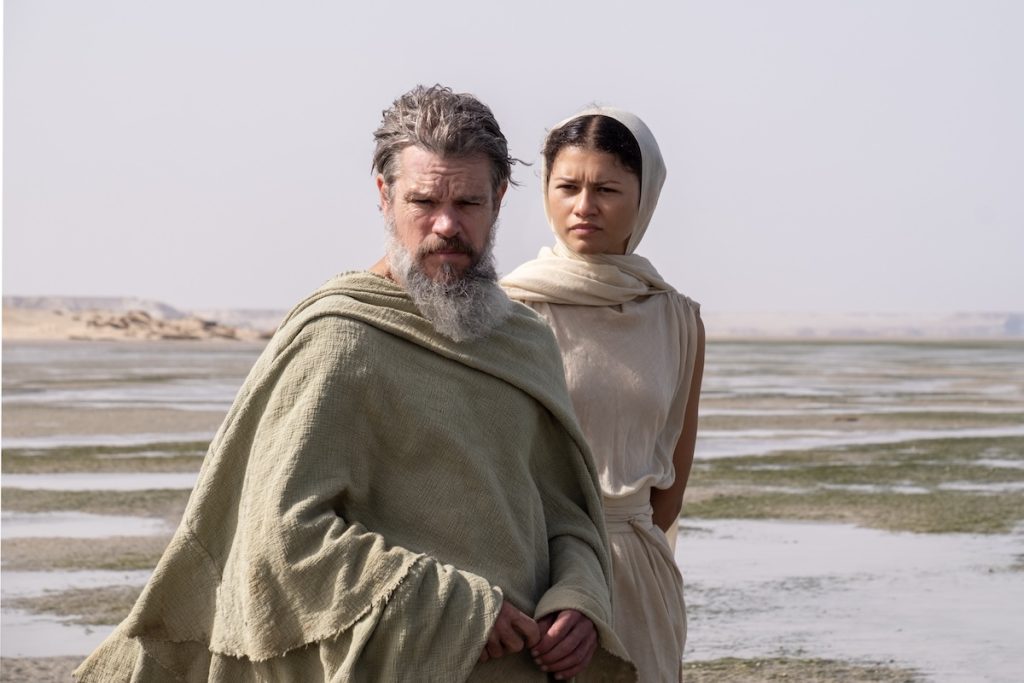
The movie begins with the title card “In a time of apparent magic…” and quickly immerses us in a fractured, distorted-memory lead character. When we encounter Odysseus on Calypso’s island, he is given lotus flowers that cause him to forget. He is truly battling to construct his own story.
As the movie oscillates between past and present by recalling the harsh, suffocating deception within the Trojan Horse, then shifting to Telemachus (Tom Holland) seeking a father he’s hardly familiar with, the storyline reflects the bewildering essence of trauma.
Nolan understands that Odysseus’s ten-year return home is a mental detox after a decade of brutal conflict. By abandoning a straightforward chronological timeline, Nolan compels us to engage with the disjointed, tormented mindset of a fighter unable to flee from the specters of his own decisions.
Part IV: Subverting the Uncanny Valley of the Supernatural
How can you portray ancient Greek monsters in a time when viewers are entirely desensitized to digital beings? This was the final challenge for Nolan, a director renowned for his intense dedication to practical effects. Had he employed typical, refined Hollywood CGI for the mythical scenes, the film would have turned into merely another standard fantasy picture.
Rather, I appreciate how Nolan looked to the historical origins of cinematic illusion, deriving significant inspiration from the iconic practical effects artist Ray Harryhausen. Consider the series featuring the Cyclops, Polyphemus. Rather than designing a colossal, flawlessly animated digital creature that moves at unbelievable velocity, Nolan employed clever forced-perspective sets, large animatronic components, and effective camera techniques.
The outcome is a being that seems alarmingly weighty, sluggish, and rooted in the physical world. As the Cyclops shifts, you sense the air displacement; when it ensnares the men, the claustrophobia feels intensely tangible since the performers engage with actual physical forms, rather than a tennis ball on a stick.
“We wanted to capture a realistic interpretation of Greek mythology. The supernatural elements shouldn’t look like digital magic; they should feel like anomalies of nature that defy our understanding of physics.”
— Christopher Nolan on the visual effects philosophy of The Odyssey
Even the highly controversial sequence where Circe (Charlize Theron) transforms Odysseus’s crew into swine is handled with a unsettling, surrealist touch that feels closer to body horror than high fantasy. Ludwig Göransson’s score during these mythical sequences abandons traditional orchestral bombast in favor of discordant, microtonal strings and heavy, concussive acoustic percussion that sounds like it’s being played inside a hollow mountain.
Nolan strips away the shiny, romanticized aesthetic of mythology and restores its original, ancient purpose: to make us feel incredibly small in a vast, terrifying, and profoundly mysterious universe.
Part V: The Anti-Hero We Desperately Needed
Let’s discuss Matt Damon’s portrayal of Odysseus, as I think this role is a clear criticism of today’s pristine, polished film hero. In today’s studio environment, main characters are crafted to be extremely relatable, frequently delivering meta-humor to comfort viewers that everything is lighthearted. They are primarily corporate mascots and secondarily human beings.
Nolan’s Odysseus is a completely different creature. Taking significant inspiration from Emily Wilson’s innovative 2017 translation of the work, which emphasizes Odysseus as a “complex” and “cunning” survivor, Damon portrays the king of Ithaca with an intense, profoundly disturbing intensity.
He is not a heroic figure; he is a brilliant strategist whose overwhelming arrogance often leads to the deaths of his soldiers. He is cunning, dishonest, and completely overwhelmed by the remorse of his actions to achieve victory in the Trojan War.
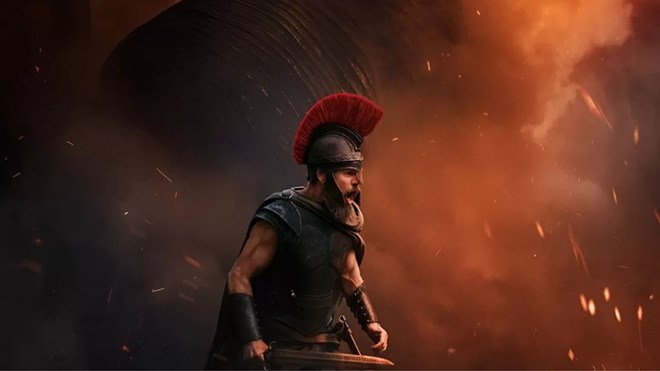
Damon’s bodily change enhances this raw authenticity. He dedicated a year to cultivating a genuine, unkempt beard as Nolan declined to utilize fake prosthetics under the harsh observation of 70mm IMAX lenses. He appears worn, fatigued, and shattered.
Upon his return to Ithaca to face the suitors in his home, the climax unfolds not as a celebratory, crowd-pleasing action scene. It is a harsh, icy, and methodical massacre that seems profoundly sorrowful instead of festive. By portraying the king as a human rather than a deity, Nolan offers a sharp critique of the severe consequences of violence and the significant challenges of reintegrating into a peaceful, domestic existence after a decade of monstrous behavior.
The Radical Return to Mythic Scale
I firmly believe that the overwhelming commercial and critical success of The Odyssey signifies the conclusive end of the studio committee’s total control over the blockbuster environment. Viewers aren’t weary of grand, cinematic narratives; they are just fatigued from being regarded as consumers willing to accept any form of pre-digested corporate material as long as it features a familiar logo attached.
Nolan embraced a bold creative risk by departing from the contemporary franchise system and establishing his presence in the realm of ancient epic poetry. He believed that if you present individuals with a bold, visually stunning narrative that honors their intelligence, they will come in large numbers.
The Odyssey succeeds because it sees the cinema screen not as an advertisement for upcoming products, but as an ancient amphitheater—a sacred area where we assemble in the darkness to face our profound fears, our local histories, and our collective humanity. The outdated Hollywood playbook is now officially irrelevant. The filmmakers have taken back the cameras, and I, for one, am absolutely delighted to see the former gatekeepers witnessing the walls crumble.