inKONBINI: The Unexpected Warmth of a 1990s Convenience Store Shift
There is a very specific, almost magical stillness that belongs entirely to the late-night convenience store shift.
If you have ever walked into a konbini in Japan at two o’clock on a rainy Tuesday morning, you know the exact atmosphere I am talking about. Outside, the world is dark, quiet, and slick with rain reflecting neon signage off wet asphalt. But the moment those automatic glass doors slide open with a gentle ding-dong, you are greeted by a bright, warm sanctuary. The ambient hum of cold-drink fridges, the rich savory aroma of simmering oden broth, rows of perfectly aligned colorful bentos, and the soft, unobtrusive background music create an immediate sense of safety.
For decades, modern society has viewed retail work purely through the lens of transaction and efficiency. We scan our items, tap our cards, and hurry back out into the night without giving a second thought to the human story sitting behind the cash register. Then came inKONBINI: One Store. Many Stories, an extraordinary slice-of-life narrative simulation developed by Nagai Industries.
Set in a quiet, nostalgic Japanese town during the early 1990s, inKONBINI invites players to step behind the counter as Hayakawa Makoto, a college student taking over shifts at her aunt’s local neighborhood convenience store. On the surface, the game tasking you with stocking shelves, brewing hot drinks, organizing magazine racks, and ringing up purchases might sound like a simple job simulator.
Yet, as you settle into the steady rhythm of your nightly duties, you begin to realize that this game is doing something far more profound than simulating customer service.
It turns mundane retail labor into a meditative form of mindfulness. It uses the physical act of organizing goods as a quiet backdrop for human connection, demonstrating how a simple corner store can become the emotional heart of an entire community.
Let’s explore why inKONBINI has captivated narrative gaming enthusiasts, how its tactile 1990s aesthetic creates an unshakeable sense of nostalgia, and why running a quiet convenience store shift proves that cozy games can capture the beauty of everyday human life with incredible grace.
A Love Letter to the Analog 1990s: Nostalgia You Can Touch
To fully appreciate the atmospheric brilliance of inKONBINI, you have to look closely at its setting.
Choosing the early 1990s as a backdrop is not merely an aesthetic choice; it is a deliberate narrative boundary. This was an era right on the cusp of the digital revolution. There were no smartphones buzz-vibrating in pockets, no self-checkout kiosks, no high-speed internet delivery apps, and no digital distractions pulling people out of the physical present moment. If you were working a night shift, you were fully present in that store. If a customer walked through the door, you looked them in the eye and engaged in genuine conversation.
The artistic attention to detail in replicating this era is staggeringly thorough.
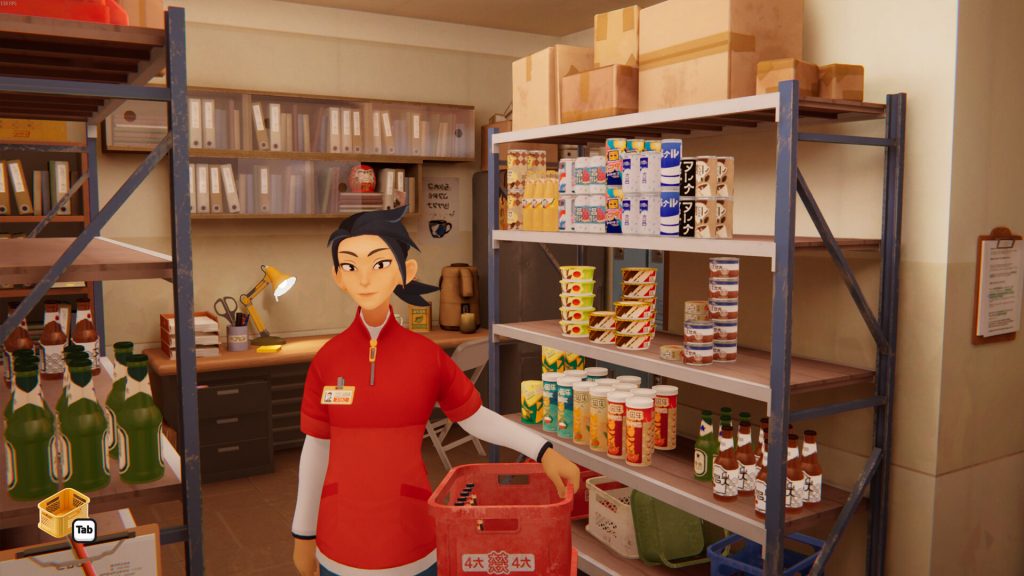
Every box, bottle, can, and magazine in your store carries a charming retro aesthetic that feels deeply authentic to 90s Japan. You aren’t scanning generic, low-poly placeholders. You are stocking glass bottles of melon soda, carefully arranging physical manga magazines with colorful cover art onto wire display racks, stocking vintage instant ramen cups, and wiping down counters with damp towels.
The sound design deserves absolute praise as well:
- The Cash Register: The physical, tactile clatter of mechanical register keys pushing down, followed by the satisfying metallic clink-cha-ching of cash drawers opening.
- The Fridges: The low, rhythmic hum of refrigeration units that creates a warm white-noise blanket over the quiet store.
- The Food Preparation: The delicate sloshing sound of wooden tongs dipping into boiling broth to scoop out radish slices, or the gentle sizzle of hot meat buns steaming inside a glass display case.
- The Weather: The soft, relaxing patter of rain striking the glass storefront windows while warm light spills out onto the quiet sidewalk.
This environment encourages you to slow down. There are no frantic countdown timers forcing you to rush customer orders, no stress meters, and no arcade-style high-score multipliers. The game actively invites you to take your time, appreciate the physical weight of every item you place on a shelf, and lose yourself in the therapeutic zen of an honest night’s work.
The Zen of Shelf-Stocking: Transforming Chores into Therapy
In traditional video game design, labor is often treated as a means to an end. You kill monsters to gather gold, or you chop down fifty oak trees so you can upgrade your wooden axe to an iron one. The repetitive task itself isn’t meant to be fun; it is a chore you tolerate to unlock a reward.
inKONBINI completely flips this paradigm on its head by turning the labor itself into the reward.
When shipment boxes arrive in the backroom, stocking shelves in inKONBINI feels remarkably like completing a satisfying tactile puzzle. You open cardboard crates, pick up individual products, rotate them to inspect their labels, and place them neatly onto display racks. You have total agency over how your store looks. If you want to group all the matcha-flavored snacks together on the middle shelf, organize cold drinks by color gradients, or ensure every instant noodle cup faces perfectly forward, the game honors your meticulous care.
This mechanical focus on order and care acts as an incredible psychological anchor.
Many of us live lives filled with chaotic, unpredictable stress. We deal with complex work emails, uncertain schedules, and endless digital noise that we cannot easily organize or control. Stepping into Makoto’s shoes and spending twenty minutes taking a messy, empty shelf and turning it into a pristine, perfectly stocked display provides an immediate, tangible sense of accomplishment.
There is a profound beauty in performing simple, honest tasks with care.
When you brew a fresh batch of hot oden—carefully placing dashi broth, konjac, boiled eggs, and daikon radish into the simmering divider—you aren’t just completing a checklist item. You are preparing warmth for a tired worker who is about to walk through your door after a grueling twelve-hour shift. The routine becomes a gentle rhythm that calms your mind and prepares you for the human interactions at the heart of the game.
One Store, Many Stories: The Art of Unhurried Conversation
If the shop management mechanics provide the calming rhythm of inKONBINI, the narrative storytelling provides its rich, beating heart.
The store is not just a commercial retail space; it is an intersection where human lives briefly cross paths. Because the game takes place in a close-knit neighborhood, you aren’t serving an endless stream of nameless, randomized NPCs. You are serving a recurring cast of local regulars, each carrying their own quiet dreams, daily struggles, secrets, and evolving life stories.
The game’s conversation design is wonderfully nuanced, branching naturally based on how you interact with your customers both verbally and through your service choices.
Consider the diverse array of neighborhood regulars who visit your counter:
- The Exhausted Salaryman: A middle-aged office worker who stops by late every night, staring blankly at the beer fridge. Through small, patient interactions, you learn about his deep fear of career stagnation and his desire to reconnect with his estranged daughter.
- The High School Student: An anxious teenager who lingers around the manga rack for an hour every afternoon, plucking up the courage to buy a single notebook. She is secretly studying for competitive university entrance exams while hiding her artistic passions from strict parents.
- The Elderly Local Widow: A sweet grandmother who comes in every morning just to buy a small box of matches or a single sweet bun, using the transaction as a precious excuse to have a five-minute conversation with another human being.
- The Struggling Artist: A customer who frequents the store to buy cheap instant coffee and notebook paper, wrestling with imposter syndrome while trying to complete his first comic submission.
What makes these interactions so remarkable is that Makoto is not an all-powerful therapist who solves everyone’s life problems with a grand speech.
You cannot fix the salaryman’s corporate burnout with a single sentence, nor can you magically solve the teenager’s family pressures. Instead, your role as the store clerk is simply to be present, to offer a warm smile, to remember their favorite brand of green tea, and to provide a safe, non-judgmental space where they can vent their thoughts for a few brief minutes.
The choices you make matter in subtle, meaningful ways.
If you remember that an elderly regular suffers from high blood pressure and gently suggest a low-sodium meal option, or if you make sure to keep a specific magazine in stock for the shy student, those small acts of consideration build deep trust over time. You watch these characters change across weeks and months, celebrating their small victories and offering quiet comfort during their hardships.
The Konbini as the Modern Secular Sanctuary
Why does a game about working in a convenience store resonate so deeply with modern gamers?
In traditional historical literature, community life revolved around local town squares, churches, neighborhood taverns, or public bathhouses—places where people organically gathered to exchange news, seek comfort, and feel grounded within a social structure.
In modern urban life, many of those traditional gathering spaces have dissolved.
For millions of people living in dense cities today, the local 24-hour convenience store has quietly become a modern equivalent of a secular sanctuary. It is the one place whose lights are always on, whose doors are never locked, and where you are always welcomed regardless of who you are or what time of night it is.
inKONBINI captures this cultural phenomenon with incredible emotional sensitivity.
The game reminds us that human beings don’t always need grand, cinematic adventures or epic world-saving quests to feel fulfilled. Sometimes, the most meaningful stories happen in the quietest corners of our world—over a steaming cup of instant coffee on a rainy night, across a glass counter display of pork buns, or during a simple exchange of pleasantries while handing over a receipt.
It validates the quiet dignity of service workers who keep our world running behind the scenes. It shows that being a good clerk—someone who pays attention, cares about the details, and treats every customer with genuine human warmth—is its own noble, beautiful form of everyday magic.
Elevating the Slice-of-Life Genre
In recent years, the “cozy gaming” movement has expanded rapidly, but many titles still rely heavily on familiar tropes like inheriting a grandfather’s farm, clearing weeds, or fighting monsters in mines.
inKONBINI: One Store. Many Stories charts a brave, refreshing new path for the genre.
It proves that you don’t need fantasy elements, magic spells, or sprawling farm plots to build a deeply relaxing, emotionally resonant gaming experience. By leaning into realistic human drama, exquisite vintage aesthetic choices, and the comforting rhythms of everyday work, Nagai Industries has crafted an atmospheric masterpiece that stands entirely in a class of its own.
It is a game that urges us to look up from our screens, slow down our frantic daily pace, and appreciate the hidden stories carried by the people we pass on the street every day.
When your shift finally ends in inKONBINI, the morning sun begins to tint the 1990s Japanese sky in soft shades of pastel pink and orange, and you sweep the front entryway before the next clerk arrives, you don’t feel tired or stressed. You feel deeply grounded, strangely peaceful, and filled with a renewed appreciation for the quiet, beautiful tapestry of ordinary life.
Whether you are a lover of narrative-driven games, a fan of retro Japanese aesthetics, or someone who simply wants to escape the noise of the modern world for a few peaceful hours behind a warm convenience store counter, inKONBINI is an unforgettable journey that will change how you look at the world around you.
Now I’d love to hand the cash register key over to all of you! What is your absolute favorite late-night convenience store snack or hot drink when you need comfort? Have you ever worked a retail or service job that left you with unexpected, cherished memories of regular customers? Drop your cozy konbini orders, personal retail stories, and thoughts in the comments below!