Curling: Why Screaming at Ice and Calling Your Own Fouls Is High Art
Here is my take: modern professional sports have completely lost their absolute minds, and we have all just quietly agreed to pretend it is normal.
If you watch a standard game in the NFL, the NBA, or Premier League soccer, you are watching a multi-billion-dollar circus of athletic deceit. We have built an entire ecosystem around trying to cheat the system without getting caught. We watch six-foot-eight NBA superstars throw themselves onto the hardwood like they just took a shotgun blast to the chest because a defender’s jersey grazed their elbow. We watch NFL wide receivers flop to the grass, dramatically waving their arms at the referee to beg for a pass interference flag. We watch soccer players writhe in fake agony on the pitch, rolling around six times to trick the official into pulling out a red card, only to pop right back up and sprint at full speed thirty seconds later.
We have accepted the cynical doctrine that if the official didn’t see it, it didn’t happen. Getting away with a foul isn’t viewed as a moral failure anymore; it is celebrated as savvy veteran gamesmanship.
And then, sitting quietly in a freezing cold arena in Winnipeg or Oslo, there is the sport of curling.
Curling looks at our modern, referee-policed, flop-heavy sporting landscape, raises a quiet glass of craft beer, and operates on an ethical framework so ancient and uncorrupted that it feels like it was beamed in directly from an alternate universe.
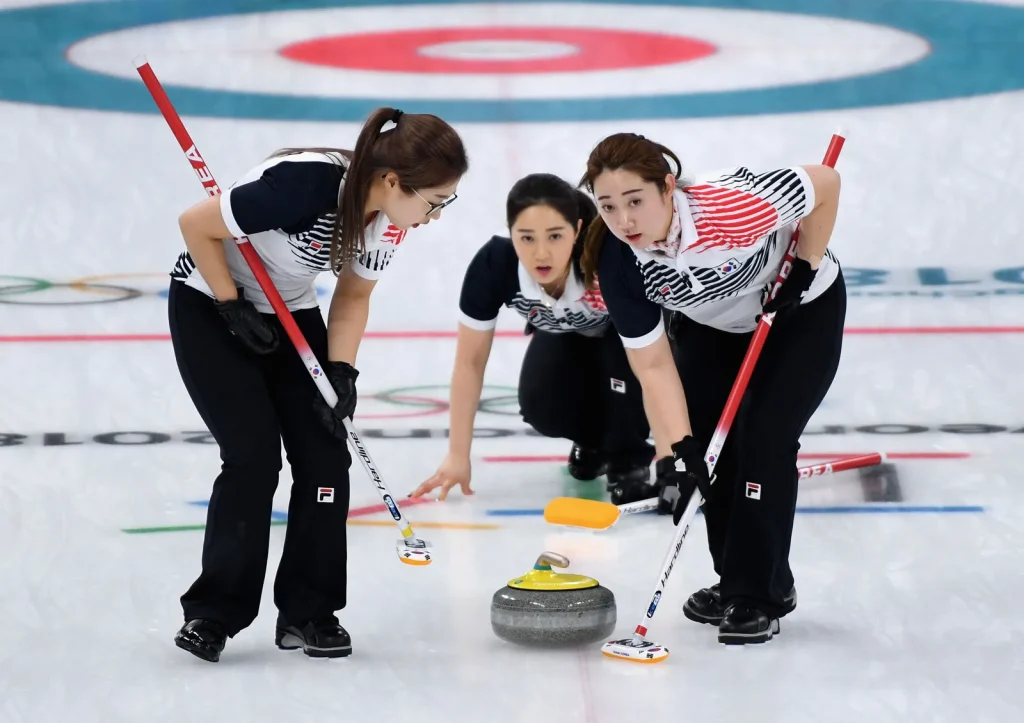
Think about the sheer, mind-bending absurdity of this sport for a second. We are talking about an Olympic event where adult men and women in color-coordinated jackets slide forty-four-pound polished granite rocks down a 150-foot sheet of dimpled ice. They chase those heavy rocks down the sheet while furiously sweeping the ice with high-tech broomsticks, screaming at the top of their lungs like drill instructors in a war zone, desperately trying to melt microscopic layers of friction to guide a stone into a target that looks like a giant target painted on the ice.
It looks completely wild. It looks like a high-stakes combination of shuffleboard, floor sweeping, and competitive shouting.
But the real magic of curling isn’t just the wild visuals or the sweeping physics. The real magic is a sacred, unwritten rulebook known across the globe as “The Spirit of Curling.” In curling, there are no referees standing over the players monitoring every millimeter of movement. There are no officials waiting to throw yellow flags or blow whistles. If a player accidentally grazes a moving forty-four-pound granite stone with the tip of their shoe or the foam pad of their broom—an infraction known as “burning a stone”—that player is expected to immediately stop, raise their hand, and confess their own sin to the entire arena.
They self-report. They willingly destroy their own game-winning shot because their shoelace brushed against a piece of sliding granite.
If you tried to introduce that honor code to any major American sport, the entire system would collapse into complete and utter comedy within three minutes. Imagine asking an NFL linebacker to calmly raise his hand and admit he held an offensive tackle, or asking a Premier League defender to tell the referee that the ball actually brushed his thumb inside the penalty box.
Yet, in curling, this absurd honor system isn’t just a gimmick. It is treated as high art. It is the core soul of the game. Let us break down the chaotic physics of sweeping, dissect the glorious yelling dynamics on the ice, roast the impossibility of self-policing in contact sports, and explain why curling’s absurd honor code is secretly the greatest thing happening in modern athletics.
The Chaos on the Sheet: Friction, Micro-Melt, and Competitive Shouting
To appreciate why the honor system in curling is so fascinating, you first have to understand the sheer physical insanity of what is actually happening during a shot. To a casual viewer scrolling through channels during the Winter Olympics, curling looks like a slow, casual pub game that somehow wandered into a multi-million-dollar venue.
You see a player gently launch a granite stone, and then two teammates jog alongside it, casually waving brooms on the ice. It looks easy. It looks like housecleaning on ice. That perspective completely misses the high-velocity friction mechanics happening beneath those broom heads.
A curling sheet is not smooth, polished ice like you would see in an ice hockey rink or a figure skating arena. Before a match begins, the ice crew walks down the sheet with a specialized spray nozzle, dropping tiny droplets of water across the surface. Those water droplets freeze instantly, creating a textured surface covered in thousands of microscopic bumps. This process is called “pebbling” the ice.
When a heavy granite stone slides over pebbled ice, those microscopic bumps create friction, slowing the stone down and causing it to curl—or curve—as it travels down the sheet. This is where the sweepers come in.
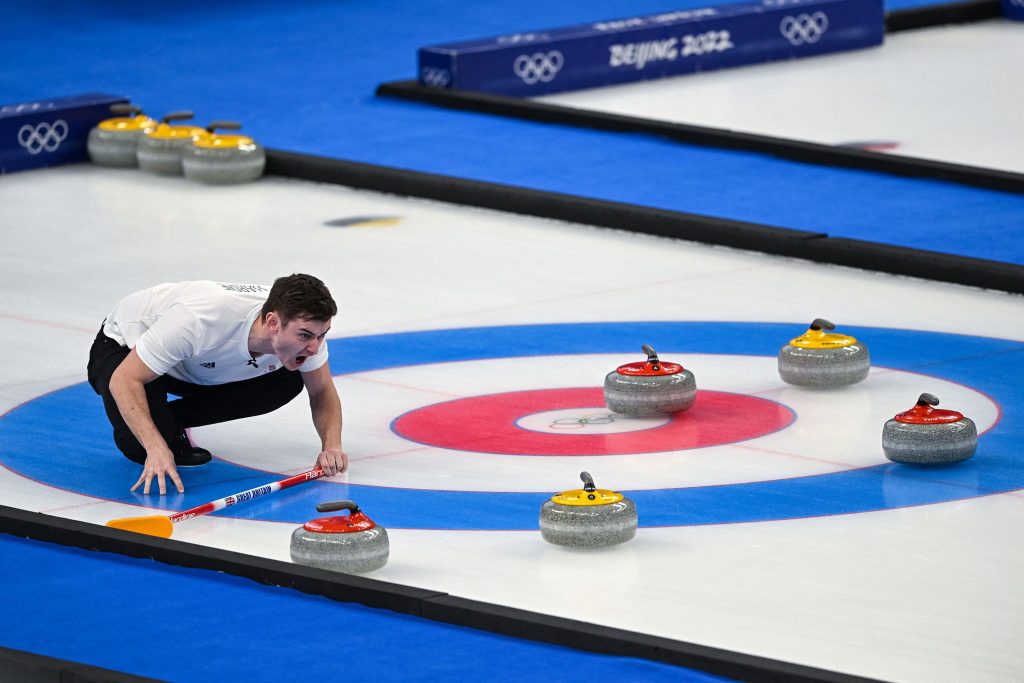
Sweeping is not a polite, gentle dusting motion. Sweeping is an intense, cardiovascular workout. A elite sweeper puts their entire body weight onto the handle of a carbon-fiber broom, driving the broom head into the pebbled ice with explosive, high-frequency strokes. We are talking about applying over fifty pounds of downward force while moving their arms back and forth at a rate of over two hundred strokes per minute while wearing slick-soled shoes on ice!
What are they actually doing down there? They aren’t sweeping dirt away. They are using friction to temporarily warm up the ice!
The intense, localized friction generated by the broom head momentarily melts the top of those frozen ice pebbles, creating a microscopic, ultra-thin film of water directly in front of the moving stone. That water layer reduces friction, allowing the granite rock to slide farther down the sheet and travel in a straighter line.
By controlling the sweeping intensity, two sweepers can manipulate a forty-four-pound rock in real time. They can extend a rock’s sliding distance by up to ten or fifteen feet, or prevent it from curving too early into an opponent’s guard stone.
And how do those sweepers know when to sweep? They don’t guess. They are guided by the “Skip”, the team captain standing 150 feet away at the far end of the sheet, staring down the target area.
Because the Skip is standing far away, they cannot whisper their instructions. They have to yell. They have to scream at the absolute top of their lungs across a noisy arena packed with other teams who are also screaming at the top of their lungs.
You hear shouts of “HARD!” or “HURRY!” or “CLEAN!” echoing across the arena. It is a glorious, chaotic symphony of acoustic noise and athletic exertion. You have two people putting their entire body weight into sweeping a piece of carbon fiber against frozen water, while a third person screams at them from forty yards away like a drill sergeant in a snowstorm, all to control a rock moving at the speed of a gentle stroll.
The Spirit of Curling: Self-Policing in a World of Cheaters
Now, situate that noisy, tumultuous, physically demanding atmosphere within the ethical boundaries of “The Spirit of Curling.” The official curling rulebook begins with a declaration that resembles a philosophical discussion on human ethics rather than a collection of sports guidelines.
It clearly indicates that curling is a sport rooted in tradition and respect. It asserts that a genuine curler prefers to lose a game than to win by dishonest methods or unintentional violations. It clearly states that there are no officials monitoring the ice as players should manage their own conduct.
This leads us to the final challenge of curling ethics: The Burned Stone. As a stone moves, the two sweepers operate mere inches from the shifting granite. The heads of their brooms are racing at incredible speed, sweeping to and fro right in front of the rock’s sliding course. Their footwear is gliding on the ice just a few millimeters above the stone’s moving surface.
In that intense atmosphere, it is very simple for something to malfunction. A sweeper’s shoelace could hang low and touch the stone. The tip of a broom head could snag a edge and make contact with the granite. A jacket zipper could hang down while in a deep squat and brush against the moving rock.
As soon as a piece of the human body, an article of clothing, or a broom makes contact with a moving stone, that stone is considered legally “burned.” According to curling rules, if a stone is burned during its movement, it must be removed from play right away, or the opposing team has the choice to place the stones where they believe they would have landed.
Here’s the twist: since there are no officials closely monitoring the players, ninety percent of scorched stones remain entirely unseen by the spectators, the TV cameras, and the rival team located 150 feet away.
If a sweeper’s boot brush unintentionally makes contact with a rock moving at two miles per hour, no one on earth is aware it occurred except for the individual whose boot brushed against the rock. In every other professional sport worldwide, the athlete would remain silent, act as if nothing occurred, continue with the game, and celebrate the shot.
In curling, when an athlete burns a stone, they do not hesitate at all. They halt their sweeping right away, let go of their broom, lift their hand, gaze at the opposing Skip, and declare, “I touched it.” The stone is fired.
They voluntarily ruin their own team’s attempt. They eliminate a possible game-winning move that required four minutes of intense strategy to develop, just because their shoe grazed a bit of rock.
They accomplish it without any disputes. They perform the action without showing any annoyance. They engage in it because to deceive regarding a scorched stone breaches the sacred code of the whole sport. Within the realm of curling, being discovered to have lied about a burned stone is akin to a social death sentence. You aren’t merely punished; you are forever deprived of your prestige among your colleagues.
The Comedy of Errors: What If American Sports Used the Curling Honor Code?
To genuinely grasp how astonishing and nonsensical the “Spirit of Curling” is, one must partake in a mental exercise. What might occur if we imposed curling’s self-regulating honor system onto the harsh, disorderly, victory-at-any-price environment of prominent American team sports?
Picture observing a crucial NFL Sunday match featuring the Dallas Cowboys and the Philadelphia Eagles while adhering to curling regulations. Imagine a top NFL offensive lineman protecting against an edge rusher during a vital fourth-and-one situation in the fourth quarter. The running back slips through the opening, races forty yards along the sideline, and secures the game-winning touchdown while ninety thousand fans roar in the stadium.
According to curling regulations, there are no officials present to throw a yellow flag for holding. The offensive lineman who just executed the block should calmly approach the head referee, tap him on the shoulder, and say, “Pardon me, sir.” Just before the running back entered the gap, I took hold of the defensive end’s shoulder pads and restrained him for an instant. The score is invalid. “Move the ball back ten yards and award us a penalty.”
Can you picture the complete, unfiltered chaos that would follow? The head coach would experience an entire physical collapse on the sidelines. The owner would dismiss the lineman before he could reach the locker room. The spectators tossed popcorn at his head while he exited the field. Or picture implementing the curling honor system in the NBA throughout the playoffs.
A key player charges down the lane, attempts a clutch layup, is slightly tapped on the elbow by a defender, and fails to make the shot as the clock runs out. According to curling regulations, whistles are not permitted. The defender who made the tap should promptly raise his hand, approach the scorer’s table, and state, “Hey everyone, my index finger brushed against his forearm while he was airborne.” “Grant him two free throws and restore 0.5 seconds to the clock.”
It seems entirely foreign to us. It seems like a humorous skit created by someone who has never seen a sporting event in their entire life.
We are so used to athletes deceiving, feigning, concealing violations, and arguing with officials that the idea of personal integrity in sports seems like a fantasy. We anticipate our athletes to deceive just within the precise limits of what the referee can observe. We commend athletes who excel in the technique of the concealed grip, the delicate stumble, or the persuasive fall.
Curling dismisses that whole harmful environment. It relies on the extreme, thought-provoking belief that people can behave with honesty and integrity, even when the risks are at their greatest.
The Post-Match Pitcher: The Tradition of Buying the Opponent a Drink
The ridiculousness of curling’s ethical standards doesn’t end when the final stone is delivered and the last surface is brushed. It transitions seamlessly into the post-game routine. In nearly every significant competitive sport, when an intense game concludes, the two teams shake hands, share a few cordial words, and quickly go back to their individual, lavish locker rooms. The victors enjoy a subdued celebration or gather for a private party, while the defeated brood quietly and make their way to the team bus.
Curling addresses post-game manners through a custom called “Broomstacking.” The expression “Broomstacking” has origins that span back hundreds of years to the game’s beginnings in Scotland. In the past, after hours spent playing on icy outdoor lochs in the frigid cold, players would lean their wooden brooms against a wall, huddle around a crackling fireplace, and warm up.
Today, Broomstacking has developed into an essential social agreement that is woven into the cultural essence of the sport. At the conclusion of a curling match, the victorious team doesn’t rush off to celebrate by themselves. According to strict curling tradition, the victorious team is culturally obligated to treat the defeated team to a round of drinks at the arena lounge!
Read that again: The WINNERS buy the LOSERS a drink.
And the tradition goes even deeper than that. The winner buys the first round, and then, by custom, the losing team buys the second round. The two teams sit together at the same table, drink beer, eat pub food, and discuss the match they just finished playing.
Imagine applying that rule to professional boxing or mixed martial arts! Imagine two heavyweights beating each other bloody for twelve rounds in a violent, high-stakes championship fight, and then thirty minutes later, sitting together at a booth in a local sports bar while the new champion buys the guy he just knocked out a pint of pale ale!
It softens the harsh edges of competition. It reminds everyone involved that at the end of the day, sports are a human endeavor meant to build community rather than foster hatred. You can scream at the ice for two hours, you can sweep until your arms turn to jelly, and you can fight for every millimeter of granite placement, but once the game ends, you stack the brooms, sit at the table, and toast your opponent.
The Paradox of High Art: Why Curling Is the Purest Sport Left
When you step back and look at the modern sports landscape, it is easy to become cynical. We see massive corruption scandals, rampant performance-enhancing drug use, multi-million-dollar contract holdouts, and athletes who view sports purely as a business platform to build their personal brand portfolios.
We see games dominated by official video reviews that take five minutes to determine if an athlete’s pinky toe was three millimeters out of bounds. We see modern sports losing their soul under the weight of hyper-optimization, analytical commercialism, and endless officiating controversies.
And then, amidst all that cynicism, you turn on the television and see four people in matching jackets standing on a sheet of frozen water in Minnesota.
They are sweeping furiously with carbon-fiber brooms. They are screaming at a forty-four-pound rock to slide two inches farther. They are calling their own fouls when their shoelaces graze the granite. And when the final stone settles, they shake hands, walk off the ice, and sit down together to share a pitcher of beer.
It looks absurd. It looks silly. It looks like a sport that shouldn’t exist in the twenty-first century. But that absurdity is precisely why curling is high art.
Curling proves that competition doesn’t have to be mean-spirited to be intense. It proves that you can play at the highest Olympic level without losing your basic human decency. It proves that a sport can rely on the personal integrity of its athletes and thrive because of it, rather than in spite of it.
Derrick’s Hot Take: We don’t need fewer sports like curling; we need the rest of the sporting world to catch up to curling’s level of psychological maturity. The next time you see a soccer player dive on the grass or an NFL receiver fake a catch, turn off the TV, find a curling stream, and watch athletes who actually respect themselves and their opponents. Sweeping ice with a broomstick might look ridiculous to an outsider, but in a world full of flops, cheats, and endless referee whistles, calling your own fouls is the purest, most honorable thing left in modern athletics.
The Unbroken Sheet
As long as human beings continue to gather on sheets of ice to slide heavy stones toward painted circles, the tradition of curling will remain a shining beacon of what sports were always meant to be. It will continue to confuse casual observers who don’t understand the sweeping physics, it will continue to entertain viewers who love the chaotic yelling, and it will continue to inspire anyone who values honor over winning at all costs.
So here is to the screaming Skips, here is to the relentless sweepers, here is to the post-game pitchers of beer, and here is to the burned stones that are proudly called by the very people who burned them. In a world full of athletic noise, curling’s quiet honor code is the loudest, most beautiful statement in sports.