The Nostalgia Mixtape Trap: How Music Hijacks Our Brain to Make Mundane Memories Feel Epic
We’ve all felt that abrupt, confusing surge of emotional time travel. You find yourself in the midst of a busy grocery store, weighing which pasta sauce brand to purchase, when a tune from your high school days unexpectedly plays over the speakers. In three seconds, the fluorescent lights and vinyl floors disappear. Your chest constricts with an odd, bittersweet pain, and you suddenly find yourself back on a muggy August night in 2004, perched on the hood of an old sedan with your childhood best friends, certain that summer would never end.
The recollection itself isn’t especially remarkable. You weren’t rescuing the planet, claiming a title, or experiencing a film-like adventure. You were simply sitting in an empty parking lot eating cold fast food and discussing unimportant topics. However, when that particular song plays, your mind transforms the memory into something magnificent, iconic, and deeply cherished.
This psychological phenomenon, how music serves as a powerful emotional enhancer for otherwise mundane life instances, is the core principle of Mixtape, the narrative adventure game created by Beethoven & Dinosaur and published by Annapurna Interactive.
Mixtape follows three high school teens on their final night together before heading to college, guiding players through a sequence of surreal vignettes that capture the ordinary joys of youth: sneaking into a local pool, skating down an empty highway, chilling in a cluttered room, and tossing toilet paper at a competitor’s home.
It is a game designed entirely around a fantastic, tantalizing licensed soundtrack that includes iconic songs from artists such as DEVO, Iggy Pop, The Smashing Pumpkins, Joy Division, The Cure, and Green Day.
It is lively, beautiful, and certainly enjoyable to play. As someone who tends to overanalyze narrative design, playing Mixtape has me grappling with an intriguing, somewhat skeptical question: Is music in story-driven indie games the peak of narrative artistry, or is it a cleverly disguised shortcut for immediate emotional impact?
Let’s analyze how Mixtape utilizes the psychology of music to transform minor teenage mishaps into profound emotional experiences, and why we consistently succumb to the nostalgic soundtrack allure repeatedly.
The Neurobiology of the Emotional Cheat Code
To grasp why Mixtape resonates so deeply, you must first examine the interactions in your brain when music and memory intersect. Human memory is famously inconsistent. We often perceive our brains as immaculate digital repositories that capture experiences with clear objectivity, but in truth, our memories are chaotic, easily altered narratives that we modify each time we remember them. Of all five senses, hearing music is distinctly connected directly to the limbic system, the fundamental area of the brain responsible for emotion, mood, and the formation of long-term memories.
Listening to a song in your developmental teenage years exposes your brain to a substantial blend of dopamine, growth hormones, and increased social sensitivity. The music you listen to during this particular time becomes ingrained in your neural connections, along with your initial heartbreak, your first experience of freedom, and your most profound worries. Psychologists refer to this phenomenon as the “reminiscence bump,” but it can simply be considered emotional superglue.
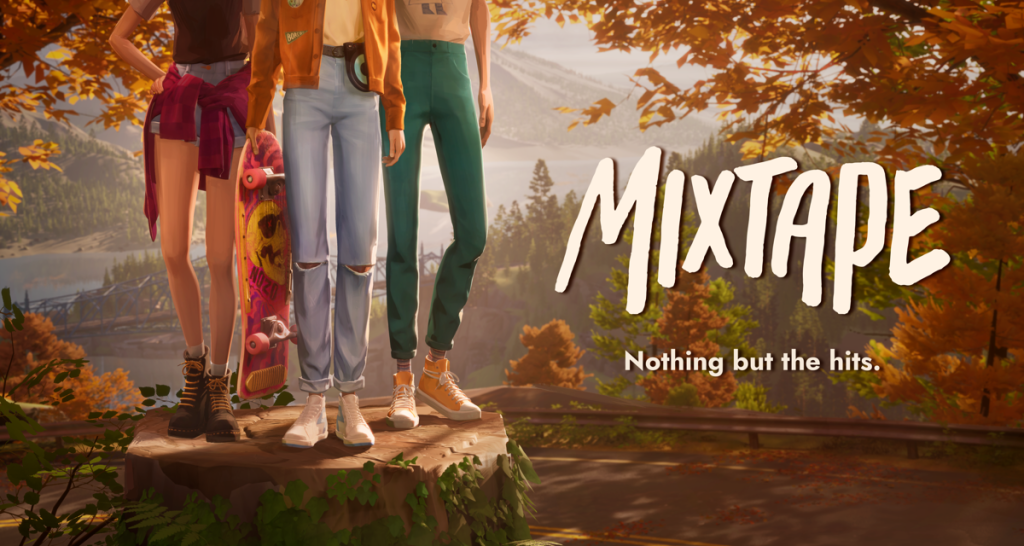
When a game such as Mixtape features a licensed song like The Smashing Pumpkins’ “1979” while your pixelated teens leap off a suburban roof into a backyard swimming pool, something intriguing occurs in your mind.
The game doesn’t need to invest two hours in gaining your emotional engagement through detailed character development or elaborate storytelling. The track accomplishes all the hard work in just three seconds. The music evades your rational, analytical thoughts, connects directly to your current real-life memory peak, and seizes your individual sense of nostalgia.
Suddenly, you aren’t just feeling emotional about three fictional video game characters on a screen. You are feeling emotional about your own lost youth, your own estranged high school friends, and your own terrifying transition into adulthood.
It is a brilliant, highly effective narrative trick. But once you notice how it works, you start to realize just how much heavy narrative heavy-lifting a great soundtrack can do for a game that might otherwise be pretty light on substance.
Turning Mundane Mini-Games Into Cinematic Mythologies
At its essence, Mixtape can be viewed as a series of simple, low-risk interactive scenes. You hit keys in sync with a rhythm prompt, navigate a skateboard past barriers, target a toilet paper roll at a rooftop, or tap a single button to enjoy a sip of soda as you observe a sunset.
Playing these same interactive sequences in total silence or with a generic, repetitive synthesizer track in the background would make them feel entirely ordinary. You might express dissatisfaction, arguing that the controls are overly basic, the goals are insignificant, and the gameplay is shallow.
Here is where the score serves as a filmic wizard’s stick. As soon as Mixtape layers a powerful, memorable guitar riff or an elevated 80s vocal melody over a straightforward mini-game such as cycling down a deserted road, the whole experience drastically shifts. The ordinary task of navigating a bike transforms into an exhilarating, legendary journey toward liberation. The act of perching on a suburban fence post alongside a friend transforms into a profound, heart-wrenching instance of teenage unity.
The game is utilizing what film scholars refer to as “diegetic empathy”, the concept that music can impart significant cinematic value to events of a smaller, human scale. During our teenage years, everything seemed to be a matter of life or death.
Not receiving a text back from a crush felt like a deep existential crisis; defying curfew was a grand act of defiance; spending time in a diner at 2 AM was a hallowed custom. Teenagers inherently perceive their lives through a dramatic, film-like perspective, and they employ music as the soundtrack to their personal narratives.
Mixtape understands this teenage self-dramatization better than almost any game before it. By syncing simple, relatable micro-actions directly to legendary rock and pop anthems, the game perfectly captures what it felt like to be young, invincible, and terrifyingly insecure all at the same time. It transforms ordinary suburban boredom into grand, tragic mythology.
The Economics of Nostalgia: When Licensed Tracks Do the Narrative Heavy Lifting
While I truly cherish the sheer visual pleasure of Mixtape, there exists a pointed, analytical aspect to this trend that deserves exploration. In the past ten years, there has been a significant increase in story-focused indie games, television series, and movies relying on licensed pop music to enhance narrative impact.
Consider how often you’ve seen a movie trailer or played an indie game featuring a slow, melancholic acoustic version of a well-known 90s pop song to instantly convey to your mind: “Hey! “This story is profound, heartfelt, and significant!”
Licensed music can be pricey, but for a developer aiming to forge an immediate emotional connection with an audience, it’s completely worth the investment. It is fundamentally an emotional bypass.
Crafting a script that develops authentic, well-earned character depth over ten hours requires immense subtlety, timing, and effort. However, placing a song like Joy Division’s “Love Will Tear Us Apart” during a moment when two characters gaze at one another with melancholic expressions immediately conveys a intricate mixture of desire, grief, and looming disaster, without the author needing to pen any lines of fresh dialogue.
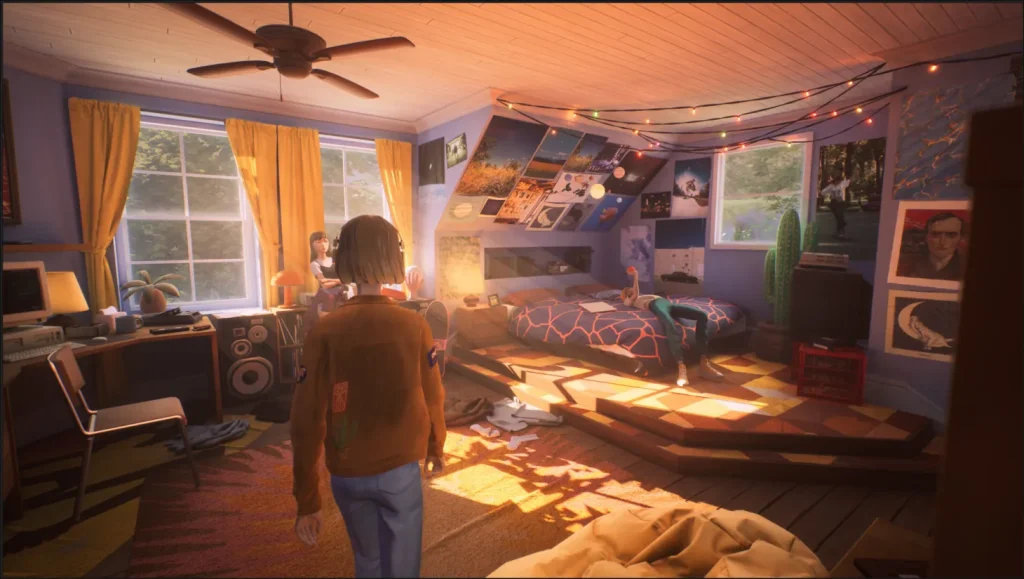
This generates an intriguing artistic contradiction in games such as Mixtape. On one side, the combination of music and gameplay in Mixtape is certainly artistic. Beethoven & Dinosaur, the same exceptional studio responsible for The Artful Escape, are true experts in audio-visual synchronization. The shifting camera angles, flickering lights, and gameplay actions align perfectly with the rhythmic pulse of the music, showcasing a remarkable technical and artistic achievement.
On the other hand, it forces us to ask an uncomfortable question: If you stripped away the multi-million dollar licensed soundtrack from Mixtape, how much would remain of the actual story and characters?
Are we falling in love with Mateo, Chloe, and corporate teenager #3 as original, well-crafted human characters? Or are we simply using their blank-slate pixelated faces as mirrors to project our own pre-existing love for Iggy Pop and Green Day?
Why the “Nostalgia Trap” Is So Irresistible Right Now
The arrival of a game like Mixtape at this particular cultural moment is not accidental. We are experiencing an unparalleled era of media nostalgia. Whether it’s 80s synthwave, 90s alternative rock, or early 2000s pop-punk, pop culture is now fixated on the past.
There exists a significant, weighty reason for this. The current moment seems tumultuous, rapid, and extremely precarious. Contemporary adult existence is intensely interconnected, perpetually anxious, and ruled by displays, algorithms, and constant news cycles.
For individuals in their twenties, thirties, and nearby ages, reminiscing about the time of tangible media, cassette tapes, CDs, landline telephones, and socializing in person without smartphones, feels akin to reflecting on a vanished utopia.
Mixtape embraces this yearning with alarming accuracy. The game offers more than just music; it provides the tangible rituals of physical music formats. Inserting a cassette into a player, pressing the plastic play button, listening to the crackle of magnetic tape before the song starts, and using a ballpoint pen to rewind a twisted tape. These minor, sensory elements connect to a profound, shared longing for an era when existence seemed more tranquil, stable, and tangibly authentic.
The “Nostalgia Trap” works because it offers us a temporary shelter from the present. When you press play on Mixtape, you are buying a ticket back to a time when your biggest responsibility was figuring out who was driving to the party on Friday night, and your worst fear was running out of battery on your portable CD player.
The Double-Edged Sword of Reliving Youth
The risk of unadulterated nostalgia, though, is that it can swiftly transform into a trivial, emotional deception. If a game merely says, “Hey, remember how wonderful it was to be young?”, it risks being shallow, a digital display of trendy clothes and nostalgic songs. Mixtape transcends simple nostalgia by conveying a poignant awareness that youth is ultimately fleeting.
The whole concept of the game revolves around a countdown. The trio understands that this is their final evening together before adulthood, college, and physical separation break their bond. Each tune they play, every joke they make, and every rooftop they occupy is eclipsed by the looming, inevitable beast of the next morning. This mechanical ticking clock alters the sensation of the music in real time.
An energetic, explosive punk song blaring as you destroy a mailbox doesn’t merely seem cool; it feels urgent. It resembles three youths shouting at their loudest to postpone the dawn, attempting to condense years of camaraderie into a four-minute pop track before the final credits and reality set in.
This is the point at which the game realizes its genuine narrative strength. It employs the soundtrack not only to evoke a sense of coolness but also to convey the weighty, tragic flow of time. It serves as a reminder that the reason those classic songs bring us to tears is not solely due to their beauty; it’s because they serve as tangible evidence that a specific moment in our lives occurred, concluded, and can never be revisited.
The Verdict: A Masterful Manipulation We Gladly Pay For
Is Mixtape utilizing licensed music as a narrative shortcut? Certainly. Certainly. It employs multi-million-dollar pop hits to evade typical character development, manipulate your personal brain chemistry, and transform simple mini-games into grand emotional sagas.
However, here’s my final hot take: The fact that it’s a cheat code is irrelevant, as the emotional experience it generates is entirely genuine.
Art doesn’t always need to be created from the ground up to hold significance. At times, the pinnacle of narrative artistry lies in the ability to collect familiar fragments of cultural enchantment and piecing them together into a reflection that aids us in better comprehending our own experiences.
Mixtape is not merely a game featuring three teens biking in the night. It is a tender, somewhat controlling, and exquisitely written love letter to how music influences human recollection. It serves as a reminder that our ordinary, tranquil lives have always been extraordinary, we merely required the perfect soundtrack to recognize it.
Now I’d like to pass the mic to all you fans of late-night music. What is that one particular song that immediately brings you back to being sixteen? Do you think that having licensed soundtracks in narrative games seems like emotional dishonesty, or do you embrace the immediate nostalgia boost? Share your top formative songs, gaming moments, and late-night experiences in the comments!