The One-Way Trip: Why Outer Wilds’ Knowledge-Based Progression is Gaming’s Most Beautiful Heartbreak
There is a distinct, melancholic tragedy built into the foundation of Outer Wilds that no other video game in history has ever quite managed to replicate. If you ask anyone who has finished Mobius Digital’s space-exploration masterpiece what they think of it, they won’t just tell you it’s a great game.
They will grab you by the shoulders, look at you with an almost religious intensity in their eyes, and say: “It is one of the greatest things I have ever experienced in my life. Please play it. Do not look anything up. Do not watch a single trailer. Just go in completely blind.” And then, if you look closely enough, you will catch a faint shadow of sadness pass across their face.
That sadness isn’t because the game is dark or depressingly cynical—it’s because of a brutal, unyielding truth that every Outer Wilds player eventually comes to terms with: You can only ever play this game once.
Not in the way people say you can only watch The Sixth Sense once for the plot twist, or how reading a good mystery novel a second time loses a bit of its punch. In Outer Wilds, the very mechanism that makes its game design a transcendent triumph of interactive art is the exact same mechanism that permanently locks you out of ever experiencing it again.
The game doesn’t gate progress behind keycards, double-jump abilities, stat upgrades, or level-ups. Your character, a blue-skinned alien hatchling with four eyes and a wooden spaceship held together by duct tape and marshmallow enthusiasm, is exactly as powerful on Minute One as they are in the final seconds of the game.
The only thing that changes between your first clumsy launch into space and the breathtaking conclusion of the story is what you, the real-world human sitting in front of the screen, actually know.
The Ultimate Key is in Your Head: Mechanics as Pure Curiosity
To understand the profound heartbreak of knowledge-based progression, you first have to appreciate how radical Mobius Digital’s core design philosophy truly is. In 99% of modern adventure games, progression is an inventory management simulator wrapped in physical gatekeeping.
You find a blue door in Metroid, so you search the map for the Ice Beam. You see a high ledge in Zelda, so you hunt for the Hookshot. You encounter a level-50 boss in an RPG, so you spend three hours grinding goblins until your strength stat reaches an arbitrary number. The game stores your key in a save file, digital inventory, or character sheet.
Outer Wilds rejects every single one of those traditional design crutches. You start the game on your home planet of Timber Hearth. You get your launch codes, strap into your seat, turn on the thrusters, and fly off into a tiny, hand-crafted solar system trapped inside a twenty-two-minute time loop. Every twenty-two minutes, without fail, the local star goes supernova, washing the entire system in a blinding wall of blue light, killing you instantly, and resetting you right back at the campfire under the open sky.
Chloe’s Hot Take: Most video games treat you like a toddler who needs to be spoon-fed abilities before you’re allowed to cross the street. Outer Wilds hands you the keys to a rocket ship on minute five, opens the door to an entire solar system, and says: “Go figure out why the sun is exploding. We aren’t going to hold your hand.”
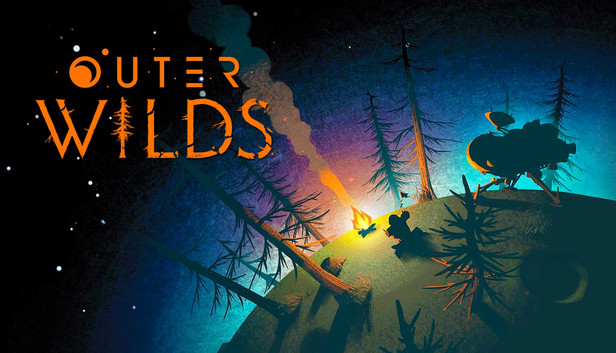
On your very first run, you might fly to Brittle Hollow, fall into a black hole at the center of the planet, float aimlessly in deep space, and die. You know nothing. You don’t know how the ancient Nomai race built their warp towers. You don’t know why the Quantum Moon disappears when you stop looking at it. You don’t know how to navigate the terrifying, foggy void of Dark Bramble without getting eaten alive by giant, blind anglerfish.
Yet, if a veteran player who has completed the game were to sit down at your controller on minute one of a brand-new save file, they could finish the entire game in under fifteen minutes. The front door to the end of the universe was wide open the entire time. You didn’t need to unlock a special weapon. You didn’t need a double jump. You didn’t need to level up your oxygen tank. You just didn’t know how to walk through it.
The Tragedy of the Ephemeral File: Why Replaying is an Illusion
This brings us directly to the tragic beauty of why Outer Wilds can never be re-experienced. In a normal game, when you hit “New Game,” the software erases your progress. Your inventory is wiped clean, your map goes dark, your stats reset to zero, and you get to experience the joyful climb of powering up your character all over again. The game creates the illusion of starting fresh because the game was holding your progress in its memory bank.
In Outer Wilds, the game doesn’t hold your progress. You do. You cannot lobotomize your own brain. You cannot selectively erase the memory of learning how to match the velocity of a quantum object. You cannot forget the solution to the puzzle of the Ash Twin Project, nor can you un-learn the terrifying, silent secret to drifting past the anglerfish in Dark Bramble.
The Outer Wilds Epistemological Trap:
Traditional Game: Save File Holds Progress $\implies$ Erase File $\implies$ Fresh Experience
Outer Wilds: Your Brain Holds Progress $\implies$ File is Irrelevant $\implies$ Permanent Loss of Ignorance
Once you know the answers, the entire illusion of the solar system shifts. The mystery that once felt like a sprawling, terrifying, magnificent ocean of cosmic secrets suddenly condenses into a clean, precise set of instructions. The dark, mysterious planet that kept you up at night becomes a straightforward destination with a specific three-step checklist. The awe transforms into appreciation, but the raw, electric spark of true discovery vanishes forever.
It is a game that deliberately bakes its own impermanence into its mechanical identity. The moment you achieve ultimate understanding—the exact moment you master the game—is the precise moment you can no longer play it.
The Ship Log: A Map of Your Own Mind
Because the game cannot track mechanical progression through traditional stat sheets, it uses a brilliant UI feature as your sole digital anchor: The Ship Log.
Located in the back of your tiny wooden ship, the Ship Log is a visual, mind-map-style rumor board that automatically connects the Nomai text translations, ancient ruins, and environmental clues you discover across the solar system.
What makes the Ship Log so profoundly satisfying is that it doesn’t give you quest markers. It doesn’t put an icon on your HUD saying “GO HERE NEXT.” Instead, it simply acts as an external hard drive for your own memory. It summarizes what you learned on your last run and whispers hints about where a missing piece of information might be hiding.
Notice how every step of that loop relies entirely on intrinsic motivation. Most games motivate you with extrinsic rewards: Here is 500 Gold! Here is a Rare Epic Helmet! Here is an Achievement Unlocked banner!
Outer Wilds gives you none of that. Your reward for solving a complex, multi-layered spatial puzzle on the Interloper comet is simply understanding what happened to the Interloper comet. The knowledge itself is the treasure. The game treats you like a genuine scientist, an archaeologist of the cosmos, assuming that your natural human curiosity is strong enough to drive you across a dangerous universe without needing digital gold stars thrown at your face.
And because the reward is pure understanding, the satisfaction hits a level of cognitive ecstasy that no loot drop can ever hope to match.
Chloe’s Hot Take: Modern AAA games treat players like goldfish with severe attention deficit issues. They think if you don’t get a shiny new weapon every fifteen minutes, you’ll close the game. Outer Wilds proves that human beings are naturally curious creatures. We don’t need shiny loot; we just want to know why things are broken so we can figure out how to put the pieces back together.
Ephemeral Nostalgia: Living in the Shadow of the First Run
Because we can never re-experience Outer Wilds firsthand, the fanbase has developed a strange, beautiful, almost parasitic social dynamic: We live vicariously through first-time streamers and friends.
Go to the Outer Wilds subreddit, Twitch, or YouTube on any given night, and you will find thousands of veteran players sitting silently in the chat of someone playing the game for the very first time. They aren’t there to give hints—in fact, the community aggressively polices spoilers with a zealous, near-religious protectiveness. They are there simply to watch the light bulb turn on inside someone else’s head.
When a new player finally realizes how the Sun Station actually works, or when they piece together the heartbreaking fate of the Nomai clan on the Quantum Moon, the veterans in the chat experience a faint, ghostly echo of their own original awe. It is the digital equivalent of sitting on the porch, watching your children open presents on Christmas morning. You can’t open the presents yourself anymore, but you can feel the warmth of the joy reflecting off their faces.
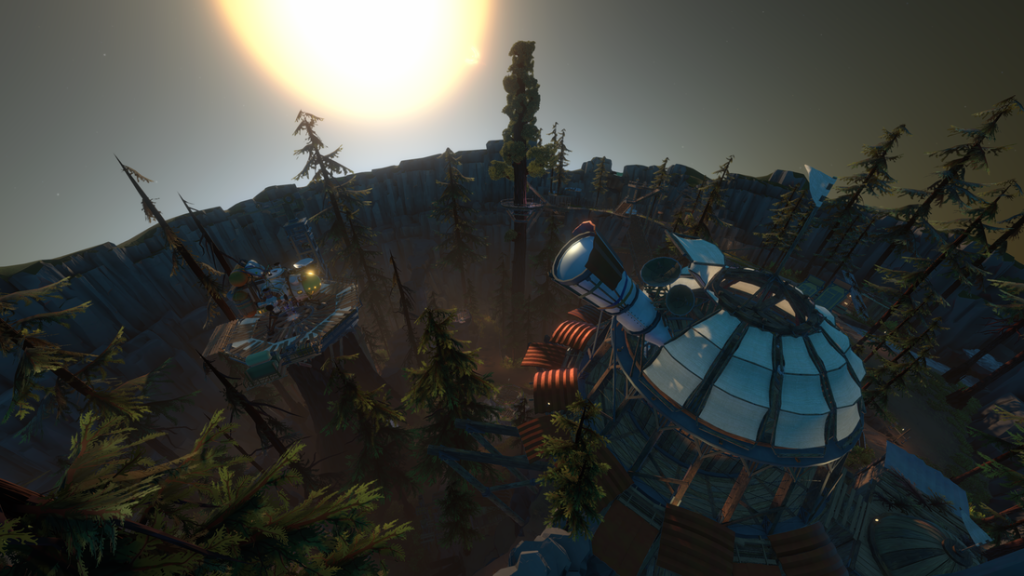
This creates a unique sense of shared grief among everyone who has completed the game. We are all members of a club defined by an exquisite loss. We possess this incredible, life-altering experience tucked away in our memories, but we can never touch it with fresh eyes again. We are forced to look back on our first playthrough not as a save file we can reload whenever we feel like it, but as a fleeting, precious memory—a summer camp that ended years ago, a trip we can never retake, a sunset that faded into night.
Acceptance at the End of the Universe
It is no coincidence that the core mechanical design of Outer Wilds—knowledge-based progression that disappears once understood—mirrors the philosophical message of its overarching story. Without spoiling the emotional climax of the narrative, Outer Wilds is fundamentally a game about letting go.
It is a story about accepting that things end. Stars go supernova. Ancient civilizations crumble into dust. Time loops eventually run their course. The universe is vast, beautiful, indifferent, and undeniably finite. Trying to cling desperately to the past, trying to force something to stay alive past its natural life cycle, only causes stagnation and pain.
The Philosophical Alignment:
Gameplay Mechanics: You can only experience discovery once.
Narrative Themes: You must accept that all things must come to an end.
Ultimate Realization: The value of the experience lies in its impermanence.
The genius of Mobius Digital is that they didn’t just write a story about acceptance; they built a game engine that forces you to practice it.
You have to accept that your twenty-two minutes are up, even if you were seconds away from translating a crucial piece of text. You have to accept that the sun is going to explode, no matter how hard you fight to stop it.
And ultimately, when the credits roll and the quiet, acoustic banjo music plays you out into the dark, you have to accept that your time with this solar system is over. You can’t go back. You can’t wipe your memory. You can’t relive the magic.
The Precious Gift of Impermanence
We live in an era of media saturation designed for endless consumption. Games are built as “live services” designed to be played for thousands of hours, updating forever, draining your time and wallet with endless seasons, battle passes, and procedural content loops. They are designed so you never have to say goodbye. Outer Wilds stands as a quiet, radical protest against that entire industry philosophy.
It respects you enough to give you a definitive, perfect, untouchable experience that ends forever the moment you understand it. It doesn’t want your money for battle passes. It doesn’t want you to play it every day for five years. It simply wants to give you a few fleeting hours of pure, unadulterated wonder—and then step back, bow quietly, and allow you to hold that memory for the rest of your life.
So if you haven’t played Outer Wilds yet, please: protect your ignorance. Put down the guides, close the wikis, step away from the trailers, and climb into that wooden rocket ship with a sense of pure, open-hearted wonder.
Because one day, very soon, you are going to know everything. And on that day, you would give almost anything to forget.
Now I want to turn it over to those of you who have taken the journey. What was the exact moment during your playthrough where everything clicked and your mind was completely blown? Which planet’s secret broke your heart the most? Share your favorite memories—carefully tag your spoilers for the uninitiated!—in the comments below!