Tennis: Peeling a Banana in 30 Seconds Like It’s Nuclear Engineering
Here is my take: court-side changeover coverage during a Grand Prix or Slam match is hands down the most unintentionally hilarious ninety seconds in modern sports broadcasting.
We spend hours watching two human thoroughbreds run eleven miles across hard courts, sliding sideways at twenty miles per hour, hitting ninety-mile-per-hour forehands with two thousand revolutions per minute of heavy topspin, and pushing their cardiovascular systems to the absolute brink of human collapse. They look like gladiators. They look like peak physical specimens operating at the absolute razor’s edge of human athletic capability.
And then the chair umpire calls “Time,” the players walk over to their benches, sit down under a oversized umbrella, and immediately transform into obsessive, hyper-neurotic mad scientists attempting to solve a multi-variable calculus equation using a plastic bottle and a piece of fruit.
If you have ever zoomed in on court-side camera feeds during a fourth-set changeover at Flushing Meadows or Melbourne Park, you know exactly what I am talking about.
A world-class athlete sits on a wooden bench, drapes three ice-cold towels over his shoulders, stares completely unblinking into the middle distance like a factory-reset robot, and spends thirty agonizing seconds peeling a single banana with the surgical, high-stakes precision of a bomb disposal technician defusing a live warhead.
We have reached a point where basic athletic nourishment has been so thoroughly over-engineered by sports scientists, biomechanists, and nutrition gurus that watching a tennis player eat half a piece of fruit looks less like a mid-match snack and more like a high-risk nuclear physics experiment. Let us break down the court-side laboratory, dissect the extreme chemistry of court-side fluids, and analyze why the changeover ritual has turned tennis into a comedy of hyper-calculated neurosis.
The Changeover as a Micro-Laboratory
In nearly every other major sport, nutrition during halftime or timeout is quite a relaxed matter. A basketball player runs to the bench, picks up a paper cup of water, wipes his forehead with a towel, hears a coach yelling about transition defense, and runs back onto the court. A soccer player consumes an energy gel during a break in the game and hocks onto the grass.
Tennis is inherently distinct. Tennis is an individual sport that lacks coaching timeouts during rallies and has strict ninety-second intervals between odd-numbered games, making the changeover bench a solitary, high-stress micro-laboratory.
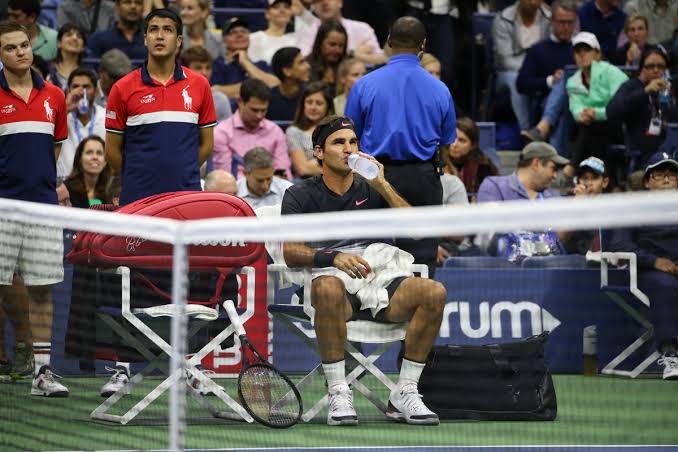
There isn’t a coach in front of you providing tactical guidance. It’s merely you, a courtside camera focused five hundred percent on your face in sharp 4K quality, and a personalized gear bag at your feet filled with unknown bottles, foil packets, pill boxes, and fresh fruit.
Within those ninety seconds, a player is required to perform a complicated biological recovery procedure. They must reduce their core body temperature, refill depleted muscle glycogen, restore extracellular sodium levels, avoid lactic acid buildup, clear their mental space, and modify their string tension—all while attempting to recover their breath and act as if twenty thousand cheering fans in the stands are not present.
The incredible amount of micro-actions packed into that ninety-second span is astonishing. Observe a player take a seat. The order is as strict as a military exercise.
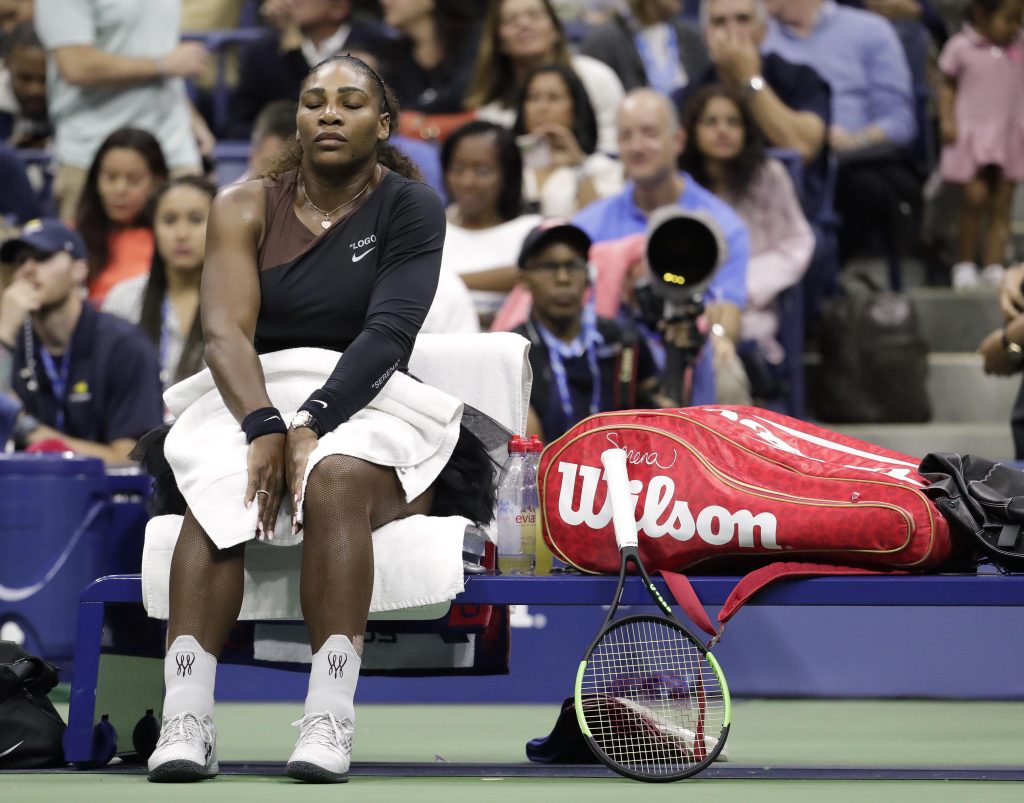
First, the racquet goes into the lap or gets placed carefully on the bag. Second, the primary towel is grabbed to wipe the forehead, arms, and grip. Third, the ice collar or cool-down wrap is draped over the trapezius muscles. Fourth, the liquid array is accessed. Fifth, the solid food protocol is executed. Sixth, the towel goes over the head to construct a psychological fortress.
If any step in that six-part sequence is disrupted—if the ball kid hands them the wrong colored towel or the banana is slightly too soft—you can see the existential panic flash across the player’s eyes.
The Banana Protocol: Surgical Precision on a Yellow Spectrum
Let’s examine the king of tennis nutrition at the court: the simple banana. For more than fifty years, bananas have been a key part of tennis changeovers, mainly appreciated for their rich potassium levels, easily digestible sugars, and natural wrapping. However, in today’s highly optimized world of sports science, athletes don’t simply consume a banana. They implement a precisely defined, bio-dynamically assessed Banana Protocol.
Observe how a high-level professional handles the banana resting on their court-side tray. They don’t simply seize it and tear it apart like a famished person at a breakfast spread. They lift it with two fingers, raise it to the court-side lights, and examine it. They are examining the ripeness range.
In high-level sports nutrition, the ripeness of a banana determines its glycemic index and how quickly it digests. A slightly under-ripe banana with a green tip is rich in resistant starch. Resistant starch takes several hours to decompose in the digestive system, indicating it offers no instant glucose to an athlete during a tough third set. In contrast, an excessively ripe banana with many brown spots has converted its starches into simple fructose and glucose, leading to a rapid increase in blood sugar, but may result in a sudden insulin drop after about twenty minutes.
The goal for a professional tour is a particular point on the ripeness chart: a firm, vibrant yellow skin with little green at the stem and no brown spots. As soon as the ripeness assessment is successful, the surgical procedure commences.
The player does not remove the banana from the stem like a novice. Numerous elite professionals remove it from the bottom tip—the monkey method—to prevent crushing the upper fruit and to effectively eliminate the vascular bundles, those pesky fibrous threads along the sides.
Then comes the most absurd part of the entire spectacle: the portion control. A player almost never eats a whole banana in one sitting. Eating a whole banana fills the stomach cavity with physical mass, forcing the body to redirect oxygenated blood away from working leg muscles and into the stomach to process digestion. That is the last thing you want when you need to sprint fifteen miles across a hard court.
Instead, the player takes exactly one bite. Sometimes one and a half bites. They chew the single bite forty-seven times, staring blankly into the camera with dead, unblinking eyes, processing the carbohydrate load. They then carefully fold the remaining three-quarters of the banana back into its original peel, wrap it in a fresh white napkin, and place it back on their tray like a hazardous material sample being preserved for laboratory analysis.
They will come back to that exact same banana two games later to take one more precise bite. It is a level of dietary discipline that borders on clinical obsession, executed live in front of millions of television viewers.
The Three-Liquid Alchemy: Chemistry Class in a Plastic Bottle
If you think the banana routine is intense, take a look at the floor beneath a player’s chair during a changeover. You will see a minimum of three distinct, custom-designed squeeze bottles sitting in a neat row.
To the casual fan watching at home, it looks like the player is just thirsty. In reality, those three bottles represent a carefully calculated osmolality matrix designed to hydrate the body at different cellular levels. Let us decode the three-liquid setup you see on court:
Bottle 1: Pure Distilled or Mineral Water
This is the baseline flusher. It is used primarily to rinse the mouth after consuming high-viscosity gels or to provide basic hydration without adding solute load to the stomach. Players will often take a gulp of a sweet energy drink, hold it in their mouth to stimulate oral carbohydrate receptors, swallow a small portion, and then instantly chase it with a sip of pure water from Bottle 1 to clear the sticky residual sugar from their palate.
Bottle 2: The Isotonic Carbohydrate & Electrolyte Solution
This is usually the brightly colored fluid—electric pink, vibrant orange, or neon blue. It contains a precise ratio of maltodextrin, fructose, sodium, and potassium blended at a specific six-to-eight percent carbohydrate concentration. This concentration matches the natural osmolality of human blood plasma, allowing the fluid to empty from the stomach rapidly and enter the bloodstream through the small intestine without causing stomach cramps or sloshing.
Bottle 3: The Hypertonic Recovery or Amino Acid Sludge
This is the mysterious, cloudy, off-white or yellowish liquid sitting in a specialized shaker bottle. This bottle contains branched-chain amino acids, essential electrolytes, high-density cluster dextrin, or specialized organic acids designed to buffer lactic buildup during extreme three-hour marathons. It looks like swamp water, tastes like battery acid, and is consumed in tiny, measured two-ounce swigs.
Watch the choreography of a player drinking from these bottles during a ninety-second break.
They reach down, pick up Bottle 2, take two squirts, set it down in its exact original position, pick up Bottle 1, take one squirt, swish it around their mouth, swallow, set it down, and then grab a towel to wipe their chin.
If you watch players like Novak Djokovic, Carlos Alcaraz, or Jannik Sinner, the bottle alignment is not random. The bottles are often turned so their labels face a specific direction, spaced exactly three inches apart, and arranged in order of consumption sequence.
If a player grabs Bottle 3 when they meant to grab Bottle 1, you can see the internal error code flash across their face. They will literally spit the liquid back out into a towel, re-align the bottles on the concrete, and restart the drinking sequence from the beginning to maintain their psychological rhythm.
The Mystery Sachets: Tearing Open MREs on National TV
As though three custom liquid containers and a surgical banana weren’t sufficient, the contemporary changeover now includes a variety of small, foil-sealed packets, tubes, and sachets resembling military field rations or futuristic pharmaceuticals.
Observe an athlete in a demanding fifth set under thirty-five-degree heat. They dive into the side pocket of their thermoguard racquet bag, extract a silver foil packet, rip the top with their teeth like a soldier accessing an MRE in a combat area, and apply a thick, clear gel straight into the back of their throat.
These are energy gels with a high concentration, consisting of twenty-five to forty grams of quickly absorbable carbohydrates mixed with caffeine, sodium, and beta-alanine.
The consumption of caffeine is a field of study in itself. Players don’t only have a cup of coffee prior to the game. They track their caffeine intake throughout the entire five-set match. They prefer not to have a caffeine spike during the first set when their natural nervous system activation and adrenaline levels are already very high. That would result in unsteady hands, inadequate fine-motor skills on fragile drop shots, and increased heart rates.
Instead, they hold off until the two-hour point—when natural glycogen levels start to decline and central nervous system fatigue kicks in—to open their first caffeine-packed sachet. They inject fifty to one hundred milligrams of pure liquid caffeine directly into their body, follow it with two sprays from Bottle 1, and settle on the bench anticipating the Adenosine receptor blockade to affect their brain just in time for the third-set tiebreak.
And then there are the Salt Tablets. If a player feels the early warning twitches of cramping in their quadriceps or calves during a long rally, the changeover turns into an emergency medical intervention. They reach for a small plastic pill bottle, pop two high-concentration sodium chloride tablets into their mouth, and wash them down with their isotonic mix.
Watching a multi-millionaire professional athlete wince in absolute agony as two hundred milligrams of pure, bitter salt dissolves in their mouth while twenty thousand fans applaud in the background is pure, unadulterated sports comedy.
Mustard Packets and Pickle Juice: The TRP Channel Miracle
When regular salt tablets and energy gels can’t prevent a total muscle cramp from seizing a player’s legs, the transition science ventures into the territory of sheer madness: Neural Reflex Interventions.
If you’ve observed top-tier tennis for a while, you’ve certainly noticed a player taking a seat on the bench, reaching into a bag, and retrieving a tiny yellow packet of store-bought mustard, or a small container of vibrant green pickle juice.
To an unsuspecting spectator on their sofa, it appears that the athlete has totally lost their senses and chosen to outfit a hot dog during a Grand Slam quarterfinal. In essence, they are activating a neuro-biological response referred to as Transient Receptor Potential (TRP) Channel Activation.
For many years, sports scientists thought that muscle cramps were solely due to dehydration and a lack of electrolytes within the muscle tissue. Contemporary neuroscience demonstrated that the theory is insufficient. The majority of severe athletic cramps are actually triggered by hyperactive motor neurons firing excessively from the spinal cord as a result of fatigue in the central nervous system.
How can you prevent an overactive motor neuron from firing in your calf muscle during a game? You stimulate the sensory nerves at the back of your throat!
Pickle juice and yellow mustard have elevated levels of acetic acid (vinegar) along with potent spices such as capsicum or allyl isothiocyanate. When a player takes a shot of pickle juice or squeezes a packet of plain mustard onto their tongue, the strong, sharp, sour flavor immediately activates the TRP channels in their mouth, throat, and stomach.
That intense sensory shock sends an immediate inhibitory neural signal racing up the vagus nerve to the brain and down the spinal cord, telling the nervous system to shut off the involuntary muscle spasms in the legs!
The physical cramp is relieved not because the pickle juice reached the calf muscle—which takes hours to digest—but because the brain was literally tricked into resetting its motor neuron firing rate by a burst of vinegar taste!
Think about how absurd that is. A player is standing on the brink of forfeiting a million-dollar match because their hamstring is locking up. They sit down, suck down a packet of French’s yellow mustard, wince in utter disgust, wipe their mouth with a designer towel, and walk back out to serve an ace at one hundred and thirty miles per hour. You cannot write a better comedy script than modern sports science in action.
The 1,000-Yard Stare: Brain Processing and Towel Fortresses
Amid all this intense chemical use, banana sculpting, and mustard dispensing, observe the player’s expression. They typically do not gaze at the audience. They hardly ever glance at the rival positioned thirty feet away on the far bench. They are performing the Thousand-Yard Gaze.
The thousand-yard gaze is a psychological protective strategy. In a stadium filled with twenty thousand enthusiastic fans, bright advertisement screens, moving television camera cranes, and recorded music playing during intervals, the sensory experience is intense. If a player permits their mind to take in every external cue during a changeover, their mental stamina depletes far earlier than their physical legs falter.
They fix their gaze on a solitary, entirely random spot in space. They will focus on a small rip in the court-side net, a particular logo on their racquet frame, or the laces on their left sneaker. They never blink. Their facial muscles become entirely relaxed. They slowly, rhythmically chew their lone piece of banana in a robotic manner, resembling a Buddhist monk meditating amidst a battlefield.
When the environmental sound becomes overly loud, they utilize the ultimate mental barrier: The Towel Tent. The towel in tennis has transformed from just a means to dab sweat from your brow to a mobile, personal space for isolation.
A player will grab a large, soft bath towel, cover their entire head with it, let the sides hang down below their cheeks, and lean forward with their elbows on their knees. Within that gloomy, moist, terry-cloth tent, the external world vanishes. There are no cameras, no spectators, no rivals, and no score displays. It’s merely the player, the scent of wet fabric, and the noise of their own deep breathing.
They will sit inside that towel tent for sixty seconds, emerging only when the chair umpire calls “Time,” looking like an astronaut stepping out of a decompression chamber onto a foreign planet.
The Climate Control Suit: Ice Collars and Personal Air Conditioners
When matches occur under intense heat policies—like the sweltering thirty-eight-degree humid conditions of the Australian Open or the US Open in late August—the changeover bench stops appearing as a sports sideline and starts to look like a NASA launch pad.
The machinery utilized during intense heat transitions is astonishing:
Initially, there exists the Ice Collar. This is a lengthy, adaptable, gel-filled tube that has been stored in an ice chest at minus-four degrees. As soon as the player takes a seat, the trainer or ball kid places this ice-cold snake around the player’s neck, resting right above the carotid arteries. The ice collar deceives the brain’s hypothalamus by cooling the blood traveling through the carotid arteries to the brain, which reduces its central perception of thermal stress and stops the brain from issuing emergency shutdown signals to the skeletal muscles.
Secondly, there is the Phase-Change Ice Vest. This is a sturdy, tailored vest filled with frozen packs that the player zips over their shirt, chilling the core chest and back area.
Thirdly, there are the Personal Misting Fans. Specialized handheld or bench-mounted artillery fans deliver a steady stream of atomized water droplets directly onto the player’s face and torso, enhancing evaporative cooling as two ball kids stand next to them, holding large, solid-colored umbrellas to shade from every beam of direct sunlight.
Look at the image of a modern player during a heat-policy changeover. They are wearing a frozen vest, wrapped in a neck ice collar, sitting under two umbrellas, getting blasted by atomized water mist, holding an ice pack against their groin, drinking a pink electrolyte solution, and chewing a single bite of a yellow banana.
They look like a sci-fi cybernetic organism undergoing mid-battle repair in an industrial docking bay!
Club Players vs. The Pro Circus
What makes this entire changeover circus so utterly hilarious is comparing the multi-million-dollar science of the pro tour to how normal human beings play tennis at their local park or country club.
Go down to your local public courts on a Saturday morning. You will see two weekend warriors playing a grueling three-set match in ninety-degree heat. There are no ice collars. There are no custom-blended hypertonic dextrin solutions. There are no ball kids holding umbrellas.
During their changeovers, these guys walk over to a rusty metal bench sitting in direct sunlight.
One guy reaches into his faded gym bag and pulls out a plastic water bottle that has been sitting in his hot car trunk for three days, containing lukewarm tap water that tastes faintly of plastic. The other guy pulls out a squished, flattened granola bar that he found at the bottom of his racquet compartment, which expired during the global pandemic in 2020.
He peels the wrapper off with his sweaty fingers, eats the entire bar in two bites, washes it down with a warm Gatorade he bought at a gas station on the way to the court, and complains to his opponent about his lower back hurting.
There are no TRP channel neural interventions. There are no ripeness spectrum checks on bananas. There is no three-liquid osmolality matrix. Just pure, unrefined, recreational human suffering fueled by warm tap water and processed sugar.
And yet, if you ask those same weekend warriors, they will tell you they spent twenty minutes on YouTube the night before watching a video on how Novak Djokovic arranges his water bottles or how Carlos Alcaraz timing-delays his caffeine intake, convinced that if they just drink their pink Gatorade in two measured squirts, their backhand slice will magically improve by thirty percent.
We love to imitate the elite circus, even when the circus looks completely insane to an outside observer.
The Verdict on the Changeover Circus
At the end of the day, we cannot really blame modern tennis players for turning their ninety-second rest breaks into a hyper-calculated science experiment.
The physical demands of modern professional tennis are completely absurd. The racquets are stiffer, the balls are heavier, the court surfaces are more abrasive, and the rallies are longer and more violent than at any point in the history of the sport. When you are asking a human body to perform at maximum athletic output for four continuous hours in brutal environmental conditions, every single micro-percentage of biological efficiency matters.
If taking two bites of a precise-ripeness banana, drinking three different colored fluids in a specific mathematical sequence, and sucking down a packet of yellow mustard gives a player a two-percent edge in muscle recovery, they would be foolish not to do it.
Pathbreaking performance requires pathbreaking neurosis. So the next time you tune into a Grand Slam broadcast and watch a match enter a crucial set break, do not change the channel or walk away to grab a snack. Keep your eyes locked on the court-side bench.
Enjoy the spectacle of a world-class athlete sitting under an umbrella, wrapped in frozen towels, executing a military-grade hydration protocol, and treating a piece of yellow fruit like a delicate piece of aerospace engineering. It is weird, it is hyper-engineered, it is completely obsessive, and it is absolute television gold.