Prosthetics vs. Performance: Did Colin Farrell Need 20 Pounds of Rubber to Play a Mobster?
Let’s discuss the preferred illusion of contemporary Hollywood. You take a seat in a dimly lit theater or make yourself comfortable on your couch, start the film, and notice a renowned, chiseled-jaw actor credited as the main star. However, when he steps onto the screen, he appears to be a completely different person.
He possesses a prominent double chin, acne-scarred complexion, a bent artificial nose, thinning hair, and eighty pounds of cushioning worn beneath his coat. The instant response from studio marketing teams and online commentators is typically a collective, enthusiastic chorus of acclaim. They applaud the astonishing change, call for an immediate Oscar for the makeup artist, and are amazed that you can’t even recognize who is beneath all that makeup.
This leads me to my main question: if we aren’t meant to recognize him, why did we employ him to begin with? For example, Colin Farrell portraying Oswald “Oz” Cobb in The Batman and his HBO spinoff, The Penguin.
Do not misunderstand me for even a brief moment here. Colin Farrell is an undeniably powerhouse of an actor. His performances in movies such as In Bruges, The Banshees of Inisherin, and The Lobster undeniably demonstrate that he is among the most captivating, emotionally sensitive, and intense actors in modern cinema.
Additionally, we need to be entirely just to prosthetics creator Mike Marino. The technical expertise showcased in The Penguin is truly impressive. The see-through skin textures, the fragile ruptured capillaries, the damaged brow, and the flawless blend around the eyes signify a pinnacle for practical special effects makeup in the history of television.
Farrell’s performance underneath all that sculpted rubber is undeniably electric. He channels a terrifying mix of Tony Soprano’s explosive rage, Fredo Corleone’s pathetic desperation, and a wounded, snarling street dog who knows everyone in the room is looking down on him.
Yet, as I watched him limp through Gotham City’s criminal underworld across hour after hour of prestige television, a frustrating thought kept nagging at the back of my brain. Did we really need a gorgeous Irish movie star to sit in a makeup chair for three agonizing hours every single morning just to play a gruff, heavy-set, mid-level mobster? Or is Hollywood simply so terrified of granting lead roles to actual character actors that it would rather wrap a handsome A-lister in twenty pounds of silicone?
Part I: The Mechanics of the “Fat-Suit” Paradigm
Hollywood’s fixation on encasing leading actors in layers of prosthetics isn’t entirely unprecedented, but in the past ten years, it has transformed from an unusual narrative gimmick into a widespread studio reliance. We have seen Gary Oldman receive an Oscar for transforming into Winston Churchill in Darkest Hour, Renee Zellweger fit into bulky padding for The Thing About Pam, Christian Bale change his body and appearance for Vice, Brendan Fraser earn an Academy Award through substantial suit work in The Whale, and Bradley Cooper wear a debated prosthetic nose to portray Leonard Bernstein in Maestro.
This trend reflects a financial cynicism that I find immensely frustrating as a critic of films. Studio executives follow a straightforward, cautious approach to minimize risk. They desire the financial appeal, global reputation, and prestigious charm of an attractive A-list film star, yet they also seek the raw physical genuineness of a rugged, distinctive character actor.
Instead of selecting an outstanding working-class character actor who inherently has the physique, voice, and facial features of a corrupt politician in his mid-fifties, a damaged mobster, or a heavily muscled individual, studios opt for a top-tier heartthrob and allocate a multi-million-dollar budget to the makeup team.
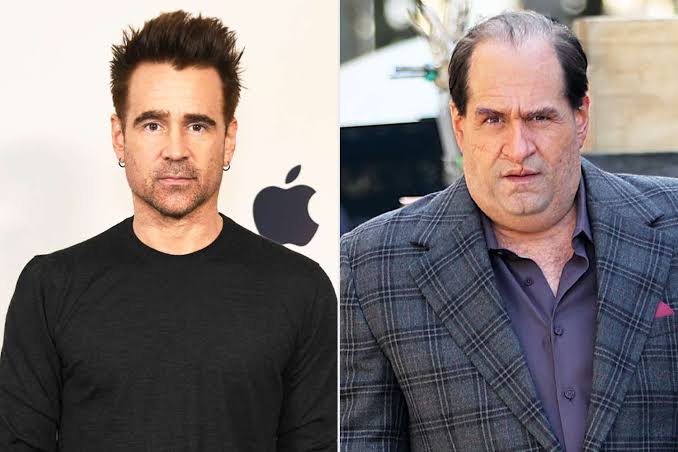
It enables the marketing system to promote two separate stories to the audience simultaneously. On one side, they invite us to see a realistic, genuine crime drama. Conversely, they encourage us to appreciate the courage and dedication of this stunning movie star for permitting a team of artists to portray him as temporarily unappealing.
This approach transforms the film’s press tour into an ego trip disguised as selfless artistic dedication. It shifts the cultural conversation away from the text of the project and redirects it entirely toward the physical endurance of the star. The primary selling point stops being whether the show tells a compelling story about power and trauma, and instead becomes a endless series of behind-the-scenes featurettes showing Colin Farrell sitting motionless while four artists glue pieces of latex to his jawline at four in the morning.
Part II: The Death of the Working-Class Character Actor
To grasp what is forfeited when we rely on prosthetics, we must reflect on American film history. Return and view the iconic crime series from the 1970s and 1980s. When filmmakers such as Francis Ford Coppola, Sidney Lumet, or Martin Scorsese required a group of chilling, convincing gangsters, they didn’t reach out to Robert Redford or Warren Beatty and affix artificial cheeks to them. They ventured into the world and recruited performers who displayed the tangible burdens of tough lives in their expressions.
They employed actors such as John Cazale, who infused a delicate, tragic humanity into Fredo Corleone in The Godfather. They selected Paul Sorvino, whose formidable stature and strong presence provided Paulie Cicero in Goodfellas with a natural sense of authority. They gave the spotlight to James Gandolfini, whose physical presence made Tony Soprano in The Sopranos one of the most intricate characters in television history. They depended on actors such as Bob Hoskins in The Long Good Friday, or reliable characters like M. Emmet Walsh and Warren Oates.
These were performers whose expressions revealed a complete life narrative before they spoke a word. They were not crafted in secluded Hollywood gyms by famous personal trainers. Their skin was coarse, jawlines were uneven, hair was thinning, builds were robust, and features were asymmetrical. Upon entering a room on camera, you immediately felt they had experienced a harsh, perilous existence, as their physical presence aligned perfectly with the surrounding narrative.
By relying almost exclusively on prosthetically altered A-listers to play heavy or unconventional roles, Hollywood is actively starving a whole generation of incredible character actors out of career-defining lead opportunities. Think about how many brilliant, mid-career character performers currently working guest spots on procedural television shows or playing unnamed bodyguards in the background could have played Oz Cobb natively. Imagine giving a working actor who naturally carries that physical frame and vocal weight the opportunity to headline a prestige HBO series.
Instead, the current studio system continues to funnel millions of dollars into making handsome men look rough, while the actors who were born to play those parts are left fighting for table scraps.
Part III: The Barrier Between the Actor and the Audience
Beyond the industrial and casting critiques, there is a fundamental aesthetic problem with heavy prosthetics that even the most dedicated performances struggle to overcome, and that is the subtle loss of human nuance.
Colin Farrell has noted in multiple interviews that looking in the mirror and seeing zero traces of his own face was an immensely liberating experience. He felt protected behind the mask, which gave him full permission to play a narcissistic, psychopathic villain with total freedom and abandon. I can completely understand why an actor loves that process. It is the ultimate game of high-stakes dress-up, providing a total psychological buffer between the performer and the role.
My Take: As a viewer sitting in the dark, I often feel the exact opposite of that liberation. Heavy prosthetics create an invisible wall between the actor’s soul and the camera lens. No matter how advanced the silicone formula is, artificial material simply does not micro-express the way genuine human skin does.
Human faces express emotional reality through countless minute, involuntary muscle movements. When an actor feels authentic sorrow, anger, fear, or love on-screen, the area around their eyes constricts, blood flows to their cheeks, their forehead moves slightly, and these subtle expressions reveal profound psychological realities that words alone cannot express.
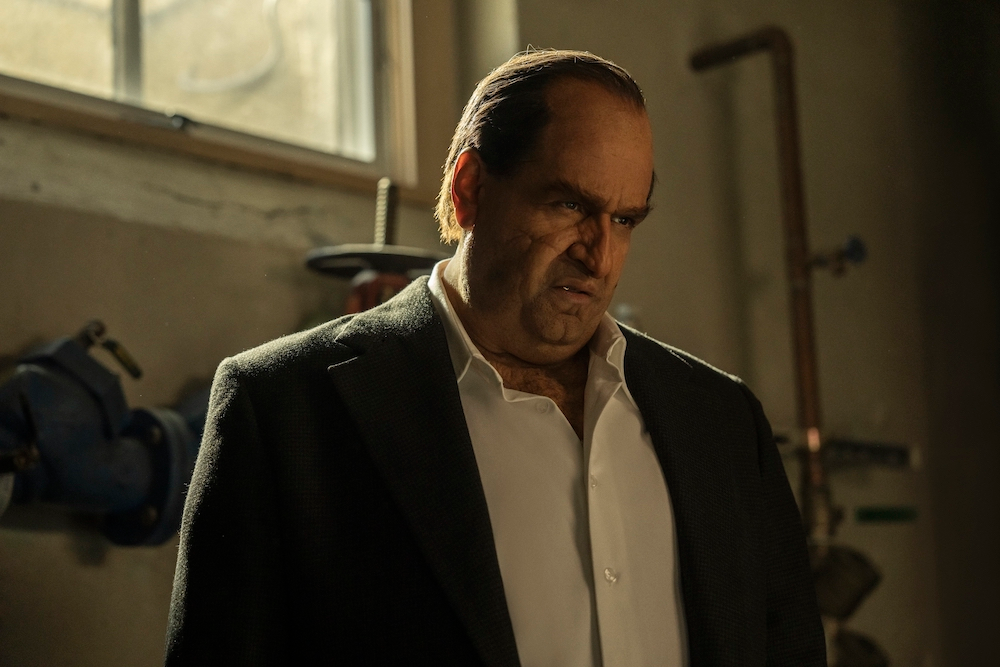
Coating an actor’s face with seven or eight different layers of painted glue, pre-seal, and airbrushed silicone inevitably mutes those micro-expressions. In The Penguin, there are moments in still close-ups where you can sense Farrell exerting extra effort under the rubber. Since his inherent facial expressions are somewhat muted by the suit, he needs to amplify his vocal tone, eye movements, and body language significantly to convey emotion beyond the barrier.
Sometimes, this highly expressive energy succeeds, providing Oz with a wide, dramatic, larger-than-life aura that aligns with the character’s comic-book roots. However, at times, it dangerously approaches the sensation of an exceedingly costly cabaret show or a cinematic moment from a video game. You are not consistently observing a genuine human experiencing internal suffering; you are witnessing a top actor controlling a highly advanced piece of animatronic puppetry from within.
Part IV: When Does a Transformation Actually Work?
I am certainly not a cynical critic who hates all special effects makeup on principle. Practical makeup remains one of the most magical tools in filmmaking when it serves the story rather than masking a studio’s cowardice in casting.
Reflect on how makeup transformations effectively achieve their goals when utilized with a narrative intent. In David Cronenberg’s The Fly, the prosthetic design for Jeff Goldblum wasn’t intended to make him simply a typical overweight individual; it illustrated the terrifying biological decline of a man who was losing his humanity piece by piece.
In Monster, the delicate makeup used on Charlize Theron didn’t create a bulky rubber costume; rather, it utilized minor dental alterations and skin aging techniques to enhance her intense, revealing emotional performance. In The Dark Knight, Heath Ledger’s memorable Joker makeup did not use thick silicone cheekpieces; rather, it utilized messy, dripping face paint applied over his real features, enabling every nuanced lip-lick, twitch, and glare to be captured directly on camera without any physical barrier.
The common thread in all these successful changes is that the actor’s inherent physical tool stays completely available to the director’s viewpoint. The makeup highlights and emphasizes the performance instead of completely covering the actor’s face.
When observing Farrell in The Penguin, his authentic face is essentially absent. His eyes persist, yet every nearby outline has been entirely crafted by a group of artists. When a movie or TV program entirely eliminates an actor’s natural characteristics, it shifts from transformative performance into elaborate disguise. It transforms into a remarkable display of vocal imitation and body language—a clever portrayal of a gangster, yet still just a portrayal.
Part V: The Counter-Argument and The Penguin’s Reality
To maintain intellectual honesty, we should consider why director Matt Reeves and showrunner Lauren LeFranc opted for this particular direction. As Matt Reeves developed his concept for The Batman, he created a gothic, noir-inspired Gotham City deeply influenced by 1970s crime films such as Chinatown and Taxi Driver. He aimed for his rogue’s gallery to resemble real humans whose physical abnormalities directly reflected their psychological scars and criminal drives.
Oswald Cobblepot’s character had to embody years of being ridiculed and overlooked because of his awkward walk, facial scars, and large build. In a tale of a man who addresses profound physical insecurities with unrelenting ambition and sociopathic brutality, the makeup has a distinct narrative function. The scars etched on his face are more than just appealing monster aesthetics; they symbolize childhood trauma, street brawls, and the brutal physical truth of enduring life in Gotham’s underbelly.
Farrell invests his whole spirit into this role. He does not use the prosthetic suit as an opportunity to take it easy or depend on visual impact alone. He fundamentally transforms his walking stance, shifts his center of gravity, lowers his vocal tone to a gritty New York rasp, and conveys a tragic, desperate fury to the screen. In his intense clashes with Cristin Milioti, who gives an extraordinary performance as Sofia Falcone without the use of any prosthetic makeup, the series achieves true dramatic peaks.
So yes, the series undoubtedly succeeds as entertainment, and Farrell’s commitment is undeniable. But my critique is not about whether The Penguin is enjoyable television on a Sunday night. It is about the dangerous precedent it continues to reinforce across the broader film and television industry.
Part VI: Let Actors Be Human Again
As I reached the conclusion of The Penguin, I was left with a strange mix of awe and exhaustion. I was in awe of the immense technical labor required to turn Colin Farrell into Oz Cobb every single day of production. Yet I was exhausted by the realization that this entire multi-million-dollar apparatus exists largely because major studios no longer trust the audience.
They do not trust us to tune into a series anchored by an unfamiliar character actor. They do not trust leading men to play roles that actually match their real-world age, weight, and physical type. They insist on wrapping every project in layers of high-concept transformation, viral marketing gimmicks, and digital or physical alterations.
Colin Farrell is a phenomenal artist who gave a wildly entertaining performance from inside a twenty-pound suit of rubber. But I sincerely hope that The Penguin represents the absolute peak of this trend rather than the permanent template for the future of character acting.
I want to see Colin Farrell’s actual face on screen again, with all its natural expressiveness, subtle lines, and emotional vulnerability. I want to see character actors given the starring roles they have earned through decades of selfless supporting work. And most of all, I want Hollywood to remember that the most powerful special effect in the history of cinema is not silicone, spirit gum, or CGI, but the unadorned human face telling the truth in close-up.