Is Analytics Making Sports Boring? The Homogeneity Problem
A tactical deep dive into how mathematical optimization is forcing teams across the NBA, European football, and the NFL to play the exact same way. Derrick evaluates whether mathematical efficiency is destroying individual creativity and regional playstyles, offering a nuanced opinion on where human instinct should overrule the algorithm.
Turn on an NBA game on a Tuesday night. Within three possessions, you already know exactly what you are going to see. A point guard brings the ball across midcourt, waves for a high pick-and-roll at twenty-eight feet, and forces a switch. The corner wing stands motionless, tethered to the three-point line like a dog tied to a fence post. The center rolls hard to the rim. The ball handler either flings an awkward floater at the glass, dumps it down for an uncontested dunk, or kicks it out to a 36% three-point shooter standing on the perimeter.
Change the channel to a Premier League football match. The goalkeeper rolls the ball to a center-back inside his own six-yard box. The inverted fullback tucks inside to form a double pivot. The wide wingers hug the touchline, feet chalked, strictly instructed not to vacate their assigned vertical channel until the third-man combination opens up Zone 14.
Flip over to an NFL broadcast on Sunday afternoon. Every single offensive coordinator on the sideline is running pre-snap shift motion out of an eleven-personnel formation, aiming to attack the exact same two-high safety shell coverage that thirty-one other teams in the league are deploying.
The uniforms change. The team names change. The multi-million-dollar logos on the chest change. But the actual product on the field has become terrifyingly, suffocatingly identical. Welcome to the era of algorithmic homogenization.
Over the past decade, professional sports front offices have surrendered their strategic sovereignty to roomfuls of Silicon Valley quantitative analysts, supercomputers, and expected-value algorithms. These data scientists were brought in with a single mission: eliminate human error and optimize tactical efficiency. In that narrow mathematical quest, they succeeded beyond their wildest dreams.
However, in solving sports as if they were giant, complex equations, analytics has accidentally committed a far worse crime. It has systematically stripped top-tier athletics of its regional soul, its individual flair, its tactical variety, and its glorious, chaotic unpredictability.
We are living through the Great Homogenization. We have replaced strategic warfare with a universal monoculture. And as a fan who fell in love with sports because of its unpredictable human drama, I am ready to say what every sports performance director is too terrified to admit publicly: mathematical efficiency is making global sports profoundly, relentlessly boring.
The Death of the Mid-Range: How Moreyball Flattened Basketball
To understand how mathematical optimization turns an entire sport into a monotonous, repetitive exercise, you have to start with the NBA’s analytics revolution.
Fifteen years ago, professional basketball was a rich, messy tapestry of stylistic contrasts. You had grit-and-grind teams in Memphis dumping the ball into the low post for physical interior battles. You had mid-range maestros in San Antonio and Dallas carving up defenses with footwork, pump fakes, and twelve-foot pull-ups. You had fast-break teams sprinting in transition, isolated wing scorers operating out of the triple-threat position, and defensive teams choking out the paint.

Then came the spreadsheet. A group of visionary executives looked at basic arithmetic and realized something glaringly obvious. Three points is worth fifty percent more than two points. An unassisted sixteen-foot jump shot yields an average expected value of roughly 0.8 points per possession. A corner three-pointer yields roughly 1.1 points per possession. A shot directly at the rim yields roughly 1.2 points per possession.
Overnight, the entire mid-range area of a basketball court was declared a statistical wasteland. Shot charts across all thirty NBA franchises, which once looked like organic heat maps filled with mid-range jumpers and elbow touches, transformed into binary, robotic shot profiles. They became dense clusters of red dots directly under the rim and an outer ring of blue dots beyond the twenty-three-foot line. Everything in between was treated like radioactive waste.
The result of this statistical purge is that every offensive scheme in the league now looks like a carbon copy of Daryl Morey’s Houston Rockets.
Players who spent their entire childhoods mastering the art of the mid-range pull-up—the signature shot of Michael Jordan, Kobe Bryant, and Dirk Nowitzki—were told to put their foot behind the line or get out of the rotation. Post-up big men who couldn’t step out and shoot 36% from beyond the arc were rendered extinct. Wing players who lacked the vision to execute kick-out passes were replaced by stationary 3-and-D robotic role players whose sole purpose is to stand in the corner, catch the ball, and let it fly.
The game didn’t just change tactically; it lost its visual identity. When every team shoots forty three-pointers a night, the rhythm of basketball changes from an athletic chess match into a monotonous, high-volume shooting drill. You aren’t watching two distinct basketball cultures collide; you are watching two groups of software developers execute the exact same algorithm from opposite ends of the floor.
Derrick’s Take: I don’t care if the expected value formula says a corner three is the holy grail of basketball analytics. Watching thirty teams stand four guys behind the arc while one ball handler runs a high pick-and-roll for two straight hours is mind-numbing.
We traded artistic variance for mathematical optimization. We lost the mid-range footwork, we lost the classic post battle, and we lost the eccentricities that made individual players unique. When every player is held to the exact same shot chart metrics, you don’t have players anymore—you just have interchangeable delivery systems for high-percentage data points.
The Positional Play Monoculture: How European Football Lost Its Regional Soul
If the NBA’s analytics revolution destroyed tactical variance on the hardwood, European football’s obsession with rigid tactical systems has done something even worse: it has erased centuries of regional footballing culture.
For a hundred years, European football was defined by deep, distinct national identities. Italian football was built on Catenaccio—a defensive art form that treated a clean sheet like a holy relic and mastered the patient, lethal counter-attack. English football was fierce, direct, and physical, relying on towering center-forwards, early crosses into the box, and secondary ball battles. German football was built on relentless physical pressing and vertical transitions. South American football was defined by street-born individualism, unpredictable dribbling rhythms, and improvisational flair.
Then Pep Guardiola perfected Positional Play, known in Spanish as Juego de Posición.
Guardiola’s methodology divided the pitch into a strict grid of vertical channels and horizontal sectors. It dictated that no more than three players could occupy the same horizontal line and no more than two players could occupy the same vertical channel at any given moment. It transformed football from a fluid, organic war of human wills into a hyper-structured game of positional chess.
Because Guardiola won trophy after trophy at Barcelona, Bayern Munich, and Manchester City using this system, the rest of the footballing world panicked. Owners, sporting directors, and young coaches decided that Positional Play was the only correct way to play the game.

Now, go watch a match in any top-flight European league. From the Premier League down to the third division of Spanish football, every manager is attempting to run a watered-down version of Pep Guardiola’s grid system.
Goalkeepers who used to launch forty-yard passes down the touchline are now forced to play nerve-wracking two-yard passes inside their own penalty box. Fullbacks who used to overlap with blistering speed are now instructed to invert into central midfield to form a secondary defensive screen. Maverick wingers who used to pick the ball up, size up their defender, and improvise a dribble are now strictly disciplined if they leave their assigned touchline channel before the structural overload is achieved.
The most tragic casualty of this tactical monoculture is the complete death of the individual creative dribbler.
Street-style playmakers who rely on unpredictable rhythm, unexpected nutmegs, and instinctual flair—players like Ronaldinho, Eden Hazard, or Jay-Jay Okocha—are actively coached out of modern academies. They are labeled as high-turnover liabilities by data systems that prioritize possession retention and defensive rest-structure above all else. Modern wingers are trained to be athletic system operators: run to the touchline, hold your position, pass the ball backward if the overload isn’t there, and execute a tactical foul the second possession is lost.
Derrick’s Take: Football used to be a clash of civilizations. Seeing an Italian side defend for eighty-nine minutes and score on one surgical counter-attack against a wild, attacking Dutch side was peak sport. It was a battle of national philosophies.
Now? Every team in the Champions League plays the exact same system. They all build from the back, they all invert their fullbacks, they all press in the exact same 4-4-2 block, and they all collect the exact same statistical metrics. We have replaced football’s rich, chaotic soul with a standardized industrial assembly line. It is clean, it is efficient, and it makes me want to put my head through a wall out of pure boredom.
The NFL’s Algorithmic Convergence: Fourth Downs and Shanahan Clones
American football has always been a game of tactical adjustments, but analytics has turned the NFL into a league where thirty-two coaching staffs are reading off the exact same computer printout every Sunday.
Take the evolution of play-calling and decision-making over the past five years. Ten years ago, head coaches had distinct personalities. Some were aggressive gamblers who trusted their gut; others were conservative, field-position purists who believed in defense and punting.
Today, every single NFL head coach has an analytics staffer sitting in the booth equipped with an automated Fourth-Down Decision Bot.
If it is fourth-and-two at the opponent’s forty-two-yard line in the second quarter, the bot processes Expected Points Added (EPA) models, Win Probability Added (WPA) algorithms, and historical conversion metrics. Within two seconds, the green light flashes on the tablet. The coach goes for it. Not because he feels a shift in momentum, not because his offensive line is dominating the line of scrimmage, and not because he has a gut feeling about his quarterback—but because a mathematical simulation told him that going for it increases his overall win probability by 1.8 percent.
When every coach in the league obeys the exact same predictive model, the operational variance between franchises vanishes.
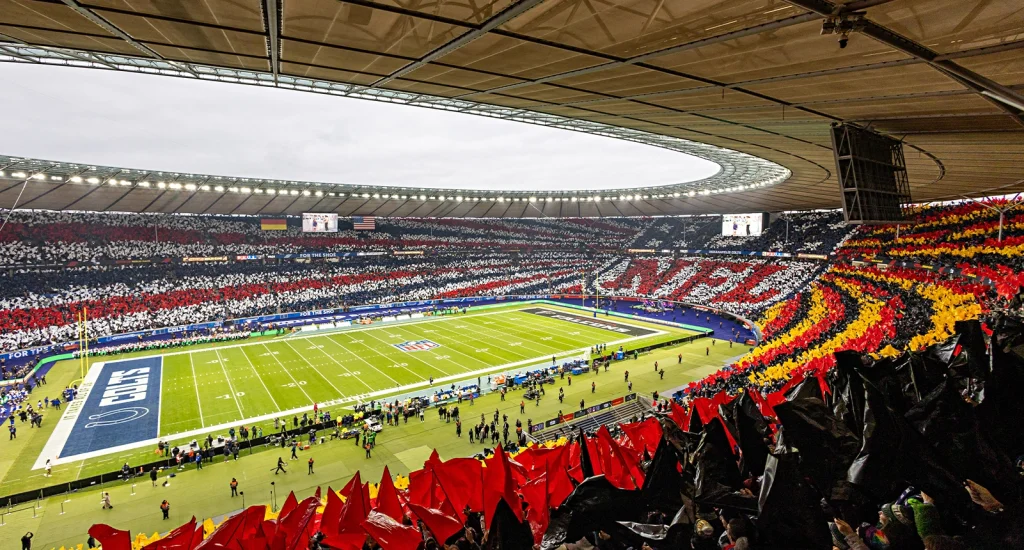
Look at what has happened to play design across the gridiron. The entire NFL has been swallowed whole by the Shanahan-McVay offensive system and the Vic Fangio two-high safety defensive system.
On offense, every young coaching candidate hired over the last three cycles runs the exact same scheme: heavy pre-snap motion, wide-zone running plays, play-action passes off that wide-zone look, and short, crossing routes designed to generate yards after the catch.
On defense, every coordinator looks at the analytics of explosive plays and responds by dropping both safeties deep before the snap. They run a two-high shell designed to take away deep passes and force offenses to execute twelve-play, painstaking drives down the field.
The result is a game that feels completely homogenized. Offenses are running the exact same pre-snap motion to diagnose coverage, defenses are showing the exact same split-safety look to prevent big plays, and head coaches are making the exact same fourth-down decisions based on the exact same software outputs.
The human element of coaching—the art of reading the room, managing emotional momentum, taking calculated physical risks, and imposing your team’s sheer physical will on an opponent—has been replaced by a group of men wearing headsets staring blankly at laminated charts.
Derrick’s Take: I am sick and tired of watching NFL head coaches turn into glorified middle managers who refuse to make a decision without checking a spreadsheet first.
Sports aren’t played inside a sterile computer simulation. A Fourth-Down Bot doesn’t know if your offensive tackle is getting bullied, it doesn’t know if your quarterback is in the zone, and it doesn’t understand the emotional momentum of sixty thousand fans screaming their lungs out. When you outsource every tough decision to an algorithm, you aren’t coaching anymore—you are just an administrator executing a software update.
The Human Factor: Efficiency vs. Entertainment
This leads us to the fundamental philosophical question that the sports analytics field avoids confronting: Whom do sports truly serve?
If a sports franchise’s only goal is to increase its win probability by a small fraction within a managed setting, then mathematical optimization is an undeniable success. If success is purely about extracting every bit of statistical inefficiency from a playbook, then the analytics community merits a round of applause.
However, sports are not isolated from their surroundings. Sports are essentially a sector of the entertainment industry. They represent a form of cultural artistry based on human expression, physical skill, local pride, and emotional intensity.
The Sports Ecosystem Paradigm:
– The Algorithmic Objective: Maximize Win Probability via Efficiency & Error Reduction
– The Human Entertainment Objective: Maximize Emotional Volatility, Creative Risk, & Stylistic Variance
When you optimize a sport so thoroughly that you eliminate mistakes, risk, and stylistic contrast, you inadvertently kill the very thing that made the sport compelling in the first place.
Human beings do not fall in love with sports because of flawless execution of expected-value models. We fall in love with sports because of chaos.
We love the irrational hero who takes a ridiculous, low-percentage shot from thirty feet out and buries it. We love the mad-scientist football manager who refuses to build from the back and instead instructs his team to launch long balls into the box out of pure physical defiance. We love the NFL coach who goes for two on the final play of the game—not because the analytics chart told him to, but because he looks his players in the eye and decides they are winning the game right here, right now.
The Destruction of Artistic Variance:
[Algorithmic Optimization] ➔ [Elimination of Irrational Risk]
➔ [Standardization of Player Styles]
➔ [Sterile, Predictable Spectacle]
By prioritizing efficiency over emotion, modern sports science has created a sterile spectacle. We have elevated the spreadsheet while lowering the human spirit. We have taught an entire generation of athletes that stepping outside the boundaries of the algorithmic framework is a mistake, turning creative geniuses into disciplined, predictable system operators.
The Counter-Revolution: The Rise of Relationism and Tactical Rejection
Luckily, a brave, small team of players and coaches are starting to resist the algorithmic uniformity. We are observing the initial subtle signs of a strategic counter-revolution.
In South American and European football, a fresh tactical approach called Relationism (or non-positional football) has arisen as a stark, assertive challenge to Pep Guardiola’s Juego de Posición.
Led by coaches who dismiss the strict zonal framework, Relationism does not dictate player positioning according to numerical coordinates. Rather, it prompts players to gather around the ball, invent quick passing sequences, move and pass using instinct, and develop natural, unforeseen patterns that cannot be analyzed by an algorithm.
The Tactical Paradigm Battle:
– Positional Play (Algorithmic Grid): Fixed Zones ➔ Structure-First ➔ Predictive Control
– Relationism (Organic Chaos): Ball Clustering ➔ Player-First ➔ Instinctual Improvisation
Rather than compelling players to conform to a fixed system, Relationist football constructs the system based on the innate, unique instincts of the individuals on the field. It accepts significant turnover risks in return for instances of stunning, unpredictable individual brilliance.
In the NBA, we observe extraordinary, rare talents such as Nikola Jokić entirely breaking down analytics-driven defensive strategies. Jokić doesn’t rush his game, he doesn’t attempt forty three-pointers each evening, and he doesn’t conform to a tidy Moreyball shooting style. He works from the mid-post, makes slow-motion, water-polo-like passes, takes odd foot-up floaters, and employs human insight and court awareness to dismantle highly refined defensive strategies.
These strategic dissidents are demonstrating that human intuition, natural chemistry, and unpredictable chaos can still succeed against computer algorithms. They are showing that the greatest competitive edge in contemporary sports isn’t discovering a newer, quicker supercomputer—it’s engaging in actions that are entirely irrational, instinctual, and human, which no algorithm can ever foresee.
Derrick’s Final Verdict: Reclaiming the Chaos
Analytics is not fundamentally bad. Data serves as a tool, and when it guides human decision-making instead of substituting it, it can provide intriguing insights into the game.
The issue occurs when data shifts from being a valuable guide to becoming an all-powerful ruler. When front offices permit algorithms to decide the way each game should unfold, they not only remove strategic mistakes but also strip away the elegance, unpredictability, and essence of the sport.
Coaches, general managers, and players must escape the confines of the algorithmic cage. Now is the moment to revive the mid-range jumper when the defense allows it. Wingers should be allowed to dribble based on their instinct rather than being restricted to the touchline. NFL head coaches should set aside the fourth-down chart, observe their players on the sideline, and choose based on intuition, determination, and emotion.
Sports should embody a wild, captivating, unforeseeable human event. Let’s cease allowing algorithms to transform them into a monotonous workday.
Derrick’s Bottom Line: The goal of sports shouldn’t be to build a sterile, mathematically perfect machine that executes the exact same efficient play ten thousand times in a row. The goal is to win through courage, flair, strategy, and human brilliance.
Throw out the standardized charts, stop treating every athlete like a data point, and let the chaos reign again. Because if sports just turn into a war of competing software programs, we might as well turn off the television and watch two computers play chess in an empty room.