Why the Global Padel Boom is an Existential Threat to Traditional Tennis
Tennis purists are laughing off padel and pickleball as backyard fads, but they are ignoring the cold, hard real estate math. You can fit four padel courts into the footprint of one traditional tennis court, quadrupling a club’s hourly booking revenue.
When the economics are this lopsided, the sport of country clubs is losing its physical foundation. Let’s look at the financial data behind the racket sports turf war.
The Great Racket Apocalypse
For over a century, tennis has enjoyed its status as the undisputed “King and Queen” of racket sports. It was protected by a thick wall of cultural prestige, history, and country-club snobbery. If you wanted to play a sport involving a yellow ball and a net, you played tennis, or you played nothing at all.
But then, the ground began to shift. It started quietly in the suburbs with the sudden, viral explosion of pickleball. Almost simultaneously across Europe, the Middle East, and Latin America, a hyper-dynamic, glass-walled hybrid of squash and tennis began spreading like wildfire through commercial real estate.
The tennis establishment spent years rolling its eyes at these new upstarts. “It’s just a fad for retirees,” the old-school club presidents scoffed from their pristine, empty clay courts. “It’s oversized ping-pong with too much noise.”
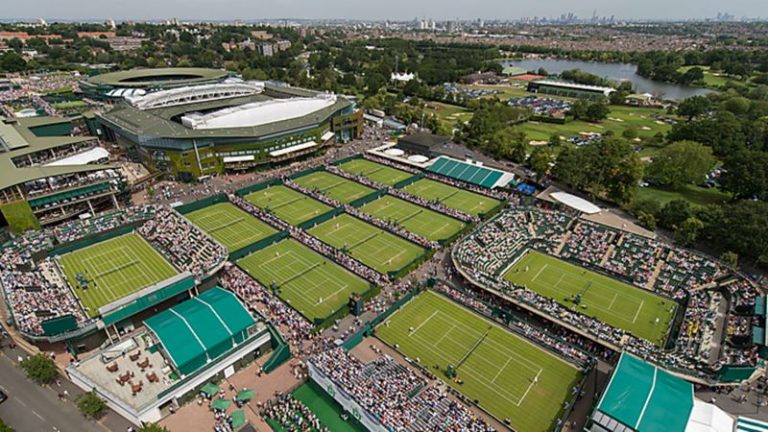
Then, the greatest male player to ever hold a racket stepped up to a microphone at Wimbledon and dropped a rhetorical bomb on the entire sport. Novak Djokovic, a man who has won 24 Grand Slams on the back of his peerless analytical brain, looked out at the press corps and delivered a chilling warning. He pointed out that while tennis remains highly prestigious, it is failing at the foundational, club level.
If clubs don’t adapt, they are going to convert all their tennis courts into padel and pickleball because it’s simply more economical. You can build three padel courts inside the space of one tennis court, and the simple financial math makes it a no-brainer for any club owner.
When the ultimate purist of modern tennis tells you the sport is facing an existential crisis on a municipal level, it is time to throw out the PR press releases and look at the ledger. This is an aggressive, hostile takeover of physical land. And right now, tennis is bringing a vintage wooden racket to a drone strike.
The Real Estate Equation: The Tyranny of the Footprint
Let’s strip away all the emotional arguments about the “elegance of the single-handed backhand” or the “glory of grass-court rallies” and talk about the only metric that matters to the people who actually own the land: spatial monetization.
A standard, regulation-size tennis court requires a massive footprint. While the actual field of play is 78 feet by 36 feet (2,808 square feet for doubles), you cannot build a tennis court without accounting for the required “run-off” zones. To keep players from slamming headfirst into chain-link fences or concrete walls when chasing a wide ball, a regulation court requires an overall footprint of roughly 120 feet by 60 feet, which translates to 7,200 square feet of premium real estate.
To put that into perspective, let’s look at what that same 7,200 square feet can hold in the modern racket era:
- A Single Traditional Tennis Court: One court, requiring 7,200 square feet of land, which can accommodate a maximum of 4 players at any given time.
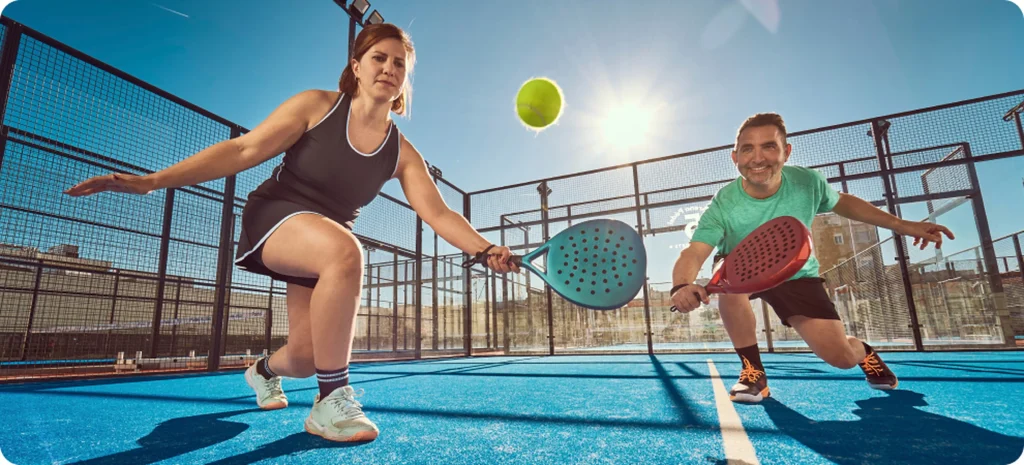
- Three Padel Courts: Each regulation padel court is only 20 meters by 10 meters (roughly 2,152 square feet). Because the court is fully enclosed by tempered glass and steel mesh walls, there is absolutely zero need for run-off space. Three courts fit comfortably inside the tennis footprint, hosting 12 players simultaneously.
- Four Pickleball Courts: A standard pickleball court is 44 feet by 20 feet (880 square feet). Even with recommended safety margins, you need only about 1,800 square feet per court. Four courts fit into the tennis footprint, putting 16 players on the court at once.
If you own a commercial club, a private gym, or a municipal park, you are looking at a brutal piece of spatial math. You can either let four people play a leisurely game of singles tennis, or you can host up to sixteen active, paying customers on the exact same patch of concrete.
The Lopsided Cashflow Model
To see how this spatial reality translates to a balance sheet, let’s build out an hourly revenue yield model. Let’s assume a highly conservative booking rate of $40 per hour for any court surface, running at peak capacity during prime evening and weekend hours.
Hourly Spatial Revenue Potential
| Sport Profile | Courts per Tennis Footprint | Players per Court | Total Player Throughput | Hourly Revenue |
| Traditional Tennis | 1 Court | 2 to 4 | 2 to 4 | $40.00 |
| Padel | 3 Courts | 4 (Doubles only) | 12 | $120.00 |
| Pickleball | 4 Courts | 4 (Doubles) | 16 | $160.00 |
The numbers don’t lie. By bulldozing a single tennis court and pouring fresh concrete for padel or pickleball, a club owner can instantly triple or quadruple their hourly booking revenue without changing their hourly rate.
But here is where my personal modeling gets even crazier. In major metropolitan areas like New York, Miami, London, and Dubai, padel is treated as a premium lifestyle sport. Clubs aren’t charging a conservative $40 an hour. They are charging up to $100 to $120 per hour for a single court.
So, if you run a premium facility, that one tennis court generating $40 an hour can be converted into three padel courts generating $100 an hour each. Your hourly revenue potential leaps from $40 to $300. Over a standard twelve-hour operating day, that is the difference between making $480 and making $3,600 from the exact same piece of land.
Derrick’s Take: If you run a club and you have bills to pay, property taxes to clear, and payroll to meet, this isn’t even a debate. It’s an absolute no-brainer. You are looking at a cash-flow multiplier that completely alters the valuation of your commercial property.
When tennis purists complain that municipal parks are “ruining the neighborhood” by converting tennis courts, they are yelling at the tide. The real estate math is so overwhelmingly hostile to tennis that any club owner who refuses to convert their courts is essentially running a non-profit charity for tennis traditionalists.
The Player Acquisition Funnel: The Learning Curve Crisis
Beyond the brutal physical math of the court footprint, tennis is losing an even more critical battle: player acquisition costs and retention rates. Tennis has an incredibly steep learning curve. It is a highly technical, physically punishing sport that demands a massive upfront investment of time, money, and frustration.
If you are a complete beginner picking up a tennis racket for the first time, your experience is almost guaranteed to be miserable. You will spend the first ten hours of your journey chasing balls that fly over the fence, double-faulting into the bottom of the net, and struggling to coordinate your feet, hips, and shoulders to execute a single clean stroke.
The learning curve of tennis generally looks like this:
- The Flop Phase (Hours 1–10): You spend more time walking to pick up stray balls than actually hitting them.
- The Net Phase (Hours 10–30): You can finally hit the ball, but half of your shots die in the net because you lack the topspin mechanics to clear it consistently.
- The Rally Phase (Hours 50+): You finally have the muscle memory to sustain a decent four-shot rally with a partner who is also competent.
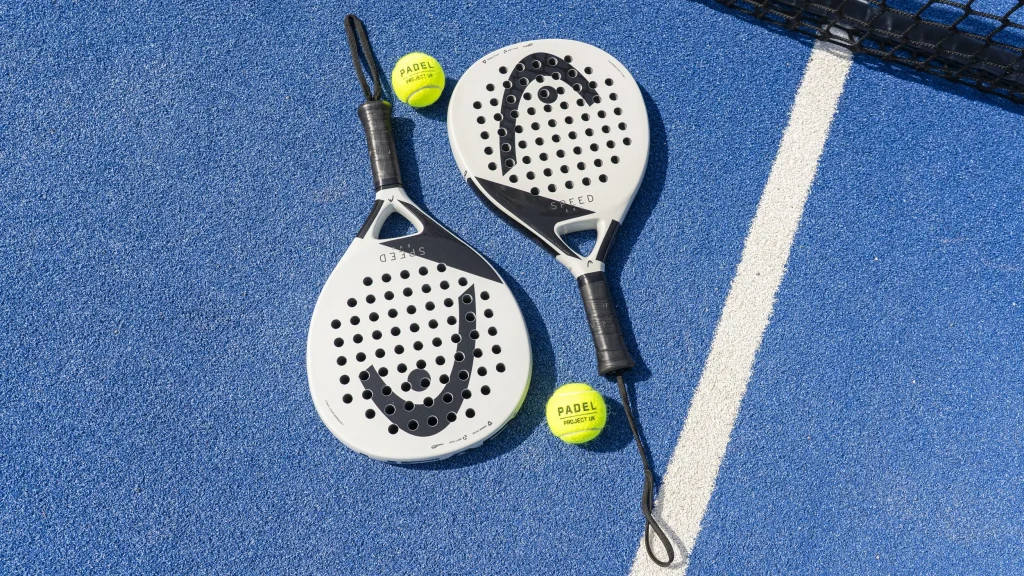
Padel and pickleball have completely destroyed this barrier to entry. Because a padel paddle is short, stringless, and made of lightweight carbon fiber, your hand is physically much closer to the ball. This vastly improves hand-eye coordination. There are no massive swing paths, no complex wrist-snaps, and no giant courts to cover.
Furthermore, because padel is played inside a glass cage, if a beginner hits the ball too hard, it doesn’t fly out of bounds. It simply bounces off the back glass wall and remains in play. The walls act as a mechanical safety net, keeping the ball live and keeping the rally going.
A group of four complete beginners can walk onto a padel court for the first time, and within fifteen minutes, they are sustaining ten-to-fifteen-shot rallies, laughing, competing, and getting a high-intensity cardiovascular workout. Padel gives you the dopamine hit of “feeling like a pro” in your very first session. Tennis makes you earn that feeling over six months of expensive private lessons.
Derrick’s Take: Tennis is suffering from a massive gatekeeping crisis. The sport’s culture has spent decades telling newcomers that they need to look a certain way, wear specific clothes, and spend thousands of dollars on private coaches before they are allowed to have actual “fun” on a court.
Padel and pickleball are the absolute antithesis of this. They are highly social, immediately accessible, and endlessly forgiving. A consumer can spend a fraction of the cost on a basic paddle, walk up to an open-play court, and immediately feel like an athlete. Tennis requires a level of physical and technical dedication that the modern, attention-compromised consumer is simply not willing to invest.
The Lifetime Value and “Topgolf-ification” of Racket Sports
The final nail in the coffin for traditional tennis clubs is the shift in how the modern consumer spends money on recreation.
Historically, tennis was a sport of quiet concentration. You showed up with your partner, played your match in relative silence, drank some water from a plastic bottle, and went home. The food and beverage integration at traditional tennis clubs was often an afterthought, a dusty vending machine in the corner of a pro shop or a quiet, formal dining room where members only ate on Friday nights.
Padel and pickleball venues have completely thrown this model out the window. They are embracing the “Topgolf-ification” of recreational sports.
These new facilities are built from the ground up as lifestyle destinations. They feature vibrant social areas, integrated bars, craft breweries, and trendy cafes right next to the glass courts. They host corporate events, birthday parties, and weekend mixers.
Because padel is almost exclusively played as a doubles sport, it is inherently social. You aren’t just playing a match; you are hanging out with three other people. The transition from the court to the bar is seamless.
Let’s look at how the secondary spending of a padel player compares to a traditional tennis player over the course of a single week:
- The Traditional Tennis Player Weekly Ledger:
- Court Fee (Split): $20.00
- Can of Tennis Balls: $5.00
- Post-match spending: $0.00 (They left immediately after shaking hands)
- Total Weekly Spend: $25.00
- The Modern Padel Player Weekly Ledger:
- Court Fee (Split): $25.00
- Post-Match Craft Beers / Tapas at the court-side bar: $45.00
- Premium Apparel/Merchandise: $15.00 (High-turnover, lifestyle-branded gear)
- Total Weekly Spend: $85.00
By shifting the focus from a purely athletic endeavor to a lifestyle and social experience, padel venues are unlocking massive, high-margin secondary revenue streams that traditional tennis clubs have completely ignored.
Derrick’s Take: The modern consumer does not want to just play a sport and go home. They want a social hub. They want to drink a local IPA with their friends while watching other matches unfold behind giant glass walls. Padel and pickleball facilities aren’t competing with tennis clubs; they are competing with bars, bowling alleys, and golf simulators.
They have turned a niche racket game into a highly profitable hospitality play. Tennis, with its rigid rules, quiet etiquette, and massive spatial requirements, is fundamentally incompatible with this high-margin, high-turnover hospitality model.
The Grassroots Starvation: Where Have the Courts Gone?
When Novak Djokovic warned that the sport of tennis is “endangered” at the club level, he was pointing to a quiet, systemic collapse of public infrastructure. Across major cities, municipal park departments are facing severe budget constraints. Tennis courts are expensive to build, incredibly expensive to resurface, and they serve a relatively small portion of the community relative to their massive footprint.
When a city council looks at a public park with four cracked, underused tennis courts, they see a major liability. But when a local pickleball or padel group proposes converting those four tennis courts into twelve to sixteen smaller courts, the politicians see a massive public relations victory.
Suddenly, instead of serving 8 to 16 tennis players at a time, that exact same patch of public parkland can serve 48 to 64 active, tax-paying citizens simultaneously. The conversion is happening at warp speed.
Every time a municipal tennis court is painted over with pickleball lines, or every time a commercial tennis club is sold to a padel developer, a piece of tennis’s biological foundation is permanently erased. If a kid growing up in a working-class neighborhood cannot find a free, accessible public tennis court to hit a ball against a wall, they will never develop the passion or the skills to become the next generation’s champion. They will simply pick up a paddle instead.
Derrick’s Final Verdict: Adapt or Face Extinction
Let’s be completely clear: tennis as a professional spectacle is not going to disappear tomorrow. The Grand Slams will always draw massive television crowds, and the top 100 players in the world will continue to make millions of dollars. The elite, ultra-private country clubs with multi-million-dollar endowments will preserve their historic clay and grass courts for their wealthy members.
But the base of the pyramid is crumbling. On a local, municipal, and recreational level, traditional tennis is in the middle of a slow, systemic retreat. It is being physically squeezed out of neighborhoods by more efficient, more profitable, and more accessible alternatives.
The structural collapse boils down to a simple set of factors:
- The Spatial Deficit: High land requirements (7,200 square feet) paired with low player throughput means tennis is a massive loser in real estate efficiency.
- The Learning Curve Barrier: A steep, expensive, and frustrating entry barrier drives the modern, instant-gratification consumer directly into the arms of paddle sports.
- The Revenue Cap: Traditional tennis clubs ignore food, beverage, and social hospitality, while padel operators run high-margin entertainment hubs.
The turf war is over, and the developers have already bought the paint.
If the governing bodies of tennis continue to sit on their hands, clinging to outdated notions of prestige and tradition, they will wake up in a decade to find that the grassroots infrastructure of their sport has been entirely dismantled. They need to actively fund public court preservation, lower the cost of player entry, and stop viewing padel and pickleball as jokes. They need to treat them as the highly aggressive, predatory land-grabs that they actually are.
Derrick’s Bottom Line: I love the sport of tennis. I love the physical test of a grueling, three-hour singles battle on a hot summer afternoon. But I also know how to read a balance sheet. You cannot fight real estate math with nostalgia.
If tennis cannot find a way to make itself more spatially efficient, more affordable, and more socially engaging for the next generation, it is going to find itself permanently locked out of the very neighborhoods that built it. Enjoy your baseline while you still have one.