The 8-Hour Movie Trap: Why Television Forgot How to Be Episodic
When did TV writers forget how to write an episode of television? We are being forced to watch eight-hour “limited series” movie trap where absolutely nothing happens in the middle four hours because the show is structured like a bloated feature film.
Let’s defend the lost art of the bottle episode, the monster-of-the-week, and the episodic structure that actually made television great in the first place.
Part I: The Rise of the “Eight-Hour Movie” Lie
I still remember the exact moment I realized the medium of television was in serious trouble. I was sitting on my couch, three episodes deep into a highly anticipated, massively budgeted sci-fi adaptation on a major streaming platform.
About midway through the fourth episode, I paused the playback to grab a glass of water, looked at the remaining runtime, and felt an overwhelming wave of absolute boredom. I asked myself a simple question: What actually happened in this episode?
The honest answer was: nothing. A couple of characters walked through a forest and discussed their tragic backstories in hushed, dramatic whispers. A secondary antagonist stared menacingly out of a high-rise window. A mystery box was introduced, but no clues were provided to help solve it.
The episode didn’t have a beginning, a middle, or an end. It was just fifty minutes of narrative paste, squeezed out of a tube to bridge the gap between a flashy pilot and a chaotic, CGI-heavy finale.

We’ve all heard showrunners boast about this during press junkets. They sit in front of journalists, smile proudly, and utter the most toxic phrase in modern entertainment: “We didn’t view this as a TV show. We really approached it as an eight-hour movie.”
Every time I hear a writer or director say this, I want to scream. Since when is “an eight-hour movie” a selling point? A movie is designed to be a tight, highly efficient two-hour narrative. If you take a story that should have been a feature film and stretch it across eight hours of streaming television, you aren’t creating “prestige art.”
You are inflating a balloon until the rubber gets so thin you can see right through it. You are forcing the audience to endure hours of narrative wheel-spinning, useless subplots, and indulgent pacing just to hit a contracted episode count.
Traditional Feature Film: [Beginning] ───> [Middle / Climax] ───> [End] (Tight, 120 Mins)
Modern “8-Hour Movie” TV: [Pilot] ───> [4 Hours of Pure Bloat] ───> [rushed Finale] (Suffocating)
I call this The 8-Hour Movie Trap. It is the direct consequence of a streaming ecosystem that has systematically dismantled the foundational rules of television writing in pursuit of cinematic prestige. And in doing so, it has forgotten what made television a unique, beautiful, and deeply satisfying medium in the first place.
Part II: The Anatomy of the Bloat
How did we get here? It helps to trace the timeline of television’s identity crisis. To understand why modern television feels so incredibly flabby, we have to look at how the transition from broadcast networks to streaming services altered the structural incentives for writers.
In the days of network TV, an episode was a sacred unit of measurement. Whether a show was producing 22 episodes a year or 13, each individual hour had to justify its existence. It had to hook the viewer, deliver a self-contained conflict, resolve that conflict, and leave the audience satisfied enough to tune in next week. Writers had to respect the commercial breaks; they had to structure their stories around act breaks that built tension at regular intervals.
Streaming erased all of those structural guardrails. Without the discipline of the weekly broadcast schedule or the physical reality of the television grid, creators began to treat the “episode” as an arbitrary boundary.
They assumed that because viewers were binge-watching, they didn’t need to write self-contained stories anymore. They could just write one massive, continuous script, chop it into eight roughly equal pieces, and call it a season. The result is a structural disaster that I break down into three distinct, painful phases:
1. The Pilot High
The first episode of these bloated series is almost always spectacular. The studio pours a disproportionate amount of the budget into it, often hiring a big-name film director to establish the visual style. The premise is set up beautifully, the characters are introduced with high energy, and the central hook is deeply compelling. You finish the first hour feeling incredibly excited.
2. The Middle-Valley Slump (Episodes 3 through 6)
This is where the “eight-hour movie” structure completely derails. Because the writers don’t have enough story to fill the runtime, they are forced to stall. This is where we get the endless, circular arguments between characters that lead nowhere. This is where we get entire episodes dedicated to a flashback that explains a minor character detail we already easily inferred.
I have sat through entire three-hour stretches of prestige television where the main plot did not move forward a single inch. It is narrative water-treading of the highest order.
3. The Rushed, Nonsensical Finale
After spending four hours doing absolutely nothing, the show suddenly remembers it has to end. The final episode is a frantic scramble to resolve ten different plotlines at once. Because the pacing has been so glacial for the past five hours, the sudden rush to the finish line feels incredibly jarring.
Actions happen without earned emotional weight, mysteries are explained away with lazy exposition dumps, and the show almost always ends on a frustrating cliffhanger to set up a second season that might never get greenlit.
Part III: In Defense of the Lost Arts
I am incredibly tired of modern television acting like episodic storytelling is somehow cheap or artistically inferior to serialized “prestige” narratives. Some of the greatest cultural achievements in television history were built on the back of strict, uncompromising episodic structures.
Let’s talk about the formats we’ve lost, and why we desperately need them back.
The Magic of the “Monster-of-the-Week”
There was a time when television embraced the joy of variety. Shows like The X-Files, Buffy the Vampire Slayer, and Supernatural mastered a hybrid formula that I miss dearly: they maintained a slow-burning, serialized mythology in the background, but the vast majority of their episodes were completely self-contained, high-concept stories.
Weekly Format: [Standalone Monster Story] + [2 Minutes of “Mythology” Arc] = The Perfect TV Balance
When I watch The X-Files, I don’t just remember the sweeping government conspiracy arcs. In fact, those are often the most frustrating parts of the show. I remember the bizarre, terrifying, and deeply creative standalone episodes. I remember “Clyde Bruckman’s Final Repose,” a tragic and hilarious hour about a man who can foresee how people die. I remember “Home,” a chilling slice of American gothic horror that still haunts my nightmares.
These episodes worked because the writers had to pitch, write, and execute a completely new concept every single week. It forced an incredible level of creative discipline. If an episode failed, it didn’t ruin the whole season; you just tried something completely different next week. Modern serialized TV doesn’t have that safety valve. If the central hook of an eight-hour streaming show doesn’t work for you, the entire season is a total write-off.
The Brilliance of the “Bottle Episode”
In the traditional TV landscape, a “bottle episode” was born out of financial desperation. When a show was running over budget, the producers would force the writers to write an episode that took place in a single, pre-existing location, using only the main cast members and no expensive guest stars or special effects.
But instead of being a limitation, the bottle episode consistently produced some of the most electrifying television ever written. Think of Breaking Bad’s famous episode “Fly.” The entire episode takes place inside Walter White and Jesse Pinkman’s underground meth lab as they try to catch a single fly that might contaminate their product.
At the time, some viewers complained that it was “filler.” But I think it is one of the finest hours of television ever broadcast. Because the writers couldn’t rely on explosive action, shifting locations, or plot progression, they were forced to focus entirely on character psychology.
The episode becomes a claustrophobic pressure cooker, forcing Walt and Jesse to confront their guilt, their deteriorating relationship, and their looming doom. It is an incredibly intimate, theatrical piece of character study that could only happen in a dedicated episodic format.
You cannot do a bottle episode in an “eight-hour movie.” In a movie structure, a bottle episode feels like a frustrating detour. In an episodic structure, it is a brilliant showcase of writing and acting.
Part IV: The Industrial Crisis Behind the Bloat
This isn’t just an artistic failure; it is an industrial crisis. The death of the episodic structure has fundamentally broken the career path for television writers, directors, and actors.
In the era of 22-episode network seasons, television was a massive, highly efficient training ground. A young writer would start as a staff writer, pitch ideas, write a couple of freelance scripts, sit in the editing room, and learn how a show was actually run from the ground up. Over the course of a decade, they would slowly work their way up to showrunner.
Classic Career Path: Staff Writer ──> Episode Writer ──> Director/Producer ──> Seasoned Showrunner
Modern Streamer Path: Feature Director ──> Plunged into TV ──> Zero Episodic Instincts ──> Bloat
Today, that training pipeline is completely gone. Streaming platforms routinely hire feature film directors or screenwriters who have never worked in television to run their multi-million-dollar flagship series. These creators don’t understand the medium. They don’t know how to pace a season of television, they don’t know how to write an episodic climax, and they treat the writer’s room as a temporary luxury rather than an essential creative engine.
They approach the show with the arrogance of a “film auteur,” viewing television as a lesser, compromised version of cinema. They slice up their continuous eight-hour scripts, hand them to directors who shoot them out of order like a giant movie, and then wonder why the final product feels so incredibly disjointed, exhausted, and flat.
Furthermore, the lack of episodic structure makes these shows incredibly difficult to watch casually. I don’t always want to commit to an active, intense, multi-week homework assignment when I turn on my television.
Sometimes, I just want to sit down after a long day of work, watch a single, brilliantly constructed forty-five-minute story with a beginning, a middle, and an end, and then turn off my TV feeling completely satisfied. Modern television has made casual viewing almost impossible. If you miss an episode of a highly serialized show, you are completely lost. If you tune in late, you have no idea what is happening. We have traded the accessibility and community of television for a demanding, exhausting monoculture of “content.”
Part V: How We Save the Medium
If we want to save television, we have to start respecting the unique strengths of the medium again. We have to stop treating “episodic” as a dirty word.
I am not arguing that serialization is inherently bad. Some of the greatest television shows of all time—The Sopranos, The Wire, Mad Men—were deeply serialized. But if you look closely at those shows, they never forgot the importance of the individual episode.
Take The Sopranos. Yes, it had massive, season-long character arcs and criminal conspiracies. But almost every single episode had a distinct thematic identity and a self-contained narrative thread.
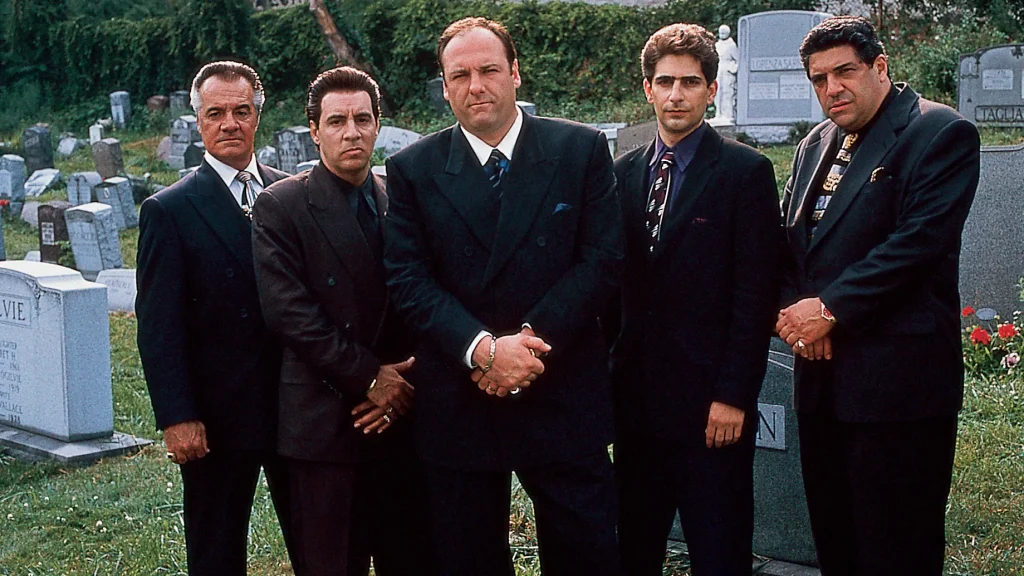
- “College” is a self-contained road trip where Tony takes his daughter to visit schools while hunting down a mafia informant.
- “Pine Barrens” is a legendary, dark-comedy survival story about Christopher and Paulie getting lost in the freezing woods of New Jersey.
These weren’t just random chunks of an “eight-hour movie.” They were distinct, memorable, beautifully structured episodes of television.
The Sopranos Model: [Episode 1: College] ──> [Episode 2: Pine Barrens] ──> [Episode 3: Blue Comet]
(Each block has its own soul, its own shape, and its own complete narrative journey)
I want to see a return to this hybrid model. I want creators to design seasons of television that feel like a collection of brilliant short stories, unified by a shared world and overarching character growth, rather than a single novel that has been clumsily chopped up with a meat cleaver.
Fortunately, I am starting to see the early signs of a creative counter-revolution. Showrunners and audiences alike are starting to feel the profound exhaustion of the streaming era. We are starting to crave the comforting, satisfying rhythm of episodic storytelling again.
I don’t want to watch another eight-hour movie. I want to watch TV. I want to argue about what happened on this week’s episode. I want to look forward to next week’s monster, next week’s bottle episode, and next week’s high-concept detour. It is time for Hollywood to stop apologizing for making television and start remembering how to write it.