How A24’s Backrooms and Curry Barker’s Obsession Humiliated the Studio Playbook
While major studios spent hundreds of millions of dollars trying to calculate what “Generation Alpha” wants, a 20-year-old on YouTube did it with a camera and a liminal space render. Backrooms and Obsession didn’t succeed because of marketing budgets; they succeeded because they understand modern dread in a way 50-year-old studio executives never will.
We are witnessing the democratic death of the traditional Hollywood gatekeeper, and honestly? It’s the most exciting thing to happen to cinema in a decade. Let’s talk about the raw visual grammar of these young filmmakers.
For decades, I’ve watched the theatrical system operate under a predictable, risk-averse framework. You optioned a recognizable intellectual property, hired a seasoned mid-career director who wouldn’t argue with creative executives, ran three dozen focus groups to shave off any challenging creative edges, and dumped $100 million into generic social media campaigns.
It was a formula built for institutional safety and I am thrilled to say it is utterly, beautifully dead. The seismic disruption of 2026 isn’t just a shift in audience taste; I see it as a full-scale execution of the traditional studio playbook.
At the center of this revolution stand two distinct, internet-native anomalies: Kane Parsons, who at 20 years old became the youngest director to top the global box office with A24’s Backrooms, and Curry Barker, whose sub-$1M, slow-burn masterpiece Obsession has humiliated legacy operations by pulling in a staggering $428 million worldwide.
These are not traditional success stories. They are, in my view, a structural humiliation of how Hollywood believes movies must be greenlit, financed, and sold.
The Two Disruptors of 2026
To understand how completely the paradigm has shifted, we have to look at the sheer scale of what these two filmmakers achieved outside and then eventually alongside the system.
| Attribute | Backrooms (Dir. Kane Parsons) | Obsession (Dir. Curry Barker) |
| Origin Point | YouTube analog horror series (created in Blender) | Viral YouTube sketch comedy & indie short The Chair |
| Production Budget | Under $10 million (Co-funded by A24 & Chernin) | $1 million (Bankrolled by Capstone Studios) |
| Global Box Office | #1 Box Office debut, massive international run | Over $428 million worldwide |
| Visual Philosophy | “Architectural Hell,” liminal spaces, Blender-engineered physical sets | Extreme claustrophobia, single-location dread, zero-compromise human performances |
Part I: Kane Parsons and the Visual Grammar of “Architectural Hell”
When Kane Parsons uploaded his first The Backrooms (Found Footage) short to YouTube as a teenager, I watched legacy executives dismiss it as a novelty. It was categorized as “user-generated content” aka. a patronizing term Hollywood uses to reassure itself that teenagers with laptops aren’t real competition.
But I knew Parsons wasn’t just messing around with VFX templates. He was constructing an entirely new visual language.
What Parsons understood, which nine out of ten studio directors fail to grasp, is that horror is not about the monster; it is about the geometry of isolation. When A24 partnered with Chernin Entertainment, Atomic Monster, and 21 Laps to fund the feature adaptation for under $10 million, they didn’t force Parsons to abandon his roots. They let him bring his digital design philosophy directly onto a massive physical set.
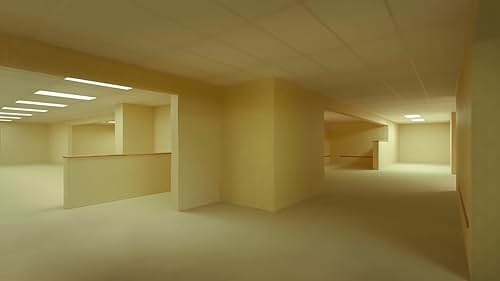
I was fascinated to learn that the production built over 30,000 square feet of physical Backrooms sets across four sound stages, using 37,000 square feet of yellow wallpaper and 29,000 square feet of matching carpet. But instead of building clean, logical Hollywood environments, Parsons used Blender to design an intentional “architectural hell”.
He engineered physical sets to mimic digital rendering errors like clipping planes, misaligned floors, intersecting arches that make no mathematical sense, and hallways that drop off into nothingness. To me, it is brilliant: a world that feels like a glitching 3D sandbox.
By forcing seasoned actors like Chiwetel Ejiofor and Renate Reinsve to navigate this physical maze, Parsons captured a highly specific, modern anxiety. I believe the horror of Backrooms is not a jump scare; it is the existential dread of being trapped in an endless, indifferent, non-Euclidean corporate void.
It’s the visual language of a generation that grew up looking at empty server rooms, abandoned malls, and digital liminal spaces. I consider it a masterpiece of atmospheric architecture, shot with the raw, jittery energy of a first-person lens that bypasses the intellectual brain and strikes directly at our survival instincts.
Part II: Curry Barker and the Economy of Human Mania
If Kane Parsons is the master of digital space, I believe Curry Barker is the master of psychological claustrophobia. Barker, half of the viral YouTube sketch comedy duo that’s a bad idea, didn’t climb the traditional industry ladder. He didn’t make a flashy proof-of-concept short designed to pitch to Disney.
He made a brutal, ultra-low-budget feature called Milk & Serial for just $800 and put it on YouTube for free. That raw, zero-budget masterclass in tension caught the attention of producers, leading to a modest $1 million budget for Obsession.
I love this detail: legacy studios offered him double that budget on one condition: he had to rewrite the script to make the protagonist, Bear, a traditional, redeemable Hollywood hero. Barker, respecting his creative voice and the integrity of the story, said no. He took the lower budget to maintain complete creative control.
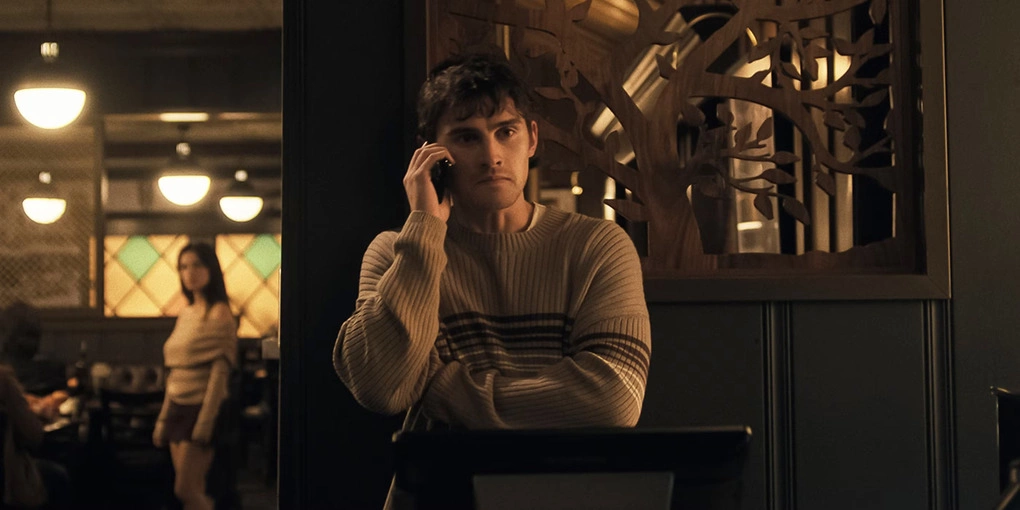
The result? A critical and box-office phenomenon that grossed over $428 million worldwide. Obsession is a masterclass in subverting the “Monkey’s Paw” trope. It takes a simple, tragic premise: a desperate music store employee named Bear (played with agonizing vulnerability by Michael Johnston) uses a supernatural toy called the “One Wish Willow” to make his crush fall in love with him.
Instead of relying on heavy CGI, makeup, or expensive visual effects to show the horror of this wish, Barker focuses entirely on the uncanny valley of human behavior. I find his use of long, unbroken takes in a single, claustrophobic house incredibly effective. It lets the actors actually act.
“When you take away someone’s face, you take away their intention, and there’s an un-comfortability and unpredictability that comes with that. You don’t know if she’s going to lean over and kiss him or jump up and kill him.”
— Curry Barker on the tension of Obsession
Barker’s background in sketch comedy is his secret weapon. Comedy is entirely about timing, human psychology, and subverting expectations. Barker imports that exact focus into horror. I believe he understands that the scariest thing in the world is the person sitting across from you at dinner whose eyes don’t quite match their smile.
By keeping the camera static, the locations minimal, and the performances razor-sharp, Barker created an instant midnight-movie classic that cost next to nothing and outperformed films with a hundred times its budget.
Part III: The Sterile Studio Playbook vs. Internet-Native Intuition
Why do I think these young, internet-native filmmakers are absolutely running circles around legacy studios?
Because the traditional Hollywood development process is structurally incapable of capturing authentic modern dread. Hollywood is run by committee. When a studio attempts to make a horror film, the script goes through five drafts, three executive notes sessions, and a marketing review to ensure it appeals to every possible demographic quadrant. By the time the film is shot, any sense of specificity, oddity, or genuine terror has been polished away.
Parsons and Barker work with a completely different operating system. They are internet-native. I argue that because they have spent years uploading content directly to audiences, receiving instantaneous feedback, they know exactly how viewers react in real time. They don’t need a focus group of paid participants to tell them what is scary; they have tested their visual theories on millions of hyper-critical internet users.
Studio Development: Script ──> Focus Groups ──> Exec Notes ──> Sanitized, Bland Product
Native Development: Creator ──> Direct Audience Loop ──> Iteration ──> Raw, Visceral Auteur Vision
This direct-to-audience pipeline creates an entirely different kind of filmmaker. I find them incredibly self-sufficient. They direct, write, edit, and often score their own work. They don’t view limitations as obstacles; they view them as stylistic choices.
When Curry Barker concentrates Obsession inside a single house, I see it as a narrative device that forces the audience into the same suffocating trap as the characters. When Kane Parsons uses Blender-inspired clipping errors on a physical set, it is a deliberate, brilliant style designed to make the audience feel like reality itself is breaking down.
The New Era of Auteur Horror
The success of Backrooms and Obsession has sent a clear, unignorable message to the industry: the gatekeepers no longer hold the keys to the cultural zeitgeist. I am convinced that audiences are starving for singular, uncompromising artistic voices. They don’t want sterile, calculated corporate products. They want to be genuinely unsettled, surprised, and challenged.
A24 understood this when they handed a multimillion-dollar feature to a teenager. Blumhouse and Focus Features understood this when they immediately signed Curry Barker to direct his next supernatural horror film, Anything but Ghosts, starring Aaron Paul and Bryce Dallas Howard.
I believe the industry is finally realizing that if they want to survive, they have to stop trying to manufacture culture and start trusting the raw, unfiltered visions of the young creators who are already building it online.
I am confident we are entering a golden age of auteur-driven horror. A decade from now, we won’t look back at the mid-2020s as the era of franchise fatigue and box-office decline. We will look back at it as the moment the internet-native class took over the cameras, burned down the traditional studio playbook, and saved the horror genre from itself. And honestly? I think it’s about damn time.