How Animal Crossing: New Horizons Exposed the Structural Limits of Forced Positivity
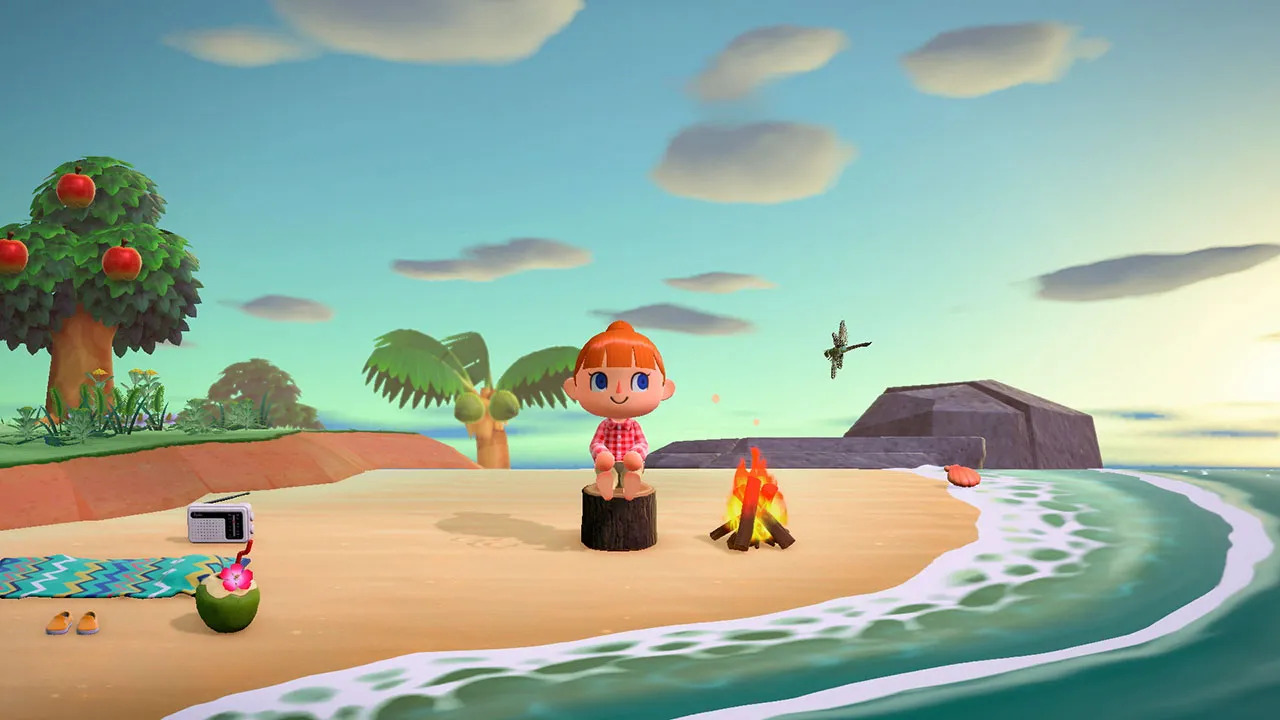
When Animal Crossing: New Horizons launched, it accidentally arrived alongside one of the most disruptive psychological crises in modern human history. As global lockdowns confined millions of people to their homes, Nintendo presented the ultimate, pristine escape: a sun-drenched, unpolluted, entirely safe digital island paradise.
The game was explicitly marketed as an oasis of absolute comfort and forced positivity, a place where your only responsibilities were to catch butterflies, chat with charming anthropomorphic animal neighbors, and decorate a personalized beachside getaway at your own leisurely pace. It was supposed to be a digital weighted blanket for a profoundly traumatized collective psyche.
But as the months rolled on, the tropical fantasy began to curdle into something altogether different. What was designed to be a peaceful, therapeutic retreat transformed into an algorithmic nightmare of real-world stress, intense social comparison, hyper-capitalist market speculation, and profound player burnout.
By analyzing the title through a psychological retrospective, a brilliant, counter-intuitive truth emerges. New Horizons did not fail because it lacked polish or content; it exposed the hard, structural limits of forced positivity. By weaponizing a rigid, unyielding real-time calendar and turning creative expression into a quantifiable social currency, the game proved that when you try to structurally mandate happiness, you can inadvertently create a highly stressful, exhausting simulation of the very real-world labor loops you are trying to escape.
The Weaponization of the Real-Time Clock
The fundamental architectural pillar of the Animal Crossing series is its adherence to the Real-Time Clock. If it is 3:00 PM on a Tuesday afternoon in the real world, it is exactly 3:00 PM on a Tuesday afternoon on your digital island. If a shop closes at 10:00 PM, its virtual doors are locked to the player until the next morning.
In theory, this mechanic was designed to encourage slow, mindful consumption. It was a deliberate pushback against the hyper-fixated, binge-watching design patterns of modern media, forcing the player to accept a natural, rhythmic pace of daily discovery over months and years.
However, when layered over the psychological anxieties of adult life, the real-time clock stops acting as a calming mechanism and transforms into a rigid system of appointment gaming. Instead of the game accommodating the player’s life, the player is forced to restructure their physical life to accommodate the game’s schedule.
If you are a working adult with a demanding schedule, the game’s insistence on real-time operation creates a persistent sense of structural exclusion. You return home from a grueling day of real-world work at 10:30 PM, seeking a brief pocket of tranquility, only to find your island’s shops closed, your villagers asleep, and the world shrouded in quiet, unhelpful darkness.
By punishing the player for having an irregular schedule, the game shifts from a relaxing hobby to an unyielding administrative obligation. The daily checklist of digging up fossils, shaking trees for furniture, checking the recycling bin, and talking to every villager to prevent them from moving away mutates from a series of whimsical activities into a second, unpaid shift of digital maintenance.
The forced positivity of the setting clashes violently with the mechanical friction of its clock, creating a psychological feedback loop of guilt and anxiety whenever the player dares to take a day off.
The “Stalk Market” and the Toxic Infiltration of Capitalism
Nowhere was the systemic failure of the game’s forced positivity more transparent than in the cultural phenomenon of the Turnip Stock Market—affectionately dubbed the “Stalk Market” by the community.
Every Sunday morning, an NPC named Daisy Mae arrives on your island to sell turnips at a volatile, fluctuating price. Throughout the following week, the resident merchants, Timmy and Tommy, offer to buy those turnips at changing rates twice a day. If you do not sell your turnips by the next Sunday, they rot, rendering your entire financial investment completely worthless.
This mechanic was intended to be a cute, low-stakes parody of financial speculation. Instead, it triggered a full-scale, toxic psychological simulation of hyper-capitalism. Because the local island pricing algorithms were prone to devastating, catastrophic market crashes, players could not rely on their own worlds to make a profit.
The community quickly outsourced the problem, building massive external digital tracking networks, discord servers, and specialized websites like Turnip Exchange.
Suddenly, a game about cozy island survival was overrun by real-world market speculation metrics. Players began hoarding millions of Bells, checking pricing spreadsheets multiple times a day, and standing in digital “queue lines” for hours just to visit a stranger’s island that boasted a high turnip payout.
The social dynamics of these visits grew incredibly transactional and cutthroat. Hosts demanded exorbitant “entry fees” in the form of rare materials, gold nuggets, or premium currency, effectively recreating the exact economic inequalities, gatekeeping, and class systems that players picked up the controller to escape. The cozy, pastoral aesthetic was completely hollowed out, replaced by a clinical, stressful exercise in financial optimization and wealth hoarding.
The Instagramification of Space: Perfectionism and Social Comparison
The most significant structural departure New Horizons made from its predecessors was the introduction of total environmental terraforming. For the first time, players were not just residents on an island; they were omnipotent urban planners capable of erasing rivers, flattening cliffs, laying down pavement, and placing furniture anywhere across the entire map.
This feature was celebrated as the ultimate expression of creative freedom, but when coupled with the rise of modern social media sharing platforms, it triggered a massive epidemic of aesthetic perfectionism and spatial anxiety.
The game became a visual arms race. Players were inundated with highly curated TikTok tours, Instagram feeds, and YouTube videos showcasing impossibly complex, meticulously designed islands featuring custom-coded paths, sprawling outdoor cafes, and intricately themed hidden grottos.
For the average player, looking at these hyper-curated digital spaces triggered a severe psychological phenomenon known as upward social comparison. You look back at your own organic, messy island, where trees are placed unevenly and weeds are growing rampant, and instead of feeling a sense of peaceful ownership, you feel a crushing wave of inadequacy and shame.
The open-ended sandbox structure, lacking a definitive end goal, forced players to create their own metric of success. That metric quickly became social media validation.
The desire to build a “picture-perfect” island overrode the organic joy of play. Players spent dozens of hours engaging in mind-numbing terraforming labor, manually terraforming block by block, not because it was inherently fun, but because they were chasing an abstract, visual standard of aesthetic perfection. When the creative process becomes performative, the forced positivity collapses, leaving behind a sterile, exhausting landscape of imposter syndrome that drove thousands of players to completely delete their save files in frustration.
The Inauthentic Cheer of the Aesthetic Void
The ultimate structural limit of New Horizons’ forced positivity was exposed by its own writing and villager AI. In classic iterations of the franchise, your animal neighbors possessed distinct, occasionally abrasive personalities. They could be grumpy, vain, deeply cynical, or overtly rude to the player upon their initial meeting. You had to actively earn their friendship through consistent, repeated positive interactions over weeks of play. This emotional friction made the relationships feel authentic, alive, and humanly messy.
In New Horizons, Capcom and Nintendo systematically sanded down these rough edges to ensure the environment remained a permanent “safe space.” The villagers were stripped of their sting; they became relentlessly pleasant, intensely agreeable, and permanently supportive echo chambers that showered the player with unearned praise from the moment they stepped off the plane.
This structural sanitization backfired spectacularly, steering straight into the realm of toxic positivity. Because the dialogue pool was severely restricted and stripped of all emotional nuance or conflict, the villagers ceased to feel like characters. They transformed into hollow, automated animatronics designed to nod and smile at the player indefinitely.
When an environment provides nothing but unyielding, forced cheer, the human brain stops registering that cheer as genuine comfort. It triggers a cognitive dissonance—a feeling that you are walking through an eerie, simulated corporate resort where the staff is legally prohibited from frowning. The absence of emotional friction didn’t create a sanctuary of joy; it created a profound, lonely narrative vacuum where everything felt deeply inauthentic, shallow, and emotionally flat.
The Legacy of the Paradise Trap
Animal Crossing: New Horizons remains a fascinating, monumental cultural artifact—a game that provided a vital, historic liferaft during a moment of global upheaval, but one that ultimately buckled under the weight of its own ideological design. It stands as the definitive proof that escapism cannot be manufactured through isolation and forced compliance.
By trapping players inside an uncompromising real-time schedule, exposing their creative expressions to the harsh meatgrinder of social media curation, and replacing genuine economic and emotional depth with a sterile, hyper-capitalist parody, the game transformed paradise into a gilded trap. It demonstrated that true mental rest and decompression do not come from an environment that mandates permanent happiness and flawless aesthetic order.
True relaxation requires the freedom to fail, the space to step away without consequences, and the emotional friction of an imperfect world. By attempting to engineer a world of absolute, unyielding positivity, New Horizons inadvertently created an unforgettable mirror of our greatest modern anxieties—proving that sometimes, there is nothing more exhausting than being forced to have a perfect day in paradise.