How 28 Years Later Reimagined Sensory Terror with Raw Digital Cinematography
Back in 2002, when Danny Boyle and Alex Garland unleashed 28 Days Later onto an unsuspecting world, they didn’t just give us fast-running rage monsters; they fundamentally altered the visual DNA of cinema.
At the turn of the millennium, while other directors held onto the glossy, rich aesthetic of traditional 35mm film, Boyle and Anthony Dod Mantle took a bold, seemingly crazy artistic leap: they filmed their apocalyptic masterpiece using inexpensive, consumer-grade Canon XL1 digital video cameras. The picture appeared blurry, blocky, stark, and faded. The highlights overexposed, the shutter speeds unrealistic, and the low-resolution digital noise buzzed like static throughout the display.
It was magnificent. It was horrifying. It seemed more like a documentary captured secretly from an actual quarantine zone than a Hollywood film. That unforgiving digital quality removed the comforting, cinematic shield that typically safeguards viewers from terror. It rendered London’s vacant streets appear hollow, specter-like, and perilously authentic.
Decades after establishing the gold standard for contemporary zombie films, Danny Boyle and Alex Garland have come back to the franchise with 28 Years Later. When the announcement came that they were reuniting to complete their original vision, the first question from film enthusiasts and horror aficionados was straightforward: How can you replicate that unique sensory horror in a time when digital cameras are now highly refined, crystal-clear, 8K devices of precise perfection? How can you portray an apocalypse as gritty, chaotic, and intensely vibrant when contemporary digital filmmaking often appears as polished as an auto advertisement?
My take on 28 Years Later is that Boyle and his team delivered a masterclass in visual anarchy. Instead of succumbing to the glossy, high-definition traps of modern filmmaking, 28 Years Later weaponizes modern digital cinematography to create a new, reimagined language of sensory horror.
By combining cutting-edge, custom-built micro-camera rigs, erratic shutter angles, and frantic, impressionistic editing, the film captures environmental decay and human desperation not as a sterile sci-fi backdrop, but as a living, breathing, terrifying organism. It proves that digital cinema isn’t just a cheaper alternative to film—when pushed to its absolute kinetic limits, it is the most visceral, terrifying artistic medium on the planet.
Part I: The Ghost of the Canon XL1, Why Texture Is the Ultimate Weapon of Horror
To appreciate what 28 Years Later achieves with its visual style, you first have to understand why traditional, pristine cinematography often fails when it comes to horror. Hollywood has spent the last twenty years pursuing visual perfection.
Cameras are more fluid, resolutions are elevated, lenses are crisper, and colors are more carefully graded than they have ever been. However, when you utilize that luxurious, sleek visual style for a narrative concerning societal breakdown and primal human fury, something fails. The world appears excessively tidy. The blood resembles stage makeup. The infected appear as if they are performers in costumes awaiting their signal.
Immaculate visuals evoke emotional separation. It cues your mind that you are in a cozy cinema enjoying a lavish production. 28 Days Later broke that barrier because its digital visuals were so flawed, so grotesque, and so erratic that your mind couldn’t register it as a conventional film. The low-resolution digital static resembled a delirious vision.
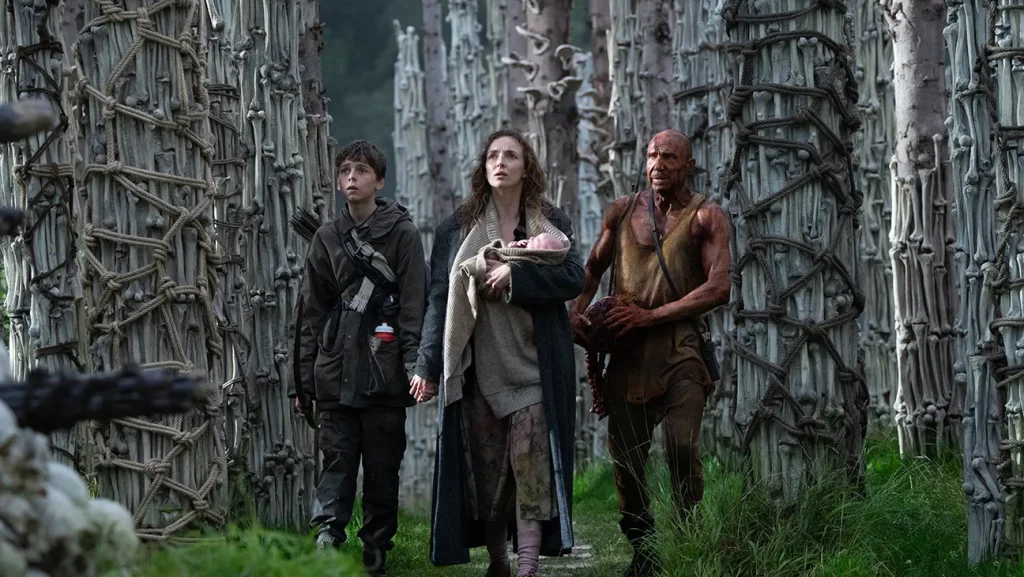
In 28 Years Later, Boyle and cinematographer Anthony Dod Mantle encounter an entirely new technological environment. They no longer shoot on standard-definition MiniDV tapes; instead, they operate in an environment of advanced sensors, high-dynamic-range colors, and ultra-high resolutions.
Rather than attempting to imitate the low-resolution aesthetic of 2002, 28 Years Later creates an innovative style of digital roughness. The movie intentionally pushes contemporary digital sensors to their extreme limits. The visuals aren’t blurry or pixelated in a traditional way; they are crisp, angular, and intensely saturated, featuring digital elements that appear dynamic. The highlights are elevated until they glow into dazzling whites. The shadows are compressed until they consume entire images in a dark abyss.
My take on this visual choice is that it creates a sense of overwhelming sensory overload. The camera doesn’t gently observe the post-apocalyptic landscape; it attacks it. Every frame feels overexposed, hyper-charged, and vibrating with an anxious, jagged energy. It reminds us that twenty-eight years after the outbreak, the world hasn’t quietly healed; it has mutated into something feral, overgrown, and dangerous.
Part II: Micro-Rigs and the Physics of Feral Movement
The original 28 Days Later changed horror forever by making the infected fast. They didn’t shuffle toward you with limp limbs and vacant stares; they sprinted at you with screaming, blood-vomiting, blind rage.
In 28 Years Later, the rage virus has evolved, and so has the way the camera tracks it. In traditional action filmmaking, when a monster or a villain chases a hero, the camera is usually mounted on a steady crane, a smooth gimbal, or a track. The movement is fluid, allowing the audience to clearly track the spatial geography of the chase.
Boyle and Dod Mantle toss those traditional rules into a shredder. For 28 Years Later, the production utilized custom-built, lightweight digital micro-camera rigs—tiny, ultra-high-definition sensors strapped directly to the bodies of the performers, mounted on flexible poles, flung through trees, and swung through the air on wire systems.
The result is a visual experience that feels less like watching a movie and more like being thrown down a flight of stairs while a predator jumps on top of you. Look at how the camera captures a chase through the overgrown, reclaimed wilderness of northern Britain.
The camera doesn’t stay at a polite distance. It is strapped inches from an infected person’s screaming face, moving in absolute, terrifying sync with their jagged, violent strides. Then, in a split second, the perspective violently whips to a low-angle shot attached to the ankle of a running survivor, pounding against the mud, rocks, and crushing underbrush.
Because these micro-camera rigs are so light and versatile, the camera can move through physical spaces that traditional cinema rigs could never dream of navigating. It hurtles through narrow crawlspaces, leaps off abandoned viaducts, and weaves through dense, tangled forests at neck-breaking speeds.
My take on this camera work is that it completely collapses the boundary between the viewer and the screen. You don’t get to stand back and evaluate the geography of the horror. You are subjected to it. The camera movements mimic the frantic, adrenaline-soaked disorientation of a panic attack. Your eyes are forced to constantly scan the jagged, whipping frame, trying to process where the threat is coming from before the next violent cut shifts the perspective entirely.
Part III: Nature Reclaiming the Ruins
One of the most striking narrative and visual accomplishments of 28 Years Later is its portrayal of the flow of time. Twenty-eight years is an extensive period. It constitutes an entire generation. The chaotic aftermath of the collapse—the blazing vehicles, the new body bags, the military barriers—has long since become a part of history. The concrete foundations of human society have started to decay, break apart, and subside into the ground.
Where lesser directors might have depicted this prolonged post-apocalypse as a dull, grey, colorless desolation, Boyle and Garland portray it as a vibrant, chilling, excessively saturated horror.
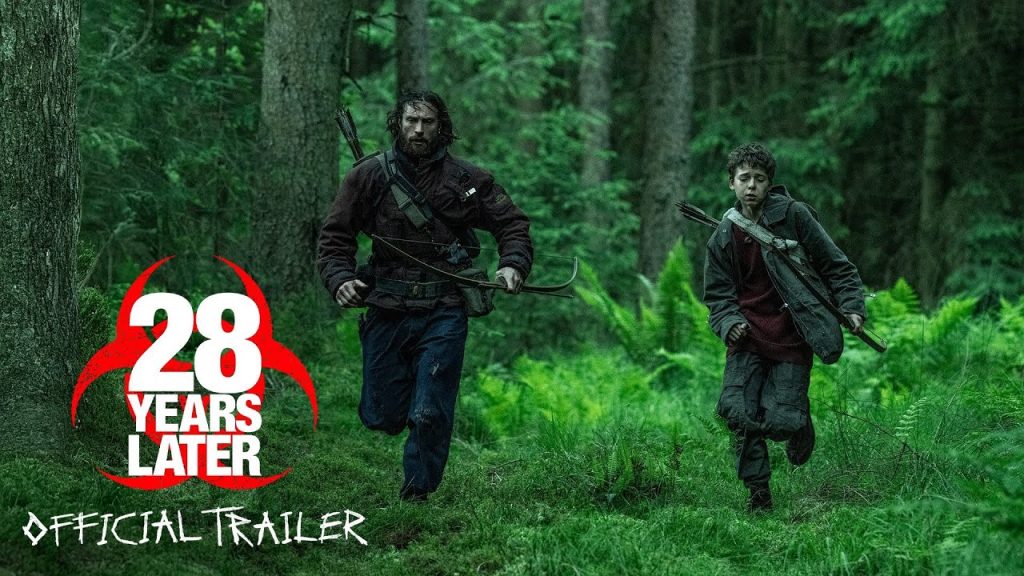
The digital cinematography portrays environmental deterioration with a dreamlike, artistic vividness. Nature has taken back Britain with remarkable intensity. Urban areas are overrun with dense, dark green foliage. Deserted suburban houses have become moist, moss-covered caves. The decaying shells of double-decker buses lie hidden under layers of wildflowers and tall weeds.
The digital color grading enhances these greens, earthy browns, and deep rust-reds to an almost unreal degree of saturation. As the sun shines through the cloudy British sky, digital sensors record the light streaming through wet leaves, glimmering off muddy puddles, and piercing dark, moist ruins in dazzling, golden beams. It is astonishingly lovely—and that loveliness is exactly what renders it so unsettling.
The world doesn’t miss humanity. Nature is thriving in our absence. My take on this visual contrast is that it creates a fascinating thematic friction at the heart of the film. The environmental decay is filmed like a gorgeous, wild nature documentary, while the human interactions inside that environment are filmed like a frantic, brutal horror movie.
It constantly reminds the audience that humans are no longer the dominant species on this island. We are an endangered, shivering pest clinging to the margins of a landscape that has moved on without us. The lush, vibrant green of the overgrown wilderness feels like a quiet, beautiful cemetery waiting to bury the last remnants of our species.
Part IV: Frantic Editing as an Emotional State
Cinematography represents just one part of the visual equation in a Danny Boyle movie. The remaining part, the hidden tool that provides his work its exhilarating speed, is the editing. In 28 Years Later, the editing doesn’t just transition between scenes to propel the story; it serves as an impressionistic, chaotic flow of thought that reflects the fractured mental condition of the survivors.
Boyle and his editing team utilize a style that appears significantly removed from conventional Hollywood narrative. In times of intense stress or aggression, the editing does not adhere to a coherent, sequential pace. It falters. It omits frames. It interjects abrupt, dazzling bursts of static visuals—a zoomed-in view of a frightened eye, a quick glimpse of a bloodied hand, an unexpected, prolonged shot of a decaying doll resting in the soil—before crashing back into the chaotic action of a pursuit.
This editing method produces an impressive feeling of psychological disconnection. When a character faces trauma or fear, the film doesn’t present events in a neat, linear fashion; it depicts the fragmented, disjointed, traumatized memories that their mind is desperately attempting to assemble in the moment.
Observe how the film transitions during a tranquil moment of contemplation compared to a scene of aggression. In the serene moments—when survivors congregate around a fire in a reinforced, temporary settlement—the transitions are gradual, mesmerizing, and prolonged. The camera lingers on the aged, grimy faces of the performers, allowing the digital sensor to absorb each wrinkle, each scar, and each unspoken tear.
Yet the second threat hits, the edit fragments like shattered glass. The change isn’t seamless. It is a brutal, auditory and visual onslaught. The frame rate changes, the shutter angle tightens—producing that sharp, jagged, staccato motion blur made famous by vintage action films—and the edits strike like a machine gun.
My take on this editing philosophy is that it prevents the audience from ever getting comfortable. You can never settle into a passive viewing state. Even during the quietest, most emotional scenes, the visual rhythm carries an underlying, nervous vibration, subtly warning you that peace is an illusion and that violence is always only one frame away.
Part V: Sweat, Dirt, and the Anatomy of Exhaustion
In an era where digital de-aging, flawless skin smoothing, and pristine CGI costumes have become the norm in studio filmmaking, 28 Years Later feels like a radical embrace of raw, unpolished human physicality. The digital camera lens is brought uncomfortably close to the actors’ faces, capturing the brutal, unglamorous reality of human survival.
There are no Hollywood movie stars with perfect teeth and pristine hair wandering through this apocalypse. The characters look exhausted, bruised, weathered, and filthy. The high-definition digital sensors capture every pore, every caked layer of mud, every line of dried sweat, and every fleck of blood dried under a fingernail. When a character breathes in the cold British morning air, the digital camera catches the thick, heavy plume of condensation rising from their mouth like smoke.
This focus on raw texture grounds the performance of the cast in a visceral, physical reality. When an actor cries, the camera catches the glistening trail of salt across a dirty cheek. When an infected character screams, the camera looks straight down their throat, capturing the strained vocal cords, the broken teeth, and the thick, dark blood pooling in the back of their mouth.
It is uncomfortable, intimate, and deeply human. My take on this tactile approach is that it restores a sense of profound empathy to a genre that has largely turned into a game of body counts and cool special effects.
In many modern zombie movies, the humans are generic targets waiting to be killed in creative ways, and the infected are digital bowling pins waiting to be knocked down. 28 Years Later rejects that dehumanizing spectacle. By focusing on the raw, unpolished physical reality of human flesh, the film makes every injury feel agonizing, every loss feel heavy, and every breath of survival feel like an impossible victory against overwhelming odds.
Part VI: The Legacy of Sensory Terror, Why 28 Years Later Matters
28 Years Later transcends being merely a successful follow-up to a cherished horror classic; it serves as an essential, pressing commentary on the creative potential of contemporary digital filmmaking. It comes at a time when the film industry is experiencing a crisis of visual identity. Viewers are becoming weary of similar, green-screen-dominated blockbusters that seem to have been created within a corporate computer server instead of being filmed on an actual set by human creators.
Danny Boyle, Alex Garland, and Anthony Dod Mantle have provided a powerful reminder that at its essence, cinema is a sensory art. They did not employ contemporary digital technology to create an appearance of a safer, cleaner, or more convenient world.
They utilized it to create a sense of increased chaos, heightened intimacy, and a terrifying immediacy in the world. They demonstrated that digital cameras, when free from the rigid constraints of conventional studio filmmaking, can more effectively capture the chaotic, raw, unrefined nature of human feelings and environmental deterioration than nearly anything else.
They transformed the affordable, defiant, guerrilla essence of the 2002 original into a refined, high-energy visual style for contemporary times.
They revealed to us that terror doesn’t dwell in the dim shadows of a polished, well-lit set; it resides in the erratic movement, the piercingly bright sunlight, the rapid pulse of a camera attached to a fleeing survivor, and the disturbing understanding that the reality we’ve created can vanish in an instant of crimson fury.
A Masterpiece of Kinetic Cinema
28 Years Later is a triumphant, exhausting, and breathtaking cinematic experience that cements the franchise’s legacy as the undisputed king of modern infection horror. It refuses to rest on nostalgia or recycle the visual gimmicks of the past. Instead, it pushes forward, reinventing its own visual mechanics to deliver a film that feels dangerously alive, fiercely original, and relentlessly terrifying.
It forces us to feel every footstep in the mud, every gasp of cold air, every drop of blood on the grass, and every frantic beat of a desperate heart beating against the end of the world.
When the screen finally cuts to black after its blistering finale, you don’t just feel like you watched a movie. You feel like you survived an ordeal. You feel your own heart pounding against your ribs, your own breath coming in shallow gasps, and your own eyes adjusting to the quiet light of the real world.
That is the magic of true sensory terror. That is the power of unapologetic, kinetic digital cinema. And that is why 28 Years Later will stand for decades as a towering monument to what horror can achieve when master artists step out onto the wire without a safety net.