The Ultimate Hype Culture: Why Skateboarders Cheer Louder for Their Rivals Than Themselves
In my opinion, organized competitive sports are entirely fixated on the incorrect aspects. When you tune into any conventional sporting event—be it a crucial playoff match in football, a thrilling rivalry in soccer, or an intense championship contest in tennis—you are observing a demonstration of separation.
An entire global sports complex has been constructed based on the intensely competitive concept of us versus them. You choose your team, don your colors, and earnestly hope for the complete defeat of the individual on the opposite side of the court or field. You see competitors decline to shake hands, scowl at each other over the net, glare from rival dugouts, and rejoice in an opponent’s blunder as if they’ve hit the jackpot.
We have been taught to believe that elite sports competition demands a fierce, merciless, nearly hostile mindset. It’s said that if you don’t look down on your opponent, you just don’t care enough about succeeding. Sliding down a steel handrail at twenty miles per hour or soaring twelve feet above the edge of a concrete bowl, the exhilarating and stunning realm of Street and Park Skateboarding unfolds.
Watching skateboarding during its major global competitions likely caused your brain to have a big, enjoyable glitch. You witnessed competitors striving for life-changing gold medals, substantial cash rewards, and international prestige. They executed incredibly challenging, remarkable tricks—kickflip backside lipslides down fourteen-step staircases, enormous backside 540s in deep concrete bowls, and complex grinds that challenge the laws of physics.
However, after an athlete disastrously failed their final run—falling off their board during the last trick and completely losing their spot on the podium—what actions did they take? Did they have a meltdown, break their gear in a surge of anger, or storm off to a secluded locker room to sulk?
Not anywhere near. They immediately sprang back up, grabbed their board, dashed over to the competitor who just vaulted ahead into first place, and delivered a loud, enthusiastic, chest-thumping high-five that resonated through the entire stadium. They hoisted their rivals onto their shoulders, enveloped them in large, sweaty embraces, and enthusiastically guided the audience in yelling at the very peak of their voices for the individual who had just seized triumph right from their grasp.
It is a complete mental journey. Skateboarding is more than an action sport; it’s the pinnacle of hype culture on our planet. It’s a game where camaraderie, collective effort, and genuine enthusiasm break fierce athletic competition into small fragments every day of the week.
Let’s delve into the daunting physics of street and park skateboarding, analyze how falling repeatedly impacts an athlete’s confidence, examine the inspiring culture of collective support, and clarify why the unmatched positive energy of skateboarding provides the best lesson on how people should interact with one another.
The Physics of Wooden Planks and Concrete Impact
To grasp why skateboarders view their immediate rivals as if they were siblings, one must first acknowledge the intense, relentless, and physically demanding nature of what being a skateboarder truly involves.
A skateboard is fundamentally a highly basic piece of gear. It consists of seven layers of compressed maple wood, approximately thirty-two inches in length, attached to two aluminum trucks and four small polyurethane wheels. Your feet are not secured to the deck in any way. There are no grips, no steering controls, no stopping mechanisms, and no safety straps.
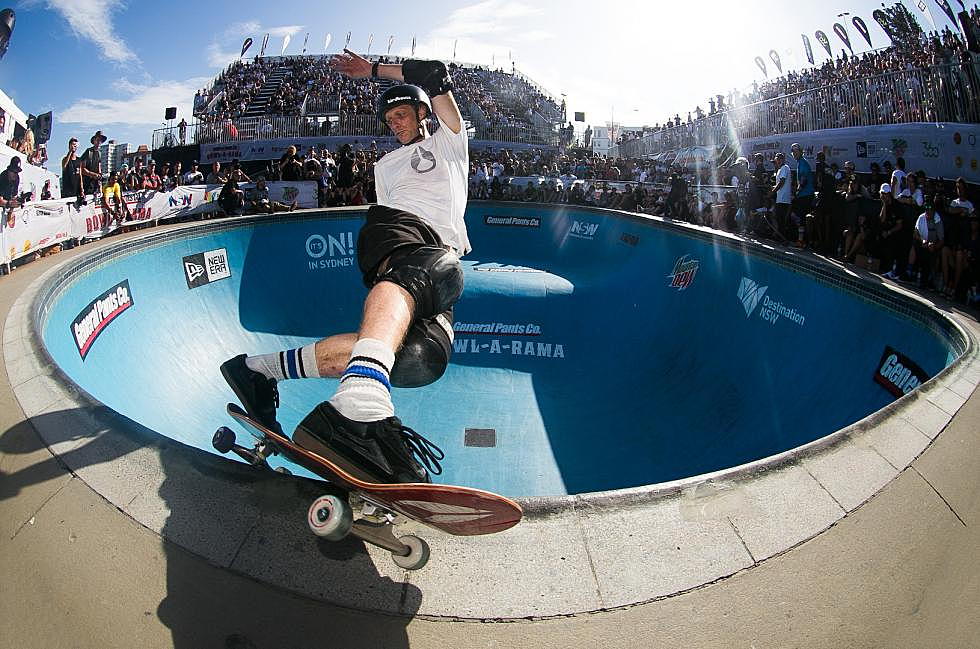
The sole factor maintaining a skater’s bond with that wooden board as they descend a concrete staircase or take off from the steep wall of a park bowl is friction, accurate foot positioning, and a deep comprehension of kinetic physics.
Think about the situation when a skater tries to perform an advanced street trick such as a Kickflip Backside Lipslide on a steep handrail. The skater speeds toward a shiny steel rail. They must flick the tail of their board against the solid ground, creating a pop that propels the wood upward. During flight, their front foot dances over the grip tape to spin the board three hundred sixty degrees on its long axis.
Simultaneously, the skater must twist their lower body ninety degrees in mid-air, fixate on the slender steel handrail, position the center of their wooden deck precisely over the metal pipe, and stabilize their whole body weight on a slick, two-inch contact area while descending rapidly.
If their foot placement is off by three millimeters, the board doesn’t catch. If their weight is slightly too far forward, the board stops dead against the steel rail, catapulting the skater headfirst onto the concrete below. If their weight is slightly too far back, the board shoots out from under their feet like a missile, causing them to drop five feet straight down onto their ribs, hips, or tailbone.
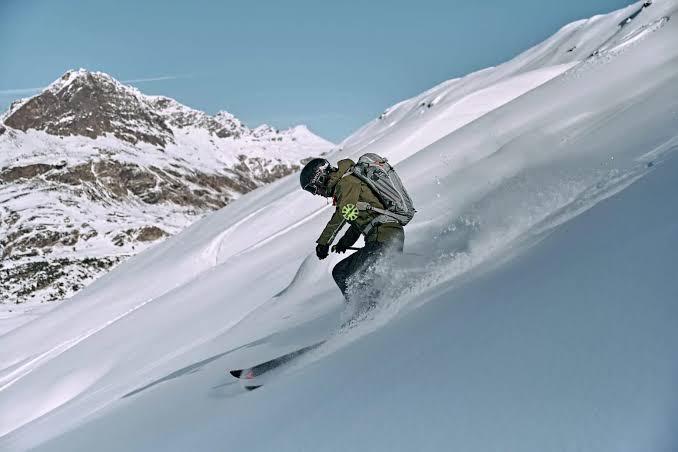
In park skateboarding, the physics are even more explosive. Skaters drop into massive concrete bowls with twelve-foot vertical walls, using gravity to build tremendous speeds. They pump through deep corners, hit the curved lip of the ramp, and launch eight, ten, or twelve feet straight up into open air.
While completely weightless high above the hard concrete floor, they spin two or three full rotations, grab the rails of their boards with their hands, spot their landing spot deep inside the curve of the bowl, and set their wheels back down on a curved wall with enough force to compress their joints like hydraulic pistons.
There is zero margin for error. A single micro-second of hesitation, a slight gust of wind, or a tiny pebble on the flat ground can turn a brilliant, poetic run into a terrifying, ragdoll impact against unforgiving concrete.
The Shared Furnace of Failure: Why the Ground Destroys Ego
This brings us to the ultimate secret behind skateboarding’s unique, wholesome culture: Skateboarding is a sport defined entirely by constant, relentless, brutal failure.
In nearly every other sport, top athletes dedicate most of their training time to achieving success. A seasoned basketball athlete takes thousands of jump shots during practice each week. A top swimmer dedicates hours gracefully finishing laps to and fro in a pool. They encounter failure, certainly, but their fundamental daily experience involves carrying out their actions smoothly.
Skateboarding is the absolute opposite. A skilled skateboarder often dedicates three, four, or five hours daily for three straight months, tumbling onto solid surfaces, sustaining bruises, scraping their elbows, and being struck in the shins by a soaring wooden board—all in pursuit of executing one precise trick just one time.
Every skateboarder worldwide, no matter the trophies they’ve won or the millions earned from sponsorships, is a true master in the skill of being thrown onto the ground.
Everyone has experienced the dull, throbbing pain of an inflamed hip. They have all removed their clothes, exposing wounds after a lengthy time on concrete. They all have faced the pinnacle of a colossal staircase or a daunting vertical slope, sensed their heart pounding in their chest, and battled against the innate human urge that yells at them to retreat from the brink.
Since each skater has experienced that identical physical and mental struggle, they share a deep, instinctual understanding for anyone else who rides a board.
When a skater watches their rival line up for a terrifying, high-risk trick in a major contest, they aren’t seeing an enemy whose downfall would benefit their bank account. They are looking at a fellow human being who has bled on concrete thousands of times, who has spent hundreds of hours crying in frustration in empty parking lots, and who is currently risking their physical safety for the pure, unadulterated love of the movement.
The ground is the great equalizer. Concrete does not care about your clothing brand, your social media followers, your nationality, or how many contests you have won in the past. It will slam a world champion with the exact same ruthless force that it slams a beginner on their very first day.
When you share an enemy as tough and unyielding as gravity itself, you don’t fight the person standing next to you. You band together with them.
The Art of the Hype: Cheering Louder for Your Rivals
To see the genuine, raw essence of skateboarding, you shouldn’t focus on the judges’ scores or the concluding awards ceremonies. You observe the deck at the start of the course while a competition is currently taking place.
In any conventional sport, the bench or sideline of the rival team represents a space of strong, silent animosity. Rivals murmur tactics, glare fiercely at the arena, or quietly hope that the contestant on the court fails their attempt, fumbles the ball, or stumbles.
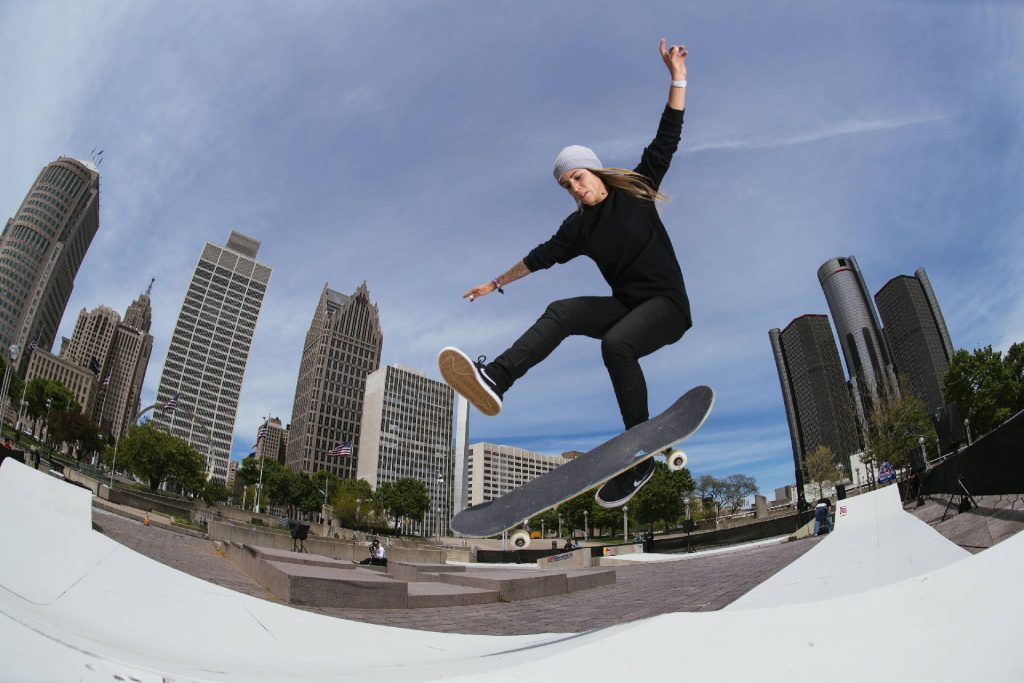
On the starting deck of a significant skateboarding competition, the ambiance resembles an electrifying, festive block celebration. Competitors will be seen gathered on their boards, enjoying laughter, exchanging jokes, listening to music, and assisting one another with their equipment. When a skater is attempting to determine the precise speed required to jump a huge gap, their fellow competitors won’t remain silent to secure an edge. They will thoroughly explain the course to them: “Alright, make three strong pushes from the upper platform, target the center of the rail, and you’ll nail it clean!”
As an athlete descends onto the course for their last run, the crowd explodes with excitement. Their competitors don’t merely stand by courteously observing. They bang the tails of their skateboards on the wooden surfaces in a loud, rhythmic roar resembling a thunderstorm passing through the arena. They shout at the peak of their voices, thrust their fists into the sky, and extend their arms in sheer, unrestrained joy.
When that athlete executes an incredibly challenging trick—like a huge trick down a handrail or a complex spin out of a bowl—their competitors on the sidelines will undoubtedly go crazy. They will leap off the platform, raise their arms over their heads in complete astonishment, shout in sheer euphoric delight, and rush onto the course to envelop the skater in a massive group hug before the contest timer has even run out.
And here is the most astonishing aspect: they continue to do this even when that executed trick causes them to fall from gold to silver, or even removes them completely from the medal podium!
To someone with a traditional sports mindset, this conduct appears entirely unreasonable. Why celebrate a moment that clearly damages your rank in the competition? Why would you support someone who is directly taking wealth and honor from you?
Skateboarders function within a wholly distinct philosophical framework. They realize that when one skater achieves an amazing trick, it symbolizes a win for the whole skateboarding community. This signifies that the limits of what can be achieved on a piece of wood have been extended slightly further into the future. They are not rejoicing in a win against another person; they are rejoicing in a conquest over the unachievable.
The Anti-Corporate Ethos: Authenticity Over Winning
To genuinely understand why skateboarding culture shuns ruthless competition, one must consider its origins as an outsider, underground subculture. For many years, skateboarding was not considered a legitimate sport by respectable society. Skateboarders faced active expulsion from public plazas, received tickets from law enforcement, were demonized by local city councils, and branded as delinquents, troublemakers, and vandalism-prone outcasts.
Cities placed metal skatestoppers on handrails, added rough gravel to smooth areas, and erected signs prohibiting skateboards in public zones. Since the external society dismissed them, skateboarders needed to create their own universe from the ground up.
They constructed their own DIY areas in vacant lots, laid their own concrete ramps beneath highway overpasses, filmed their own affordable skate videos using handheld cameras, and established a close-knit worldwide community where anyone with a board was immediately accepted. As an outcast group striving for your right to exist in public areas, you cannot afford to expend energy on internal conflict or trivial disputes. You rely on one another. You exchange boards, you swap wheels, you give rides to locations, and you support anyone who dares to face something frightening.
When large television networks and corporate sponsors arrived with hefty sums to make skateboarding a mainstream spectator sport, they attempted to incorporate conventional sports narratives as well. They attempted to create false rivalries, portray athletes as fierce adversaries, and construct dramatic narratives focused on ruthless competition.
Skateboarders collectively looked at those corporate narratives, laughed, and completely ignored them. They refused to adopt the fake hostility. They continued to dress the way they wanted, listen to the music they loved, share their techniques with competitors, and celebrate each other’s successes on the biggest global stages in the world. They showed the world that you can take a sport into the massive, high-stakes arena of modern media without sacrificing its soul, its authenticity, or its core values of friendship and mutual support.
In skateboarding, the person who wins the contest isn’t necessarily the person who gets the highest score from the judges. The person who wins is the person who had the most fun, pushed their personal limits, and brought the highest level of stoked energy to the session.
The Radical Prescription Our World Needs
We exist in a society that is profoundly affected by harmful rivalry, societal comparison, and unending pessimism. We navigate our existence confined in digital spaces that prompt us to interpret others’ achievements as our individual shortcomings. We browse through highlight reels of others’ lives and experience bitter jealousy. We wish for influencers, celebrities, and public figures to stumble so we can feel improved about ourselves. We have created a society that views life as a zero-sum game, meaning for me to succeed, you must fail.
That way of thinking is tiring, lonely, and completely spirit-breaking. This is why the authentic, electric excitement surrounding skateboarding is more than just an awesome athletic subculture; it is a transformative, life-affirming guideline for how we should approach our everyday existence.
Skateboarding shows us that another person’s talent does not lessen your value. It demonstrates that you can struggle with every part of yourself to reach your personal peak while also being the most enthusiastic supporter for those around you. It demonstrates that real strength is found in fostering a community where everyone supports one another, instead of pushing others down to claim a spot at the top.
Observing a skateboarder tumble from their board, quickly bounce back up, and dash across the course to fervently embrace the competitor who just defeated them showcases the pinnacle of human maturity and athletic elegance.
Derrick’s Hot Take: Every major sports league on planet Earth should be forced to take mandatory culture lessons from street and park skateboarders. If athletes competing for global medals at the absolute pinnacle of human physical performance can scream with pure, unadulterated joy when their direct rival lands a historic trick, then we have zero excuse for walking around with bitterness, petty envy, and toxic hostility in our daily lives. Skateboarding proves that life isn’t about beating the person next to you—it is about getting stoked on human potential, lifting each other up after hard falls, and celebrating the ride together.
The Endless Session
At the end of the day, long after the bright lights of the television broadcast are shut off, the metal handrails are packed away, and the contest podiums are disassembled, the true heart of skateboarding remains exactly where it has always been.
It is out there in the dusty street plazas, the local concrete skateparks, the backyard DIY bowls, and the empty parking lots at two o’clock in the morning.
There will always be another skater trying to learn their very first kickflip on a cracked driveway, getting their shins battered and sweating through their shirt. And standing right next to them, there will always be a group of friends—and complete strangers who just met them five minutes ago—slamming their boards against the pavement, shouting words of encouragement, and waiting to erupt into pure, wild celebration the second those four wheels roll away clean.
The session never truly ends. The skaters will keep dropping in, they will keep taking heavy slams on hard concrete, they will keep picking each other up out of the dust, and they will keep cheering louder for their friends than they do for themselves.
So the next time you catch a street or park skateboarding contest on your screen, don’t just focus on the incredible physical tricks or the technical scores. Watch the reactions on the platform. Watch the high-fives, the bear hugs, the smiling faces, and the raw, beautiful camaraderie among human beings who choose love over rivalry.
Marvel at the physics, respect the resilience, soak in the unbeatable positive vibes, and remember that when you choose to celebrate other people’s triumphs, everybody wins.