The 30-Foot Terror: How Steph Curry Shattered Basketball Geometry Without Touching the Ball
In my opinion, Wardell Stephen Curry II is the most impactful and transformative offensive player in professional basketball history, and the gap is substantial.
Individuals who lack a genuine understanding of the game enjoy examining the box scores and discussing his three-point shooting achievements. They discuss the four thousand career three-pointers, the forty-three percent career percentage from outside, the consecutive MVP awards, and the four championship titles. They regard Steph as merely a highly effective scoring machine—a player who positions himself beyond the arc, receives a pass, launches a basketball into a net from thirty feet away, and dances his way back down the court.
That perspective overlooks the fundamental impact Steph Curry has on an NBA defense. The most frightening aspect of Steph Curry isn’t his actions when he possesses the basketball. The most frightening aspect—the element that causes defensive coordinators to lose sleep at three in the morning, drenched in anxiety on their pillows—is what occurs when he’s without the ball.
We are discussing “Off-Ball Gravity.” Long before Curry arrived, basketball was a straightforward, linear sport based on geometric closeness. If you possessed the ball, you were a danger. Without the ball, the defense could take it easy, retreat into the paint, fulfill their roles, and unwind.
Steph Curry single-handedly dismantled that conventional geometric framework, discarded it in a bin, ignited it, and compelled every defensive coordinator worldwide to completely overhaul their entire strategy from the ground up. He is a human cheat code who alters spatial reality, generates five-on-four advantages effortlessly, and dismantles top defensive strategies just by moving around a screen thirty-five feet from the hoop.
Let us pull back the curtain on the mechanics of off-ball gravity, break down how Steph redesigned the spatial math of modern team offense, and explain why he is the ultimate offensive system in basketball history.
The Death of Traditional Spatial Geometry
To appreciate how absurd Steph’s off-ball gravity really is, you first have to understand how basketball spaces were defended for the first sixty years of the league’s existence.
Historically, the geometry of basketball was governed by the paint area and the three-point line. The most perilous zone on the court was the key—the prohibited area directly beneath the rim. Defenses were constructed from the interior outward. The main objective of any top-tier defense was to safeguard the paint, obstruct the lane, guard the basket, and compel opponents to attempt challenged long two-pointers or low-probability outside shots.
If an offensive player was without the ball, his defender would back off, position one foot in the lane for help defense, while watching his man with one eye and keeping the other on the ball. This was referred to as “assist-and-recover” defense. It served as the foundational basis of basketball coaching from James Naismith up until the 1990s and 2000s.
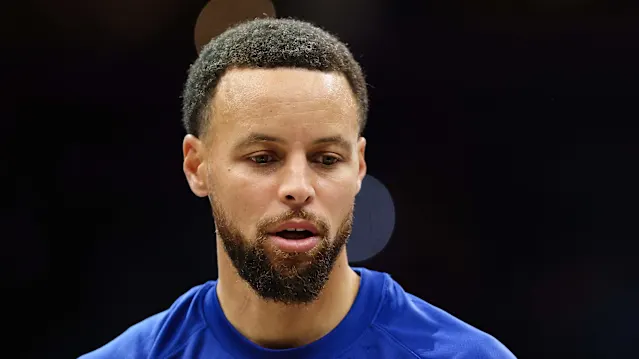
Then Stephen Curry became a human firestarter. Steph not only broadened his shooting range to the three-point line; he expanded his comfortable, high-percentage shooting range to thirty-five feet—directly on the mid-court logo! Consider how that straightforward physical enlargement affects the spatial geometry of a basketball court.
When a player can effortlessly sink a pull-up jumper from thirty-five feet with a quick-release motion that takes under 0.3 seconds to shoot, you cannot utilize conventional “help-and-recover” defense. You cannot remain in the paint area. You cannot abandon him for even a moment. You can’t even stay behind the conventional three-point line!
Steph compels rival defenders to guard him the instant he crosses the half-court line. By drawing a perimeter defender thirty-five feet from the basket, Steph individually increases the area the defense must manage by thousands of square feet!
The court didn’t get bigger. The physical hardwood dimensions remained ninety-four feet long by fifty feet wide. But because Steph’s threat level starts at the logo, he stretches the defensive shell so thin that huge, gaping canyon-sized lanes open up inside the three-point arc for everyone else on his team.
The Panic Index: What Spatial Tracking Maps Actually Show
If you get the opportunity to view second-spectrum spatial tracking maps or motion-capture visuals of the Golden State Warriors’ offense, it resembles a psychological horror film for defenders.
On a typical tracking map, offensive and defensive players are depicted as small dots moving around a digital court. In a standard NBA offense, when the point guard holds the ball at the top of the key, the other four defenders are spaced out loosely, preserving their defensive structure, monitoring the ball, and positioning themselves in passing lanes.
When Steph Curry is on the court off the ball, the tracking map becomes complete chaos. Observe the outcome as Steph distributes the ball to a teammate stationed at the wing and begins to move across the baseline.
He never ceases. He doesn’t wait in the corner with hands on hips for a kick-out pass like a conventional spot-up shooter. He is in continuous, unyielding, highly energetic motion. He darts off a back-screen, circles around a pin-down screen, moves through the paint, flares out to the wing, and alters direction three times in five seconds.
What is the purpose of the defensive tracking dots? They are in a frenzy! You will frequently observe two—sometimes even THREE—defensive players entirely forsake their designated opponents, overlook the individual with the basketball, and dash wildly toward Steph Curry as if attracted by a strong industrial magnet.
This is the origin of the phrase “Off-Ball Gravity.” Steph has a scoring threat so vast that he creates an unseen gravitational force on every defender on the court.
I’ve watched plays where Draymond Green is driving down the center of the lane with the basketball. In any normal basketball game, the two wing defenders would slide inward to collapse on Draymond, stop his drive, and force him to kick the ball out.
Instead, because Steph is running toward the right corner, both wing defenders actually sprint away from Draymond Green toward Steph! They literally clear a red-carpet pathway for Draymond to glide in for an uncontested, wide-open slam dunk!
Draymond Green didn’t beat his man with an elite cross-over. He didn’t execute a complex post move. He just walked through an open door that Steph Curry unlocked from thirty feet away without even touching the basketball!
The Relentless Cardio Engine: The Secret Behind the Gravity
Plenty of great shooters have played in the NBA. Ray Allen, Reggie Miller, Klay Thompson, Kyle Korver—these were all hall-of-fame-level snipers who could knock down shots at an astonishing rate. So why doesn’t anyone talk about “Ray Allen Gravity” or “Reggie Miller Gravity” in the same breathless, game-warping tone that we use for Steph?
Because no one in the history of the sport has ever merged exceptional, legendary shooting accuracy with the endurance of a marathoner like Steph Curry does.
Most top NBA superstars use their time off the ball to relax. When LeBron James, James Harden, or Luka Dončić unload the ball, they position themselves close to the half-court line or move to the wing to rest. They conserve their energy for when the ball returns to them to perform isolated pick-and-rolls.
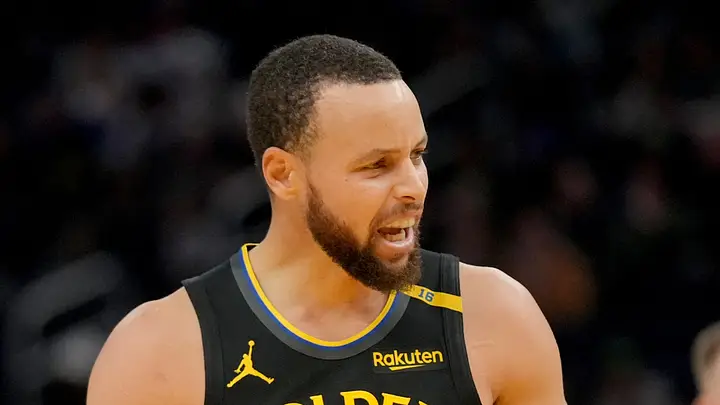
Steph Curry acts in a completely different way. As soon as he relinquishes the ball, his actual job starts. Steph covers approximately two and a half to three miles during each game—mostly dashing at full speed through a maze of solid screens set by Draymond Green, Kevon Looney, and his taller teammates. He experiences continual, forceful slowdowns, abrupt turns, shifts in direction, and physical interactions from opponents pulling his jersey, pushing against his side, and pushing him off his path.
Consider the mental anguish that a rival defender endures throughout a forty-eight-minute match. Picture yourself as a top-tier perimeter defender—someone akin to Marcus Smart, Jrue Holiday, or Mikal Bridges. Your sole responsibility tonight is to defend Steph Curry.
For forty minutes, you must sprint past three brick-wall screens each possession, follow a player who never stays still, navigate through bodies, battle through physicality, and realize that if you lose sight of him for 0.4 seconds or take one misstep around a screen, he will receive a pass and sink a thirty-foot shot right in your face.
By the start of the fourth quarter, your legs are burning, your chest is on fire, your concentration is completely shot, and your brain is fried from constant alarm fatigue. Steph’s off-ball gravity isn’t just a spatial advantage; it is a psychological weapon of mass exhaustion. He wears defenses down physically and mentally until they inevitably break, miscommunicate a coverage, and leave a teammate completely unmarked under the rim.
The “4-on-3” Power Play: Draymond Green’s Secret Superpower
One cannot discuss Steph’s off-ball gravity without mentioning its most significant beneficiary: Draymond Green. For years, casual fans and skeptical critics enjoyed discussing Draymond Green’s personal offensive worth. They examine his box scores—eight points, seven rebounds, eight assists—and argue he’s an over-rated supporting player who benefitted from being paired with the greatest shooter ever.
Those individuals entirely overlook how Steph’s gravity and Draymond’s decision-making collaborate to form the most lethal tactical play in contemporary basketball: the Steph Curry High Pick-and-Roll. When Steph emerges from a high pick-and-roll executed by Draymond Green at thirty feet, rival teams confront an unresolvable strategic challenge.
If they use standard defense—having the center back drop to guard the paint—Steph will just step back and sink an open three-pointer every time he moves down the court. Thus, teams must implement the “Blitz” or the “Trap.” Both defenders—Steph’s assignment and Draymond’s assignment—rush out to thirty feet to intensely double-team Steph, cornering him near the sideline to make him give up the ball.
And what is it that Steph does? He smoothly tosses a brief, straightforward pass over the defender to Draymond Green, who is receiving the ball close to the top of the key. As soon as Draymond receives that pass, Steph’s presence has finalized its enchanting snare.
With two defenders compelled to double-team Steph thirty feet from the hoop, the other three defenders are tasked with covering the rest of the court against four Warriors players. It’s a continuous 4-on-3 advantage during the course of a basketball match!
Draymond Green catches the ball in wide-open space with a full head of steam running downhill toward the basket, flanked by a shooter in the corner and an athletic big man hovering near the dunker spot. Draymond is a world-class passing mastermind. In a 4-on-3 situation with fifteen feet of open floor in front of him, he will pick a defense apart with surgical precision every single time.
If the rim protector steps up to stop Draymond’s drive, Draymond throws an alley-oop lob for a dunk. If the corner defender slides over to stop the lob, Draymond whips a pass out to the corner for an open three-pointer. If nobody steps up, Draymond glides in for an easy layup.
Draymond Green isn’t racking up eight assists a night by pulling off miraculous, jaw-dropping passes through three defenders. He is doing it by executing simple, fundamental reads inside the wide-open, four-on-three playground that Steph Curry’s off-ball gravity created for him thirty feet away!
Redesigning the Geometry of Team Offense
Prior to Steph Curry changing the league, conventional NBA offenses relied on strict, expected patterns. You executed a pick-and-roll, delivered an entry pass to a post player, or allowed your isolation scorer to dominate one side of the court while four players remained stationary and observed. Steph’s off-ball influence compelled the Golden State Warriors—and ultimately the entire NBA—to create an entirely new offensive approach centered on equal-opportunity movement, read-and-react dynamics, and spatial advantage.
Steve Kerr understood from the start that keeping possession of the ball was restricting Steph’s genuine capabilities. Transforming Steph into an off-ball creator, Kerr revealed a lively form of basketball resembling Premier League soccer or fluid jazz rather than conventional static NBA play.
In Golden State’s approach, the ball is in continuous motion as the defense continuously responds to Steph’s movements without the ball. Steph delivers the ball, navigates through the lane, establishes a split-screen for Klay Thompson, moves to the wing, and attracts two defenders along with him. As the defense hurriedly tries to guard both Steph and Klay on the outside, Andre Iguodala, Shaun Livingston, or Andrew Wiggins sneaks behind the preoccupied defense for an easy backdoor layup.
This is the reason players who sign with the Golden State Warriors experience a dramatic increase in their shooting percentages and efficiency statistics. Players who had difficulty locating open shots in stagnant, isolation-focused offenses step onto the court with Steph Curry and instantly discover themselves receiving wide-open, uncontested layups and gym-like three-pointers!
They aren’t suddenly twice as skilled as they were six months ago. They are simply swimming in the massive spatial ocean created by Steph’s gravity. Steph makes everyone around him better not just through leadership or playmaking, but through the sheer, undeniable physics of his presence on the floor.
The Copycat Epidemic: Why Nobody Can Replicate the Magic
When a player fundamentally alters a sport, the entire league swiftly attempts to replicate them. Following Steph Curry’s initial championship victory and his breaking of the single-season three-point record in 2016, NBA front offices embarked on a frantic, frenzied quest to find their own “Steph Curry.”
Draft analysts began referring to every college point guard with long-range shooting ability as “the next Steph Curry.” Teams began launching forty three-point attempts each night. Athletes such as Damian Lillard, Trae Young, and James Harden started launching shots from thirty-five feet, aiming to utilize long-range shooting as a strategy to distort defenses.
Although those players possess incredible, extraordinary skills individually, none have managed to genuinely emulate Steph’s off-ball attraction. Why? Because nearly all contemporary elite high-volume scorers require—and desire—the ball in their possession to excel.
Damian Lillard, Trae Young, Luka Dončić, and James Harden are playmakers who dominate the ball. They execute their skills through powerful pick-and-roll plays and isolating dribble techniques. When they lose possession, their danger level decreases considerably as they remain stationary on the perimeter to rest. They don’t dash across three screens each time they don’t have the ball. They don’t cover three miles each night without the ball.
They possess gravity that is ball-dominant. When they possess the ball, assistance is necessary. When they lack possession of the ball, you can defend them as usual. Steph Curry is the sole superstar in basketball history with both exceptional ball-dominant gravity and iconic off-ball gravity!
If you leave him when he has the ball, he pulls up and scores. If you relax when he passes the ball, he sprints around a back-screen, catches a handoff, and scores. He is a perpetual motion machine of scoring threat that never allows a defense to settle into a comfortable rhythm.
You can copy Steph’s pull-up three-pointers. You can copy his deep shooting range. You can copy his pull-up transition jumpers. But you cannot copy his off-ball cardio engine, his unselfish willingness to run relentlessly without touching the ball, and the instinctual chemistry he shares with his teammates.
The Defenseless Opponent: Panic, Miscommunication, and Paralyzed Schemes
To truly understand how devastating Steph’s off-ball gravity is, you have to listen to how opposing head coaches and elite defenders talk about guarding him in a seven-game playoff series.
Coaches facing LeBron James construct a defensive barrier in the paint. When facing James Harden or Luka Dončić, they aim to push them into difficult mid-range shots and eliminate their passing options. When coaches get ready for Steph Curry, they sound like individuals approaching a natural catastrophe armed with a flimsy plastic umbrella.
In one playoff series after another, we have observed elite, highly-ranked defenses utterly collapse under the mental strain of attempting to follow Steph Curry when he doesn’t have the ball. Tyronn Lue, who led the Cleveland Cavaliers against Steph in four straight NBA Finals, candidly acknowledged that his team’s defensive strategy prioritized halting Steph Curry off the ball rather than addressing LeBron’s main matchup on the court!
During the 2017 and 2018 NBA Finals, Kevin Durant earned consecutive Finals MVP awards, showcasing incredible and overwhelming scoring statistics. Critics frequently utilized those statistics to claim that Durant was the better player. What those detractors overlooked was the recording!
During the entire Finals series, Cleveland’s defense was so fearful of Steph’s off-ball influence that they consistently allowed Kevin Durant—one of the greatest scorers ever—to move freely down the lane for easy, uncontested dunks during transition plays, as two defenders rushed to the three-point line to guard Steph Curry!
Consider how crazy that situation is! The defense voluntarily allowed a clear dunk for Kevin Durant because they were utterly frozen by the anxiety of Steph Curry receiving a pass for a three-pointer!
That isn’t just winning a matchup; that is breaking the psychological sanity of an entire basketball team. Steph made elite NBA defenders lose basic instincts they had practiced since elementary school because the threat of his shot was so terrifying it overridden their logical brain functions.
The Greatest Game-Changer in Modern Sports History
A nonsensical argument sometimes arises among basketball historians regarding Steph Curry’s status among the all-time legends. Traditionalists often highlight Michael Jordan, LeBron James, Kareem Abdul-Jabbar, or Shaquille O’Neal as exceptional physical athletes who excelled in the game due to their athletic strength, physical stature, or sheer scoring ability.
Although those legends were remarkable, historic giants of the sport, none altered the essential manner in which basketball is played, coached, analyzed, and defended like Steph Curry.
Michael Jordan inspired everyone to soar through the air and slam dunk. LeBron James demonstrated the ultimate height of athletic adaptability. Shaquille O’Neal compelled teams to recruit enormous players solely to foul him six times each game.
Steph Curry redefined the actual layout of the court. He turned a game that had been played inside-out for a hundred years to be played outside-in. He demonstrated that a six-foot-two point guard lacking exceptional vertical leap or physical presence could excel in the sport through technique, spatial perception, constant mobility, and unmatched shooting accuracy.
He transformed the three-point shot from a rare strategic tool into the prevailing currency of contemporary basketball. He compelled youth leagues, high schools, colleges, and professional teams worldwide to rethink their lineup construction, spacing instruction, and offensive strategies. And he accomplished a lot of it while moving around the court without the ball.
Derrick’s Hot Take: Box score watchers will tell you that Steph Curry is the greatest shooter who ever lived. Real basketball purists know that he is something far more dangerous: a human spatial anomaly who breaks defensive brains simply by jogging thirty feet away from the basket. You can try to build a defense to stop a guy with the ball, but you cannot build a defense to stop a guy whose mere presence changes the math of the floor. Steph didn’t just break shooting records; he conquered the physics of team basketball.
The Eternal Arc
When Steph Curry eventually decides to hang up his sneakers and walk away from the sport, he will leave behind a game that looks completely unrecognizable compared to the one he entered as a skinny, overlooked rookie out of Davidson back in 2009. He transformed basketball from a game of physical collision and proximity into a game of continuous flow, infinite range, and spatial intelligence.
Every time you watch a modern NBA team hoist forty three-pointers, every time you see a center step out to guard thirty feet away from the rim, every time you see a role player cut backdoor for an easy dunk because two defenders panicked on the perimeter, you are watching the direct, living legacy of Wardell Stephen Curry II.
He didn’t just play basketball better than everyone else. He changed the rules of basketball geometry forever, and we will never see another player who bends the sport quite like him.