Blue Prince: Why Building Your Own Haunted Mansion Triggers Pure Control-Freak Joy
There is a very specific type of mental madness that takes over your brain when a game hands you a blank floor plan and tells you to design the house you’re supposed to escape. If you are the kind of gamer who gets an unnatural dopamine hit from organizing inventories, color-coding spreadsheets, or meticulously planning house layouts in The Sims, most mystery games feel just a little bit too passive.
You walk down a pre-rendered hallway, pick up a brass key, walk to a locked door, turn the key, and watch a cutscene. You are a tourist in someone else’s puzzle box. The developer built the maze; you’re just the rat following the breadcrumbs. Then comes Blue Prince, takes a sledgehammer to that entire design philosophy, and hands you the drafting pen.
Dogwood Manor isn’t just a mysterious estate with a shifting, impossible layout—it’s an architectural nightmare that you are actively drafting into existence, room by room, choice by choice. You aren’t just trying to solve a mansion. You are building the very labyrinth that will either crown you an architectural genius or trap you in a dead-end corridor of your own making. And for anyone with even a mild control-freak streak, it is the most intoxicatingly addictive mind trap in gaming.
The Ultimate Power Trip: From Puzzle Solver to Master Architect
To appreciate why Blue Prince feels so completely different from traditional puzzle adventures like The Witness or Myst, you have to look at its core gameplay loop: procedural room drafting.
You start each day standing in an empty doorway. Before you lies a black grid of unexplored floor space. When you open a door, the game doesn’t just reveal what’s on the other side. Instead, it pauses time, draws a hand of three random room cards from your available blueprint pool, and says: “Pick one. Where does it go? How does it connect?”
Chloe’s Hot Take: Most puzzle games treat you like an intruder trying to pick a lock. Blue Prince treats you like an arrogant architect who thinks they can outsmart a house. The moment you lay down a library card thinking you’re a genius, only to realize you just blocked your own path to the utility closet, the game has you right where it wants you.
Suddenly, every single step you take carries the immense, terrifying weight of creation. Do you place a quiet, low-resource Bedroom right now to restore your precious allowance of steps, even though its single doorway will force your hallway into a tight corner? Or do you gamble on a sprawling, three-door Foyer that opens up multiple paths, despite knowing it will burn through your key budget and demand specialized items you haven’t drafted yet?
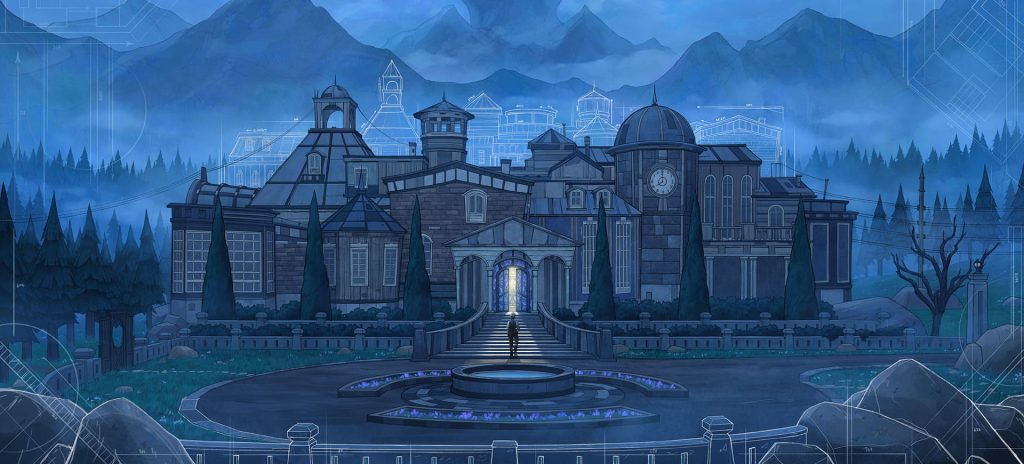
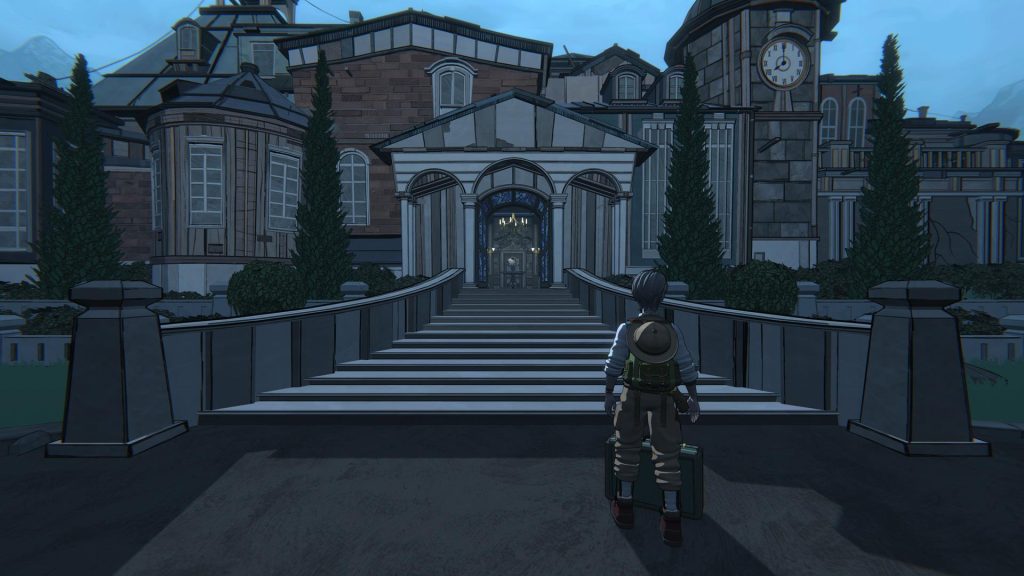
This shift in agency completely rewires how your brain processes failure and success. When you get lost or hit a brick wall in a standard puzzle game, it feels like the developer made an obscure jump in logic or designed an annoying roadblock. But when you get stuck in Mt. Holly, there is no developer to blame. You look down at your map, see a tragic dead end surrounded by three solid brick walls, and have to confront the agonizing truth: I built this wall. I put this room here. I am the architect of my own demise.
The Psychology of the Draft: Managing Resources and Ego
At its heart, Blue Prince is a high-stakes balance between micro-resource management and macro-spatial planning. Every step you take inside the estate costs step power—a literal physical currency that represents your stamina for the day. Run out of steps, and your day ends, resetting the mansion floor plan back to an empty grid.
This turns every single door choice into a psychological chess match with your own hubris. You aren’t just solving spatial puzzles; you’re managing an intricate internal economy of keys, gems, steps, and information. The game constantly tempts your worst control-freak impulses by offering high-risk, high-reward rooms.
Take the Drafting Room or the Laboratory, for instance. These specialized spaces offer game-changing perks—allowing you to reroll bad room draws, duplicate blueprint cards, or manipulate the drafting pool for future floors. But they often come with severe spatial costs, like weirdly placed doors that align terribly with your current hallway structure, or strict entry requirements that drain your immediate supplies.
The Control-Freak Paradox:
High-Utility Rooms $\implies$ Strange Door Alignments & Resource Drain
Simple Hallways $\implies$ Safe Progression & Low Information Gain
Your ego constantly whispers: “Draft the big room. You can make the doors work. You’re smart enough to loop the hallway back around.”
Three doors later, you find yourself trapped in a draft corner with zero keys, two steps left, and a room that points straight into a solid exterior wall. It’s an exquisite form of self-inflicted agony that keeps you muttering, “Just one more run. I can optimize the layout better this time.”
The House as a Living Puzzle Box
What makes Mt. Holly feel so delightfully eerie isn’t jumpscares or blood-stained walls. It’s the quiet, unsettling realization that the house’s history, its former owner’s eccentricities, and its deep lore are all baked directly into the architectural logic itself. As you explore, you aren’t just drafting generic rooms; you are uncovering the bizarre narrative of the estate through its blueprint synergies.
Certain rooms react to adjacent rooms in ways that feel almost alive. Place a Conservatory next to a Garden, and new interactive options bloom. Line up specific art galleries, and subtle clues hidden within the oil paintings begin to form a coherent story about the family that once lived here. The mansion becomes a massive, interconnected narrative matrix where spatial layout is the lore.
Chloe’s Hot Take: Horror games waste too much time trying to scare you with monsters in the dark. Blue Prince understands that nothing is more terrifying than an empty hallway that doesn’t align with your blueprint logic. The true horror isn’t what’s hiding in the room—it’s the room itself.
This architectural narrative design creates an incredible sense of discovery. You aren’t just finding notes left on desks; you are physically reconstructing the estate’s lost history by placing its historical chambers in alignment with one another. When a secret passage reveals itself because you happened to mirror a room layout from a draft schematic you found three runs ago, the sense of accomplishment is unmatched.
It wasn’t a scripted trigger or a cutscene that unlocked the door. You parsed the clues, selected the blueprints, placed the rooms, and physically walked through the space you engineered.
The Beauty of Radical Reset: Why Starting Over Feels So Good
In most games, losing your progress feels like a slap in the face. If an RPG wipes out an hour of dungeon crawling because of a sudden party wipe, you want to throw your controller across the room. Yet in Blue Prince, running out of steps and watching the mansion collapse back into a blank drafting board feels strangely liberating.
Because every run is defined by the specific blueprint hand you draw, no two mansions are ever identical. A failed run isn’t a loss of time; it’s a completed draft. It’s a blueprint you get to fold up, analyze, and learn from. You realize: “Ah, I placed my heavy-cost rooms too early in the draft depth. Next time, I need to build a stable resource engine on rank two before pushing into the outer perimeter.”
The game transforms the concept of the “roguelike run” into a series of architectural iterations. You aren’t just trying to beat the game in a single sprint; you are refining your personal drafting methodology over dozens of attempts. You become faster at reading room synergies, sharper at recognizing dead-end traps, and more cold-blooded about sacrificing a promising hallway if the math doesn’t check out.
Why Our Brains Crave Order in Chaos
We live in a world where things rarely go according to plan. Projects get delayed, schedules get scrambled, and unexpected life variables interrupt our clean, organized agendas.
Games like Blue Prince serve as a pristine digital sanctuary for the overworked mind. They take the chaotic, unpredictable nature of a mystery narrative and wrap it in a system of absolute spatial rules.
When you sit down at the drafting table in Mt. Holly, the noise of the outside world fades away. There are no ambiguous signals or hidden catch-22s. There is only the grid, your hand of cards, your step counter, and your own intellect.
Every breakthrough is yours. Every disaster is yours. And every single door you open is a testament to your willingness to walk down a path of your own creation.
Now I want to hand the drafting pen over to you guys! How are you approaching your mansion layouts in Blue Prince? Are you a reckless explorer who drafts multi-door rooms as fast as possible, or a cautious, methodical architect who plans three steps ahead to guarantee a clean retreat? Drop your best layout strategies, worst dead-end stories, and room synergy discoveries in the comments below!