The $50 Million Sick Day: How Modern NBA Superstars Turned Sitting on a Bench into a High-Tech Art Form
In my view, “load management” is the biggest marketing scam ever seen in professional sports. If you purchased a ticket for a Broadway production, spent six hundred dollars for a front-row seat, and entered the theater only to receive a flyer from an usher stating that the lead actor is absent tonight because of intense neurological fatigue, you would insist on a refund, burn your playbill, and scream at the box office manager until you were out of breath.
If you purchased a new Ferrari, took it home, and then received a call from the dealership stating you could only use it on every third Thursday due to the transmission experiencing biomechanical stress on gentle slopes, you would likely laugh at the salesman and sue the company for selling you a defective car.
Nevertheless, the contemporary National Basketball Association has managed to persuade countless dedicated fans that spending thousands on upper-deck tickets to see a team’s top two players in expensive, tailored sweatpants sitting on the bench during a Tuesday game against the Charlotte Hornets is not a con—it is cutting-edge preventative sports science.
We have arrived at a situation where fit twenty-six-year-old millionaire athletes frequently take planned nights off because a team biomechanical engineer checked an iPad, noticed a small orange dot blinking next to a player’s tracking metric, and announced that their soft-tissue load limit had been exceeded.
It is an absolute, unmitigated joke. Let us dismantle the fake science, expose the staggering luxury gap between modern stars and previous generations, and explain why load management isn’t an advance in sports medicine—it is just high-paid entitlement dressed up in a lab coat.
The 1990s Reality Check: Commercial Flights, Fast Food, and 82 Games
To grasp how much softer the current NBA superstar has become, one must examine the way the legends played just three decades ago. In the 1980s and 1990s, athletes lacked hyper-personalized travel plans, specialized sleep advisors, and wearable biometric devices that tracked their heart rate variability during rest.
They did not enter specially designed, fifty-million-dollar Boeing luxury aircraft featuring reclining leather seats that lie flat, personalized catering, and on-board physical therapy tables. Michael Jordan, Karl Malone, Patrick Ewing, and Charles Barkley strolled through airport terminals at six in the morning, each carrying their duffel bags. They crammed their six-foot-ten bodies into middle seats in coach on Delta or United flights, with their knees pressed against their chins while enduring two-hour tarmac delays at O’Hare.
Upon arriving at midnight, they bypassed ultra-luxury hotels featuring soundproof blackout curtains and personalized climate-controlled beds. They lodged in typical urban hotels, consumed tepid room service or fast food, and rose the following morning to endure thirty-eight exhausting minutes of physical basketball, facing opponents who were legally permitted to elbow them in the ribs during lane cuts.
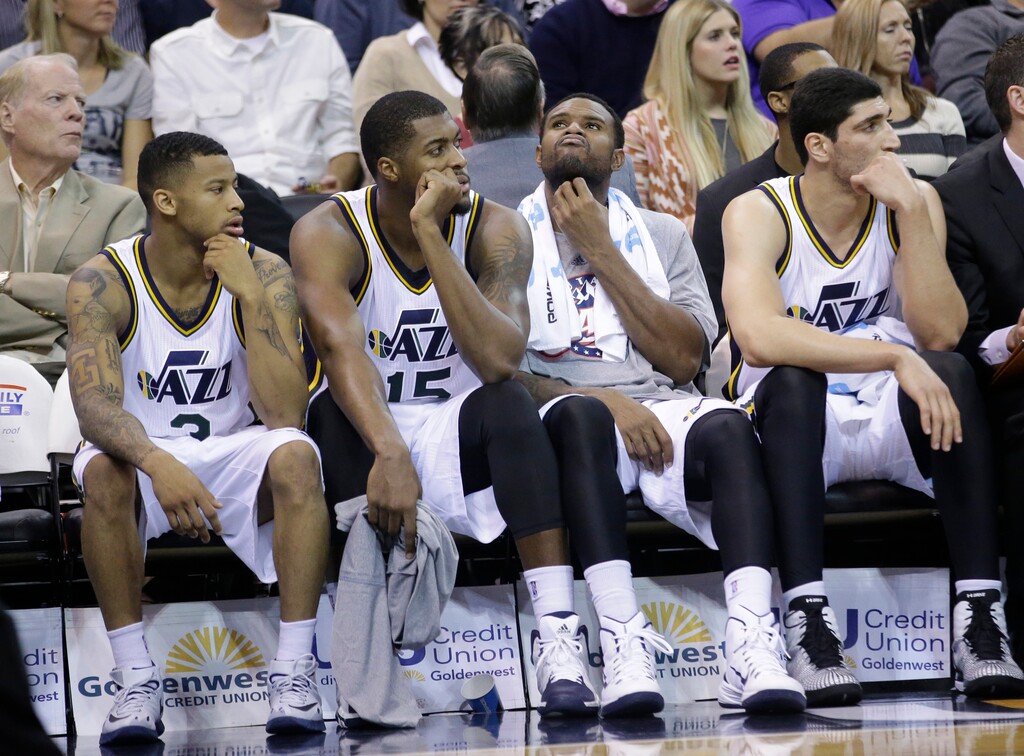
Examine Michael Jordan’s attendance statistics. His Airness participated in all eighty-two games in a season on nine different occasions throughout his career. During the 1997-98 season—his last season with the Chicago Bulls—Jordan was thirty-five. He participated in all eighty-two games, averaged thirty-eight point eight minutes per game, led a worn-down Bulls team through four tough playoff rounds, and played all eighty-two games once more at thirty-nine with the Washington Wizards.
Karl Malone sat out a total of ten games during a fifteen-year period in Utah while battling seven-foot power forwards every night in the post. John Stockton participated in all eighty-two games for sixteen different seasons.
Did those players possess superior knees compared to today’s athletes? Did they have advanced genetic cartilage that protected them from joint deterioration?
Certainly not. They persevered through small injuries, aches, and discomfort due to a deep respect for the game, a fierce competitiveness that made being benched a blow to their pride, and an awareness that fans invested their hard-earned money to see them compete.
The Sports Science Myth: The iPad Biomechanics Hustle
Now, contrast the 1990s operational environment with the present situation of contemporary NBA training centers. Entering the practice facility of a contemporary NBA team today resembles stepping into a cutting-edge NASA research center or a pharmaceutical lab rather than a traditional basketball gym.
Teams utilize large teams of performance directors, load management experts, biomechanical analysts, and kinesiologists. These individuals stroll through practice facilities with iPads in hand, dressed in stylish matching polo shirts, and monitoring data points produced by micro-chipped GPS sensors embedded in the players’ jerseys.
They monitor every conceivable thing. They track a player’s sprint acceleration, deceleration force, vertical jump impact, heart rate recovery curve, salivary cortisol levels, and sleep quality metrics.
When a star player dashes back and forth across the court twelve times on a Sunday afternoon, the iPad application operates a forecasting algorithm. It produces a graph indicating that the player’s neuromuscular readiness score has fallen by four point two percent, and that maintaining this level of play raises their risk of a hamstring strain by six point seven percent over a three-week period.
The performance director swiftly approaches the head coach, presents the iPad screen as if it’s a nuclear launch code, and urges him to rest the star on Tuesday night against Charlotte due to concerns about his biomechanical load.
It is complete, pseudoscientific self-justification. These sports performance departments have built a self-sustaining corporate ecosystem where they have to justify their inflated six-figure salaries. If a director of performance tells the team owner that these guys are elite twenty-four-year-old athletes whose bodies are built to run and should play eighty-two games, the owner will wonder why they are paying a sports science team three hundred thousand dollars a year.
So, to prove their worth, these analysts create overly complex, fragile, high-maintenance recovery protocols that treat multi-million-dollar human athletes like delicate glass figurines that will shatter into a thousand pieces if they step onto a basketball court three times in five days.
They have manufactured a culture of physical fragility. By constantly telling players that their bodies are on the verge of breaking down if they play on back-to-back nights, they have psychologically conditioned a generation of athletes to believe that feeling minor muscle soreness is a medical emergency that requires a night off.
The Luxury Gap: Hyperbaric Chambers and $20,000 Mattresses
The frustration of the average fan with the load management story stems from the extraordinary luxury and recovery technology that contemporary NBA players enjoy every day. Contemporary athletes receive not only fifty million dollars annually to participate in a sport; they are supported by a multi-million-dollar personal recovery system that people two decades ago could never have imagined utilizing.
A contemporary celebrity doesn’t merely relax in a chilly tub filled with tap water and ice bags. They enter personal sub-zero nitrogen cryotherapy chambers that reduce temperatures to minus-two hundred degrees Fahrenheit to eliminate inflammation from their joints in three minutes. They rest in private, soft-shell hyperbaric oxygen chambers within their homes to infuse their tissue cells with pressurized oxygen, speeding up cellular repair while enjoying television.
When contemporary teams travel, they use personalized team jets featuring specialized lighting systems designed to regulate circadian rhythms, memory-foam flat beds, onboard physical therapy tables, and private chefs who cook tailored organic macro meals based on each player’s unique blood work.
At home, players rest on intelligent mattresses featuring active liquid cooling systems that automatically regulate the bed temperature during the night to enhance deep sleep duration. They use advanced biometric rings and wristbands that monitor their resting heart rate with millisecond precision, delivering immediate recovery updates straight to their personal trainers before they even awaken in the morning.
Before and after games, players slide their legs into inflatable pulse-compression boots that use bio-mimicry peristaltic waves to flush metabolic waste out of their muscles. They sit in full-spectrum infrared saunas that penetrate deep muscle tissue to stimulate cellular repair.
Think about the hilarious contradiction here. Modern players have access to twenty times the medical tech, fifty times the travel luxury, one hundred times the nutritional science, and infinitely better facilities than any generation of athletes in human history.
And yet, despite having every scientific advantage known to mankind, they claim their bodies are less capable of playing eighty-two games than guys who drank full-sugar soda at halftime, wore flat leather sneakers with zero arch support, and flew coach on commercial airlines. How does anyone buy this narrative with a straight face?
The Financial Betrayal of the Blue-Collar Fan
Beneath all the biomechanical jargon, pseudoscience, and corporate justifications lies a stark, unvarnished reality: load management is a blatant, insulting affront to the dedicated fan who funds the whole industry.
Professional basketball is not a communal service. It is an industry focused on entertainment. The astronomical annual salaries of fifty million dollars given to contemporary players do not occur by chance; they are financed directly through television rights agreements, corporate sponsorships, and, crucially, fans purchasing tickets, jerseys, parking passes, and forty-dollar concessions at stadiums.
Imagine a working-class parent bringing their child to an NBA game. Consider a worker who puts in forty or fifty hours weekly in fields like construction, healthcare, education, or retail. They set aside funds for six months to purchase two tickets so they can take their son or daughter to watch their favorite superstar perform live. They pay seven hundred dollars for lower-bowl seats, fifty dollars for parking, one hundred dollars on food and memorabilia, and take an evening off from work to travel two hours to the venue.
They enter the building, purchase a program, glance up at the jumbotron twenty minutes prior to tip-off, and notice a graphic announcing that their favorite player is sitting out for rest and load management.
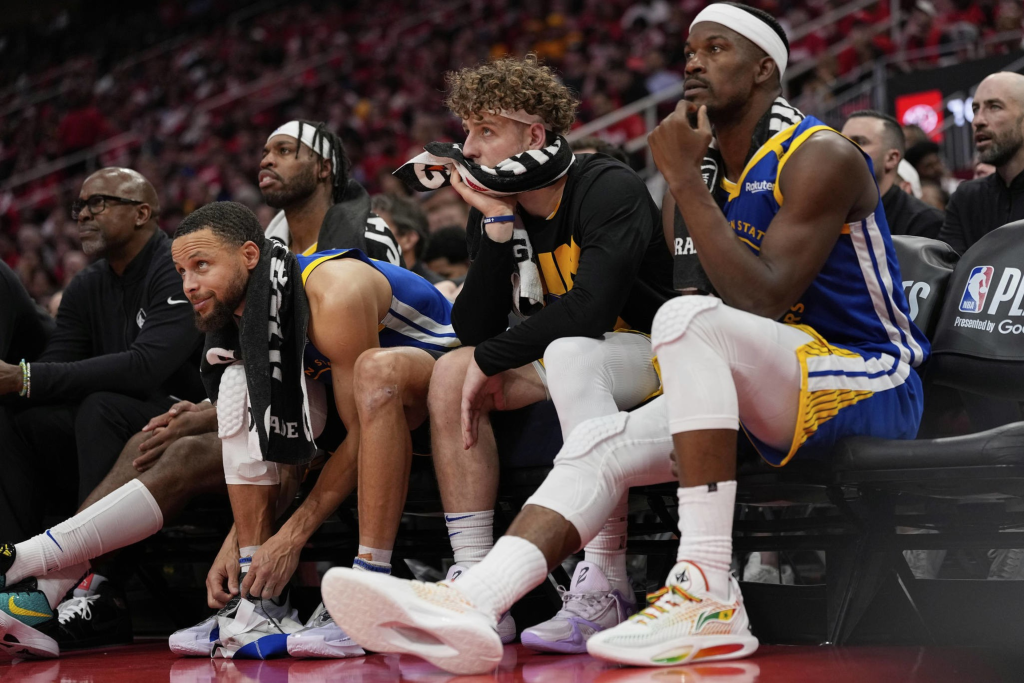
The key athlete is not hurt. He didn’t rupture an ACL, twist an ankle, or fracture a finger. He sits on the bench in a bright tracksuit, chatting with his teammates, glancing at his phone while a group of third-string reserves trails by twenty-four points.
That fan doesn’t get a refund. The ticketing app doesn’t send an automated message offering money back because the product they paid for isn’t participating. The team keeps the money, the player keeps his multi-million-dollar paycheck, the stadium keeps the concessions revenue, and the fan is left sitting there trying to explain to their heartbroken kid why their hero is taking a planned sick day despite making six hundred thousand dollars per game.
It is corporate fraud disguised as sports medicine. When you purchase a ticket to an NBA game, you are paying for a premium product. When the marquee stars decide to treat regular-season games like optional practices, they are diluting the value of the product, disrespecting the fans who fund their extravagant lifestyles, and destroying the competitive integrity of the regular season.
The Psychological Softness: Entitlement vs. Competitive Fire
What caused this to occur? Due to a fundamental shift in the league’s culture from competitive pride to corporate maintenance. In earlier times, not attending a game was seen as a neglect of responsibility. Players considered themselves as fighters with obligations to their fellow team members, their coaches, and their supporters. If a player could put on a shoe and sprint in a straight path, they participated.
Not playing in a game because you felt fatigued or achy was viewed as humiliating. Your teammates would tease you in the locker room. Your rivals would detect vulnerability and doubt your resilience. The press would criticize you, and the supporters would jeer at you.
Today, that competitive pride has been entirely supplanted by a mindset focused on corporate self-preservation. Contemporary celebrities have been persuaded by their agents, business managers, and personal brand advisors that the eighty-two-game regular season is not truly significant. They perceive the regular season as a slight annoyance—an eighty-two-game exhibition meant only to secure a place in the playoffs where their true legacy is created.
They observe their four-year, two-hundred-and-fifty-million-dollar guaranteed deals and understand that their income is entirely secure no matter if they participate in sixty games or eighty-two games. When you promise a worker hundreds of millions of dollars without any financial consequences for taking voluntary days off, the worker instinctively begins to take those voluntary days off.
It is basic human incentive structure. The league built a financial system that completely decoupled player compensation from regular-season availability, and now they are shocked that players treat regular-season games like optional overtime shifts.
The Statistical Reality: Load Management Doesn’t Even Prevent Injuries
Here lies the definitive game-changer, the key factor that utterly undermines the core of the load management initiative: the evidence shows that load management does not actually reduce injuries at all.
Over the past ten years, NBA franchises have significantly intensified their load management strategies. Star players are logging fewer minutes each game, taking more planned nights off, skipping back-to-backs, and missing extended periods of the regular season.
If the sports science principles regarding load management were accurate, we would have observed a significant, noticeable drop in games lost to serious injuries in the past decade. We ought to exist in a golden age of perfect player wellness where hamstrings never tear, Achilles tendons never rupture, and knees never experience inflammation during the playoffs.
On the contrary, the situation has reversed completely. In the last ten years, the rates of significant injuries in the NBA have surged dramatically. Soft-tissue strains, hamstring injuries, calf tightness, and severe ligament tears are happening at unprecedented levels, even though players are missing more games than ever before in professional basketball history.
Consider the utter ridiculousness of this contradiction. Teams are resting players more than they have in the past, yet injuries among players are at an all-time high.
Why not? Human muscle, bone density, and tendon strength adjust to physical stress via a mechanism called progressive overload. When you frequently disrupt an athlete’s competitive rhythm, resting them every three games and hindering their bodies from developing the physical resilience that results from steady, high-intensity repetition, you actually increase their muscle tissue’s vulnerability to acute injury when they abruptly step onto the court and attempt to perform at full intensity.
By trying to protect these players like fragile museum glass, teams have accidentally made them physically soft, rhythmically inconsistent, and bio-mechanically vulnerable to the exact injuries they are desperately trying to avoid.
How to Fix the Load Management Crisis
We do not have to accept this soft, fan-hostile culture as the permanent future of professional basketball. The fix is remarkably simple, but it requires the NBA league office to stop enabling the fake sports science excuses and start treating load management like the product-destroying parasite it really is.
Initially, link all supermax contract qualifications and personal playoff accolades to a strict seventy-two-game minimum.
The NBA made a minor progress by implementing a sixty-five-game minimum for postseason honors, but it falls short. Increase the threshold to seventy-two games to be eligible for supermax contract extensions or personal accolades. Observe how quickly a player’s biomechanical stress vanishes when thirty million dollars in contract bonuses are at stake.
Secondly, implement refunds for game-day tickets for players resting who are not injured. If a franchise decides to sit a healthy player for load management on a night when the player shows no recorded structural injury, require that the team must immediately return thirty percent of the face-value ticket price to all fans present in the arena. Observe how quickly team governors contact their performance directors, insisting their star play instead of missing out on two million dollars in ticket sales due to an orange iPad score.
Third, implement autonomous league health assessments. Should a team mark a player on the injury report due to knee discomfort or for rest, an independent, impartial league physician must conduct a physical assessment. If the physician discovers no structural harm, no fluid accumulation, and no clinical injury, penalize the franchise one million dollars and suspend the performance director for a fortnight.
The notion that twenty-five-year-old top athletes require Tuesday evenings off to recuperate from spending thirty minutes sprinting on a wooden court in fifty-thousand-dollar tailored shoes is a complete affront to every employee worldwide. Michael Jordan didn’t rest strategically. Kobe Bryant never managed his load. They competed out of passion for the game, admiration for the supporters, and had the mental spirit of a winner. It’s time for modern stars to drop the iPad excuses, put down the cryo-tanks, lace up their shoes, and go to work.
The Final Buzzer
Basketball is an incredible, stunning, soaring game. Contemporary NBA athletes possess an incredible degree of physical ability, athleticism, and skill that enhances the joy of watching the game when performed at its peak.
However, talent devoid of availability holds no value at all. A superstar worth fifty million dollars sitting on a bench in a fashionable tracksuit during a regular-season match isn’t an elite athlete leveraging the forefront of sports science. He is merely an overpaid observer enjoying a lucrative day off, funded by the fans who cover his salary.
The NBA needs to discard the false biomechanical justifications, dismiss the performance experts with iPads, eliminate the load management charts, and embrace a straightforward, fundamental principle that has guided the sport for a hundred years: if you can walk to the bench, you are fit enough to play. Provide the supporters with what they’ve purchased.