Engineered Hostility: How Role Queue and the Scoreboard Poisoned Overwatch 2’s Soul
If you played the original Overwatch back in 2016, you probably remember a very different game than the high-stress spreadsheet simulator we log into today. You remember stepping into a match on Hanamura or King’s Row where the spawn room felt like a chaotic, joy-filled sandbox.
Someone was spamming Lucio’s voice lines while wall-riding in circles, a Mei was ice-walling teammates into doorframes for cheap laughs, and two players were aggressively emoting at each other in front of an arcade cabinet. You might end up with a terrifying team comp featuring four Torbjörns, one Symmetra, and a single, deeply stressed Reinhardt. It was messy, completely unbalanced, and frequently unhinged.
Yet, somehow, it felt alive. It felt human. Fast-forward to Overwatch 2, and that chaotic playground magic has been thoroughly scrubbed away in favor of clinical precision, hyper-optimized competitive roles, and transparent metrics. The modern spawn room is dead quiet, save for the occasional passive-aggressive “Thanks!” ping.
Before the doors even slide open, players are already pressuring the single solo Tank to swap off Doomfist, eyeing the Support player’s pick with intense suspicion, and preparing their keyboards to flame whichever Damage player fails to keep pace with the rest of the lobby.
What happened to the lobby vibe? It didn’t just evaporate because gamers suddenly became angrier over time. The slow decay of player empathy in Overwatch 2 is a direct, predictable consequence of system design.
By imposing strict Role Queue systems and handing players a real-time, hyper-quantified scoreboard, Blizzard accidentally engineered an environment where teammates no longer view each other as human collaborators trying to have fun—they view each other as broken code ruining their rank.
The Role Queue Trap: When Structure Kills Spontaneity
To diagnose how we got here, we have to talk about the introduction of Role Queue. Back in the early days of open-queue Overwatch, team compositions were a free-for-all. Yes, that led to infamous competitive horrors like the “GOATS” meta—where three Tanks and three Supports rendered Damage heroes completely obsolete at high ranks—and yes, it meant far too many matches were lost because five teammates insisted on playing squishy flankers while refusing to touch a single healer.
Blizzard’s solution was logical on paper: force every team into a strict structure of two Damage, two Supports, and (eventually in Overwatch 2) a single solo Tank. It solved the queue problem. It made matches predictable. It ensured every team had a baseline of healing and space creation. But it also broke something fundamental in the social contract between players.

In an open-queue environment, if your team was getting dismantled, you possessed total agency to pivot. If your lone Support player was getting bullied by a relentless Genji, a Damage player could voluntarily swap to a second healer to take off the pressure. If your Tank was struggling to break a choke point, someone could double up on shields to help push the payload. Flexibility fostered empathy because everyone understood that team synergy was a collective, fluid responsibility.
Chloe’s Hot Take: Role Queue turned team composition from a collaborative conversation into an assembly line. When you lock players into rigid boxes, you strip away creative problem-solving. If something goes wrong now, you can’t step up to fix it yourself—you just sit back and glare at the person assigned to that box.
When you lock players into strict roles, responsibility becomes rigid and non-transferable. If the enemy Pharah is terrorizing your backline, the Support players cannot swap to Hitscan damage heroes to shoot her down. They are forced to sit there, completely helpless, praying that their assigned Damage players notice the problem.
This creates immense psychological frustration. Instead of thinking “What can I do to help our team adapt?”, player thinking immediately shifts to “Our assigned Damage player isn’t doing their job.” Role Queue eliminated bad team comps, but in doing so, it created a rigid blame culture where every teammate is evaluated like an employee failing to meet their key performance indicators.
The Real-Time Scoreboard: A Weaponized Spreadsheet
If Role Queue established the groundwork for teammate animosity, the Overwatch 2 scoreboard supplied the fuel. In the initial game, statistics were mostly confidential.
You could view your own gold medals for damage or healing and compare your performance to that of your team, but you could never access a clear tabular breakdown displaying each player’s exact stats in real time. If a teammate was having difficulty, you needed to deduce it from the gameplay context instead of fixating on a stark, cold statistic.
Overwatch 2 substituted the private medal system with a real-time, detailed scoreboard showing Eliminations, Assists, Deaths, Damage, Healing, and Mitigation for each individual in the lobby. It was portrayed as an instrument for personal growth and openness. In reality, it emerged as the most toxic element ever introduced to a hero shooter.
The Scoreboard Deception Loop:
High Damage Stat $\neq$ Meaningful Kills
High Healing Stat $\neq$ Game-Saving Utility
Low Numbers $\implies$ Instant Team Scapegoating
The main issue with the Overwatch 2 scoreboard is that it measures figures without considering the context at all. Overwatch isn’t a game focused on dealing the highest damage; it’s centered around managing resources, creating space, and timing.
A Moira that continuously launches damage orbs at an opposing Roadhog throughout the match may boost her damage and kill statistics to remarkable levels; however, she contributes no real value as she is merely enabling the enemy support ultimates. In contrast, a Mei who deploys a perfectly timed Ice Wall to divide the enemy team, resulting in a flawless wipe, receives no scoreboard recognition for that round-deciding move.
A Sombra who takes two minutes to stealthily get behind the enemy team and hack a Moira during her ultimate may have low overall damage, but her move secures victory on the map. However, as soon as your team loses even one team fight, someone checks the scoreboard, hits Tab, notices that Sombra’s damage is less than that of the opposing Soldier: 76, and then types in the match chat: “Sombra diff.” “Report for toss.”
The scoreboard transforms intricate, multi-faceted tactical choices into a simple math competition. It provides toxic players a statistical tool to defend against criticism while openly humiliating teammates who are performing quiet, unmeasurable utility tasks.
The Solo Tank Nightmare: The Pressure of Being the Only Shield
No role illustrates the death of empathy in Overwatch 2 more starkly than the single Tank. The transition from 6v6 to 5v5 was advertised as a massive upgrade for game pacing. By removing one Tank from each team, Blizzard made match flow faster, reduced screen clutter, and eliminated the double-shield stall metas that had slowed the late stages of original Overwatch to a crawl.
What they didn’t anticipate was the staggering psychological burden this change placed on the single remaining Tank player. In 6v6, Tank play was a delicate, beautiful dance between two partners.
You had a Main Tank pushing the frontline and an Off-Tank peeling for the backline, absorbing cooldowns, and covering mistakes. If you had an off-game on Reinhardt, your Zarya could throw a clutch bubble to save you. You shared the load. You had a partner in crime. In 5v5, you are completely alone on an island.
Chloe’s Hot Take: Playing Tank in Overwatch 2 feels less like playing a hero shooter and more like being a pinata at a party where everyone brought a bat. If you make one misstep, sleep darts, anti-heal grenades, and discord orbs rain down on you instantly—and your own team blames you for not absorbing them better.
The moment a 5v5 team fight collapses, the finger pointing begins with the solo Tank. If you play aggressively to take space, your backline complains that you are overextending and abandoning them. If you play defensively to protect your Supports, your Damage players complain that you aren’t creating space. If the enemy Tank counter-swaps to hard-counter your character, you are forced into an exhausting game of hero-select chess where you spend the entire match walking back to spawn just to change heroes.
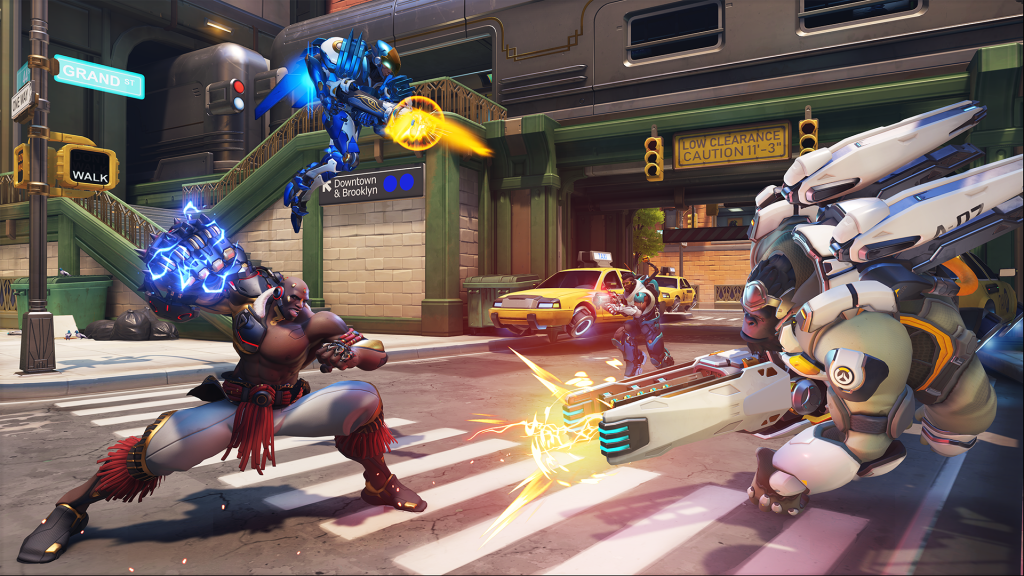
When a single mistake by a single player instantly loses a team fight, grace disappears from the lobby. Teammates don’t offer encouragement or constructive advice; they demand an immediate hero swap or start typing “Tank gap” into global chat before the first round even finishes.
Dehumanization in the Lobby: From Teammates to NPC Bots
When you combine rigid Role Queues, a scoreboard that weaponizes raw numbers, and the immense pressure of 5v5 solo-tanking, you get a gaming culture that feels fundamentally hostile to human error.
In early Overwatch, when a player tried a bizarre flank or picked an off-meta hero like Torbjörn on attack, the lobby treated it like a fun, weird experiment. You cheered them on. You built ridiculous strategies around them. You recognized that on the other side of that screen was a person having a goofy evening after work.
Today, off-meta choices are treated as an attack on your personal competitive rank. If a player isn’t playing the absolute meta-optimal hero, utilizing the highest-tier hero matchups, and keeping their stats perfectly aligned with scoreboard averages, they are immediately dehumanized.
They aren’t viewed as a fellow gamer who might be having a bad match, testing out a new playstyle, or simply learning a difficult mechanical character like Tracer or Doomfist. They are viewed as an obstacle—a broken piece of code that needs to be reported, flamed, or bullied out of the match.
We have traded player empathy for mechanical optimization. We have replaced the joy of spontaneous collaborative play with the cold, unfeeling metrics of a corporate performance review.
And the saddest part is that this toxicity isn’t an accident. It is the direct design output of a game that rewards numerical stat-padding while providing zero systems to highlight intangible, empathetic teamwork.
Reclaiming the Soul of the Hero Shooter
Is it possible to bring empathy back to Overwatch 2, or is the community permanently poisoned? Fixing this problem doesn’t start with harsher text chat bans or more aggressive automated reporting bots. You cannot police toxicity out of a game when the game’s core UI design actively encourages players to judge and scapegoat one another. If Blizzard wants to heal the lobby vibe, they need to redesign the systems that drive us apart:
Rethink the Scoreboard: Hide raw damage and healing totals during active gameplay. Instead, display team-focused utility metrics, space creation indicators, or personal performance targets that encourage individual improvement rather than teammate comparison.
Reward Intangible Teamwork: Bring back post-match endorsement cards that highlight clutch plays, game-saving utility uses, and positive teamwork rather than just Play of the Game kill streaks.
Embrace Flexibility: Experiment with hybrid queue systems or casual modes that restore fluid hero swapping and double-tank synergies without forcing players into hyper-rigid competitive boxes.
Until we stop evaluating our teammates through the lens of weaponized spreadsheets and rigid role expectations, Overwatch 2 will remain a brilliant mechanical shooter trapped inside a deeply miserable social environment. It’s time to close the scoreboard, stop looking at raw numbers, and remember that behind every hero portrait is just another human being looking for a fun match.
Now I want to hear from you guys. Have you felt the lobby vibe shift over the years? What was the moment you realized the scoreboard was doing more harm than good in your matches? Do you miss the wild, unscripted chaos of 6v6 open queue, or do you prefer the structured predictability of 5v5 role queue despite the pressure? Drop your hot takes, tank horror stories, and lobby experiences in the comments below!