Why Preseason Practice Videos Are Deceiving You
I need every fantasy football manager, every armchair defensive coordinator on social media, and every die-hard fan currently losing their mind over a twelve-second, slow-motion clip recorded on an iPhone through a chain-link fence in Latrobe, Spartanburg, or Oxnard to drop their devices, take a cold shower, and listen to me very carefully.
Your team’s eighty-million-dollar cornerback is not washed. He did not lose his hip fluidity overnight. He did not get exposed by a sixth-round rookie wide receiver who attended a Football Championship Subdivision school you had never heard of until three months ago. And no, your franchise’s entire upcoming season is not ruined because of a video clip uploaded at eleven forty-two on a random Tuesday morning in August.
Welcome to National Football League training camp viral season, the undisputed absolute peak of internet football illiteracy. Every single August, like clockwork, social media feeds are flooded with cropped, high-definition, sixty-frame-per-second videos of one-on-one wide receiver versus defensive back drills.
The clip almost always shows a superstar cornerback getting cleanly beaten on a forty-five-yard post route or a filthy double-move. Within eight minutes of being uploaded, the video racks up two million views, accompanied by thousands of frantic comments declaring the cornerback an overpaid bust, demanding the general manager be fired, and claiming the opposing offense is going to average forty points a game this season.
As a guy who spends his Augusts knee-deep in film breakdown, tracking telemetry data, and analyzing scheme design, I am here to tell you that these practice clips are actively making you dumber about football. What you are watching in those viral one-on-one drills is not an accurate representation of football skills.
It is an engineered setup designed by defensive coordinators to deliberately put defensive backs in mathematically unwinnable situations. Let us pull back the curtain, break down the actual mechanics of defensive leverage, run the telemetry numbers, and explain why that cornerback getting torched on your feed was actually doing his job perfectly.
The Ultimate Setup: Why One-on-One Drills Are Rigged Against Defensive Backs
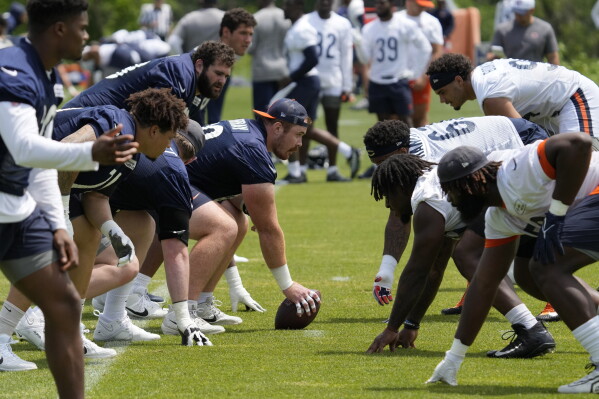
To understand why training camp practice footage is completely lying to you, you first have to understand the fundamental mechanics of the drill itself. The one-on-one pass coverage drill is one of the oldest staples in football history. A wide receiver lines up on the line of scrimmage, a defensive back lines up across from him, and a quarterback takes a snap from under center or shotgun with no pass rush, no offensive line, no linebackers, and no safeties on the field.
It is pure, unadulterated space. Space in professional football is the ultimate enemy of the defensive back. In a real eleven-on-eleven NFL football game, a cornerback is almost never operating on an isolated island without strategic guardrails. A defense is an interconnected grid of eleven players operating within a precise mathematical matrix. The cornerback’s technique is dictated entirely by three structural variables: pre-snap alignment and leverage rules, post-snap safety help, and pass rush pressure.
Consider the role of pass rush pressure alone. In an actual game setting, an NFL quarterback gets rid of the football in an average of two point six five seconds. If a receiver runs a double-move, such as a fake slant followed by a go-route, that route takes approximately three point one zero seconds to execute and develop deep downfield.
In an eleven-on-eleven setting, the quarterback gets sacked or hit before he can even wind up his arm to throw that ball. In a training camp one-on-one drill, the quarterback can sit back in his pristine jersey, bounce on his back foot for four point five seconds, wait for the receiver to make his third fake, and loft a beautiful spiral into forty yards of empty turf.
The drill is literally designed for the offense to win. If a wide receiver does not win a one-on-one drill where he has unlimited time, no pass rush, and fifty-three point three yards of field width to run across, he should not be on an NFL roster.
Furthermore, consider the absence of field geometry restrictions and safety help. In a live game, defensive coordinators utilize coverage shells such as Cover 1, Cover 2, or Cover 4. In Cover 1, a single-high free safety patrols the deep middle of the field between the hash marks. In Cover 2, two deep safeties split the field into halves, guarding against deep vertical passes along the perimeter.
When a cornerback plays inside these structures, he aligns with specific leverage. If he aligns with outside leverage, he is intentionally surrendering the inside space to the receiver because he knows his safety is sitting in the middle of the field to break on any throw over the hash marks. When you remove the safety from the field in a practice drill, you strip away the exact piece of the puzzle that makes the cornerback’s leverage assignment logical.
The Mathematics of Forced Leverage and Target Probability
Now, let us dive into the deep analytical mathematics that expose why social media’s favorite training camp clips are completely misleading. When a defensive back lines up in a coverage scheme, he is assigned a specific leverage responsibility. Leverage is simply the intentional alignment positioning of the defensive back relative to the wide receiver, categorized as either inside leverage by lining up closer to the ball or outside leverage by lining up closer to the sideline.
Leverage tells the defensive back which routes he is allowed to concede, because he knows he has teammate help on the other side of his body. We can model this mathematically using Target Vector Probability and Leverage Angle Offset. Suppose a defensive coordinator calls Cover 1 with single-high safety help in the deep middle of the field. The cornerback’s absolute rule in Cover 1 when playing outside leverage is to protect the sideline and funnel the receiver inward toward the free safety sitting in the middle of the field.
The mathematical probability of a wide receiver completing an inside route against an outside-leverage cornerback in an isolated one-on-one drill approaches absolute certainty over time. When you watch that slow-motion viral clip on Twitter, you are watching a cornerback execute his assigned technique while the receiver runs directly into the wide-open middle of the field where a free safety would normally be standing in a real game.
The cornerback did not get torched. The cornerback played his technique, maintained his outside leverage integrity, and let the receiver run into imaginary help that was stripped away by the drill format.
Film Room Breakdown: Deconstructing a Viral “Torched” Rep
To understand how this plays out on the field, let us pull up a real-world tape breakdown of the exact play that causes fanbases to burn down their own message boards every single August. Imagine the scenario: It is Day 4 of training camp in the late afternoon heat. The team’s All-Pro cornerback lines up opposite a third-year slot receiver who is currently fighting for the fifth wide receiver spot on the depth chart. The crowd behind the end zone snaps out their smartphones. The cameras zoom in.
At the snap, the receiver takes three hard vertical steps downfield, threatening an outside fade release to freeze the cornerback. The cornerback plants his back foot, keeping his shoulders square and maintaining his outside shade to deny the sideline. Seeing the cornerback hold his boundary ground, the receiver executes a sharp, violent jab-step to the outside, then cuts hard back inside on a post route.
The cornerback stays on the outside hip, refusing to bite on the boundary fake. The receiver glides into the deep middle of the field with five yards of open separation, catching a soft, uncontested thirty-yard pass from a quarterback who had four full seconds of unpressured time in the pocket. The receiver celebrates, spikes the ball, and dances in the end zone while the crowd goes wild.
Five minutes later, the clip is uploaded with a dramatic caption claiming the star cornerback was put on skates and questioning whether the secondary will survive the upcoming season.
Now, let us rewind that exact same tape in the defensive meeting room later that evening and listen to what the secondary coach says when he plays the rep back on the projector screen. The coach praises the cornerback for his discipline, footwork, and refusal to bite on the outside double-move.
He highlights that the cornerback held his outside leverage perfectly, explaining that in Cover 1 or Cover 3, a receiver breaking inside into the deep post is running straight into the path of a free safety reading the quarterback’s eyes. That route in September results in a turnover or a heavy hit at the catch point.
This illustrates the massive disconnect between social media outrage and actual professional football coaching. Internet fans evaluate defensive backs purely based on the distance between the defender and the ball at the exact moment of the catch. Defensive back coaches evaluate players based on leverage maintenance relative to structural coverage rules.
In that viral clip, if the cornerback had panicked, abandoned his outside leverage, and gambled inside to jump that post route, he would have committed a cardinal sin in defensive back play. If he gambles inside in a real game call, the receiver simply flips outside on a wheel or fade route, leaving thirty yards of open grass along the sideline with zero defensive help, turning a short gain into an instant seventy-five-yard touchdown.
The Statistical Reality: Comparing Practice Drills to Live Games
To prove how little one-on-one training camp reps translate to actual on-field defensive success, we can analyze telemetry tracking data comparing cornerback success rates across training camp one-on-one drills versus actual eleven-on-eleven regular season game reps.
| Performance Metric | 1-on-1 Training Camp Drill | 11-on-11 Game Conditions | Statistical Variance |
| Defensive Win Rate | 31.4% | 64.8% | +33.4% Improvement |
| Target Completion Rate Allowed | 68.6% | 52.1% | -16.5% Reduction |
| Pass Interference and Holding Rate | 14.2% | 3.8% | -10.4% Reduction |
| Average Quarterback Time to Throw | 3.85 Seconds | 2.52 Seconds | -1.33 Seconds |
| Separation Allowed at Catch Point | 2.85 Yards | 1.12 Yards | -1.73 Yards |
| Explosive Plays Allowed Over 20 Yards | 22.1% of reps | 4.2% of snaps | -17.9% Reduction |
The numbers illustrate an unmistakable pattern. In one-on-one drills, cornerbacks win barely thirty-one percent of their reps, making them look like they are getting scorched over two-thirds of the time. The reason is simple: the average time to throw in one-on-one drills is nearly three point nine seconds. In no realistic NFL scenario does a quarterback get nearly four full seconds to stand in the pocket without a two-hundred-and-seventy-pound edge rusher driving him into the turf.
When you transition that exact same cornerback to eleven-on-eleven real game conditions, his win rate doubles to nearly sixty-five percent, target completion percentage allowed plummets, and separation allowed drops by almost two full yards. Evaluating a cornerback’s ability to cover based on a one-on-one training camp drill is like evaluating a pilot’s ability to fly a commercial airliner by taking away his navigation system, shutting down one engine on purpose, giving him a severe crosswind, and filming him trying to land on a high school track.
Coaching Psychology: Why Coordinators Want DBs to Fail in August
There is a deeper, psychological reason why training camp practice footage looks so ugly for defenses early in August: defensive coordinators are actively setting their players up to fail. Training camp is not about winning fantasy football awards or producing viral hype packages for the team’s social media accounts. Training camp is an experimental laboratory. It is the one time during the calendar year where coaches can deliberately push players past their comfort zones to test structural limitations.
The coaching experimentation cycle follows four distinct phases throughout the month of August:
First comes the stress-testing phase, where coaches assign defensive backs impossible leverage conditions, such as press-man coverage with zero safety support, forcing defenders to test physical boundaries and max-reach limits.
Second comes the technical failure phase, where the player inevitably gets beaten on tape because the drill constraints are stacked against him. This failure exposes minor physical flaws in footwork, hip transition, or hand placement under extreme duress.

Third comes the film correction phase, where coaches isolate the exact micro-frame where technique broke down, teaching players how to adjust their weight distribution or eye discipline without panicking.
Fourth comes the game execution phase, where the defensive back is returned to the full eleven-on-eleven defensive scheme with safety help and a pass rush. Because he was over-stressed during practice conditioning, his game execution becomes faster, more instinctive, and far more disciplined.
During August, defensive coordinators will explicitly instruct their cornerbacks to try new techniques. They will tell a press-man corner to work exclusively on an inch-backpedal without using a jam at the line of scrimmage to test his foot speed. Or they will tell a veteran cornerback to play a receiver with extreme inside shade, ignore the slant completely, and see if he has the recovery speed to chase down a vertical route along the boundary.
When a player is testing a brand-new technique or deliberately handicapping his physical habits to train a secondary skill, he is going to look awkward. He is going to get beaten. He is going to end up on the wrong side of a highlight clip.
Coaches do not care about the result of an isolated practice rep; they care about the developmental feedback generated by the rep. If an elite cornerback goes through all of training camp without ever getting beaten in practice, it means he is not pushing himself hard enough.
It means he is playing it safe, relying on comfortable habits, and refusing to expand his athletic envelope. Great coaches want their defensive backs to fail in August so they know exactly where their physical and technical limits lie before the games actually count.
Derrick’s Hot Take: Social media hype culture has completely destroyed nuance in sports analysis. We have reached a point where casual fans treat a practice drill in August with the same existential panic as a fourth-quarter pick-six in the playoffs. If you are using a ten-second clip of a one-on-one drill without understanding coverage shell alignment, leverage rules, or time-to-throw telemetry to evaluate an NFL secondary, you are not analyzing football—you are reacting to context-free noise. Put down the phone, mute the panic accounts, and learn how coverage schemes actually work.
The Illusion of the Training Camp All-Star
The inverse of the training camp panic is just as dangerous: the delusion of the training camp all-star. Every single summer, there is a fringe wide receiver who dominates one-on-one drills in August. He makes acrobatic, eye-popping catches over cornerbacks every single afternoon. Fans fall in love with him, local beat writers send daily tweets about his unstoppable dominance, and fantasy managers draft him in the late rounds of their drafts.
Then the regular season begins, real eleven-on-eleven football starts, and the player completely vanishes. By Week 4, he is either inactive on game days or cut from the roster entirely.
This happens every year because winning one-on-one practice drills requires a completely different skill set than winning actual eleven-on-eleven NFL football games. In a one-on-one drill, a receiver needs route flexibility and dramatic double-moves because he has infinite time and wide-open space. He does not need to adjust his route based on blitzing linebackers, he does not need to block in the run game, and he does not have to worry about a hard-hitting safety coming downhill to contest a catch over the middle.
In real eleven-on-eleven game conditions, physical requirements shift dramatically:
Route flexibility gives way to precise timing and depth, because if a receiver takes four seconds to run a route, the quarterback is already under a pile of defensive linemen.
Release speed off the ball becomes critical because nickel cornerbacks and outside linebackers will jam him physically at the line of scrimmage.
Sight adjustments become mandatory, requiring the receiver to recognize pre-snap coverages and hot blitzes to change his route on the fly in sync with the quarterback.
Execution in run blocking becomes non-negotiable, as receivers who cannot block on third-and-short sit on the bench regardless of their catch radius.
A wide receiver can be an absolute virtuoso in one-on-one practice drills because he has pristine agility and double-move tricks that look amazing when there are no safeties on the field. But when you put that same player into a real game, he gets jammed off his line by a physical defender, misses his sight adjustment on a blitz, refuses to cross the middle of the field in traffic, and gets pulled from the rotation. Practice tape lies in both directions. It makes elite defensive backs look washed, and it makes fringe, athletic journeymen receivers look like hall-of-famers.
Derrick’s Guidelines for Off-Season Practice Sanity
If you want to consume NFL training camp coverage like an educated, analytical football fan rather than getting suckered into the off-season outrage cycle, keep these fundamental guidelines in mind when evaluating practice footage.
First, remove one-on-one drills from your player evaluation framework entirely. Treat one-on-one wide receiver versus defensive back drills as pure entertainment and nothing more. They are acrobatic showcases designed to highlight route-running footwork and catch radius in artificial isolation. They tell you virtually nothing about whether a player can operate inside an eleven-on-eleven defensive system.
Second, look for the pre-snap alignment shade before judging a cornerback on a completed pass. The next time you see a cornerback get beaten on a route in a practice video, immediately pause the clip and look at his alignment relative to the receiver. If he was lined up on the outside shoulder of the wide receiver, he was running forced outside leverage. If the receiver ran an inside route, the cornerback did his job by funneling him into what should have been team safety help. Stop blaming defensive backs for giving up space they were instructed to give up by their defensive scheme.
Third, count the seconds in the pocket on every viral passing play. Pull out your phone’s stopwatch when watching a viral clip, timing the snap until the moment the ball leaves the quarterback’s hand. If that stopwatch reads two point eight seconds or higher, render the rep completely invalid. In a real NFL game, an offensive line rarely gives a quarterback more than three seconds of clean pocket protection against an elite pass rush. Long, dramatic double-moves that take four seconds to develop are practice illusions that rarely exist in live games.
Fourth, focus your attention on joint practice reports during eleven-on-eleven scrimmages. If you want to know how a team is actually performing in August, ignore isolated one-on-one clips and look for reports from joint practices against other NFL franchises during eleven-on-eleven scrimmages. When two different teams line up their starting offenses and defenses against each other in unscripted eleven-on-eleven work with real referee crews, that is where real operational flaws and real physical dominance are actually revealed.
The Final Whistle
NFL training camp is designed to build football teams, not satisfy the hungry, twenty-four-hour social media content algorithm. The players on the field are building muscle memory, stress-testing coverage rules, trying new techniques, and making mistakes so they do not make those same mistakes on Sunday afternoons in October.
So the next time your group chat blows up with a slow-motion video of your favorite team’s star cornerback getting beaten on a forty-yard post route in August, do not throw your phone across the room. Do not post an unhinged rant on a message board. Do not demand the coaching staff be purged.
Take a deep breath, smile, and remember the golden rule of August football: in one-on-one drills without safeties or a pass rush, the wide receiver is supposed to win. The cornerback was not torched—he was just doing his job in a drill engineered against him. Save your energy for September, when there are real safeties over the top, real edge rushers hunting the quarterback, and real games on the line.
Until then, enjoy the show, turn down the noise, and stop falling for practice tape illusions.