The Cozy MMO Paradox: Can a Game Truly Be Relaxing with Other People Around?
Close your eyes and envision the perfect cozy gaming experience. You are in a softly lit space with gentle ambient lofi music playing softly behind you. In the game, a soft morning fog sweeps across a field of golden wheat. You take your watering can, hear the soft shhh-shhh of water hitting the ground, and get ready to search for wild mushrooms in a serene, untouched forest. You have total authority over your time, your environment, and your tranquility.
Now, open your eyes and include twenty-five unfamiliar faces in that same setting. Out of nowhere, two individuals dash by your farm sporting neon-pink bunny ears. A person called xX_DarkRiven_Xx is frantically leaping in circles atop a rock node that you were just about to extract. The chat box in the bottom-left corner of your screen is quickly filled with heated disputes:
“GROVE AT 3AM! CALL IT OUT IN CHAT OR YOU’RE SELFISH!”
“WHO CHOPPED THE FLOW TREE BEFORE THE TIMED CALLOUT? REPORTED!”
“LF2M BUG CATCHING LURE PARTY – FAST GRIND ONLY!”
Welcome to Palia, the heavily hyped “cozy MMO” designed by Singularity 6. And welcome to what I call The Cozy MMO Paradox: the fundamental, irreconcilable friction between the intimate, quiet solitude that makes cozy games work, and the chaotic, high-efficiency, social dynamics of a massively multiplayer online game.
The Sacred Isolation of Cozy Games
To grasp why blending “cozy” with “MMO” forms such a harmful mix, we must first analyze what truly renders cozy games—such as Stardew Valley, Animal Crossing, or Unpacking—so profoundly soothing.
Comfortable gaming goes beyond mere aesthetics. It is not characterized solely by pastels, gentle music, or adorable farm animals. Cozy gaming is a mental refuge constructed on three essential foundations: Independence, Isolation, and Effortless Rhythm.
When you start up Stardew Valley on a rainy Tuesday night, the universe awaits you. The oak tree in the woods won’t be cut down by anyone else while you’re occupied caring for your cows. The uncommon fish in the river lacks a global spawn timer that requires you to set an alarm on your actual phone. The game does not punish you if you wish to spend three full in-game days simply redecorating your virtual bedroom or gazing at the ocean waves.
Above all, you are the focal point of your own universe. You are liberated from the social anxiety, performative acts, and spatial rivalry of the physical realm. Comforting games serve as a virtual blanket fort. The whole purpose of a blanket fort is that you decide who can enter.
Chloe’s Hot Take: True coziness requires complete personal control over your environment. The moment you introduce random strangers with competing priorities into a shared space, “cozy exploration” instantly morphs into spatial real estate competition.
When developers take that blanket fort, tear down the walls, and drop it into a persistent, shared server shard filled with 24 random internet strangers, the sanctuary collapses.
You are no longer experiencing a serene world at your own pace; you are perpetually reacting to the noise, pace, and efficiency demands of everyone else around you.
How MMO Mechanics Ruin Quiet Solitude
Palia was pitched to us as a revolutionary concept: an online world without combat, without real threat, and without pressure. The developers promised that players could gather, farm, craft, and build homesteads together in a peaceful, communal environment.
It sounds dreamy on paper. But in practice, MMO systems are inherently built on scarcity, spawn timers, and optimization. And those systems completely butcher the vibe. Let’s look at how this plays out in Palia‘s actual day-to-day gameplay:
1. The Myth of “Shared Resources” and the Anxiety of Spawns
To prevent intense toxicity, Palia implemented a system where anyone who strikes a resource node (such as a Palium ore or a Flow Tree) receives a portion of the loot provided they make a hit.
In theory, this appears very considerate and non-competitive. In truth, it establishes a strange, socially uncomfortable etiquette fee. As you stroll around Bahari Bay and notice an uncommon Palium node, a sudden wave of social anxiety washes over you:
Should I simply mine it to return to enjoying my afternoon?
If I extract it by myself, does that make me a “selfish player” in the view of the server?
Should I halt my actions, input the precise grid coordinates in the public chat room (“Palium node at hideaway cave!”), and awkwardly perform the ‘wave’ emote for five minutes as I wait for strangers to approach?
If you merely cut it or extract it, individuals in chat could actually accuse you of “stealing” or “sniping” resources. What began as a leisurely rock-mining excursion has transformed into an unexpected public service duty, forcing you to organize a small event for unfamiliar faces just to acquire some iron ore.
2. The Nightmare of the “Flow Grove” at Midnight
The clearest illustration of this design flaw is Palia’s midnight Flow Tree Grove. Each night in the game at midnight, a group of uncommon Flow Trees appears in the wild.
In a solo game, discovering a mystical luminous forest of old trees would be a stunning, inspiring revelation. You would be beneath the violet covering, hear the enchanting ambient buzz, and experience a feeling of amazement.
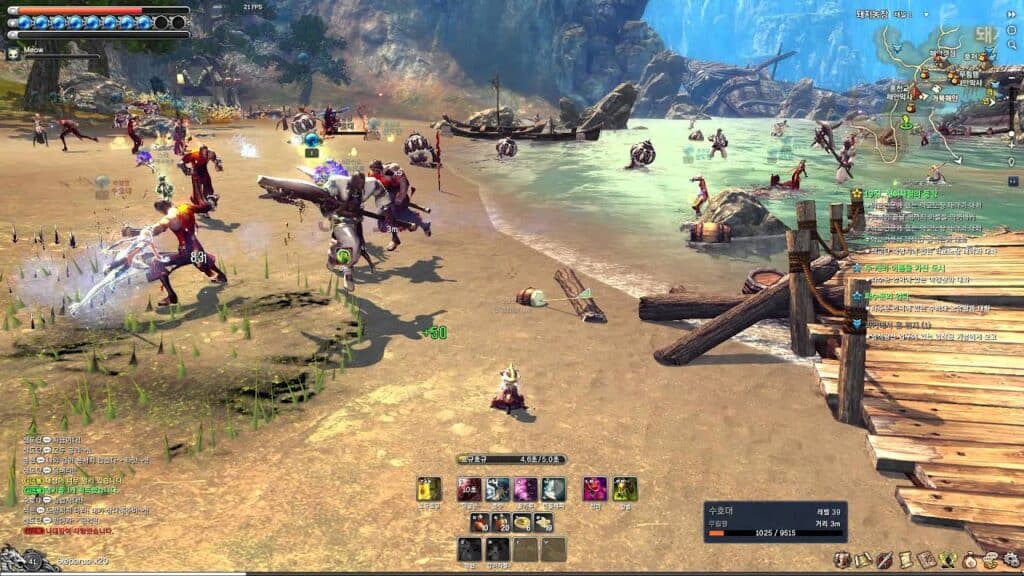
In Palia, discovering a Flow Grove sparks an instant, frenzied chaos. Someone shouts the coordinates in the chat. In under two minutes, ten players rush across the meadow like a horde of ravenous locusts. Each player strikes each tree once with their axe to mark the loot, and then they gather in a circle, waiting for the set server chop time (typically 3:00 AM in-game time).
You remain in complete silence next to ten quiet avatars positioned within each other’s hitboxes, anticipating a timer to reach zero so you can simultaneously cut down a forest. It doesn’t seem like a warm, enchanting dream realm. It resembles standing in queue at the DMV while clutching an axe.
3. Public Chat and the Death of Atmospheric Immersion
Nothing kills the immersive atmosphere of a peaceful high-fantasy forest faster than the global server chat window. You’re listening to the gentle rustle of leaves and the chirp of virtual crickets. You’re fully immersed. Then, a bright blue chat window flashes on your screen:
[Server] GamerGuy99: wtf why did someone chop the grove early????
[Server] CozyFairy_x: I didn’t see anyone call it out, calm down
[Server] GamerGuy99: bro I ran all the way from Kilima for that flow wood ur literally ruining the game
[Server] SunshineSam: anyone selling 50 garlic?
You can hide the chat, of course. But hiding the chat means you miss callouts for rare items you actually need to upgrade your tools, effectively punishing you for wanting peace and quiet.
You are constantly forced to choose between immersion and efficiency.
Why “Other People” Destroy Cozy Spatial Dynamics
There is an old, famous quote by French philosopher Jean-Paul Sartre: “Hell is other people.” Now, Sartre probably wasn’t thinking about cozy farming simulators when he wrote that, but if he had played Palia, he would have felt thoroughly validated.
The physical presence of other players in a cozy game creates a subtle, constant friction that completely disrupts your mental flow state.
The Problem of “Tragedy of the Spatial Commons”
In Animal Crossing: New Horizons, your island serves as a flawless canvas. You stroll along a trail you created, rest on a seat you made, and appreciate the view.
In Palia’s expansive world, the surroundings are perpetually affected by the frenetic actions of other players.
You settle beside a tranquil riverbank to catch fish. Three seconds later, another gamer swoops down from a mountaintop, lands directly in the water beside your fishing bobber, frightens the wildlife, takes out a bug net, and begins hurriedly tossing bombs at a rare beetle.
They’re not attempting to be unkind! They are simply enjoying the game! However, their swift, purpose-driven actions quickly shatter the tranquil atmosphere you were relishing. You are no longer in a tranquil, vibrant environment; you are in a sprawling lobby where everyone scurries about like frantic chickens attempting to complete their daily objectives.
The “Home Tour” Illusion and Social Comparison
To Palia’s credit, the developers recognized that open-world gathering had social friction, so they tried to shift the core “cozy community” focus toward housing and decoration.
They introduced plot visits and community “Home Tours,” where players can open up their private homesteads for other people to walk through and rate.
At first glance, this seems harmless. Who doesn’t want to show off their cute custom kitchen? But this feature accidentally imports one of the absolute worst aspects of modern real-life social media into a cozy game: Performative Comparison.

Chloe’s Hot Take: Housing in cozy games should be a personal sanctuary, not a public showroom. The moment you introduce voting, rating systems, and public showcases, interior design stops being about personal self-expression and starts being about clout-farming and flex culture.
In Stardew Valley, your house is decorated for you. You put a random pumpkin on a table because you think it looks silly and cute.
In a social MMO setting with home ratings, housing quickly becomes a competitive arms race. You visit someone else’s plot and see a massive, glitched, multi-story palace decorated with 500 rare plushies, glitch-placed floating aquariums, and full furniture sets that required 200 hours of gold grinding.
You return to your modest, three-room wooden cottage, look at your simple wooden table, and suddenly feel a strange sense of inadequacy.
The pressure to build for an audience instead of building for yourself creeps in. The cozy blanket fort has officially turned into a real-estate open house where you’re hoping for five-star reviews from passing strangers.
The Fundamental Flaw: Cozy Games Demand Solitude
Here is the inconvenient truth that game designers are afraid to admit: Cozy gaming and Massively Multiplayer architecture are fundamentally incompatible.
MMOs thrive on:
- Competition and scarcity
- Strict schedules, timers, and group coordination
- High player density and loud, active social spaces
- Efficiency, min-maxing, and speed-running
Cozy games thrive on:
- Abundance and personal pacing
- Unstructured, timeless exploration
- Solitude, quietude, and personal agency
- Imperfection, relaxation, and mindfulness
When you try to blend these two ideologies together, you don’t get the best of both worlds. You get a bizarre hybrid that satisfies neither audience.
Hardcore MMO players get frustrated by the lack of challenging endgame content, trading systems, and competitive mechanics. Meanwhile, true cozy gamers get overwhelmed by the chatter, the timers, the resource etiquette, and the hyperactive crowd running through their peaceful views.
How to Fix the Cozy MMO (Or At Least Save Your Sanity)
If developers want to create a truly successful online cozy game—or if you want to enjoy Palia without losing your mind—the entire philosophy surrounding social interaction needs to be redesigned from the ground up.
1. Give Us Private / Solo Servers
The single most important feature Palia could ever add is a button that says: “Play in Solo / Friends-Only Mode.”
Give players the option to generate a private world instance where resources don’t require public callouts, trees don’t need group chopping, and chat is strictly limited to people on your friends list. Let us invite three close friends over for a campfire, rather than forcing us onto a public server shard with 24 strangers.
2. Move From “Massive” to “Intimate” Multiplayer
Cozy games work brilliantly in small-scale co-op.
Playing Stardew Valley with your partner or two close friends is magical because you share goals, communicate effortlessly, and respect each other’s pace. The problem with Palia isn’t multiplayer—it’s the Massively part of Massively Multiplayer.
We don’t need a sprawling city filled with random strangers performing emote dances. We need an intimate village where every face is someone we actually know and choose to hang out with.
3. Asynchronous Social Features
If you want to include strangers, look at how games like Journey or Animal Crossing handle social connection: asynchronously.
Let us leave little physical notes in the woods for strangers to find. Let us trade baked goods through a village mailbox. Let us visit offline copies of people’s houses without forcing us to interact with them in real-time.
Asynchronous connection gives us the warm feeling of community without destroying our personal solitude.
Other people aren’t inherently bad, but uninvited crowds are the antithesis of peace. A game can only be truly cozy if it gives you the power to close the door and lock out the rest of the world.
At the end of the day, Palia is a fascinating, beautiful experiment. It proved that millions of players are hungry for a non-violent, peaceful online world.
But it also proved that you cannot simply strip combat out of a traditional MMO engine and call it cozy. True coziness isn’t just about what you’re doing in a game; it’s about how the game makes you feel. And as long as cozy MMOs prioritize public server density over personal solitude, they will always feel more like a crowded shopping mall than a peaceful sanctuary.
Now, I want to hear from you! Have you played Palia or other online cozy games, and do you actually enjoy running into other players in the wild? Or do you find yourself wishing for a “Solo Server” button every time someone chops down a tree you were walking toward?
Are you team “The More The Merrier” or team “Leave Me Alone In My Digital Forest”? Drop your hot takes, awkward server chat encounters, and cozy gaming confessions in the comments below!