The Bottleneck Episode: Low Budget, Max Genius
A hidden truth in television production, known by every studio executive, line producer, and showrunner yet seldom mentioned in refined circles, is that many of the most exceptional hours of television ever aired emerged not from lofty creative aspirations, but from pure, unfiltered financial urgency.
Imagine the scene within a writer’s room in the ninth or tenth week of production. The budget for the season has been completely shattered. Maybe episode four showcased a ridiculously costly car chase that destroyed six production cars. Perhaps episode seven needed three hundred background actors in authentic Victorian attire, or a sci-fi set construction that depleted the quarterly contingency fund rapidly.
Out of the blue, the line producer enters the room, slams a ledger down on the conference table, and issues a harsh ultimatum: “We have exactly twelve dollars and fifty cents remaining in the bank for episode eight.” “Determine it.”
During the initial phases of network television, this economic downturn led to the emergence of a particular, practical sub-genre recognized across the industry as the bottle episode. The phrase initially came from the Star Trek set, where the cast and crew called episodes that took place solely within the established sets of the Starship Enterprise “ship-in-a-bottle” ideas.
The operational instruction was misleadingly straightforward: confine the main cast within one room, a malfunctioning elevator, a subway carriage, or a sealed kitchen. Eliminate the budget for guest stars entirely. Remove all site filming. Remove special effects. For a writer lacking motivation, a bottle episode resembles a confinement. Yet for a master artisan of television storytelling, it represents the supreme test.
When you remove the eye-catching distractions of contemporary television—the expansive drone footage, the dynamic action scenes, the exorbitant CGI, and the rapid shifts between four separate B-plots—a program is reduced to its essential framework. It has no place to conceal itself. It must rely solely on the inherent power of two elements: the foundational structure of the dialogue and the raw, authentic performances of its cast.
Limitation is not the adversary of creativity; it is its most powerful stimulant. The bottleneck episode represents the pinnacle of television’s daring efforts, and when carried out flawlessly, it reliably delivers the most powerful, emotionally charged hours a show can ever achieve.
Part I: The Crucible of Absolute Limitation
To understand why trapping characters in a box generates such incredible drama, we have to look at the psychological mechanics of space in visual storytelling.
Under normal television circumstances, narrative momentum is maintained through physical movement and spatial distraction. If a scene between two characters starts to drag or feel slightly flat, the director can cut to a wide shot of a bustling city street.
They can transition to a completely different subplot on the other side of town. They can throw in a sudden plot twist, introduce a surprise guest star, or interrupt the conversation with an action beat. Modern television has developed a hyperactive, frantic rhythm designed specifically to prevent the viewer’s brain from ever sitting still long enough to notice flaws in character dynamic or dialogue construction.
A bottle episode systematically dismantles every single one of those escape hatches.
Standard Television Rhythm:
[Scene A] ──► [Spatial Cut / Location Change] ──► [Subplot B] ──► [Action Beat] ──► [Pacing Maintained]
Bottle Episode Architecture:
[Single Locked Room] ──► [Zero Spatial Escape] ──► [Escalating Verbal Friction] ──► [Emotional Catharsis]
When you lock four characters in a single room for forty-five minutes, the physical space ceases to be a passive backdrop and becomes an active pressure cooker. The room contracts with every passing minute. Without the release valve of location changes or secondary subplots, the interpersonal friction between the characters escalates exponentially.
Every unsaid resentment, every hidden secret, every buried trauma, and every fundamental flaw in their relationships is forced to the surface because there is literally nowhere else for the narrative energy to go.
The Structural Architecture of Narrative Compression
The distinction between a typical episode and a bottle episode goes beyond budget; it represents a core change in the functioning of story mechanics.
In a typical episode, outside events influence character decisions. An outside occurrence takes place—a crime happens, a client requests something, a conflict starts—and the characters respond to that external influence. The action extends out into the universe.
In a bottle episode, character decisions propel the inner narrative. Due to the absence of external events, the story engine depends solely on psychological exploration and verbal conflict. A solitary line of speech turns into a landmine. A long-hidden secret turns into a third-act explosion. The motion is inward, delving deeply into the psychological depths of the characters.
This structural compression redefines dialogue from mere exposition into a dynamic, deadly tool. In a realm devoid of special effects, a well-crafted, incisive monologue holds greater impact than a hundred-million-dollar CGI scene.
Part II: The Pantheon—Deconstructing the Masterpieces
To appreciate the sheer genius of this format, we need to examine the classic bottle episodes that didn’t just survive their financial constraints, but used them to redefine what television was capable of achieving.
1. Breaking Bad — “Fly” (Season 3, Episode 10)
You cannot discuss the art of the bottle episode without confronting “Fly,” directed by Rian Johnson and written by Sam Catlin and Moira Walley-Beckett. It remains one of the most polarizing, brilliant, and structurally audacity-filled hours in modern prestige television history.
The production situation resembled a classic line-producer nightmare: Season 3 of Breaking Bad was significantly over budget, having exhausted its cash reserves on extensive location filming in the New Mexico desert and expensive action sequences. They required an episode that was nearly free, made use of current sets, and did not need any new actors.
The outcome? Walter White and Jesse Pinkman dedicate a full hour in their underground meth lab attempting to catch a single housefly that Walt believes is a “contaminant.”

On the surface, the concept appears to be an unbearable, gimmicky filler installment. In practice, it serves as a masterclass in psychological horror and character exploration. The fly represents more than just a fly; it embodies the decay of Walter White’s ethical principles. It symbolizes his total lack of control, his intense guilt for watching Jesse’s girlfriend Jane choke to death, and the overwhelming awareness that his life has plunged into an irreparable nightmare.
The episode depends solely on the remarkable acting chemistry between Bryan Cranston and Aaron Paul, with no explosions or cartel gunfights. As Walt grows more sleep-deprived and unstable, climbing ladders and waving flyswatters like a lunatic, the atmosphere transitions from humorous absurdity to frightening emotional fragility.
The peak of the episode—where a heavily sedated Walt almost reveals his involvement in Jane’s death to Jesse—functions effectively due to their confinement in that sterile, suffocating underground space. Distractions are absent. Only the nauseating, oppressive burden of two men ensnared in the ruins of their own decisions remains.
2. Community — “Cooperative Calligraphy” (Season 2, Episode 8)
While Breaking Bad used the bottle episode to evoke existential dread, Dan Harmon and the creators of Community utilized it to perform a meta-analysis of the essence of television storytelling.
When the study group notices that Annie’s pen has disappeared for the twentieth time, Annie loses her temper, secures the doors to the study room, and won’t permit anyone to leave until the culprit admits to the theft. The series openly recognizes its own structural format, as Abed loudly announces to everyone that they are officially participating in a “bottle episode.”
What comes next is a flawless, mind-bending analysis of social interactions and suspicion. Since the characters are confined to the room, the episode gradually removes their courteous social façades one layer at a time. They rummage through each other’s bags, charge each other with profound treachery, and ultimately find themselves in their underwear in a room completely turned on its head.
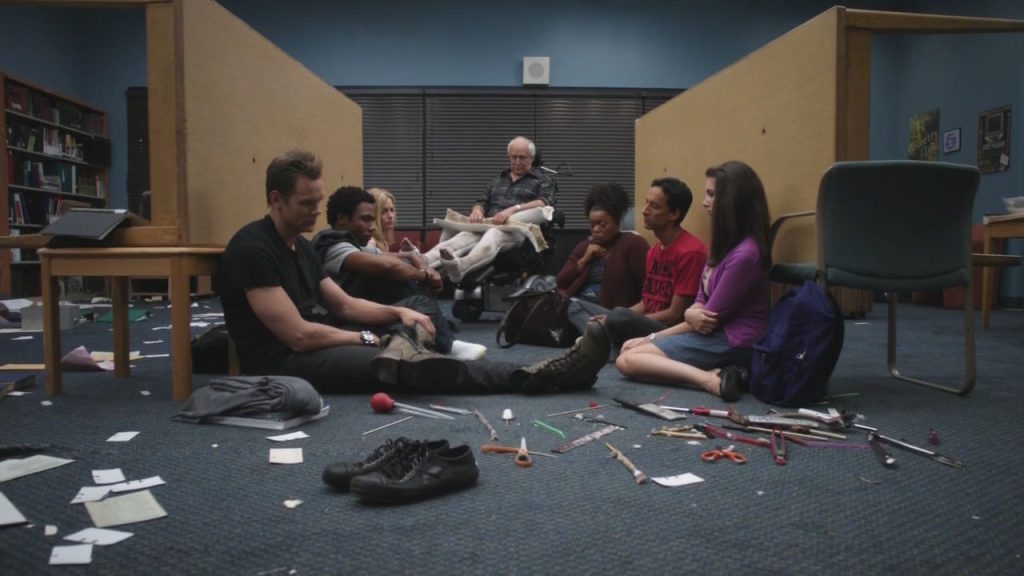
Harmon employs the physical confinement to analyze the harmful, interdependent characteristics of the study group. The episode does not require outside guest stars or pop-culture satires (the show’s typical strengths) since the internal character interactions are extremely rich, unpredictable, and carefully crafted. It demonstrates that if your main characters have real, well-defined conflicts, you can place them in a vacant room with an absent pen and produce twenty-two minutes of pure comedic brilliance.
3. The Bear — “Fishes” (Season 2, Episode 6)
Traditionally a long-form drama, Christopher Storer’s The Bear offers a contemporary twist on the bottleneck idea with “Fishes”—an episode that broadens the cast while dramatically constricting the physical environment.
Set predominantly within a tumultuous, cramped family residence during a Christmas dinner years prior to the main series events, “Fishes” confines the Berzatto family in a tight kitchen and dining area.
The episode exemplifies a lesson in spatial and auditory confinement. The camera functions at eye-level, navigating narrow corridors, dodging around sizzling ovens, and overwhelming the viewer with intersecting, loud conversations. The house’s physical limits turn into an unavoidable snare.
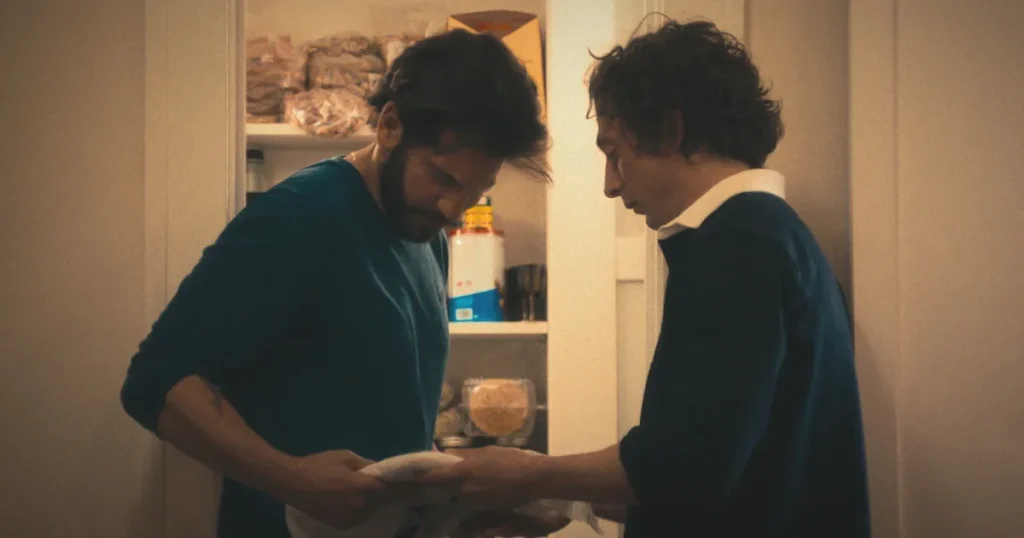
We witness Jamie Lee Curtis present a standout performance as the family matriarch, exhibiting a degree of unpredictable emotional intensity that seems poised to ignite the house at any moment. The sheer brilliance of “Fishes” resides in its unwillingness to provide the audience with a moment of reprieve. You find yourself confined in that kitchen with that family, experiencing every bit of the inherited trauma, tension, and foreboding until the unavoidable, catastrophic car accident brings the evening to a gracious close.
Part III: The Actor’s Dream, The Writer’s Exam
In a casual conversation, any experienced television actor or writer will typically mention that their preferred episodes to create are the bottle episodes. Why is that? A bottle episode brings television back to its theatrical origins.
Contemporary screen acting frequently involves a fragmented and disconnected process. An actor arrives on set, films a three-second reaction scene, waits two hours for the lighting adjustments, delivers a single line of information, and then returns to their trailer. The story continuity is fragmented into small, algorithmic segments intended for the editing suite.
A bottle episode entirely turns that process around. Since the event occurs in one setting in real time or close to it, filming a bottle episode resembles practicing and presenting a theatrical production.
Performers receive extensive, ten-page dialogue segments that demand they pay attention, respond, and maintain emotional storylines throughout lengthy, continuous shots. They cannot depend on stunt doubles, special effects, or smooth editing transitions to rescue a dull moment. If the performance lacks authenticity, the whole episode falls apart.
For authors, the bottle episode serves as the ultimate test. It assesses whether you genuinely grasp your characters or if you’ve merely depended on clever plot devices to conceal weak characterization.
If you remove a character’s capacity to escape, confront someone, or unravel an outside enigma, what remains of them? What do they discuss when the sound ceases? What do they fear when compelled to gaze over a small wooden table at the individual who understands them more than anyone else in the world?
If a writer can answer those questions with precision, humor, and heartbreak, they don’t need a twenty-million-dollar budget to make magnificent television. They just need a desk, a script, and the courage to lock the door.
Part IV: Why the Modern Streaming Era Is Killing the Art Form
As an industry watchdog who spends far too much time dissecting production budgets and streaming mechanics, I have to deliver a tragic, uncomfortable truth: The true bottle episode is an endangered species in modern television.
The death of the classic bottle episode is one of the unintended, tragic side effects of the modern streaming model.
In the old network TV era, seasons consisted of twenty-two to twenty-four episodes. Showrunners were cranking out television on a relentless, high-speed assembly line. Under those grueling conditions, budget management was a dynamic, week-to-week survival game. You had to write two or three bottle episodes per season simply to afford the explosive season finale. Those financial constraints forced writers to be creative, experimental, and daring.
Network Era (22–24 Episodes):
High Volume ──► Financial Scarcity ──► Forced Invention ──► Frequent Bottle Masterpieces
Streaming Era (6–8 Episodes):
Low Volume ──► Cinematic Micro-Movies ──► Hyper-Budgeted Plot Sprints ──► Extinction of Constraint
In the current streaming age, seasons have been shortened to six, eight, or ten episodes. Production budgets are primarily front-loaded and distributed similarly to small cinematic films. Shows are created to be quick-paced, plot-rich experiences with stunning visual quality, intended to be consumed in just one weekend.
Showrunners typically have only eight episodes to convey a story, so they often don’t feel they possess the narrative “luxury” to halt the plot and spend a full hour focused on two characters in one room. Moreover, streaming algorithms intentionally discourage episodes that significantly contrast in tone or pacing with the rest of the series. Executives worry that a subdued, gradual, conversation-focused bottle episode will lead a casual viewer to press the “back” button and look for something else.
We have exchanged innovative structure for refined cinematography. We have exchanged raw, dramatic character exploration for fast-paced plot development.
In removing the financial crisis that confined writers to limitations, modern television has inadvertently stripped away one of its most significant sources of creative innovation. When each episode receives a budget akin to that of a movie, no one has to be confined to a silent space trying to make a dialogue between two individuals feel like a battleground.
Part V: Long Live the Box
Exceptional television has never depended on the camera package size, the complexity of visual effects, or the stunning allure of foreign filming locations. Those items serve as pleasant adornments, yet they are ultimately merely packaging.
Television, in its most profound and elevated form, serves as an intimate medium. It is a creative medium aimed at bringing human expressions and voices straight into our homes. It serves as a reflection of the frightening, amusing, chaotic truth of human relationships.
The bottleneck episode remains a lasting, magnificent symbol of craftsmanship’s victory over wealth. It demonstrates that you can eliminate all excess features, reduce the production budget to nothing, close the doors, and still produce an hour of television that is so intensely captivating that viewers forget to breathe.
As we traverse an ever more uniform, overly budgeted entertainment arena ruled by lifeless CGI and formulaic story arcs, we must honor the rare showrunners who retain the bravery to confine their characters in a constrained, unembellished space. Provide us with fewer seventy-million-dollar green-screen skirmishes and more malfunctioning elevators, lost pens, underground meth facilities, and chaotic festive dinners. Secure the door, disable the visual effects, and allow the humans to communicate. That is the place where the enchantment resides.